

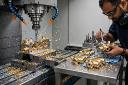
Milling quotes use vocabulary that can sound like a foreign language: end mills, omniversal machines, horizontal orientation. Learning a few terms makes it easier to compare CNC milling services UAE providers offer and to ask for what your part needs. This guide uses Genesis-MFG's CNC guide to explain milling, then shows how to specify matching shims from its shim page.
Genesis-MFG's CNC guide describes CNC milling as a precise machining process that removes excess material from workpieces using rotary cutters. It sits within CNC precision machining, which uses Computer-Aided Manufacturing blueprints to shape raw material into the desired product, and which is a subtractive process. The work often involves expert designers and professional engineers collaborating, using advanced tools to create intricate parts with complex geometries.
Why does that matter to you? Precision machining helps create parts that meet tight tolerance requirements and stringent specifications, and it works with materials from metals to plastics. The guide lists reduced labor costs and quicker turnaround as further benefits, so ask each shop to put a number on turnaround for your part.
The guide names these terms:
It does not rank them, so treat the list as a vocabulary. Ask the shop which machine and cutter it plans to use for your part and why, and ask whether the job runs on one machine or moves between several. Some jobs put all the tools on a single CNC machine, with the machinist only starting and stopping the process, while others need the workpiece moved from one machine to another. Choosing among CNC milling services shops offer is easier when each can explain its route in plain terms.
The best machine depends on the part's complexity, shape and material. The guide's example is a cylindrical part, which suits a CNC lathe because the cutting tool contacts the spinning workpiece. Parts with different geometries call for other precision processes, which can include drilling with multi-point bits or wire EDM for intricate parts.
Tolerance steers the choice as well. A typical CNC machine holds ±0.005 in. (0.13 mm), and precision machining can reach ±0.002 in. (0.051 mm) down to ±0.0002 in. (0.005 mm), depending on material and geometry. Genesis-MFG asks you to note detailed requirements on your design before uploading CAD files, so state the critical dimensions up front.
Milled parts often sit against thin spacers. Genesis-MFG's shim page offers custom shims in stainless steel, aluminum, copper, brass or titanium, from 0.001 in. to 0.250 in. (0.025 mm to 6.35 mm) thick. They come in square, rectangular, circular or custom shapes, with plain, coated or plated finishes. They are cut by water jet and laser, with a stated tolerance of ±0.005 in., which matches the typical CNC figure above, and prototypes are available in low-volume and short-production quantities.
Ask your custom shim manufacturer about the three quality checks it lists: inspection of raw material, dimensional inspection against customer requirements and surface finish inspection. When you request CNC milling services UAE quotes, send both sets of drawings together:
That keeps both parts on one set of numbers.
Learn the milling vocabulary, ask how each part will be made, state tolerances early and specify shims alongside milled parts. For the spacers, talk to a custom shim manufacturer at the same time. Genesis-MFG's shim page lists its customization options, quality checks and standards, and a drawing is enough to request a quote.
A typical CNC machine holds ±0.005 in. (0.13 mm). Precision machining can reach ±0.002 in. (0.051 mm) down to ±0.0002 in. (0.005 mm), depending on material and geometry.
STEP, IGES or XT for 3D drawings, and PDF for 2D drawings with tolerances and dimensions.
A blueprint with CAD or CAM programs, plus the list of materials, quantity and finish requests.
Genesis-MFG offers shim prototypes in low-volume and short-production quantities.
Many teams treat a prototype and the production run as two separate purchases, then discover the second supplier cannot reproduce what the first one tested. Choosing precision machining services in Sharjah that cover both stages keeps the design, programs and tolerances consistent from the first part to the thousandth. This guide shows how that path works, using Genesis-MFG's published approach.
Rapid prototyping is the fast production of a physical model or working part from a digital design. It lets teams find problems early and make changes before committing to expensive tooling or large orders. A problem found at the prototype stage costs far less to fix than one found after production starts.
Genesis-MFG says the same shop and CNC programs that make your prototype can take the part into production quantities once the design is approved. The CNC guide adds that its standard tolerance is ±0.005 in. (0.13 mm) for both prototypes and full production. In practice, test results from the prototype carry over to production parts when both stages come from the same provider of precision machining services instead of resetting with a new supplier.
Pick the material you plan to use in production, because Genesis-MFG machines prototypes from a solid block of real material, so the part matches the strength of the final one. Options include aluminium (6061 and 7075), the most popular choice for fast, accurate metal prototypes, plus stainless and carbon steel for strength and corrosion testing. Brass, copper and titanium suit specialist applications, and engineering plastics include POM, nylon, ABS, PEEK, PTFE, acrylic and polycarbonate.
Then match the service to the question you need answered. Functional prototypes test performance and pressure, and fit and assembly prototypes check how parts go together. Engineering validation (EVT) builds are small batches for testing and certification, and rapid tooling produces jigs, fixtures and low-volume tooling. Bridge production covers small runs while production tooling is being made.
Genesis-MFG's workflow gives you checkpoints at each stage:
A rapid prototyping company UAE engineers can rely on should offer this kind of structure, with design-for-manufacturing feedback on every order. There is no minimum order, and Genesis-MFG signs NDAs before you share designs. For the quote itself, the CNC guide asks for a blueprint with CAD or CAM programs, material details, quantity and finish requests. It prefers STEP, IGES or XT files for 3D and PDF for 2D drawings with tolerances.
As volume grows, the processes stay the same. Genesis-MFG's CNC work covers milling, turning, drilling and wire EDM, and precision machining can reach ±0.002 in. (0.051 mm) down to ±0.0002 in. (0.005 mm), depending on material and geometry. Mark critical tolerances on the drawing before you upload it, so the same numbers guide every revision and every batch.
The prototyping page lists the sectors that use this path:
Whichever sector you work in, ask any supplier of precision machining services in Sharjah how a prototype becomes a production order, and who reviews the design along the way.
Treat prototype and production as one path: test in the real material, keep the same programs and tolerances, and use design reviews to catch problems early. When you shortlist a rapid prototyping company UAE teams can depend on, ask how prototypes move into volume. Genesis-MFG's prototyping page explains its services and workflow, and a CAD file is enough to start a quote.
Genesis-MFG states a standard tolerance of ±0.005 in. (0.13 mm) for both prototypes and full production.
Genesis-MFG says yes. Once your design is approved, it uses the same programs and process to manufacture production quantities.
Bridge production is small runs while production tooling is being made. Rapid tooling covers jigs, fixtures and low-volume tooling that bridge the gap to production.
A 3D CAD file in STEP or IGES (XT also works for CNC quotes) and a 2D drawing with tolerances. Sketches or a physical sample also work for prototypes.
Industrial businesses need components that fit accurately, perform reliably, and meet the demands of their working environments. From oil and gas facilities to manufacturing plants, the quality of individual parts can influence equipment performance and maintenance costs. Choosing suitable materials and manufacturing methods is therefore essential for long-term reliability. Genesis MFG supports industrial customers in Sharjah, UAE, with precision machining and custom manufacturing solutions. Businesses exploring cnc machining services uae can benefit from understanding machining processes, material selection, inspection requirements, and the importance of correctly manufactured components.
Computer Numerical Control machining uses programmed instructions to guide cutting tools and transform raw materials into finished components. It allows manufacturers to produce detailed shapes, accurate dimensions, and repeatable parts for different industrial applications. Common processes include milling, turning, and drilling, with the choice depending on the component's design and required features.
CNC milling is useful for creating flat surfaces, slots, pockets, and complex profiles. Turning is commonly used for cylindrical components such as shafts, sleeves, and threaded parts. These processes can support the production of brackets, housings, fittings, and replacement components used in industrial machinery.
Genesis MFG's precision machining service focuses on manufacturing components according to customer requirements. Before production begins, buyers should provide technical drawings, material specifications, quantities, and required tolerances. These details help establish a clear understanding of the finished product and allow the manufacturing team to assess an appropriate production method.
Material selection affects component strength, durability, corrosion resistance, weight, and manufacturing cost. Aluminum is often suitable for lightweight parts that require good machinability. Stainless steel may be preferred for applications involving moisture or corrosive environments, while carbon steel is frequently considered for components requiring strength and structural support.
Copper and brass may be appropriate when their specific mechanical, electrical, or corrosion-related properties meet the application's needs. More specialized materials may be necessary when components face demanding temperatures, pressures, or chemical exposure.
Manufacturers should evaluate the working conditions before recommending a material. A component used in a high-temperature environment may require different properties from a part used in ordinary machinery. Engineers should also consider how the material interacts with adjoining components and whether the finished part requires additional treatment or surface finishing.
Genesis MFG encourages customers to communicate their material preferences and operating requirements during project discussions. Clear specifications help the manufacturing team assess the design and reduce the possibility of selecting materials that do not suit the intended application.
Metal shims are thin components used to adjust clearances, correct alignment, and compensate for dimensional differences between assembled parts. They can be important in pumps, gearboxes, engines, and other equipment where accurate positioning supports reliable operation.
Working with a custom shim manufacturer allows businesses to specify the required thickness, dimensions, shape, material, and finish. Genesis MFG provides custom gasket and metal shim manufacturing solutions designed around different industrial requirements.
Depending on the application, suitable shim materials may include stainless steel, aluminum, copper, brass, or titanium. The final selection should consider the operating environment, mechanical requirements, and compatibility with surrounding components. Cutting methods such as laser cutting and waterjet cutting can produce different profiles according to the material and design.
Dimensional accuracy is especially important for shims. A component that is too thick or too thin may affect alignment and load distribution. Customers should therefore provide accurate drawings or samples and identify any critical thickness or flatness requirements before production begins.
Quality control helps ensure that manufactured components meet agreed specifications. Inspection requirements vary according to the design, material, and intended use, but they may include dimensional measurements, surface finish checks, and verification of material documentation.
For machined components, important features can include bore diameters, hole positions, threads, and mating surfaces. For metal shims, thickness and flatness may be particularly significant. Identifying these critical features before production helps the manufacturer determine suitable inspection methods.
Buyers should discuss tolerances with the manufacturing team rather than assume that every design can achieve the same level of accuracy. Material properties, part geometry, tooling, machining conditions, and inspection equipment can all influence the achievable result.
For applications that require traceability or formal documentation, customers should confirm which inspection reports and material records are available. Clear acceptance criteria help both parties evaluate the finished components and reduce misunderstandings during delivery.
Industrial customers often need a manufacturing partner that understands technical requirements and communicates clearly throughout a project. Genesis MFG presents CNC precision machining, custom manufacturing, gasket and metal shim production, and equipment sourcing among its service offerings.
The company's approach emphasizes understanding the customer's requirements before moving through development and production. This is useful when a component must fit an existing assembly or meet specific operating conditions. Customers can share engineering drawings, samples, material preferences, and quantities to help the team assess their requirements.
Another consideration is the company's location in Hamriyah Free Zone, Sharjah, UAE. Businesses seeking regional manufacturing support can discuss their needs with Genesis MFG and determine whether the available services suit their applications.
Customers should evaluate any manufacturing supplier according to technical capability, quality procedures, communication, cost, and realistic delivery expectations. Genesis MFG's range of related services gives industrial buyers an opportunity to discuss machining and custom component requirements with one provider, subject to the project's specifications and the company's confirmed capabilities.
Good manufacturing results begin with complete and accurate project information. Engineering drawings should clearly identify dimensions, material grades, tolerances, threads, surface finishes, and any special requirements. When drawings are unavailable, a sample may help communicate the design, but its suitability should be checked against the actual operating requirements.
Production quantity is another important consideration. Prototype projects may involve design changes, while recurring orders require consistent specifications and repeatable inspection. Discussing expected demand helps the manufacturer evaluate production planning and identify possible cost considerations.
Replacement components require particular attention because they must work with existing equipment. Buyers should provide information about the equipment, component function, operating temperature, pressure, vibration, and exposure to chemicals where relevant. These details help establish the conditions the replacement part must withstand.
Before approving production, customers should confirm the final specifications, quotation, inspection requirements, and delivery schedule. Maintaining clear communication throughout the project helps prevent avoidable changes and supports a more predictable manufacturing process.
Precision manufacturing depends on accurate drawings, suitable materials, appropriate machining methods, and effective quality checks. CNC machining supports the production of complex industrial components, while metal shims help achieve correct spacing and alignment in equipment. Businesses can improve project outcomes by defining their requirements clearly and selecting suppliers whose capabilities match the intended application.
Companies considering cnc machining services uae should evaluate technical expertise, inspection procedures, and experience with comparable components. When selecting a custom shim manufacturer, buyers should pay particular attention to material suitability, thickness, dimensions, and application requirements. Genesis MFG provides precision machining and custom manufacturing solutions from Sharjah, UAE. Businesses can contact the team with their drawings and specifications to discuss suitable options for their projects.
CNC machining can produce shafts, housings, brackets, fittings, threaded parts, and other components requiring defined dimensions and shapes.
Common options include aluminum, stainless steel, carbon steel, copper, and brass. The appropriate material depends on strength, corrosion resistance, operating conditions, and component design.
Metal shims help adjust clearances, correct alignment, and compensate for dimensional differences between assembled components.
Provide engineering drawings or samples, material specifications, required quantities, tolerances, surface finish details, and any necessary inspection documentation.
Review the supplier's relevant capabilities, quality procedures, material options, communication practices, and ability to meet your technical specifications and delivery requirements.
Ordering machined parts for the first time can feel overwhelming. Terms like tolerance, surface finish, and material certification get thrown around quickly, and it's easy to nod along without fully understanding what you're paying for.
Once you understand the basics, though, sourcing decisions get a lot easier. CNC precision machining is simply the process of using computer-controlled equipment to cut, drill, or shape material into a finished part with high accuracy.
A CNC machine follows a programmed set of instructions to move a cutting tool along precise paths. Instead of a machinist manually adjusting a lathe or mill, software directs every movement, which is why repeatability is so much higher than with manual methods.
The process usually starts with a digital design file. That file gets translated into machine code, the raw material gets loaded, and the machine executes the cuts exactly as programmed, over and over, part after part.
What makes precision cnc machining reliable is the feedback built into the process. Machines can hold position within very tight limits, and modern equipment often includes sensors that catch deviations before they turn into scrapped parts.
Metals like aluminum, stainless steel, brass, and titanium are common choices because they machine predictably and hold tolerances well. Certain engineering plastics also work well when a part needs to be lightweight or resistant to corrosion.
Industries that rely heavily on precision cnc machining include automotive, medical device manufacturing, aerospace, and industrial equipment production. Each of these fields has parts where a small dimensional error can compromise safety or function.
Clear drawings save everyone time and money. A print that specifies tolerances, surface finish requirements, and material grade up front prevents back-and-forth questions that can delay a project by days or weeks.
It also pays to think about quantity early. Setup costs are spread across the whole batch, so ordering ten parts versus a thousand changes the per-unit price significantly, even though the machining process itself is similar.
Talking through design details with your machinist before finalizing a print often catches problems early. A feature that looks fine on screen can be difficult or expensive to machine, and an experienced shop can usually suggest a simpler alternative.
CNC precision machining has become the backbone of modern parts production because it combines accuracy with repeatability at a scale manual methods simply can't match. Understanding how the process works helps you ask better questions and make smarter sourcing decisions.
From material selection to tolerance requirements, every choice affects cost and quality, and precision cnc machining only delivers real value when those choices are made with the end application in mind.
CNC machining uses computer-controlled equipment to execute programmed movements, while manual machining relies on an operator physically adjusting the machine. CNC generally offers higher repeatability across large production runs.
Timelines depend on part complexity, material availability, and order quantity. Simple parts can be ready in days, while complex assemblies with multiple operations may take several weeks.
Standard CNC equipment can typically hold tolerances within a few thousandths of an inch, with specialized machines capable of even tighter accuracy for demanding applications.
It can be, though setup costs are spread across fewer parts, which raises the per-unit price. Many shops still find it worthwhile for prototypes and low-volume runs where accuracy matters.
Provide a detailed drawing with dimensions and tolerances, the required material, desired quantity, and any surface finish or certification requirements. The more detail you share upfront, the more accurate the quote will be.

Every industry that relies on tight tolerances eventually turns to precision machining manufacturing, and for good reason. From tiny medical implants to heavy-duty automotive brackets, this process shapes raw material into components that must perform exactly as designed, every single time. Get it wrong, and the consequences ripple through an entire supply chain, delaying projects and inflating costs.
Behind every accurate component sits a team that understands both the science and the art of cutting metal. Precision CNC machined parts aren't purely automated—it requires engineers who can read blueprints, anticipate material behaviour, and adjust processes on the fly when something doesn't look quite right. That blend of human judgement and machine precision is what separates a reliable supplier from a risky gamble.
Not all suppliers are created equal when you need precision CNC-machined parts for a demanding application. Buyers should ask pointed questions about tolerance capabilities, inspection equipment, and past project history before committing. A manufacturer with transparent documentation and a willingness to walk you through their quality process is usually one worth trusting with your next order.
Ultimately, the value of precision manufacturing lies in the trust it builds between designer and manufacturer, project after project. Cutting corners might save money initially, but poorly sourced precision CNC-machined parts often lead to costly reworks, delays, and damaged client relationships further down the line. Choose partners who prioritise transparency, documented quality checks, and consistent communication, and you'll safeguard both your budget and your reputation for the long haul.
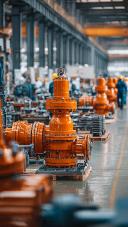
Oilfields are not forgiving environments. High pressure, corrosive fluids, extreme temperatures, and constant vibration are just a normal day. Components that fail in these conditions don't just get replaced they can cause production shutdowns, safety incidents, and very expensive remediation work.
This is why precision CNC machined parts have become central to how the oil and gas industry sources its critical components. Not generic, catalogue parts. Purpose-built, tightly toleranced components made to survive conditions that would destroy standard hardware within weeks.
The demands placed on components in upstream, midstream, and downstream operations are quite different from those in most other industries. Wellhead equipment operates under pressures that can exceed 15,000 PSI. Subsea components may sit at depths where the surrounding water pressure alone would crush ordinary housings. Refinery pipework runs continuous chemical processes at elevated temperatures for months or years without shutdown.
In this context, a precision CNC machined part isn't just about hitting a tight tolerance on a drawing. It's about understanding the operating environment, the media the part will contact, the pressure cycling it will endure, the temperature range it will see and machining accordingly.
That means material selection matters enormously. It means surface finish matters, because a poor finish on a sealing face can cause a leak at 10,000 PSI even if every dimension is correct. And it means traceability matters, being able to prove where the material came from, how it was processed, and what inspection results it achieved.
The UAE sits at the centre of one of the most active oil and gas regions on the planet. Abu Dhabi's offshore and onshore fields, the industrial facilities in Ruwais, Sharjah's manufacturing base, and the downstream operations across the Emirates all require a continuous supply of precision components, many of which cannot be sourced from a catalogue.
Oil and gas equipment UAE suppliers face a specific set of challenges. Lead times matter enormously because unplanned downtime in a production facility costs tens of thousands of dollars per hour. Local availability matters because getting components cleared through customs, inspected, and to the site quickly is often more important than marginal cost savings from sourcing further away.
And the technical requirements are demanding. ADNOC specifications, for example, set out material, inspection, and documentation requirements that go beyond standard commercial machining. Suppliers working in the UAE oil and gas sector need familiarity with these standards, not just the ability to machine a part to a drawing.
The combination of proximity, technical capability, and regulatory awareness is what separates a supplier that can serve this market from one that can supply standard parts but hasn't been tested in these conditions.
A handful of materials appear constantly in oil and gas machining work.
Duplex and Super Duplex Stainless Steel: Used extensively for its combination of corrosion resistance and strength. Harder to machine than standard stainless, but essential for sour service environments where hydrogen sulphide is present.
Inconel 625 and 718: Nickel-based alloys that hold their mechanical properties at high temperatures. Common in downhole tools and high-temperature process equipment.
Carbon Steel (typically 4140 or 4340): Widely used for structural components, valve bodies, and flanges where corrosion is managed through coatings rather than alloy selection.
17-4 PH Stainless: Precipitation-hardened stainless with good corrosion resistance and high strength, often used for shafts and connectors in downhole applications.
Each of these behaves differently under a cutting tool, requires different speeds and feeds, and puts different demands on the machining operation. Getting them right requires experience, not just good equipment.
If you're sourcing machined components for oil and gas equipment, the certification question isn't optional. Relevant standards include:
API (American Petroleum Institute) specifications: API 6A, 6D, and 17D are common reference points for wellhead, pipeline, and subsea equipment, respectively.
NACE MR0175 / ISO 15156: Covers material requirements for equipment used in hydrogen sulphide-containing environments. A part that isn't NACE-compliant in a sour service application is the wrong part.
ISO 9001 and ISO 3834: Quality management standards for machining and welding operations, respectively.
Suppliers should be able to demonstrate compliance with the relevant specifications for your application, not just state it on a website. Ask for documentation.
In some industries, you can trade a little precision for faster turnaround, and it doesn't matter much. In oil and gas, that trade rarely works. A valve seat that's out of round by a fraction of a millimetre will leak. A thread that's cut slightly off the specification will fail under load cycling. A surface that's too rough will score a seal.
The economics of getting it right the first time are completely different in this sector. Reworking a component is annoying and expensive. Replacing a failed component on a live installation offshore or downhole is a completely different category of problem.
This is why buyers in the oil and gas sector tend to work with approved vendor lists and long-term supplier relationships rather than shopping around for price for every purchase. The cost of vetting a new supplier properly is real, but it's much less than the cost of a supplier failure. If you're sourcing oil and gas equipment UAE operations depend on, getting that vetting right from the start saves a great deal of trouble later.
What types of parts are most commonly CNC machined for oil and gas?
Valve components, flanges, connectors, downhole tool housings, pump components, and custom fittings are among the most common. Essentially, anything that needs to hold pressure, control flow, or survive a corrosive environment.
How important is material traceability for oil and gas components?
Very. Most operators and EPC contractors require full material traceability, mill certificates, heat numbers, and inspection records before a component can be installed. Suppliers that don't provide this documentation create problems downstream.
Can machined parts meet NACE requirements?
Yes, but it depends on the material being correctly specified and the machining process not introducing conditions (like excessive heat) that alter the material's metallurgical properties. This is a specialist area.
What's the typical lead time for precision-machined parts in the UAE?
It varies considerably depending on part complexity and material availability. Simple components in standard materials might be available in days. Complex parts in exotic alloys can take several weeks.
Are there local UAE machining suppliers who can meet API standards?
Yes, the industrial zones in Abu Dhabi, Dubai, and Sharjah host some machining operations with API-certified scopes. Always verify current certification status directly rather than relying on historical documentation.

The manufacturing sector in the UAE is expanding because of industrial development and rising demand for premium components. Businesses across oil and gas, construction, and engineering depend on precision machining to achieve operational effectiveness and secure their operations. The process of choosing suitable machining companies in uae becomes essential for businesses that need consistent operational results. Reliable machining partners enable companies to manufacture precise components while decreasing operational interruptions and boosting total efficiency. The organization achieves project success through its collaboration with specialized experts who guarantee that all work meets both industry requirements and client satisfaction standards.
Manufacturing processes rely on precision machining as their essential component. The process involves material cutting and shaping followed by finishing to produce parts that meet exact specifications. The industrial sector requires these services to verify that their equipment operates correctly and maintains safety standards. The machining process delivers high-quality results which reduce errors and enhance operational performance in critical industries such as oil and gas. A certified machine shop in uae operates as a reliable facility which maintains strict quality standards while using modern equipment to deliver consistent results. Businesses require this level of precision because they need to maintain reliability while they work to meet international standards.
Modern machining companies use advanced technologies such as CNC machines, CAD/CAM software, and automated systems. The tools enable manufacturers to create complicated parts with exceptional precision and operational efficiency. The process requires quality control to maintain its effectiveness. The testing and inspection process guarantees that products will meet established standards. The majority of machining companies in the UAE dedicate resources to research and development as a means to enhance their operations and maintain market competitiveness. The company achieves operational efficiency through technology implementation which enables them to manage projects of any size while upholding exceptional quality standards.
Clients choose us because we focus on quality, precision, and customer satisfaction. Our team possesses extensive industry knowledge which enables us to understand the various requirements of different sectors. Our certified machine shop in the UAE operates according to international standards which require us to test every product before delivery. Our advanced machinery enables us to produce results which meet both accuracy and consistency standards. Our reliable partnership stems from our dedication to deadlines, our clear communication, and our ability to provide competitive prices. We collaborate closely with our clients to gain insights into their needs, which enables us to create solutions that promote their business development.
Partnering with a professional machining company offers many advantages. It helps businesses reduce production errors, improve efficiency, and save costs. Experienced technicians manage the entire process, from design to final production, ensuring smooth operations. Reliable companies also provide flexible solutions to meet changing project needs. This allows businesses to scale their operations without compromising quality. Working with experts ensures that all components are manufactured with precision and delivered on time, which is essential for maintaining productivity in competitive industries.
Choosing the right machining partner is a critical decision for any industrial business. Professional machining companies in uae provide the expertise, technology, and reliability needed to meet complex requirements. At the same time, working with a trusted certified machine shop in uae ensures high-quality results, compliance with standards, and long-term efficiency. By selecting an experienced and dependable provider, businesses can improve performance, reduce risks, and achieve sustainable growth in today’s competitive market.

In today’s competitive industrial environment, businesses demand accuracy, durability, and efficiency from every component they use. Custom Industrial Manufacturing Services play a crucial role in delivering tailored solutions that meet specific operational requirements. From oil and gas to construction and heavy engineering, industries rely on advanced production techniques to maintain performance and reduce downtime. By leveraging Custom Industrial Manufacturing Services, companies can ensure that every part is designed and manufactured according to exact specifications, improving both reliability and productivity.
Custom industrial manufacturing refers to the process of producing specialized components based on unique client requirements. Unlike mass production, this approach focuses on customization, precision, and flexibility. It allows businesses to develop parts that perfectly align with their machinery and operational needs.
Manufacturers use advanced technologies such as CNC machining, laser cutting, and fabrication processes to achieve high levels of accuracy. This ensures that each component meets strict quality standards and performs efficiently in demanding environments.
Precision is a key factor in industrial success. Even minor errors in component design or production can lead to equipment failure, increased maintenance costs, and operational delays. That’s why industries partner with experienced manufacturers who specialize in delivering accurate and reliable solutions.
With the support of Custom Industrial Manufacturing Services, companies can reduce risks and enhance overall performance. Precision manufacturing ensures that every part fits perfectly, functions efficiently, and meets industry standards.
Modern manufacturing facilities offer a wide range of capabilities to meet diverse industrial requirements:
CNC machining is one of the most advanced manufacturing methods, allowing for precise cutting, drilling, and shaping of materials. It ensures consistency and accuracy across all production runs.
Laser cutting provides clean and accurate results, especially for complex designs. It is widely used in metal fabrication and industrial component production.
Fabrication involves shaping and assembling raw materials into finished products. This includes welding, bending, and forming processes that create durable and reliable components.
Manufacturers work with various materials, including:
Selecting the right material is essential for ensuring product durability and performance.
Custom manufacturing services are essential for a wide range of industries:
This sector requires high-quality components that can withstand extreme temperatures and pressure. Precision manufacturing ensures reliability and safety in critical operations.
Construction projects depend on strong and accurately manufactured components to maintain structural integrity and safety.
From traditional power plants to renewable energy systems, precision components are vital for efficient energy production.
Heavy machinery and equipment require durable and precisely engineered parts to operate effectively in demanding environments.
There are several reasons why companies prefer customized manufacturing solutions:
Every project has unique requirements, and customization ensures that specific needs are met without compromise.
Precision manufacturing delivers components with exact measurements, reducing errors and improving overall efficiency.
While custom manufacturing may involve initial investment, it reduces long-term costs by minimizing maintenance and replacement expenses.
Advanced machinery and experienced engineers enable quick production and timely delivery.
Manufacturers follow strict quality control processes to ensure that all components meet regulatory requirements.
A structured process ensures consistent quality and reliability:
This systematic approach guarantees that every product meets the highest standards.
The manufacturing industry is continuously evolving with new technologies. Automation, robotics, and smart manufacturing systems are transforming production processes. These advancements improve efficiency, reduce human error, and enhance product quality.
Digital tools and software also enable manufacturers to create accurate designs and simulations before production begins. This reduces waste and ensures better outcomes for clients.
Selecting the right manufacturing partner is critical for project success. Businesses should consider factors such as:
A reliable partner will provide end-to-end solutions, ensuring smooth project execution and high-quality results.
In today’s industrial landscape, businesses cannot afford to compromise on quality or performance. Custom Industrial Manufacturing Services provide the flexibility, precision, and reliability required to meet modern industrial demands. By partnering with experienced manufacturers, companies can achieve better efficiency, reduced costs, and improved operational performance.
As industries continue to evolve, the role of precision custom machining manufacturers becomes even more critical in delivering advanced solutions. These manufacturers combine expertise, technology, and innovation to produce high-quality components tailored to specific needs. Choosing the right manufacturing partner ensures long-term success and sustainable growth in a competitive market.
Ultimately, working with precision custom machining manufacturers allows businesses to stay ahead by leveraging cutting-edge solutions and maintaining superior quality standards. With the continued advancement of industrial technologies, precision custom machining manufacturers will remain a key driver of innovation and efficiency across global industries.
These services involve designing and producing customized industrial components tailored to specific operational requirements.
Industries such as oil and gas, construction, energy, and heavy engineering rely heavily on custom manufacturing.
Precision ensures that components are accurate, reliable, and capable of performing efficiently in demanding conditions.
Manufacturers typically use stainless steel, aluminum, carbon steel, and specialized alloys.
They reduce downtime, improve product performance, and ensure components fit perfectly within systems.