

Industrial businesses need components that fit accurately, perform reliably, and meet the demands of their working environments. From oil and gas facilities to manufacturing plants, the quality of individual parts can influence equipment performance and maintenance costs. Choosing suitable materials and manufacturing methods is therefore essential for long-term reliability. Genesis MFG supports industrial customers in Sharjah, UAE, with precision machining and custom manufacturing solutions. Businesses exploring cnc machining services uae can benefit from understanding machining processes, material selection, inspection requirements, and the importance of correctly manufactured components.
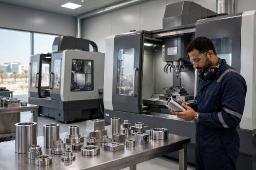
Computer Numerical Control machining uses programmed instructions to guide cutting tools and transform raw materials into finished components. It allows manufacturers to produce detailed shapes, accurate dimensions, and repeatable parts for different industrial applications. Common processes include milling, turning, and drilling, with the choice depending on the component's design and required features.
CNC milling is useful for creating flat surfaces, slots, pockets, and complex profiles. Turning is commonly used for cylindrical components such as shafts, sleeves, and threaded parts. These processes can support the production of brackets, housings, fittings, and replacement components used in industrial machinery.
Genesis MFG's precision machining service focuses on manufacturing components according to customer requirements. Before production begins, buyers should provide technical drawings, material specifications, quantities, and required tolerances. These details help establish a clear understanding of the finished product and allow the manufacturing team to assess an appropriate production method.
Material selection affects component strength, durability, corrosion resistance, weight, and manufacturing cost. Aluminum is often suitable for lightweight parts that require good machinability. Stainless steel may be preferred for applications involving moisture or corrosive environments, while carbon steel is frequently considered for components requiring strength and structural support.
Copper and brass may be appropriate when their specific mechanical, electrical, or corrosion-related properties meet the application's needs. More specialized materials may be necessary when components face demanding temperatures, pressures, or chemical exposure.
Manufacturers should evaluate the working conditions before recommending a material. A component used in a high-temperature environment may require different properties from a part used in ordinary machinery. Engineers should also consider how the material interacts with adjoining components and whether the finished part requires additional treatment or surface finishing.
Genesis MFG encourages customers to communicate their material preferences and operating requirements during project discussions. Clear specifications help the manufacturing team assess the design and reduce the possibility of selecting materials that do not suit the intended application.
Metal shims are thin components used to adjust clearances, correct alignment, and compensate for dimensional differences between assembled parts. They can be important in pumps, gearboxes, engines, and other equipment where accurate positioning supports reliable operation.
Working with a custom shim manufacturer allows businesses to specify the required thickness, dimensions, shape, material, and finish. Genesis MFG provides custom gasket and metal shim manufacturing solutions designed around different industrial requirements.
Depending on the application, suitable shim materials may include stainless steel, aluminum, copper, brass, or titanium. The final selection should consider the operating environment, mechanical requirements, and compatibility with surrounding components. Cutting methods such as laser cutting and waterjet cutting can produce different profiles according to the material and design.
Dimensional accuracy is especially important for shims. A component that is too thick or too thin may affect alignment and load distribution. Customers should therefore provide accurate drawings or samples and identify any critical thickness or flatness requirements before production begins.
Quality control helps ensure that manufactured components meet agreed specifications. Inspection requirements vary according to the design, material, and intended use, but they may include dimensional measurements, surface finish checks, and verification of material documentation.
For machined components, important features can include bore diameters, hole positions, threads, and mating surfaces. For metal shims, thickness and flatness may be particularly significant. Identifying these critical features before production helps the manufacturer determine suitable inspection methods.
Buyers should discuss tolerances with the manufacturing team rather than assume that every design can achieve the same level of accuracy. Material properties, part geometry, tooling, machining conditions, and inspection equipment can all influence the achievable result.
For applications that require traceability or formal documentation, customers should confirm which inspection reports and material records are available. Clear acceptance criteria help both parties evaluate the finished components and reduce misunderstandings during delivery.
Industrial customers often need a manufacturing partner that understands technical requirements and communicates clearly throughout a project. Genesis MFG presents CNC precision machining, custom manufacturing, gasket and metal shim production, and equipment sourcing among its service offerings.
The company's approach emphasizes understanding the customer's requirements before moving through development and production. This is useful when a component must fit an existing assembly or meet specific operating conditions. Customers can share engineering drawings, samples, material preferences, and quantities to help the team assess their requirements.
Another consideration is the company's location in Hamriyah Free Zone, Sharjah, UAE. Businesses seeking regional manufacturing support can discuss their needs with Genesis MFG and determine whether the available services suit their applications.
Customers should evaluate any manufacturing supplier according to technical capability, quality procedures, communication, cost, and realistic delivery expectations. Genesis MFG's range of related services gives industrial buyers an opportunity to discuss machining and custom component requirements with one provider, subject to the project's specifications and the company's confirmed capabilities.
Good manufacturing results begin with complete and accurate project information. Engineering drawings should clearly identify dimensions, material grades, tolerances, threads, surface finishes, and any special requirements. When drawings are unavailable, a sample may help communicate the design, but its suitability should be checked against the actual operating requirements.
Production quantity is another important consideration. Prototype projects may involve design changes, while recurring orders require consistent specifications and repeatable inspection. Discussing expected demand helps the manufacturer evaluate production planning and identify possible cost considerations.
Replacement components require particular attention because they must work with existing equipment. Buyers should provide information about the equipment, component function, operating temperature, pressure, vibration, and exposure to chemicals where relevant. These details help establish the conditions the replacement part must withstand.
Before approving production, customers should confirm the final specifications, quotation, inspection requirements, and delivery schedule. Maintaining clear communication throughout the project helps prevent avoidable changes and supports a more predictable manufacturing process.
Precision manufacturing depends on accurate drawings, suitable materials, appropriate machining methods, and effective quality checks. CNC machining supports the production of complex industrial components, while metal shims help achieve correct spacing and alignment in equipment. Businesses can improve project outcomes by defining their requirements clearly and selecting suppliers whose capabilities match the intended application.
Companies considering cnc machining services uae should evaluate technical expertise, inspection procedures, and experience with comparable components. When selecting a custom shim manufacturer, buyers should pay particular attention to material suitability, thickness, dimensions, and application requirements. Genesis MFG provides precision machining and custom manufacturing solutions from Sharjah, UAE. Businesses can contact the team with their drawings and specifications to discuss suitable options for their projects.
CNC machining can produce shafts, housings, brackets, fittings, threaded parts, and other components requiring defined dimensions and shapes.
Common options include aluminum, stainless steel, carbon steel, copper, and brass. The appropriate material depends on strength, corrosion resistance, operating conditions, and component design.
Metal shims help adjust clearances, correct alignment, and compensate for dimensional differences between assembled components.
Provide engineering drawings or samples, material specifications, required quantities, tolerances, surface finish details, and any necessary inspection documentation.
Review the supplier's relevant capabilities, quality procedures, material options, communication practices, and ability to meet your technical specifications and delivery requirements.
| No comments yet. Be the first. |
