


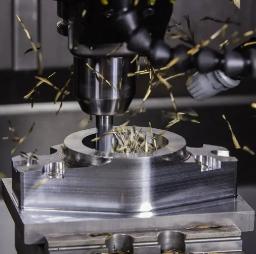
Ordering machined parts for the first time can feel overwhelming. Terms like tolerance, surface finish, and material certification get thrown around quickly, and it's easy to nod along without fully understanding what you're paying for.
Once you understand the basics, though, sourcing decisions get a lot easier. CNC precision machining is simply the process of using computer-controlled equipment to cut, drill, or shape material into a finished part with high accuracy.
A CNC machine follows a programmed set of instructions to move a cutting tool along precise paths. Instead of a machinist manually adjusting a lathe or mill, software directs every movement, which is why repeatability is so much higher than with manual methods.
The process usually starts with a digital design file. That file gets translated into machine code, the raw material gets loaded, and the machine executes the cuts exactly as programmed, over and over, part after part.
What makes precision cnc machining reliable is the feedback built into the process. Machines can hold position within very tight limits, and modern equipment often includes sensors that catch deviations before they turn into scrapped parts.
Metals like aluminum, stainless steel, brass, and titanium are common choices because they machine predictably and hold tolerances well. Certain engineering plastics also work well when a part needs to be lightweight or resistant to corrosion.
Industries that rely heavily on precision cnc machining include automotive, medical device manufacturing, aerospace, and industrial equipment production. Each of these fields has parts where a small dimensional error can compromise safety or function.
Clear drawings save everyone time and money. A print that specifies tolerances, surface finish requirements, and material grade up front prevents back-and-forth questions that can delay a project by days or weeks.
It also pays to think about quantity early. Setup costs are spread across the whole batch, so ordering ten parts versus a thousand changes the per-unit price significantly, even though the machining process itself is similar.
Talking through design details with your machinist before finalizing a print often catches problems early. A feature that looks fine on screen can be difficult or expensive to machine, and an experienced shop can usually suggest a simpler alternative.
CNC precision machining has become the backbone of modern parts production because it combines accuracy with repeatability at a scale manual methods simply can't match. Understanding how the process works helps you ask better questions and make smarter sourcing decisions.
From material selection to tolerance requirements, every choice affects cost and quality, and precision cnc machining only delivers real value when those choices are made with the end application in mind.
CNC machining uses computer-controlled equipment to execute programmed movements, while manual machining relies on an operator physically adjusting the machine. CNC generally offers higher repeatability across large production runs.
Timelines depend on part complexity, material availability, and order quantity. Simple parts can be ready in days, while complex assemblies with multiple operations may take several weeks.
Standard CNC equipment can typically hold tolerances within a few thousandths of an inch, with specialized machines capable of even tighter accuracy for demanding applications.
It can be, though setup costs are spread across fewer parts, which raises the per-unit price. Many shops still find it worthwhile for prototypes and low-volume runs where accuracy matters.
Provide a detailed drawing with dimensions and tolerances, the required material, desired quantity, and any surface finish or certification requirements. The more detail you share upfront, the more accurate the quote will be.
| No comments yet. Be the first. |
