


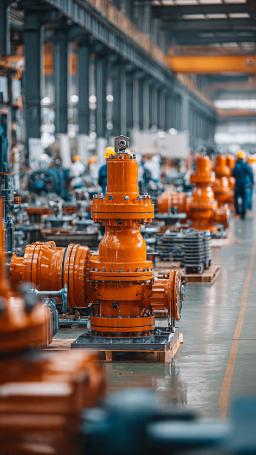
Oilfields are not forgiving environments. High pressure, corrosive fluids, extreme temperatures, and constant vibration are just a normal day. Components that fail in these conditions don't just get replaced they can cause production shutdowns, safety incidents, and very expensive remediation work.
This is why precision CNC machined parts have become central to how the oil and gas industry sources its critical components. Not generic, catalogue parts. Purpose-built, tightly toleranced components made to survive conditions that would destroy standard hardware within weeks.
The demands placed on components in upstream, midstream, and downstream operations are quite different from those in most other industries. Wellhead equipment operates under pressures that can exceed 15,000 PSI. Subsea components may sit at depths where the surrounding water pressure alone would crush ordinary housings. Refinery pipework runs continuous chemical processes at elevated temperatures for months or years without shutdown.
In this context, a precision CNC machined part isn't just about hitting a tight tolerance on a drawing. It's about understanding the operating environment, the media the part will contact, the pressure cycling it will endure, the temperature range it will see and machining accordingly.
That means material selection matters enormously. It means surface finish matters, because a poor finish on a sealing face can cause a leak at 10,000 PSI even if every dimension is correct. And it means traceability matters, being able to prove where the material came from, how it was processed, and what inspection results it achieved.
The UAE sits at the centre of one of the most active oil and gas regions on the planet. Abu Dhabi's offshore and onshore fields, the industrial facilities in Ruwais, Sharjah's manufacturing base, and the downstream operations across the Emirates all require a continuous supply of precision components, many of which cannot be sourced from a catalogue.
Oil and gas equipment UAE suppliers face a specific set of challenges. Lead times matter enormously because unplanned downtime in a production facility costs tens of thousands of dollars per hour. Local availability matters because getting components cleared through customs, inspected, and to the site quickly is often more important than marginal cost savings from sourcing further away.
And the technical requirements are demanding. ADNOC specifications, for example, set out material, inspection, and documentation requirements that go beyond standard commercial machining. Suppliers working in the UAE oil and gas sector need familiarity with these standards, not just the ability to machine a part to a drawing.
The combination of proximity, technical capability, and regulatory awareness is what separates a supplier that can serve this market from one that can supply standard parts but hasn't been tested in these conditions.
A handful of materials appear constantly in oil and gas machining work.
Duplex and Super Duplex Stainless Steel: Used extensively for its combination of corrosion resistance and strength. Harder to machine than standard stainless, but essential for sour service environments where hydrogen sulphide is present.
Inconel 625 and 718: Nickel-based alloys that hold their mechanical properties at high temperatures. Common in downhole tools and high-temperature process equipment.
Carbon Steel (typically 4140 or 4340): Widely used for structural components, valve bodies, and flanges where corrosion is managed through coatings rather than alloy selection.
17-4 PH Stainless: Precipitation-hardened stainless with good corrosion resistance and high strength, often used for shafts and connectors in downhole applications.
Each of these behaves differently under a cutting tool, requires different speeds and feeds, and puts different demands on the machining operation. Getting them right requires experience, not just good equipment.
If you're sourcing machined components for oil and gas equipment, the certification question isn't optional. Relevant standards include:
API (American Petroleum Institute) specifications: API 6A, 6D, and 17D are common reference points for wellhead, pipeline, and subsea equipment, respectively.
NACE MR0175 / ISO 15156: Covers material requirements for equipment used in hydrogen sulphide-containing environments. A part that isn't NACE-compliant in a sour service application is the wrong part.
ISO 9001 and ISO 3834: Quality management standards for machining and welding operations, respectively.
Suppliers should be able to demonstrate compliance with the relevant specifications for your application, not just state it on a website. Ask for documentation.
In some industries, you can trade a little precision for faster turnaround, and it doesn't matter much. In oil and gas, that trade rarely works. A valve seat that's out of round by a fraction of a millimetre will leak. A thread that's cut slightly off the specification will fail under load cycling. A surface that's too rough will score a seal.
The economics of getting it right the first time are completely different in this sector. Reworking a component is annoying and expensive. Replacing a failed component on a live installation offshore or downhole is a completely different category of problem.
This is why buyers in the oil and gas sector tend to work with approved vendor lists and long-term supplier relationships rather than shopping around for price for every purchase. The cost of vetting a new supplier properly is real, but it's much less than the cost of a supplier failure. If you're sourcing oil and gas equipment UAE operations depend on, getting that vetting right from the start saves a great deal of trouble later.
What types of parts are most commonly CNC machined for oil and gas?
Valve components, flanges, connectors, downhole tool housings, pump components, and custom fittings are among the most common. Essentially, anything that needs to hold pressure, control flow, or survive a corrosive environment.
How important is material traceability for oil and gas components?
Very. Most operators and EPC contractors require full material traceability, mill certificates, heat numbers, and inspection records before a component can be installed. Suppliers that don't provide this documentation create problems downstream.
Can machined parts meet NACE requirements?
Yes, but it depends on the material being correctly specified and the machining process not introducing conditions (like excessive heat) that alter the material's metallurgical properties. This is a specialist area.
What's the typical lead time for precision-machined parts in the UAE?
It varies considerably depending on part complexity and material availability. Simple components in standard materials might be available in days. Complex parts in exotic alloys can take several weeks.
Are there local UAE machining suppliers who can meet API standards?
Yes, the industrial zones in Abu Dhabi, Dubai, and Sharjah host some machining operations with API-certified scopes. Always verify current certification status directly rather than relying on historical documentation.
| No comments yet. Be the first. |
