


Peyronie’s disease is a sensitive yet important men’s health condition that affects both physical function and emotional well-being. Despite being relatively common, many men delay seeking help due to embarrassment or lack of awareness, which can worsen the condition over time.
This in-depth, SEO-optimized article provides a well-researched and up-to-date overview of Peyronie's Disease, including causes, symptoms, diagnosis, and the most advanced treatment options available today.
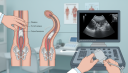
Peyronie’s disease is a disorder in which fibrous scar tissue (plaque) develops beneath the skin of the penis. This scar tissue disrupts normal elasticity, causing the penis to bend or curve abnormally during erection.
While a slight natural curvature is normal, Peyronie’s disease leads to:
In more severe cases, it can also cause erectile dysfunction and penile shortening.
The penis contains two cylindrical chambers called the corpora cavernosa, which fill with blood during an erection. These chambers are surrounded by a flexible sheath called the tunica albuginea.
When scar tissue forms in this sheath:
The exact cause is not always identifiable, but most experts agree it is linked to penile trauma combined with abnormal healing.
This is the most common cause. Injury may occur due to:
Even minor repeated injuries can lead to scar formation over time.
Instead of healing normally, the body forms excess fibrous tissue, which hardens into plaque.
This may be influenced by:
Men with a family history of connective tissue disorders are more likely to develop Peyronie’s disease.
Certain health conditions increase the risk:
With age:
Men with the following are at higher risk:
Symptoms vary from mild to severe and may develop gradually.
The most prominent symptom:
Scar tissue can restrict blood flow, making erections difficult to achieve or maintain.
Understanding the stage helps determine the best treatment approach.
Diagnosis is usually straightforward but requires proper evaluation.
The doctor will ask about:
Helps evaluate:
Sometimes performed to measure curvature accurately.
Treatment depends on:
Limited effectiveness but sometimes prescribed:
Best suited for moderate cases.
A modern and effective approach:
Requires consistent daily use over months.
Used mainly for:
Its effect on curvature remains limited.
Recommended for severe or stable cases.
Ideal for men with erectile dysfunction:
Ignoring Peyronie’s disease can lead to:
The emotional effects are often underestimated. Men may experience:
Professional counseling can be highly beneficial.
Advancements in medical science are improving outcomes:
These treatments aim to repair damaged tissue rather than just manage symptoms.
While not fully preventable, you can reduce risk:
Seek medical attention if you notice:
Early treatment leads to better outcomes.
Myth: It’s a sexually transmitted disease
Fact: It is not contagious
Myth: Surgery is always required
Fact: Many cases are treated non-surgically
Myth: Only older men are affected
Fact: It can occur at any age
Peyronie's Disease is a manageable medical condition that requires awareness, early diagnosis, and proper treatment. With modern medical advancements, patients now have access to a wide range of effective solutions—from non-invasive therapies to advanced surgical procedures.
Ignoring the condition can lead to complications, but seeking timely care can restore both physical function and confidence.

Premature Ejaculation (PE) is one of the most common male sexual disorders, affecting an estimated 20–30% of men at some point in their lives. Despite its prevalence, it remains one of the least discussed health concerns due to embarrassment, cultural stigma, and misinformation. The good news is that PE is highly treatable, and in many cases, completely manageable with the right combination of medical, psychological, and lifestyle interventions.
This in-depth guide provides a complete understanding of premature ejaculation—from its biological mechanisms to advanced treatment strategies—helping individuals make informed decisions about their sexual health.
Premature ejaculation is a condition where a man ejaculates sooner than desired during sexual activity, often with minimal stimulation and little voluntary control. It becomes a clinical issue when it is persistent, recurrent, and causes distress.
Healthcare professionals typically diagnose PE based on three key factors:
Premature Ejaculation is more common than many realize:
Many men do not seek help, which leads to underreporting and prolonged suffering.
Understanding the classification of PE is crucial for selecting the most effective treatment.
Ejaculation is a complex physiological process involving coordination between the brain, spinal cord, and reproductive organs.
PE occurs when this reflex is triggered too rapidly, often due to heightened sensitivity or reduced inhibitory control from the brain.
PE is multifactorial, meaning it arises from a combination of causes.
Fear of underperforming can create a cycle where anxiety accelerates ejaculation.
Conditions like depression and chronic stress interfere with sexual response.
Men who habitually rushed sexual activity in adolescence may develop long-term patterns.
Lack of emotional connection or unresolved conflicts can contribute.
Low levels of serotonin are strongly associated with reduced ejaculatory control.
Men may rush intercourse due to fear of losing erection.
Abnormal testosterone or thyroid hormone levels can disrupt sexual function.
Inflammation or infection can affect ejaculation timing.
Some men may inherit a predisposition for rapid ejaculation.
Increased nerve sensitivity leads to faster climax.
These factors weaken overall health and sexual performance.
The hallmark symptom is rapid ejaculation, but other indicators include:
PE affects far more than just physical performance.
Proper diagnosis is essential for effective treatment.
Effective treatment often combines multiple strategies.
⚠️ Always consult a qualified doctor before using medications.
Improving overall health enhances sexual performance:
While not always scientifically proven, some methods may help:
These approaches work best alongside medical treatment.
A supportive partner is crucial for recovery.
Fact: It is extremely common.
Fact: Biological factors are equally important.
Fact: Most men improve significantly with treatment.
Consult a doctor if:
The outlook for PE is highly positive:
Consistency and proper guidance are essential.
Premature ejaculation is a common, treatable, and manageable condition that should not be ignored. With advancements in medical science, behavioral therapy, and psychological support, men now have access to a wide range of effective solutions.
Breaking the silence around PE is the first step toward recovery. Seeking professional help, maintaining open communication, and following a structured treatment plan can dramatically improve both sexual health and overall quality of life.
P-Shot Therapy, also known as the Priapus Shot, is a non-surgical, medication-free regenerative treatment designed to improve male sexual health. It uses the body’s own platelet-rich plasma (PRP) to enhance blood flow, tissue repair, and nerve sensitivity in the penis. The P-Shot has gained popularity as a safe and effective option for men experiencing erectile dysfunction (ED), reduced sensitivity, or age-related sexual performance decline.
Unlike pills or invasive surgeries, the P-Shot focuses on healing and regeneration, offering long-lasting improvements with minimal downtime.
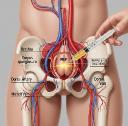
The PShot is a medical procedure that involves injecting platelet-rich plasma (PRP) into specific areas of the penis. PRP is derived from the patient’s own blood and contains a high concentration of growth factors that stimulate tissue regeneration and improve blood circulation.
These growth factors help:
Repair damaged penile tissue
Promote new blood vessel formation
Enhance nerve sensitivity
Improve erectile strength and quality
Because the treatment uses the patient’s own blood, the risk of allergic reactions or rejection is extremely low.
The procedure follows a scientifically backed regenerative process:
A small amount of blood is drawn from the patient, similar to a routine blood test.
The blood is placed in a medical centrifuge that separates platelet-rich plasma from other blood components.
To ensure comfort, a numbing agent is applied to the treatment area.
The concentrated PRP is carefully injected into targeted areas of the penis where improved blood flow and tissue repair are needed.
Over the following weeks, growth factors activate stem cells, promote collagen production, and improve circulation, leading to stronger and more sustainable erections.
P-Shot therapy offers multiple sexual health benefits, especially for men seeking a natural alternative to medications.
Improved erectile strength and firmness
Enhanced blood flow to penile tissue
Increased sexual sensitivity and pleasure
Better erection sustainability
Improved confidence and sexual performance
Natural tissue regeneration
Minimal downtime and fast recovery
Some patients also notice a slight improvement in penile girth or length, mainly due to improved blood circulation—not permanent size enlargement.
P-Shot therapy is suitable for many men, including those who:
Experience mild to moderate erectile dysfunction
Do not respond well to ED medications
Want a natural, drug-free treatment
Have diabetes-related or age-related ED
Experience reduced sensitivity or weaker erections
Want to enhance sexual performance and confidence
A medical consultation is essential to determine eligibility and rule out underlying conditions.
P-Shot therapy can help with various male sexual health concerns:
Erectile Dysfunction (ED)
Poor blood circulation to the penis
Reduced penile sensitivity
Peyronie’s disease (in selected cases)
Performance anxiety-related ED
Age-related decline in erectile quality
| P-Shot Therapy | ED Medications |
|---|---|
| Treats root cause | Temporary symptom relief |
| Natural PRP from your body | Chemical-based |
| Long-lasting results | Short-term effect |
| Improves tissue health | No tissue repair |
| No daily dependency | Requires repeated dosing |
The P-Shot is ideal for men looking for a long-term solution rather than temporary performance enhancement.
Procedure Duration: 30–45 minutes
Downtime: Minimal (same-day return to normal activities)
Discomfort Level: Mild and well-controlled with anesthesia
Sexual Activity: Usually resumed within 24–48 hours
Most patients see noticeable improvements after one session, but depending on severity:
Mild ED: 1 session
Moderate ED: 2–3 sessions
Severe ED: Combination therapy may be recommended
Results continue to improve over 4–8 weeks as tissue regeneration progresses.
Patients commonly report:
Stronger and more reliable erections
Improved erection quality without medication
Increased sensitivity and satisfaction
Enhanced sexual confidence
Results typically last 12–18 months, and maintenance sessions can prolong benefits.
P-Shot therapy is considered very safe when performed by qualified medical professionals.
Temporary swelling
Mild bruising
Slight redness
Short-term tenderness
Serious complications are extremely rare due to the use of autologous PRP.
The cost of P-Shot therapy varies depending on:
Number of sessions required
Clinic expertise and technology
Additional combination treatments
A personalized consultation helps determine an accurate treatment plan and pricing.
The P-Shot is not a penis enlargement procedure. However, some men notice a slight increase in girth or length due to:
Improved blood flow
Stronger erections
Better tissue expansion
These changes are functional rather than structural.
P-Shot therapy stands out because it:
Uses your body’s natural healing ability
Offers long-lasting improvement
Avoids surgery and medications
Improves overall penile health
Boosts sexual confidence naturally
P-Shot Therapy (Priapus Shot) is a breakthrough regenerative treatment for men seeking a safe, effective, and natural solution for erectile dysfunction and sexual performance issues. By restoring blood flow, repairing tissue, and enhancing sensitivity, the P-Shot addresses the root causes of ED rather than masking symptoms.
For men who want long-term results without dependence on pills or invasive surgery, P-Shot therapy offers a scientifically supported and patient-approved option for renewed sexual health and confidence.