


Walk into almost any dental office today and ask the front desk where their new patients are coming from, and you'll start hearing a familiar answer: Google. Not word-of-mouth alone. Not a billboard on the highway. Google. Specifically, Google Ads for dentists — the paid listings that appear at the very top of search results when someone nearby types "dentist near me" or "emergency dental care today." More and more practices are putting real budget behind these campaigns, and the reasons why are worth understanding whether you're already running ads or still on the fence.
There was a time when a new dental practice could plant a sign out front, get listed in the Yellow Pages, and expect a steady trickle of walk-ins from the neighborhood. That world is gone. Today, when someone cracks a tooth at 9 p.m. on a Wednesday or finally decides it's time to get those veneers they've been thinking about, their first move is a Google search. They're not asking friends. They're not browsing social media. They're typing a specific question and clicking one of the first things they see.
That behavioral shift — patients searching with intent before they ever pick up the phone — is exactly what makes Google Ads such a powerful tool for dental practices. You're not interrupting someone who didn't ask to hear from you. You're showing up precisely when they're already looking for what you offer.
Organic SEO is valuable and every practice should invest in it. But ranking organically for competitive dental keywords in a mid-size or large metro takes months, sometimes longer. Google Ads bypasses that timeline entirely. The moment your campaign is live, your practice can appear above organic results — above even the map listings in some cases — for the exact search terms your ideal patients are using right now.
This immediacy matters more than most practice owners initially realize. Dental decisions are often urgent. Someone experiencing a toothache isn't going to scroll through page two of Google. They're calling whoever shows up first and sounds trustworthy. A well-placed, well-written ad can be the difference between that patient booking with you or with the practice down the street.
Think about the intent behind the search. Someone typing "emergency dentist open Saturday" or "dental implants consultation near me" isn't casually browsing — they're ready to act. Google Ads lets your practice intercept that moment directly, which is something no other marketing channel does as precisely.
It's worth addressing something honestly: plenty of dentists ran Google Ads a few years back, didn't see the return they expected, and wrote the whole thing off. That experience was real and valid — but the landscape has changed significantly, and so has the sophistication of how these campaigns are built and managed.
Early dental PPC campaigns were often too broad, sending traffic to generic homepages with no clear call to action. Today, effective campaigns are built with a very different approach: tightly themed ad groups for specific services, dedicated landing pages optimized for conversion, call tracking to measure real appointments — not just clicks — and continuous data-driven adjustments based on what's actually working. Practices that had a bad experience before and came back with a properly structured campaign tell a very different story the second time around.
Dental is one of the more competitive local service categories in Google Ads, and that's precisely why sitting on the sidelines is becoming riskier. In most U.S. cities, multiple DSO groups, corporate dental chains, and well-funded private practices are actively bidding on the same keywords. Every month a practice waits is another month a competitor is locking in visibility, capturing new patients, and building the kind of online review presence that compounds over time.
This doesn't mean independent or smaller practices can't compete — in fact, the opposite can be true. A hyper-focused local campaign that speaks directly to a specific neighborhood or a specific service niche can outperform a generic broad campaign from a large group. Precision and relevance often beat raw budget. But none of that happens on its own. It requires intentional strategy, not just turning on ads and waiting.
One thing practices often discover when they run thoughtful Google Ads campaigns is that they don't just get more leads — they get better-fit leads. When you're targeting specific service keywords, your ads are naturally filtering for patients who want exactly what you offer. Someone clicking an ad for Invisalign consultations is a very different prospect than someone who found you through a vague organic search for "dentist."
This means your front desk spends less time fielding calls from people who aren't a match and more time converting warm, motivated inquiries. That efficiency ripples outward — it affects case acceptance rates, treatment planning conversations, and ultimately the type of practice you build over time.
The practices seeing the strongest results aren't treating Google Ads as a standalone effort. They're connecting it to a broader strategy — a well-optimized Google Business Profile, a fast and mobile-friendly website, consistent patient reviews, and content that builds authority in their local market. When all of those pieces work together, your paid ads benefit from a stronger Quality Score, which can lower your cost per click and improve where your ads appear.
There's also the question of what happens after the click. An ad can bring someone to your website, but if that website is slow, confusing, or doesn't make it easy to book, you're spending money to drive people to a dead end. The best-performing dental ad campaigns treat the landing page with just as much care as the ad itself — clean design, clear service information, visible phone numbers, and a frictionless path to booking.
The growing investment in Google Ads among dental practices isn't a trend that's likely to reverse. Patient behavior has shifted online in a way that's structural, not temporary. The practices that understand this — and act on it with the same seriousness they'd apply to any clinical investment — are the ones that will be best positioned heading into the next few years.
It's not about chasing every new platform or marketing fad. It's about being present where your patients already are, at the moment they're already looking. Right now, that place is overwhelmingly Google. And the practices investing in showing up there are reaping the rewards in filled schedules, stronger patient pipelines, and sustainable growth.
In today’s digital-first world, most people search online before booking a dentist appointment.
Whether they need cosmetic dentistry, emergency treatment, or regular cleanings, potential patients often begin with Google.
If your clinic does not appear near the top of search results, you may be losing valuable opportunities to competitors. This is where working with a professional dental SEO company becomes essential.
Search engine optimization for dental practices is not simply about website traffic. It is about attracting the right local patients, building credibility, and generating consistent appointment bookings.
A specialised dental SEO company understands how to position clinics in front of people actively searching for dental services.
Traditional marketing methods alone are no longer enough for most clinics. Patients increasingly rely on online searches, reviews, and website credibility when choosing healthcare providers.
Strong SEO helps dental practices:
When your clinic appears prominently for relevant searches, you create more opportunities for consistent business growth.

Dental marketing is highly specialized because patient searches are often local, service-based, and urgency-driven.
People commonly search for terms like:
A dental SEO company understands how patients search and builds strategies that target high-intent keywords capable of driving real appointments rather than irrelevant traffic.
This focused approach helps clinics attract patients actively seeking services.
One of the core services provided by a dental SEO company is strategic keyword research.
This involves identifying the most valuable search terms based on patient demand, competition, and local search intent. Keywords are then integrated naturally into website pages, service descriptions, blogs, and metadata.
For example, optimizing for terms related to specific procedures, locations, and treatment categories can improve rankings for highly relevant searches.
Effective keyword optimization ensures your clinic is visible when potential patients are ready to book.
For dental clinics, local visibility is critical because most patients seek providers within their surrounding area.
A dental SEO company focuses heavily on local SEO strategies such as:
These strategies help clinics appear in local search results, especially for “near me” queries that often lead directly to appointments.
Strong local SEO can dramatically improve patient acquisition within your target geographic area.
Ranking higher is only part of the equation. Your website must also convert visitors into patients.
Dental SEO companies optimize clinic websites by improving:
A fast, user-friendly website improves both search engine performance and patient trust.
When visitors can quickly find services, contact information, and appointment options, conversion rates often increase significantly.
Educational and informative content plays a major role in successful dental SEO.
A professional dental SEO company creates optimized blog posts, service pages, and FAQ sections that answer common patient questions while targeting important search terms.
Examples may include:
This content not only improves keyword reach but also positions your clinic as a trustworthy authority.
Helpful content encourages both search engine visibility and patient confidence.
Behind-the-scenes website factors can greatly impact rankings.
A dental SEO company manages technical SEO elements such as:
These technical improvements help search engines understand and index your site more effectively.
Without strong technical SEO, even quality content may struggle to rank competitively.
Online reviews significantly influence both patient trust and local search rankings.
Dental SEO companies often help practices improve review generation strategies by encouraging satisfied patients to leave positive feedback on Google and other platforms.
A strong review profile can:
Managing reputation effectively enhances both SEO performance and long-term brand image.
Dental markets can be highly competitive, especially in larger cities.
A specialized dental SEO company evaluates competing clinics to identify ranking gaps, keyword opportunities, and backlink strategies.
By understanding what competitors are doing well, SEO professionals can build stronger campaigns that help your practice outperform nearby providers.
This data-driven strategy improves both efficiency and long-term ranking potential.
Backlinks from reputable websites remain a major ranking factor.
Dental SEO companies build quality links through:
These links strengthen your website’s authority in Google’s eyes, improving your ability to rank for competitive dental searches.
Effective link building supports sustainable search growth over time.
One major advantage of professional SEO is access to ongoing performance tracking.
A dental SEO company monitors metrics such as:
This allows strategies to be adjusted for continuous improvement.
Rather than relying on guesswork, clinics benefit from data-backed decisions that maximize marketing returns.
While paid ads can generate short-term leads, SEO often provides stronger long-term value.
Once rankings improve, dental clinics can receive consistent organic traffic without paying for every click. SEO creates sustainable digital assets that continue generating patient opportunities over time.
For many practices, this leads to better long-term marketing efficiency and stronger return on investment.
General marketing agencies may lack the industry knowledge required to compete effectively in dental search markets.
A specialized dental SEO company understands:
This expertise allows for more targeted and successful strategies.
PSM Digital Agency delivers customized dental SEO solutions designed specifically to help clinics increase online visibility, rank higher, and attract more qualified patients.
Partnering with a professional dental SEO company can transform how clinics attract and convert new patients online. Through keyword targeting, local SEO, content development, technical optimization, and reputation management, specialized SEO services help practices build stronger digital visibility and long-term patient growth.
For dental clinics looking to improve rankings, strengthen authority, and consistently attract more patients, investing in expert SEO is one of the smartest marketing decisions available.
PSM Digital Agency provides strategic dental SEO services tailored to help practices grow their online presence, outperform competitors, and achieve sustainable success in an increasingly competitive healthcare market.
Partner with PSM Digital Agency today to strengthen your dental practice’s online visibility and drive lasting growth.
Google ads for dental clinic campaigns are one of the fastest and most effective ways to attract new patients online. When people search for services like emergency dentistry, teeth whitening, dental implants, or family dentists, Google Ads helps your clinic appear at the top of search results instantly. A well-optimized google ads for dental clinic strategy can increase appointment bookings, improve local visibility, and generate high-quality leads for your practice. At PSM Digital Agency, we help dental clinics create targeted Google Ads campaigns that deliver measurable results and maximize return on investment.
Google Ads is an online advertising platform that allows businesses to display ads on Google search results, YouTube, and partner websites. When someone searches for terms like “dentist near me,” “emergency dental clinic,” or “teeth whitening services,” your dental clinic can appear at the top of the page through paid advertising.
Unlike traditional advertising methods, Google Ads targets people who are already searching for dental services. This means the traffic is highly relevant and more likely to convert into appointments.

Most dental patients search for nearby clinics online. Google Ads allows you to target specific locations, ensuring your ads are shown to people in your service area. Whether your clinic serves one city or multiple suburbs, local targeting helps attract the right audience.
SEO is important, but it can take months to rank organically. Google Ads provides immediate visibility. Once your campaign is active, your clinic can appear on the first page of Google within hours.
Google Ads campaigns can be optimized for calls, appointment forms, or website visits. By using effective keywords and ad copy, clinics can attract patients who are ready to book treatments.
One of the biggest advantages of Google Ads is budget flexibility. Dental clinics can start with a small daily budget and scale campaigns based on performance. You only pay when someone clicks your ad.
Search ads appear when users search for dental-related keywords on Google. These ads are highly effective because they target people actively looking for dental services.
Examples of keywords include:
Display ads appear on websites, blogs, and apps across Google’s network. These ads are useful for brand awareness and retargeting previous website visitors.
Local ads help dental clinics appear in Google Maps and local searches. This increases visibility for nearby patients looking for immediate dental care.
Remarketing campaigns target people who previously visited your website but did not book an appointment. These ads remind potential patients to return and schedule a consultation.
Keyword selection is the foundation of a successful campaign. Focus on high-intent keywords that indicate a user wants dental treatment.
For example:
Avoid broad keywords that may waste your budget on irrelevant clicks.
Your ad should clearly explain your services and encourage users to take action. Highlight benefits such as:
Use strong call-to-actions like:
Sending traffic to a well-designed landing page improves conversion rates. Your landing page should include:
A fast and user-friendly page helps turn visitors into patients.
Tracking phone calls, form submissions, and appointments helps measure campaign success. Google Ads conversion tracking allows clinics to identify which ads generate the best results.
At PSM Digital Agency, we continuously monitor campaigns to improve ROI and reduce wasted ad spend.
Google Ads is one of the most effective ways for dental clinics to attract new patients and increase appointments. With proper targeting, compelling ad copy, and optimized landing pages, dental clinics can generate consistent leads and grow their practice.
Whether you are a new clinic or an established dental practice, investing in Google Ads can deliver measurable business results. Partnering with an experienced agency like PSM Digital Agency ensures your campaigns are professionally managed for maximum success.

Choosing the right SEO partner can make or break your clinic’s online growth. With competition increasing in every location, working with a reliable dental seo agency is essential to attract new patients and stay visible in search results.
However, many dental clinics make critical mistakes during the selection process, which leads to poor results, wasted budgets, and missed opportunities.
Understanding these common pitfalls can help you make a smarter, more confident decision. Let’s explore the mistakes dental clinics often make and how to avoid them.
One of the biggest mistakes clinics make is choosing an agency based purely on cost.
While budget is important, the cheapest option rarely delivers long-term results. Low-cost services often rely on outdated or ineffective techniques that can harm your website’s performance.
Instead of focusing only on price, consider the value an agency brings. Look at their expertise, strategy, and ability to deliver measurable results over time.
Many clinic owners don’t fully understand what SEO includes.
SEO is not just about adding keywords to your website. It involves technical optimisation, content strategy, local SEO, link building, and ongoing performance tracking.
Without this understanding, it becomes difficult to evaluate whether an agency is offering the right services. A good dental seo agency should clearly explain their process and how it benefits your clinic.

SEO strategies vary across industries.
An agency that works well for e-commerce or general businesses may not understand the specific needs of dental clinics. Dental SEO requires knowledge of patient behaviour, local search intent, and healthcare-related compliance.
Choosing an agency without relevant experience can result in ineffective campaigns that fail to attract the right audience.
Some agencies promise instant results or guaranteed rankings.
SEO is a long-term strategy, and no agency can guarantee top rankings within a short time. Such promises often indicate the use of risky techniques that can lead to penalties from search engines.
It’s important to choose an agency that sets realistic expectations and focuses on sustainable growth rather than quick fixes.
For dental clinics, local visibility is everything.
Patients typically search for services near their location. If an agency does not prioritise local SEO, your clinic may struggle to appear in relevant searches.
Effective local SEO includes optimising your Google Business Profile, managing reviews, and targeting location-based keywords. This is a critical area that should not be overlooked.
Transparency is essential when working with an SEO agency.
Some agencies provide vague updates without clear data or measurable outcomes. This makes it difficult to understand what is being done and whether it is working.
A reliable agency should offer detailed reports, explain their strategies, and keep you informed about progress. Clear communication builds trust and ensures accountability.
SEO is constantly evolving.
Agencies that rely on outdated practices like keyword stuffing, low-quality backlinks, or duplicate content can harm your website’s ranking. These methods may provide short-term gains but often lead to long-term issues.
Modern SEO focuses on quality content, user experience, and ethical optimisation techniques. Always ensure the agency follows current best practices.
Many clinics skip the step of checking an agency’s track record.
Case studies, client testimonials, and past results provide valuable insights into an agency’s capabilities. Without this information, it’s difficult to assess their effectiveness.
A proven history of success with similar clients is a strong indicator of reliability.
SEO is not just about rankings, it’s also about user experience.
If your website is slow, difficult to navigate, or not mobile-friendly, even the best SEO strategy will struggle to convert visitors into patients.
An effective agency should evaluate your website’s performance and suggest improvements to enhance usability and engagement.
Starting SEO without clear goals is a common mistake.
Some clinics expect immediate patient bookings without defining measurable objectives. This can lead to disappointment and confusion.
Before working with an agency, establish clear goals such as increasing website traffic, improving local rankings, or generating more appointment bookings. This ensures alignment and better results.
SEO is not a one-time effort.
Some clinics expect quick results and lose patience when progress takes time. This often leads to switching agencies frequently, which disrupts momentum.
A strong SEO strategy requires consistency, ongoing optimisation, and long-term commitment. Choosing an agency that focuses on sustainable growth is essential.
Communication issues can affect the entire partnership.
If an agency is slow to respond, unclear in their explanations, or difficult to reach, it can create frustration. Regular updates and open communication are important for a smooth working relationship.
Choose an agency that values transparency and keeps you informed at every stage.
Content plays a major role in SEO success.
Some agencies focus only on technical aspects and ignore content creation. Without high-quality, relevant content, it becomes difficult to rank for important keywords.
A good dental seo agency will develop a content strategy that educates patients, answers their questions, and builds trust.
Many clinics rush into decisions without asking important questions.
It’s essential to understand the agency’s approach, timeline, tools, and reporting methods. Asking the right questions helps you evaluate whether the agency is a good fit for your clinic.
Taking time during the selection process can prevent costly mistakes later.
An agency’s reputation matters.
Online reviews, ratings, and client feedback can reveal a lot about their reliability and performance. Ignoring this information can lead to poor choices.
Look for consistent positive feedback and a strong reputation in the industry.
Selecting the right dental seo agency is a crucial decision that directly impacts your clinic’s online visibility and patient acquisition. Avoiding common mistakes such as focusing only on price, ignoring local SEO, and overlooking transparency can help you achieve better results.
PSM Digital Agency offers specialised dental SEO services with a strong focus on local visibility, data-driven strategies, and long-term growth.
Their experienced team understands the unique needs of dental clinics and delivers tailored solutions that drive real patient bookings.
Connect with them today to build a smarter, more effective SEO strategy for your clinic.
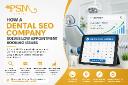
Low appointment bookings are one of the most common challenges faced by dental clinics today. Even practices with excellent services, modern equipment, and experienced dentists can struggle to attract consistent patient flow.
In a highly competitive market, simply having a website is not enough; it needs to be visible, engaging, and strategically optimized to convert visitors into booked appointments.
This is where a dental SEO company plays a critical role. By improving your online visibility and optimizing your digital presence, a specialized SEO partner can help turn your website into a patient-generating asset rather than just an online brochure.
Understanding how this process works can help you identify the gaps in your current strategy and take the right steps toward sustainable growth.
Before diving into solutions, it’s important to understand the root causes of low bookings.
Many dental clinics struggle due to limited online visibility. If your practice does not appear on the first page of search results, potential patients are unlikely to find you.
Most users rarely scroll past the top results when searching for services like “dentist near me” or “teeth cleaning.”
Another common issue is poor website performance. Slow loading speeds, outdated designs, or confusing navigation can discourage users from staying on your site, let alone booking an appointment.
Lack of targeted traffic is also a major factor. Attracting visitors who are not actively looking for dental services will not result in conversions. Without proper keyword targeting, your website may receive traffic, but not the right kind.
A dental SEO company addresses all these challenges through a structured and data-driven approach.

One of the primary ways a dental SEO company solves booking issues is by improving your search engine rankings.
When your website ranks higher on search engines, it becomes easier for potential patients to discover your services. SEO experts optimize your website for relevant keywords such as “emergency dentist,” “cosmetic dentistry,” or location-based searches.
This includes on-page optimization, where content, meta tags, headings, and images are aligned with search intent. Off-page strategies like building high-quality backlinks also strengthen your website’s authority.
As your rankings improve, your clinic gains more visibility, leading to increased website traffic and, ultimately, more appointment bookings.
Not all website visitors are equal. A dental SEO company focuses on attracting users who are actively searching for dental services.
By targeting high-intent keywords and phrases that indicate a readiness to book, SEO specialists ensure your website reaches the right audience.
For example, keywords like “book dental appointment,” “same-day dentist,” or “tooth pain treatment near me” signal immediate need.
This targeted approach increases the likelihood of conversions because visitors arriving on your site already have a strong intent to take action.
Local visibility is crucial for dental practices. Most patients prefer clinics that are nearby and easily accessible.
A dental SEO company optimizes your Google Business Profile to improve your presence in local search results and map listings. This includes ensuring accurate contact information, business hours, and service details.
Positive patient reviews are also encouraged and managed as part of the strategy. Reviews play a significant role in building trust and influencing booking decisions.
With a well-optimized profile, your clinic is more likely to appear in the “local pack,” which significantly boosts appointment inquiries.
Driving traffic to your website is only half the job; converting visitors into patients is equally important.
A dental SEO company improves user experience by ensuring your website is fast, mobile-friendly, and easy to navigate.
Clear call-to-action buttons such as “Book Now” or “Schedule Appointment” are strategically placed to guide users.
Landing pages are designed to address patient concerns, provide relevant information, and encourage immediate action. Features like online booking forms, click-to-call buttons, and live chat options further simplify the process.
When users have a seamless experience, they are more likely to book an appointment rather than leave your site.
Content plays a key role in building trust and attracting potential patients.
A dental SEO company develops informative blog posts, service pages, and FAQs that address common patient queries. Topics such as dental procedures, oral health tips, and treatment options help educate visitors while positioning your clinic as an authority.
Well-written content also improves search rankings by incorporating relevant keywords naturally. This dual benefit of visibility and trust leads to higher engagement and more bookings.
Technical issues can silently impact your website’s performance and visibility.
A dental SEO company conducts a thorough audit to identify and fix problems such as broken links, slow page speeds, poor mobile compatibility, and indexing errors. These issues can prevent your website from ranking effectively, even if the content is strong.
By resolving these technical barriers, SEO experts ensure that search engines can crawl and index your site properly, improving overall performance and visibility.
Trust is a major factor in healthcare decisions, including dental care.
A dental SEO company helps build credibility by showcasing patient testimonials, before-and-after images, and professional credentials. Consistent branding and accurate information across all online platforms also reinforce trust.
When potential patients feel confident in your expertise and reliability, they are more likely to choose your clinic over competitors.
Local SEO is especially important for dental clinics, as most patients search for nearby services.
A dental SEO company optimizes your website for location-based keywords and ensures your business is listed in relevant directories. Consistent name, address, and phone number (NAP) information across platforms improves your local rankings.
Additionally, creating location-specific landing pages helps attract patients from different areas within your service region.
These strategies ensure that your clinic appears in front of potential patients exactly when they are searching for dental services nearby.
SEO is not a one-time effort; it requires ongoing monitoring and optimization.
A dental SEO company tracks key performance metrics such as website traffic, keyword rankings, and conversion rates. This data-driven approach helps identify what is working and what needs improvement.
Regular updates and adjustments ensure that your strategy remains effective and aligned with changing search engine algorithms and patient behavior.
This continuous optimization leads to sustained growth in appointment bookings over time.
All these strategies work together to create a strong online presence.
Higher visibility brings more visitors to your website. Improved user experience keeps them engaged. Targeted keywords attract the right audience. Trust-building elements encourage them to take action.
The result is a steady increase in appointment bookings without relying solely on paid advertising.
SEO provides long-term value by creating a consistent flow of organic traffic and potential patients.
Low appointment bookings can significantly impact the growth of a dental practice, but the right digital strategy can turn things around.
A dental SEO company addresses the root causes of poor visibility, weak user experience, and low conversion rates through a comprehensive approach.
By improving search rankings, targeting the right audience, optimizing local presence, and enhancing website performance, SEO transforms your online presence into a powerful patient acquisition tool.
At PSM Digital Agency, we specialize in helping dental practices overcome booking challenges with tailored SEO strategies that deliver measurable results.
If you're looking to increase patient inquiries and grow your clinic, our team is ready to help you achieve consistent and sustainable success.
Get in touch with us today and start turning your website into a reliable source of new patient appointments.
As the digital landscape rises the bar, dental clinics need more than just a website to attract new patients. Paid advertising, particularly through Google Ads, has become one of the most effective ways to generate immediate visibility and high-quality leads.
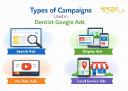
For clinics investing in dentist Google Ads, understanding the different campaign types is essential. Each campaign serves a unique purpose, targeting potential patients at different stages of their decision-making journey.
A well-structured strategy often combines multiple campaign types to maximise reach, engagement, and conversions.
Google Ads allows dental practices to appear at the top of search results when potential patients are actively looking for services.
Unlike organic marketing, which takes time, paid campaigns deliver instant visibility. They also offer precise targeting based on location, keywords, demographics, and user intent.
This makes Google Ads a powerful tool for driving appointment bookings and growing your practice.
Search campaigns are the foundation of most dental advertising strategies.
These ads appear on Google search results when users type in specific keywords such as “dentist near me” or “teeth cleaning.” They target users with high intent, meaning they are actively looking for dental services.
Search campaigns are highly effective for generating immediate leads and bookings.
Display campaigns focus on visual advertising across websites within Google’s network.
These ads appear as banners or images on various websites, helping increase brand awareness. While they may not always generate immediate bookings, they keep your clinic visible to potential patients.
Display campaigns are particularly useful for remarketing and staying top-of-mind.
Local campaigns are essential for dental clinics targeting nearby patients.
These ads appear in Google Maps and local search results, making it easier for users to find your clinic. They often include important details such as location, contact information, and directions.
For clinics relying on local traffic, this campaign type is highly valuable.
Not every website visitor books an appointment on their first visit.
Remarketing campaigns target users who have previously interacted with your website or ads. By showing them relevant ads as they browse online, you can encourage them to return and complete their booking.
This approach improves conversion rates and maximises the value of your traffic.
Video campaigns allow dental clinics to engage audiences through visual storytelling.
These ads appear on YouTube and can showcase services, patient testimonials, or educational content. Video ads help build trust and credibility, which are important factors in healthcare decisions.
They are particularly effective for brand building and patient education.
Performance Max campaigns use automation and machine learning to optimise ad performance across multiple Google platforms.
These campaigns combine search, display, YouTube, and other channels into a single campaign. Google’s algorithm determines the best placements to achieve your goals, whether it’s lead generation or brand awareness.
This campaign type is ideal for clinics looking for a comprehensive, data-driven approach.
Call-only campaigns are designed to drive direct phone calls.
Instead of directing users to a website, these ads encourage them to call your clinic immediately. This is particularly useful for urgent services such as emergency dental care.
Call-only campaigns are highly effective for generating quick leads.
While less common for service-based clinics, shopping campaigns can be used if your practice sells dental products.
These ads display product images, prices, and details directly in search results. They are useful for clinics offering items such as teeth whitening kits or oral care products.
Branded campaigns target users searching specifically for your clinic name.
These campaigns ensure that your practice appears prominently when someone looks for your brand. They also help protect your visibility from competitors who may bid on your brand keywords.
Branded campaigns are essential for maintaining control over your online presence.
Some campaigns focus on targeting users searching for competing dental clinics.
By bidding on competitor keywords, your ads can appear as an alternative option. This strategy can help attract patients who are comparing different providers.
However, it requires careful management to ensure cost-effectiveness.
The most effective dentist Google Ads strategies do not rely on a single campaign type.
Instead, they combine multiple campaigns to target patients at different stages — from awareness to decision-making. For example, search campaigns capture high-intent users, while display and video campaigns build brand recognition.
A well-balanced approach ensures consistent visibility and better results.
Running successful Google Ads campaigns requires expertise.
From keyword research and ad copywriting to bid management and performance tracking, every element must be optimised. Poorly managed campaigns can lead to wasted budget and low returns.
Working with professionals ensures that your campaigns are strategically designed and continuously improved.
Google Ads offers a wide range of campaign types, each designed to achieve specific marketing goals. For dental clinics, understanding these options is key to building an effective advertising strategy that drives patient growth.
From search and local campaigns to video and remarketing, each type plays a role in attracting and converting potential patients.
At PSM Digital Agency, we specialise in creating high-performing dentist Google Ads campaigns tailored to dental practices. Our data-driven approach ensures maximum visibility, better leads, and measurable results.
Contact us today to elevate your dental marketing with expertly managed Google Ads campaigns.
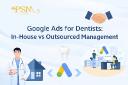
Running Google Ads can be one of the fastest ways for dental clinics to attract new patients. When done correctly, it brings in targeted enquiries, increases visibility, and supports steady growth.
But one key decision clinics often struggle with is this: Should Google Ads be managed in-house or outsourced to professionals?
Both approaches have their advantages and limitations. The right choice depends on time, expertise, budget, and long-term goals.
For clinics investing in Google Ads for dentists, understanding this difference helps in making a more informed and strategic decision.
Understanding What Google Ads Management Involves
Before comparing options, it is important to understand what managing Google Ads actually requires.
It is not just about setting up campaigns.
Effective management includes:
This ongoing process requires both time and expertise.
In-house management means handling Google Ads within your clinic.
This could involve the clinic owner, a staff member, or an internal marketing team managing campaigns directly.
One of the main advantages of in-house management is control.
You can make immediate changes, adjust budgets, and align campaigns directly with your clinic’s priorities.
Internal teams understand the clinic’s services, tone, and patient expectations better.
This can help in creating messaging that feels more personalised and aligned with the brand.
Managing Google Ads requires consistent attention. For dental clinics, balancing patient care and marketing can become difficult. Campaigns may not receive the level of focus they need.
Google Ads is constantly evolving. Without specialised knowledge, it is easy to miss optimisation opportunities or make costly mistakes. This can lead to higher ad spend with lower returns.
Understanding data and improving performance requires experience. Without proper tracking and analysis, campaigns may run without delivering meaningful results.
Outsourcing involves working with a professional agency or specialist.
They handle all aspects of Google Ads, from strategy to execution and optimisation.
Agencies bring experience and industry knowledge. They understand what works, what does not, and how to adjust campaigns based on performance data.
Outsourced management follows a structured approach. Campaigns are planned, tested, and optimised regularly to improve results.
With professional management, campaigns are optimised continuously. This leads to better targeting, improved conversion rates, and more efficient use of budget.
Outsourcing allows clinic owners and staff to focus on patient care. Marketing is handled by experts, reducing internal workload.
Agencies often use advanced tools for tracking and analysis. These insights help in making data-driven decisions and improving campaign performance.
When working with an external team, changes may take time.
Communication is required for updates and approvals.
Professional services involve additional cost.
However, this cost is often balanced by improved performance and reduced wasted ad spend.
Many clinics focus only on cost when choosing between in-house and outsourced management.
However, value is more important.
In-house management may seem cost-effective, but poor performance can lead to wasted budget. Outsourcing may involve a higher upfront cost but often delivers better returns.
The focus should be on results rather than just expense.
In-house management may be suitable if:
Outsourcing is often better if:
Some clinics choose a hybrid approach.
They manage certain aspects internally while outsourcing the strategy or optimisation. This provides a balance between control and expertise.
Regardless of the approach, Google Ads requires ongoing effort.
Campaigns need regular updates based on performance, competition, and market trends. Without optimisation, results can decline over time.
Consistency is key to success.
The way Google Ads is managed directly affects growth.
Well-managed campaigns bring consistent patient enquiries, while poorly managed ones waste budget and reduce confidence in marketing.
Choosing the right approach ensures sustainable results.
Managing Google Ads for dentists is not just about running ads. It is about strategy, optimisation, and consistent performance.
In-house management offers control but requires time and expertise. Outsourcing provides professional support and better efficiency, but involves cost.
The right choice depends on your clinic’s resources and goals.
If you are looking to improve results with Google Ads for dentists, working with Google ad experts at PSM Digitak Agency can help you achieve better performance, smarter budget use, and consistent patient enquiries through well-managed campaigns.
Getting consistent patient bookings is one of the biggest challenges for any dental clinic. You may offer the best treatments and have a well-equipped setup, but if patients cannot find you online, your appointment calendar will stay inconsistent.
Today, most patients search on Google before choosing a dentist. Whether it is for routine cleaning or urgent treatment, visibility plays a major role in decision-making.
For clinics looking to grow, two strategies are commonly considered: Google ads for dental clinic and SEO. Both help you appear on Google, but they work very differently.
Understanding how each one works and how fast they deliver results can help you choose the right approach for your clinic.
Google Ads is a paid advertising platform that allows your clinic to appear at the top of search results instantly.
When someone searches for services like “dentist near me” or “tooth pain treatment,” your ad can show above organic results.
How Google Ads Works
Google Ads runs on a bidding system.
You select keywords related to your services, set a budget, and create ads. When someone searches using those keywords, your ad appears, and you pay only when someone clicks on it.
This makes it a quick way to attract potential patients who are actively searching.
Typical Results Timeline
Google Ads is known for speed.
Once your campaign is live, your clinic can start appearing in search results within a few hours. In many cases, clinics begin receiving calls or booking inquiries on the same day.
This is why Google Ads is often considered the fastest way to generate leads.
SEO, or Search Engine Optimization, focuses on improving your website’s organic ranking on Google.
Instead of paying for visibility, you build it over time by optimizing your website and content.
How SEO Works
SEO involves multiple elements working together:
Google analyzes your website and ranks it based on relevance, quality, and trust.
Typical Results Timeline
SEO takes time to show results.
In most cases, noticeable improvements begin within 3 to 6 months. For competitive areas, it may take longer to achieve top rankings.
However, once your website starts ranking, it continues to bring traffic without ongoing ad costs.
The biggest difference between the two is speed.
Immediate vs Long-Term Results
Google Ads delivers immediate visibility. Your clinic can appear at the top of search results almost instantly after launching a campaign.
SEO, on the other hand, builds gradually. It takes time for Google to recognize and rank your website.
If your goal is quick patient bookings, Google Ads clearly works faster.
However, if your goal is sustainable growth, SEO becomes more valuable over time.
Understanding cost is important when choosing between Google Ads and SEO.
Google Ads Cost Structure
With Google Ads, you pay for every click.
The cost per click depends on competition and location. In the dental industry, keywords can be competitive, which increases the cost.
Once you stop running ads, your visibility disappears.
SEO Cost Structure
SEO requires an upfront investment in optimization and content.
However, once your website ranks well, it continues to attract traffic without paying for each click.
Over time, SEO becomes more cost-effective compared to paid ads.
Both strategies can bring patients, but the intent may vary slightly.
Google Ads Leads
Google Ads targets high-intent users.
These are people actively searching for services and ready to take action. This is especially useful for emergency or urgent treatments.
SEO Leads
SEO attracts both informational and high-intent users.
Patients often explore multiple options, read content, and build trust before booking. This results in more informed and long-term patients.
Dental services are location-based, which makes local visibility extremely important.
Google Ads for Local Targeting
Google Ads allows precise location targeting.
You can show ads only to users in your service area, ensuring that your budget is spent on relevant audiences.
SEO for Local Rankings
SEO helps your clinic appear in local search results and Google Maps.
Optimizing your Google Business Profile, collecting reviews, and maintaining accurate information improve your local presence.
Both strategies are important for attracting nearby patients.
Google Ads is ideal in situations where speed is important.
Best Use Cases
It helps you get instant visibility without waiting for rankings.
SEO is more suitable for long-term growth.
Best Use Cases
It creates a stable foundation for your clinic’s growth.
The most effective strategy is not choosing one over the other.
It is using both together.
How the Combination Works
Google Ads brings immediate traffic and quick bookings.
SEO builds long-term visibility and reduces overall marketing costs.
While ads deliver fast results, SEO ensures sustainability.
This combination allows your clinic to grow steadily while maintaining a consistent flow of patients.
Google ads for dental clinic and SEO both play an important role in growth.
If speed is your priority, Google Ads is the fastest way to start getting patient inquiries. It delivers immediate visibility and quick results.
SEO, while slower, builds long-term growth and helps you maintain a consistent online presence.
The right strategy depends on your current goals, budget, and growth plans.
At PSM Digital Agency, we help dental clinics find the right balance between Google Ads and SEO to maximize patient bookings and long-term success.
If you are looking to grow faster while building a strong online presence,
let’s create a strategy that brings real patients to your clinic.