


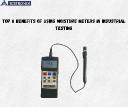
Moisture content is one of the most critical factors affecting the mechanical properties of many different materials. Too much or too little moisture in a particular material can negatively impact the strength, durability, look and feel, and usefulness of that material. Moisture meters, therefore, have become a very important tool in the industrial environment; knowing how to use these tools and what they can offer to industrial manufacturers, testing labs, and QC departments has enabled manufacturers to make informed decisions related to product specifications and maintain a level playing field regarding adherence to the same industry standards.
Below are the top six benefits of using moisture meters in industrial testing.
One of the primary benefits of moisture meters is their ability to provide accurate and reliable moisture readings. In industries such as packaging, construction, paper, textiles, and plastics, moisture levels directly influence material properties.
Accurate moisture measurement allows testing teams to evaluate whether materials meet required specifications before processing or final use. This reduces variability in production and ensures that only materials within acceptable moisture ranges are approved, improving overall quality consistency.
Excess moisture can lead to serious material defects such as warping, cracking, corrosion, mold growth, or reduced mechanical strength. Moisture meters help detect these risks early in the testing phase.
By monitoring moisture levels, industries can take corrective actions before materials are used in manufacturing or storage. This proactive approach minimizes material damage, reduces waste, and protects the integrity of finished products across different industrial applications.
Effective process control depends on precise input parameters, and moisture content is a key factor in many industrial processes. Understanding moisture meter uses helps manufacturers optimize processes such as drying, curing, coating, and molding.
When moisture levels are maintained within controlled limits, production processes become more efficient and predictable. This leads to reduced rework, fewer interruptions, and improved operational efficiency, ultimately supporting better throughput and cost management.
Many industries operate under strict quality and regulatory standards that specify acceptable moisture levels for raw materials and finished products. Inconsistent or undocumented moisture data can lead to non-compliance and rejected batches.
Using moisture meters enables accurate documentation and traceability of test results. This supports compliance with industry standards, customer specifications, and audit requirements, making moisture measurement an essential part of quality assurance and regulatory readiness.
Material waste and reprocessing significantly increase production costs. Moisture-related defects often result in rejected products, additional testing, or remanufacturing.
Moisture meters help identify moisture issues at an early stage, allowing corrective measures before significant resources are invested. Over time, this leads to substantial cost savings by reducing waste, minimizing rework, and improving overall production yield.
One of the major advantages of moisture meters is their wide range of applications. From testing raw materials to inspecting finished goods, moisture meters are used across diverse industries.
Common moisture meter uses include evaluating paper and board, wood and construction materials, powders and granules, textiles, and packaging products. This versatility makes moisture meters a valuable investment for industries that require consistent quality control across different material types.
Testronix Instruments is a trusted provider of material testing solutions, offering reliable and accurate moisture meters designed for industrial testing environments. Their instruments are developed to deliver consistent performance, user-friendly operation, and precise moisture measurement across various materials. With a strong focus on quality, durability, and testing accuracy, Testronix Instruments supports manufacturers and testing laboratories in maintaining high-quality standards and improving process reliability.
Moisture meters play a vital role in industrial testing by ensuring accurate material assessment, preventing defects, and supporting efficient production processes. From improving quality control and compliance to reducing waste and enhancing versatility, the benefits of understanding and applying moisture meter uses are significant. By integrating reliable moisture measurement tools into testing workflows and leveraging trusted solutions from providers like Testronix Instruments, industries can achieve greater consistency, efficiency, and confidence in their product quality.