


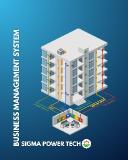
Ever wondered what makes a smart building tick? A Building Management System is the behind-the-scenes hero, coordinating everything from air flow to lighting. In this post, we'll unpack the key components of a Building Management System, showing how they team up to keep offices efficient and comfortable—perfect for busy setups in places like Delhi.
Building managers often scratch their heads over uneven temperatures or surprise energy spikes. A Building Management System solves that by linking its parts into one smooth operation. Knowing these pieces helps you pick the right setup and spot value from a solid BMS company.
Studies from building experts highlight that offices with a full BMS system see energy savings of 20-30%. It's not magic—it's these components working hand in hand as a reliable BMS building maintenance system. Let's dive in.
Sensors are the starting point in any Building Management System. These small devices dot your building, watching temperature, humidity, motion, and even light levels. When a meeting room fills up, occupancy sensors notice and signal the rest of the BMS system to adjust cooling or lights.
In commercial spaces, they're lifesavers. No more guessing if a hallway's empty—the Building Management System knows and acts. A good BMS company like Sigma Power Tech picks durable sensors built for India's dusty, humid conditions, ensuring they last.
One report notes sensors alone can cut lighting waste by 15% in offices. Simple yet powerful.
Next up are controllers, the brains of your Building Management System. They grab data from sensors and crunch it against your rules—like "keep lobbies at 23°C during business hours." Then, they send orders to fans, valves, or switches.
Think of them as traffic cops in a BMS system, directing flow without jams. In larger buildings, multiple controllers handle zones, making the whole BMS building maintenance system flexible. Sigma Power Tech customizes these for seamless fits, avoiding common setup headaches.
Industry data shows controllers boost response times by 40%, keeping everything steady.
No Building Management System shines without software. This is the user-friendly hub—a screen or app—where you see real-time stats, set schedules, and get alerts. Spot a power hog in the basement? Tweak it from your desk.
Modern BMS systems often go cloud-based, letting remote checks for multi-site owners. As part of a BMS building maintenance system, it logs trends, helping predict busy seasons. Clients tell us this visibility alone drops surprise costs by 25%.
A trusted BMS company ensures intuitive interfaces—no steep learning curves.
Sensors sense, controllers decide—actuators do the work in a Building Management System. These are motors, dampers, and relays that physically change things: opening vents, dimming bulbs, or locking doors.
In daily use, they keep comfort spot-on. Hot day? Actuators ramp up AC precisely. This precision in a BMS system prevents overkill, saving energy noted at 30% in user studies.
Sigma Power Tech integrates these reliably, so your Building Management System feels effortless.
What glues everything? Networks. In a Building Management System, wires or wireless links carry data between sensors, controllers, and software. Protocols like BACnet keep it all talking the same language.
For big commercial buildings, robust networks mean no blind spots. Downtime drops as the BMS building maintenance system stays connected. One survey found networked setups reduce faults by 35%.
Top BMS companies future-proof these for easy expansions, like adding EV chargers later.
People forget this, but the interface—keyboards, touch panels, apps—is vital in a Building Management System. It lets staff override autos, like boosting heat for a late event.
User-friendly designs mean quick training. In India’s fast offices, this keeps teams productive. As a BMS system feature, mobile access shines for on-the-go managers.
Reports show intuitive interfaces cut errors by 20%, proving ease matters.
Offices battle waste, discomfort, and breakdowns. A full Building Management System fixes them:
Delhi clients using our setups report 28% savings first year. Real wins from smart parts.
Not all pieces fit every building. A BMS company assesses your space—size, age, needs—then matches components. Scalable? Check. Compatible with old gear? Essential.
Sigma Power Tech stands out, blending global standards with local tweaks. We handle installs with zero downtime, backing it with support.
Payback? Often 2 years, per facility studies.
Keep components sharp with checks. Clean sensors, update software yearly. A BMS system thrives on this, extending life.
As a BMS building maintenance system, built-in diagnostics help. Partner with a BMS company for plans—prevent big fixes.
The key components of a Building Management System—sensors, controllers, software, actuators, networks, and interfaces—create efficiency magic. Your BMS system runs lean, saving cash and stress.
Don't settle for patchwork fixes. As your go-to BMS company, Sigma Power Tech delivers complete Building Management System solutions. Ready to upgrade? Let's chat—your building's potential awaits.

One of the main problems we face now is climate change. One of the main causes is carbon dioxide (CO₂), a gas that is released into the air when we burn fossil fuels like coal, oil, and gas. Over time, this gas builds up in the atmosphere and traps heat, causing the planet to warm. To fight this problem, we need more than just reducing emissions. Additionally, the existing CO₂ must be eliminated. That’s where a CO2 removal system comes in.
The purpose of a CO2 removal system is to extract carbon dioxide from the air and store it in a safe place where it won't make global warming worse. This helps to clean the air and reduce the impact of climate change. These systems can work in different ways—some use nature, while others use machines.
There are a few ways a CO2 removal system can support the fight against climate change:
Examples of CO2 Removal Systems
To avoid the worst effects of climate change, we must act fast. Reducing emissions is important, but it’s only part of the solution. A CO2 Removal system gives us another tool to protect the planet and secure a better future for the next generation.