


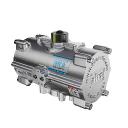
Pneumatic actuators are widely used in industrial automation because they convert compressed air into controlled mechanical movement. They can provide fast, repeatable, and dependable motion for applications involving valve operation, material handling, clamping, positioning, and automated machinery. However, the performance of an automation system depends greatly on selecting an actuator that matches the actual operating requirements.
When working with a pneumatic actuator supplier in india, buyers should consider more than actuator size. Operating pressure, required force or torque, stroke length, rotation angle, cycle frequency, air quality, mounting arrangement, and environmental conditions all influence the suitability of an actuator. A properly selected unit can help improve operational consistency and reduce unnecessary maintenance.
A pneumatic actuator receives compressed air and converts the air pressure into mechanical movement. Depending on its construction, this movement can be linear or rotary.
Linear actuators are commonly used for pushing, pulling, lifting, clamping, and positioning tasks. Rotary actuators are frequently used for operating quarter-turn valves and equipment that requires controlled rotational movement.
The actuator must generate sufficient force or torque for the connected equipment. If it is undersized, the system may experience incomplete movement, slow operation, or failure under load. Oversizing can also create unnecessary equipment and energy costs.
Several operating conditions should be evaluated before choosing an actuator.
These factors should be evaluated together rather than individually. A balanced selection can contribute to smoother and more consistent automation performance.
One of the most common applications for rotary pneumatic actuators is automated valve operation. Pneumatic actuators can operate quarter-turn valves by producing the required rotational torque.
They are commonly paired with butterfly and ball valves in industrial piping systems. When integrated with suitable control components, the actuator can respond to signals from an automated control system.
Proper sizing is particularly important in valve automation. The actuator must provide enough torque to overcome valve operating resistance under the actual pressure and media conditions.
Pneumatic actuators can be designed for single-acting or double-acting operation.
A single-acting actuator uses compressed air to move in one direction while a spring mechanism returns it to another position. This arrangement can be useful where a defined position is required when the air supply is interrupted.
A double-acting actuator uses compressed air for movement in both directions. It can provide controlled powered movement during both operating cycles and is suitable for many industrial automation applications.
The appropriate configuration depends on the required movement sequence and process requirements.
The quality of compressed air can have a significant effect on pneumatic actuator performance. Moisture, dust, and other contaminants can enter the actuator and contribute to wear or inconsistent operation.
Proper air preparation can help remove contaminants and maintain suitable pressure. Filtration and regulation equipment can provide cleaner and more consistent air to the actuator.
Adequate airflow is also important. Undersized tubing, restricted fittings, or insufficient air supply can reduce actuator speed and affect the response of automated equipment.
Different industrial processes require different actuator speeds. Some applications need rapid movement, while others require controlled and gradual operation.
Actuator speed can be influenced by air pressure, flow restrictions, load, tubing dimensions, and actuator design. Flow control devices can be used to regulate airflow and adjust movement speed.
Controlled motion can be particularly important in applications where sudden movement could damage equipment or affect product quality.
Actuator construction should match the environment in which the equipment will operate. Aluminum is often used where lightweight construction is beneficial, while stainless steel may be considered for environments where additional corrosion resistance is required.
Seal materials should also be suitable for the operating temperature and surrounding conditions. Exposure to chemicals, moisture, extreme temperatures, or abrasive environments may require specialized construction.
Selecting materials based on actual conditions can help support longer service life and reduce component replacement.
Correct installation is essential for reliable pneumatic actuator operation. The actuator should be properly aligned with the connected mechanism to avoid excessive side loading or mechanical stress.
Air connections should be secure, and tubing should be appropriately sized. The actuator should also be installed in a position that allows convenient inspection and maintenance.
Regular maintenance can include checking air connections, seals, mounting hardware, and movement. Unusual noise, leakage, slow operation, or inconsistent movement may indicate a developing problem.
The right pneumatic actuator can contribute to improved automation performance by providing predictable movement and reliable operation. Proper sizing can help reduce incomplete cycles, unnecessary air consumption, and mechanical stress.
For automated production environments, consistent actuator performance can also support repeatable machine sequences. This can be especially useful where equipment operates continuously or performs frequent repetitive movements.
A well-designed pneumatic system should therefore consider the actuator as part of the complete automation arrangement rather than as an isolated component.
Mark & Aira Trading LLC is associated with industrial valve and automation solutions. When evaluating pneumatic actuator options, businesses should still assess technical specifications, application requirements, and system compatibility to determine the appropriate configuration for their particular installation.
Conclusion
Pneumatic actuator selection has a direct influence on the performance and reliability of automated equipment. Force or torque requirements, operating pressure, movement, cycle frequency, air quality, materials, environmental conditions, and installation all need to be considered before making a selection.
A correctly matched actuator can provide dependable motion, efficient valve operation, and consistent performance across many industrial applications. Combining suitable actuator sizing with clean compressed air, proper installation, and regular maintenance can help automation systems operate more efficiently and reliably over the long term.