


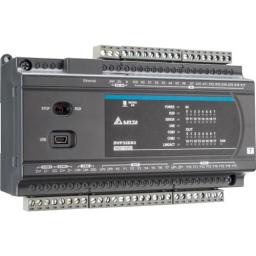
Automation is no longer optional in modern manufacturing; it’s essential for efficiency, consistency, and scalability. One of the key technologies driving this shift is the Delta PLC (Programmable Logic Controller).
Known for reliability and flexibility, Delta PLC systems are widely used across industries to streamline operations and reduce manual dependency.
If you’re exploring automation solutions, understanding where and how Delta PLC is applied can help you make more informed decisions for your production setup.
A Delta PLC is an industrial control system designed to automate machines and processes. It receives input signals from sensors, processes the data based on programmed logic, and controls outputs such as motors, valves, and actuators.
What makes Delta PLC particularly useful in manufacturing is its ability to:
This allows manufacturers to maintain consistent production quality while improving overall efficiency.
One of the most common applications of Delta PLC is in automated production lines.
In manufacturing environments, multiple processes need to work in sync, from material feeding to assembly and packaging. Delta PLC ensures that each step happens at the right time and in the correct sequence.
For example, in an assembly line, the PLC can control conveyor belts, robotic arms, and sensors simultaneously. This reduces human error and ensures smooth workflow, especially in high-volume production setups.

Precision is critical in manufacturing, and even small errors can lead to material waste or product defects.
Delta PLC systems provide accurate control over machinery by constantly monitoring inputs and adjusting outputs in real time. Whether it’s controlling temperature, pressure, or speed, the PLC ensures that operations stay within defined parameters.
This level of control improves product quality and reduces the chances of inconsistencies.
Packaging is another area where Delta PLC plays a significant role.
From filling and sealing to labeling and sorting, PLC systems automate repetitive tasks with speed and accuracy. They also help coordinate different machines involved in the packaging process, ensuring everything runs smoothly.
In material handling, Delta PLC controls systems like conveyors, lifts, and automated storage units. This reduces manual labour and improves efficiency in moving goods across the facility.
Manufacturers today are not just focused on output; they also want to reduce operational costs.
Delta PLC helps optimize energy usage by controlling when and how machines operate. For instance, it can shut down idle equipment or adjust motor speeds based on load requirements.
Over time, this leads to significant energy savings and lower production costs, making operations more sustainable.
Modern manufacturing is moving towards smart factories, where systems are interconnected and data-driven.
Delta PLC can integrate with Industrial IoT (IIoT) platforms, allowing real-time monitoring and data analysis. This enables manufacturers to:
With this level of insight, decision-making becomes faster and more accurate.
Unexpected machine breakdowns can disrupt production and lead to losses.
Delta PLC systems help minimize downtime by enabling predictive maintenance. They can detect irregularities in machine performance and alert operators before a failure occurs.
This proactive approach helps maintain continuous production and reduces costly interruptions.
One of the strengths of Delta PLC is its adaptability.
It is used across various manufacturing sectors, including:
Each industry has different requirements, but Delta PLC can be customized to suit specific processes and operational needs.
Manufacturers choose Delta PLC not just for automation, but for its long-term value.
It offers:
This makes it a practical choice for both small-scale and large-scale manufacturing units.
The role of Delta PLC in manufacturing industries continues to grow as businesses move towards smarter, more efficient operations.
From production line automation to energy optimisation and real-time monitoring, its applications are wide-ranging and impactful.
If you’re looking to implement or upgrade automation systems, working with the right technology partner is essential.
Luova provides advanced industrial automation solutions, helping manufacturers integrate Delta PLC systems effectively and improve productivity with reliable, future-ready setups.
| No comments yet. Be the first. |
