


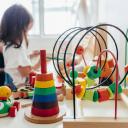
If you’ve ever watched your child lose interest in a flashing plastic toy within minutes, you’re not alone. Many parents searching for screen-free alternatives eventually rediscover wooden toys for kids — not as a trend, but as a practical solution for deeper learning and calmer play.
In a world filled with overstimulation, simple materials often support stronger child development. Whether you’re focused on early childhood education, homeschooling, or preschool learning, choosing the right kind of play tools matters more than the quantity you own.
In this guide, we’ll break down what actually matters and how to approach it the right way.
Before talking about what to buy, it helps to understand why wooden materials have stood the test of time.
Unlike single-function electronic toys, wooden learning toys rarely dictate how they must be used. A set of blocks can become a tower, a bridge, a zoo enclosure, or a counting tool. This flexibility strengthens problem-solving, spatial awareness, and imagination — all essential for early childhood development.
Many preschool teachers notice that when classrooms reduce noise-heavy toys, children engage longer. Natural textures and neutral designs reduce distraction, supporting sustained attention — a skill that directly impacts school readiness.
This is why Montessori learning environments consistently prioritize hands-on, natural materials for foundational skills.
Not all toys labeled “educational” truly serve a learning purpose. Here’s a practical framework to help parents and educators choose wisely.
Before purchasing, ask: What skill does this develop?
Look for toys that support:
Fine motor coordination (stacking rings, peg boards)
Early math concepts (counting beads, shape sorters)
Language development (storytelling figures, alphabet tiles)
Problem-solving (simple puzzles)
When you match toys to developmental milestones, play becomes intentional rather than random.
A common mistake in homeschooling and preschool education is offering too many options at once.
Children engage more deeply when choices are limited. Rotate materials every few weeks instead of displaying everything.
For example, instead of ten different puzzle types, offer one well-designed wooden puzzle and observe how your child interacts with it over several days. You’ll likely see problem-solving improve through repetition.
A battery-operated car does one thing. A set of wooden blocks does hundreds.
Open-ended educational play encourages:
Creativity
Social interaction
Independent thinking
Emotional regulation
If you’re unsure what qualifies as developmentally supportive design, this helpful resource on natural play materials (https://yourwebsite.com) explains how thoughtfully made tools align with early learning principles without overwhelming children.
Keep the focus on adaptability rather than entertainment value.
Large stacking blocks
Shape sorters
Simple knob puzzles
These support hand-eye coordination and sensory exploration.
Pattern blocks
Counting frames
Pretend-play kitchen sets
These enhance early math skills and imaginative development.
Construction sets
Strategy-based board games
DIY craft kits
These promote logical thinking and persistence — key for long-term academic growth.
One homeschooling parent replaced a loud interactive tablet toy with three wooden items: a balance board, alphabet tiles, and building blocks.
Within two weeks:
Independent play time increased
Sibling conflicts decreased
Reading practice became more playful
The materials didn’t “teach” directly. They created space for curiosity to emerge.
That’s the difference.
Start with 5–8 high-quality toys instead of 20 plastic ones
Keep toys visible on low shelves to encourage independence
Observe how your child plays before adding new materials
Choose neutral designs that allow imagination to lead
Rotate toys monthly to maintain engagement
These small adjustments often produce noticeable improvements in focus and creativity.
Today’s children are growing up surrounded by fast-paced stimulation. Intentional toy choices help restore balance.
For parents focused on child development, preschool readiness, or homeschool structure, wooden toys for kids offer more than nostalgia — they support foundational skills through tactile, meaningful interaction.
They aren’t magical solutions. But when chosen thoughtfully, they create an environment where children can think, experiment, and grow at their own pace.
And in early education, that steady growth is what truly lasts.