The moment you open your car door in the UAE summer, you're greeted by a wall of heat like opening an industrial oven. Dashboard thermometers reading 75 degrees Celsius aren't exaggerations; they're brutal reality. Most drivers immediately crank their AC to maximum and suffer through ten minutes of barely tolerable heat. But there are smarter, faster ways to achieve coolness without waiting or wasting fuel.
The conventional wisdom of "turn on AC and wait" ignores thermal dynamics research and cooling techniques that can slash your heat-to-comfort time by more than half. Understanding how heat accumulates and which interventions make the biggest difference transforms your driving experience from uncomfortable endurance to rapid relief.
Your parked car doesn't just get hot; it becomes a heat trap. The greenhouse effect happens in concentrated form inside your vehicle every day. Sunlight enters through windows, heats interior surfaces, and those surfaces radiate infrared heat that glass traps inside. Meanwhile, your dark dashboard, leather seats, and black steering wheel absorb solar radiation like heating elements.
This heat accumulation follows exponential patterns. During the first hour of sun exposure, your cabin temperature might rise thirty degrees. During the second hour, it climbs another twenty degrees as seats and dashboard reach saturation. By hour three, surface temperatures exceed 85 degrees Celsius on dark materials, hot enough to cause burns on exposed skin within seconds.
The challenge intensifies because modern vehicles are designed for insulation, which works against you during parking. The sealed construction that keeps climate-controlled air inside during driving also prevents natural cooling when parked. Your car becomes a closed system accumulating heat with nowhere for it to escape until you intervene.
Smart cooling begins before you even sit down. Opening all four doors for thirty seconds creates cross-ventilation that purges the hottest air trapped at ceiling level where temperatures are typically ten to fifteen degrees higher than floor level. This simple act costs you nothing but eliminates the initial heat blast.
The strategic sequence matters. Open the driver and passenger doors first to create primary airflow, then crack rear doors to establish circulation. Hot air naturally rises and escapes through upper openings while cooler ground-level air flows in from below. Even slight air movement at this temperature differential creates noticeable relief.
For maximum effect, combine door opening with window operation. Lower all windows completely, but avoid starting the engine immediately. Let natural convection work for twenty to thirty seconds first. This reduces the thermal load your AC must overcome, allowing it to reach comfortable temperatures faster. You're effectively giving your system a head start by removing extreme heat before demanding cooling performance.
Once you start the engine, resist the instinct to set everything to maximum cold. Modern AC systems operate most efficiently when following specific sequences that align with thermodynamic principles. Start with fan speed at medium, temperature at maximum cold, and set the system to fresh air mode rather than recirculation. This counterintuitive step matters because you need to purge superhot cabin air before switching to recirculation.
Drive with windows down for the first sixty to ninety seconds while fresh air mode pushes hot interior air out. Your AC compressor is working during this phase, but instead of fighting to cool 70-degree trapped air, it's processing outside air that's merely 45 degrees. This temperature differential makes the system work more efficiently.
After ninety seconds, close all windows and switch to recirculation mode. Now your AC system is cooling already-processed air rather than constantly fighting fresh hot air intake. The temperature drop becomes dramatically faster. Within three minutes, you should feel genuinely cold air, and within five minutes, the cabin reaches comfortable levels that would have taken ten to twelve minutes using the traditional maximum-everything approach.
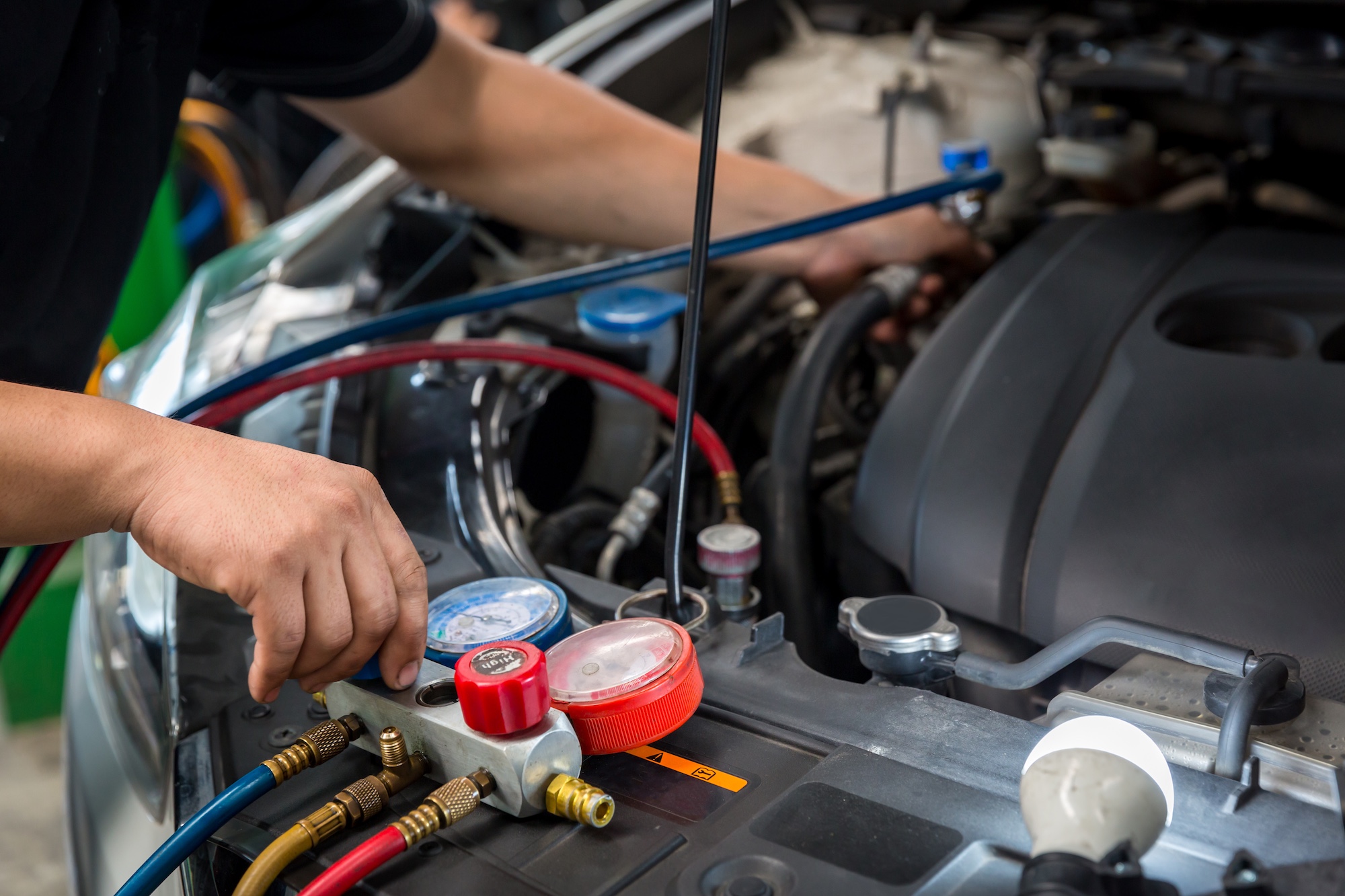
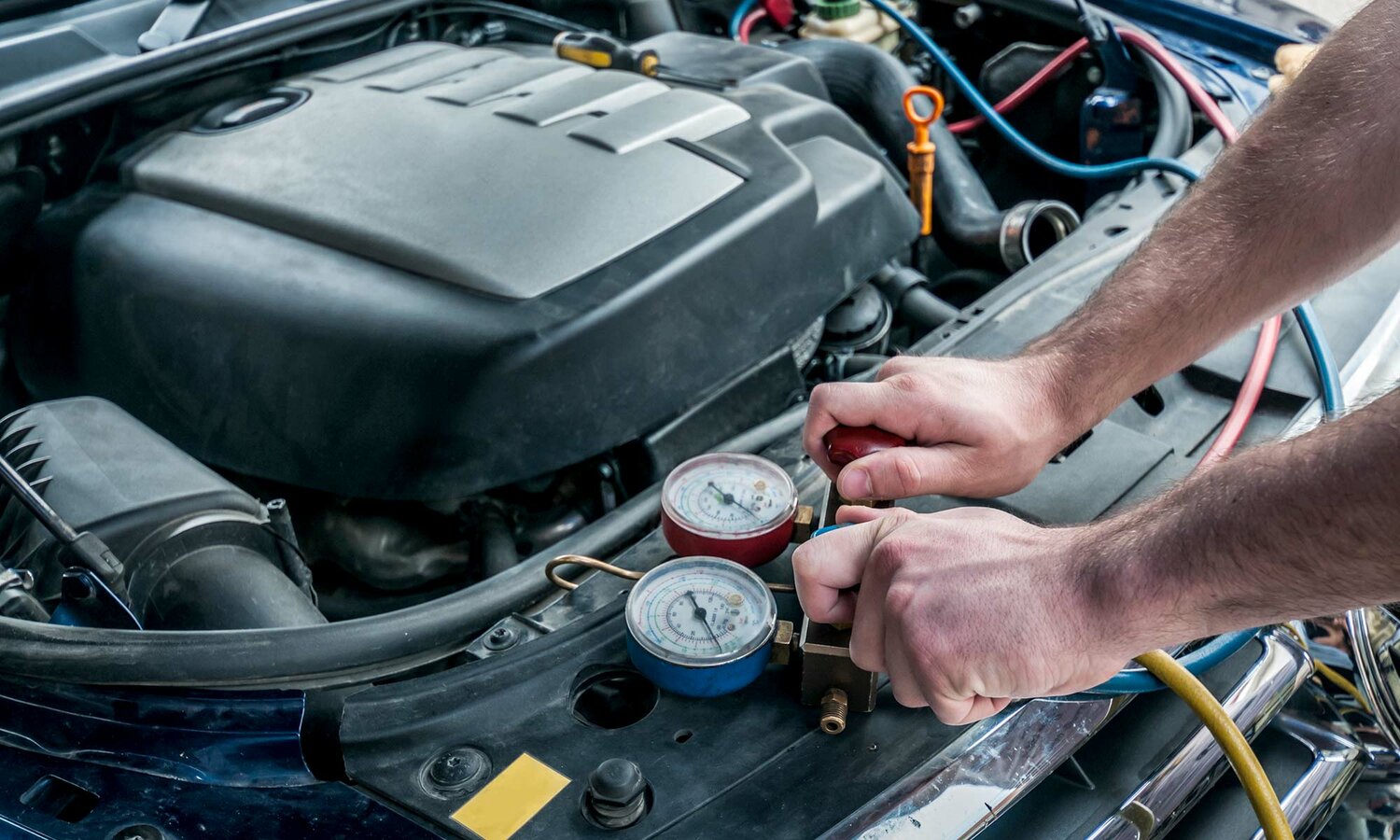
Sometimes the issue isn't your technique but compromised system performance you can't see. Refrigerant leaks represent the most common hidden problem that gradually degrades cooling efficiency over months. You might not notice the decline because it happens slowly, but eventually, your AC takes longer to cool, never quite reaches that crisp coldness, and struggles during the hottest parts of the day.
These leaks occur in components you never see evaporator coils hidden behind dashboards, condenser units in front grilles where road debris causes punctures, or connection points where rubber seals deteriorate under extreme heat. The refrigerant doesn't leak dramatically; it seeps slowly, sometimes taking months to drop below functional levels. Professional Auto AC leak detection Sharjah services use specialized equipment including UV dye injection and electronic sensors to identify microscopic breaches that visual inspection misses.
Addressing leaks before they completely drain your system saves money and prevents secondary damage. When refrigerant levels drop too low, compressors run without adequate lubrication, accelerating wear on expensive components. What starts as a simple leak repair escalates into compressor replacement costing thousands. Regular system checks catch these issues early, ensuring your AC delivers maximum cooling performance exactly when summer heat peaks.
Your AC system battles against heat radiating from every interior surface, and managing those surfaces directly amplifies cooling effectiveness. Steering wheel covers, dash mats, and seat covers made from reflective or light-colored materials can reduce surface temperatures by twenty to thirty degrees. This translates to the difference between surfaces too hot to touch and surfaces merely warm.
Windshield sun shades deserve particular attention because your windshield represents the largest single glass surface admitting solar radiation. Quality reflective shades can reduce interior temperature by fifteen degrees during parking, translating to faster cooling when you return. The investment costs less than one tank of fuel but delivers returns every day you park in sunlight.
Consider the thermal mass principle working against rapid cooling. Your seats, dashboard, and door panels store tremendous heat that continues radiating for minutes after AC begins. Leather seats especially act as heat reservoirs, staying uncomfortably hot long after air temperature drops. Ventilated seats address this by removing heat from the surface you're sitting on rather than just cooling surrounding air. For vehicles without this feature, light-colored seat covers provide the next best solution.
Parking location and orientation dramatically affect how much heat your car accumulates, which determines how quickly you can cool it later. Strategic shade hunting goes deeper than just finding any tree. East-facing parking in the morning and west-facing spots in the afternoon minimize direct windshield sun exposure during peak hours.
Underground or covered parking represents the gold standard, reducing interior temperatures by twenty-five to thirty-five degrees compared to open-air parking. If you have choice in parking location, prioritize covered options even if they require longer walks. The minutes saved in cooling time exceed the extra walking.
Time-based strategies also matter for unavoidable sun exposure. If you'll return around 2 PM when sun is most intense, parking on the eastern side of buildings provides afternoon shade. These considerations compound over time, reducing daily heat stress and improving your vehicle's interior condition since extreme heat accelerates material degradation.
Achieving maximum chill in your car isn't about having the most powerful AC system; it's about understanding thermal dynamics and applying strategic interventions. The combination of pre-entry ventilation, proper AC sequencing, surface temperature management, and smart parking reduces cooling time from ten minutes down to five minutes while improving system efficiency.
These techniques require minimal effort once they become habit, yet deliver immediate benefits that transform your driving experience during brutal summer months. They reduce strain on your AC by minimizing the temperature differential it must overcome, extending component life and preventing premature failures. Mastering these strategies puts you in control of your cabin environment.
| No comments yet. Be the first. |