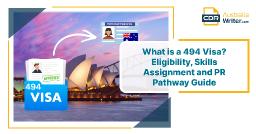

What is a 494 visa? Many skilled professionals ask this when they first hear about Australia's regional employer-sponsored migration pathway.
The 494 visa is officially the Skilled Employer Sponsored Regional (Provisional) visa, which allows regional employers in Australia to sponsor overseas workers for up to five years. Furthermore, it provides a direct pathway to permanent residency after three years of regional employment.
The skilled employer-sponsored regional visa fills a genuine gap in the migration system. Many regional businesses cannot find suitably qualified local workers. Consequently, the 494 visa bridges that gap by bringing skilled professionals into areas where their expertise is genuinely needed.
The 494 visa is a provisional visa valid for five years. It targets skilled workers who accept employment from an approved regional employer in Australia.
Australia introduced this visa on 16 November 2019. It replaced the older Subclass 187 Regional Sponsored Migration Scheme visa. Moreover, the government allocates a maximum of 10,000 places annually under this subclass.
Two streams exist under this visa category. The Employer Sponsored Stream suits most applicants. Additionally, the Labour Agreement Stream applies when employers hold a formal labour agreement with the Department of Home Affairs.
The regional employer sponsored visa for Australia targets specific geographic areas. For migration purposes, regional Australia includes every location outside Sydney, Melbourne, and Brisbane. Notably, Perth, Gold Coast, Canberra, Adelaide, Hobart, and Newcastle all qualify as regional areas.
A successful skills assessment for 494 visa applications is mandatory for most applicants. No skills assessment means no valid nomination. Therefore, this step needs to happen before anything else in the application process.
Each profession uses a different assessing authority. The authority for your occupation is fixed as you cannot choose it. Here is a quick overview:
|
Occupation |
Assessing Authority |
Assessment Type |
|
Engineers |
CDR or Washington Accord Pathway |
|
|
Architects |
Architect Accreditation Council (AACA) |
Portfolio and competency review |
|
IT Professionals |
Australian Computer Society (ACS) |
RPL or skills assessment form |
|
Accountants |
CPA Australia / CAANZ / IPA |
Academic and experience review |
|
Tradespeople |
Trades Recognition Australia (TRA) |
Trade competency assessment |
|
Other professionals |
VETASSESS |
Qualification and employment review |
Engineers face the most demanding skills assessment process. Consequently, they must submit a CDR report to Engineers Australia. This document includes three career episodes, a continuing professional development log, and a summary statement.
The CDR report must be written in the first person. It must describe real engineering projects in detail. Furthermore, every paragraph in the career episodes must map correctly to Engineers Australia's defined competency elements.
Learn More: 494 Visa Australia

The skilled migration visa application process in Australia is one of the most structured and points-driven immigration systems in the world. It is designed to bring in professionals whose qualifications and experience fill genuine gaps in the Australian workforce – and it rewards those who prepare well and understand exactly what is expected of them.
Many overseas professionals assume that having a good degree and several years of work experience is enough to sail through. The Australia skilled visa requirements go further than that. Your occupation needs to appear on the relevant skills list, your qualifications need to be assessed by the right authority, and your points score needs to be competitive enough to receive an invitation to apply.
This guide covers the full picture – the visa types available, how the points test works, what the skills assessment involves, and what commonly goes wrong so you can avoid those mistakes from the start.
Australia uses a points-based skilled migration visa application system managed by the Department of Home Affairs. Unlike some countries where a job offer alone gets you a visa, Australia requires skilled professionals to meet a set of eligibility criteria, score enough points, and, in most cases receive an invitation before they can even lodge a formal application.
The system is competitive. Being eligible is not the same as being selected. Thousands of professionals register their interest every year through a pool called SkillSelect, and only those with the highest points scores receive invitations during regular selection rounds.
At the foundation of the entire system is the Skilled Occupation List Australia. If your occupation does not appear on this list, the skilled migration pathway is not available to you — regardless of your qualifications or how many years of experience you have. Checking this first saves a lot of time and effort going in the wrong direction.
Learn More: Skilled migration visa application
General skilled migration skills assessment is the formal step that determines whether your qualifications and work experience are recognised at Australian standards, and without it, most skilled migration visa pathways simply do not open. Many overseas professionals understand this in theory but find the actual process more involved than they expected when they start preparing their application.
GSM skills assessment Australia covers a wide range of occupations across engineering, architecture, information technology, accounting, health, and many other sectors. The assessing authority, the documents required, and the evaluation criteria all depend on your specific occupation, which means understanding the system at an occupation level, not just a general level, is what separates a well-prepared application from one that struggles.
The general skilled migration skills assessment is an evaluation carried out by a formally recognised assessing authority in Australia. Its job is to confirm that an overseas-trained professional’s qualifications and work history meet the standard expected of someone in that occupation in Australia.
One of the core general skilled migration visa requirements before you can even register your expression of interest through SkillSelect is a positive assessment letter from the relevant authority for your nominated occupation. You cannot bypass or defer this step. The assessment must be completed and a positive result received before thevisa application process can meaningfully begin.
The skilled migration assessment process in Australia is built around the principle that every professional admitted under a skilled visa has been independently verified as meeting local competency standards. This protects Australian employers, maintains professional standards across industries, and ensures that migration outcomes genuinely serve the workforce needs the program is designed to address.
For applicants, the practical consequence is that the quality of your skills assessment submission directly affects your migration timeline. A strong, well-documented application that receives a positive result the first time keeps your entire migration plan on track. A weak application, one that results in a negative outcome or a request for additional information, can add months to the process and in some cases require a completely new submission.
GSM skills assessment Australia outcomes also have a validity period. A positive assessment is generally valid for three years. If your visa application is not lodged within that period, the assessment expires and you need to go through the process again. This is why timing your skills assessment correctly within your overall migration plan matters.
Learn More: General Skilled Migration Skills Assessment

Statement of purpose is one of those documents that sounds straightforward until you actually sit down to write it. Most professionals know roughly what it should contain, as your background, your goals, and why you chose Australia, but turning that knowledge into a document that reads well, stays within limits, and genuinely supports your application is a different challenge altogether.
For engineers, the Engineers Australia statement of purpose carries real weight. It is not just a formality attached to your skills assessment or visa submission. Immigration officers and assessors read these papers very carefully, and a poorly written or unclear statement can make an otherwise strong application look bad.
Writing a Statement of Purpose (SOP) for skilled migration is different from writing an academic SOP or a cover letter for a job application. The tone, structure, and content priorities are all specific to the Australian migration context. Getting these details right from the start will save you a lot of time and trouble later.
A statement of purpose is a written document that you send in with your visa application, skills assessment, or professional recognition application. It tells you about your work history, why you want to move or study in Australia, and what you plan to do when you get there.
Unlike a resume or curriculum vitae, which present information in a structured list format, the statement of purpose is written in prose. It needs to tell a coherent story as one that connects your educational background, your work history, and your future intentions in a way that makes sense to the person reading it.
The statement of purpose for Australia visa applications is particularly important because it is often the only place in the submission where the applicant can speak directly. Every other document, transcripts, references, assessment letters – presents evidence. The SOP gives context to that evidence and explains the reasoning behind the application.
Learn More: Statement of Purpose
RPEng registration is one of the most practical pathways available to engineers seeking formal professional recognition in Australia.
Professionals Australia RPEng, the Registered Professional Engineer of Professionals Australia, offers an affordable and accessible route to professional accreditation, particularly for engineers working in Queensland, Victoria, Western Australia, and the ACT.
Many engineers consider this pathway seriously. Furthermore, overseas engineers who have recently migrated to Australia often look at RPEng as an early step toward professional standing in their new country.
RPEng registration is a professional accreditation scheme run by Professionals Australia, formerly known as the Association of Professional Engineers Australia (APEA).
It formally recognises engineers who meet defined standards of qualification, experience, and ethical practice. Moreover, it publicly signals that an engineer has been independently assessed as competent to practise without supervision.
Australia's RPEng requirements are clear but very detailed. A Chartered Professional Engineer should possess an accredited engineering degree, have 5 years of working experience in engineering, and be constantly developing his skills.
Also, registering gives you legal standing in states and territories where it is now required for engineers to do so. So, engineers who work in Queensland, Victoria, Western Australia, or the ACT without the right registration could face serious legal and professional problems.
The RPEng vs CPEng question is one of the most common discussions among engineers in Australia. Both credentials demonstrate professional competence. However, they come from different organisations and carry different weights in different contexts.
|
Aspect |
RPEng |
CPEng |
|
Issuing body |
Professionals Australia (APEA) |
Engineers Australia |
|
Cost |
More affordable as included in APEA membership |
Higher as structured assessment and review fees |
|
Assessment method |
CV, referees, competency demonstration |
Written competency reports and oral interview |
|
International recognition |
Australia only |
Recognised internationally through mutual recognition agreements |
|
State registration accepted? |
QLD, VIC, WA, ACT approved |
Accepted across all states |
|
CPD requirement |
150 hours over three years |
Ongoing CPD with Engineers Australia requirements |
|
Prestige |
Practical and cost-effective |
More widely recognised by major firms and clients |
In the RPEng vs CPEng comparison, neither credential is universally superior. RPEng suits engineers who need state registration quickly and affordably. Furthermore, engineers who work in sectors where international recognition matters more should consider CPEng.
Some engineers hold both credentials, using RPEng for state registration and CPEng for broader recognition.
Read Full Article at: RPEng Registration Australia
Contact us for your migration success!🔗 https://cdraustraliawriter.com📧 info@cdraustraliawriter.com
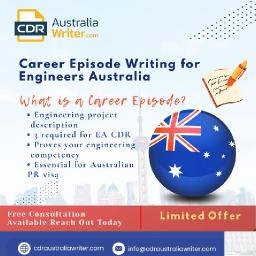
CDR Australia Writer provides expert Career Episode Writing Services to help engineering professionals craft compelling narratives that meet Engineers Australia's strict standards for skilled migration.
Core component of your CDR (Competency Demonstration Report)
Detailed narratives of your engineering projects and work experience
Demonstrate your competencies against Australian engineering standards
Required by Engineers Australia for skills assessment and migration purposes
Showcase your technical knowledge, problem-solving abilities, and engineering judgment
✅ Critical Assessment Tool – Primary evidence of your engineering competencies
✅ Visa Requirement – Essential for subclasses 189, 190, 491, and 482
✅ Skills Validation – Proves your qualifications match Australian standards
✅ Career Gateway – Opens opportunities for professional engineering roles across Australia
Each episode should cover different projects or phases of your career, highlighting diverse engineering competencies.
Introduction – Project background and your role
Background – Organizational context and objectives
Personal Engineering Activity – Your specific contributions and technical decisions
Summary – Outcomes and competencies demonstrated
Must align with Engineers Australia's Stage 1 and Stage 2 Competency Standards for your engineering category.
Learn more about CDR Writing Services.
Educational certificates and transcripts
Detailed project documentation
Work experience letters and references
Technical drawings, reports, or calculations (if available)
Employment history timeline
Project responsibilities and outcomes
Plan
Turnaround
Standard
12–18 business days
Express
7–10 business days
Premium/Rush
4–6 business days
❌ Using generic or template-based content
❌ Copying from project reports or company documents
❌ Writing in third person instead of first person
❌ Failing to demonstrate personal engineering contributions
❌ Not aligning with competency elements
❌ Exceeding word limits (2500 words maximum per episode)
✅ One-on-One Consultation – Understanding your unique engineering background
✅ Custom-Written Episodes – Tailored to your projects and competency requirements
✅ 100% Plagiarism-Free Content – Original writing with detailed plagiarism reports
✅ Competency Alignment – Mapped to Engineers Australia standards
✅ Professional Formatting – Follows EA guidelines precisely
✅ Unlimited Revisions – Until you're completely satisfied
✅ High Success Rate – Proven track record of EA approvals
Need help with your Summary Statement as well? We provide complete CDR packages.
Written in first person, clearly showing YOUR specific contributions, not team efforts.
Demonstrates advanced engineering knowledge, analysis, and problem-solving skills.
Covers different aspects of engineering practice across various timeframes.
Shows concrete results and impact of your engineering decisions.
Well-crafted Career Episodes are the foundation of a successful CDR application. Don't risk rejection with poorly written or plagiarized content. Let CDR Australia Writer's experienced engineers transform your projects into compelling narratives that showcase your true engineering competence.
Ready to start your migration journey? Contact us today for a free assessment!
To get full service at an affordable pricing refer: https://cdraustraliawriter.com/service/professional-services/career-episode-writing/
You need exactly three Career Episodes for your CDR application. Each should focus on different projects or aspects of your engineering work to demonstrate a broad range of competencies.
Yes, if you're a recent graduate with limited work experience. However, professional work projects are strongly preferred. You can also combine academic projects with internships or industrial training. Check our CPD Writing Service for additional documentation.
Each Career Episode should be between 1000-2500 words. Engineers Australia recommends not exceeding 2500 words per episode to maintain assessor engagement.
Professionally, it takes 7-18 business days depending on your chosen service plan. Attempting to write them yourself may take 4-8 weeks without expertise in EA requirements.
With CDR Australia Writer, we offer unlimited revisions and a high success rate. Our expert writers ensure compliance with all EA standards before submission.
Absolutely! We offer complete CDR Report Writing Services including Career Episodes, Summary Statement, CPD, and CV preparation.
Professionals seeking Australian qualifications for migration need to understand the key differences between Credit Transfer and Recognition of Prior Learning (RPL). Both pathways fast-track your qualifications without repeating coursework, but choosing the right one impacts your timeline and success rate.
Credit Transfer suits individuals with formal, accredited courses who want to continue education at a different Australian institution. It recognizes previously completed units, saving time and money.
Recognition of Prior Learning (RPL) is for experienced professionals with substantial work experience but lacking formal qualifications. RPL assesses your competencies against national standards and awards qualifications based on demonstrated skills—essential for skilled migration.
For engineers, IT professionals, and tradespeople seeking Australian PR, your choice depends on your background and goals. If you have formal qualifications, Credit Transfer may be faster. If you have extensive practical experience without certification, RPL transforms your knowledge into recognized credentials—critical for ACS, EA, VETASSESS, and TRA assessments.
A well-prepared RPL report or Credit Transfer application demonstrates your competencies meet Australian standards, improving your chances of skills assessment approval and permanent residency.
Visit our comprehensive guide 10 Essential Credit Transfer vs RPL Differences for complete comparison, eligibility requirements, and expert recommendations.
Also Read:
Contact us for your migration success!
🔗 https://cdraustraliawriter.com
📧 info@cdraustraliawriter.com
📞 +61 480 096 740