


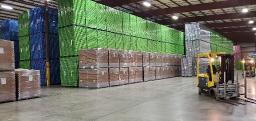
The beverage industry is arguably one of the most complex supply chain environments in the world. Between the sheer weight of glass bottles, the volatility of temperature-sensitive ingredients, and the razor-thin margins of retail distribution, shipping soda, wine, spirits, or RTD (ready-to-drink) beverages is not business as usual. It is a logistical high-wire act.
As your beverage brand scales, you eventually hit a threshold where managing your own inventory, palletizing orders, and navigating freight lanes becomes a bottleneck to growth. This is where a Third-Party Logistics (3PL) provider becomes your most important business asset.
However, not all 3PLs are created equal. A provider that excels at shipping apparel or electronics may lack the infrastructure, certifications, and expertise to handle a beverage supply chain. In this guide, we’ll explore what makes a top-tier beverage 3PL and how to select the right partner for your brand’s specific needs.
Before evaluating partners, it is helpful to understand why beverage logistics is considered a "specialized" field. If you are comparing 3PLs, you must ensure they have capabilities in the following areas:
Beverages are dense, heavy, and often fragile. Unlike shipping boxes of light clothing, beverage shipping requires specialized palletization, heavy-duty racking, and a deep understanding of weight distribution to prevent load shifts during transit.
Depending on your product, you may be navigating FDA regulations, alcohol distribution laws (tied to the three-tier system), or organic/non-GMO food safety standards. Your 3PL must be equipped to handle compliance documentation and maintain high levels of traceability.
If your product is a cold-brew coffee, a probiotic juice, or a craft kombucha, your supply chain cannot have “thermal gaps.” The right 3PL must offer refrigerated warehousing (cold storage) and temperature-controlled freight options to ensure product integrity from the warehouse floor to the retail shelf.
Beverages have limited shelf lives. A beverage-specific 3PL will operate on a FI-FO (First-In, First-Out) or FE-FO (First-Expired, First-Out) basis. Without robust inventory management software (WMS), you risk significant financial loss due to spoilage.
When you start interviewing potential 3PL partners, look for these markers of a high-quality logistics provider:
Your 3PL’s Warehouse Management System (WMS) should integrate seamlessly with your sales channels (Shopify, Amazon, Faire, or wholesale ERPs). Real-time inventory visibility is non-negotiable; you need to know exactly how much stock is sitting in which region at any given second.
The cost of shipping beverages is heavily dictated by distance. If you are based in California but serve a massive customer base in the Northeast, shipping from one central hub will destroy your margins. An ideal partner will have a multi-node network, allowing you to store inventory closer to your customers and reduce "last-mile" shipping costs.
If you are moving beyond Direct-to-Consumer (DTC) and into retail (Whole Foods, Kroger, etc.), you will encounter EDI (Electronic Data Interchange) requirements. Large retailers have strict "routing guides." If your 3PL doesn't understand how to properly label, palletize, and schedule retail deliveries, your brand will be hit with expensive chargebacks.
Beverage brands often experience massive seasonal spikes. Can your 3PL handle a 300% increase in volume during the summer months without failing on fulfillment times? Look for a partner that has the labor flexibility and storage capacity to scale up and down with your brand’s natural ebbs and flows.
Once you have identified a few candidates, don’t just look at the price sheet. Dig into their operational reality by asking these four critical questions:
If you are a startup, you might be tempted to keep logistics in-house as long as possible. Here are three signs you have outgrown your DIY logistics:
Choosing the Best Beverage 3PL is not just about finding someone who can store your product; it’s about finding a growth partner. When logistics transitions from a "problem to be solved" to a "competitive advantage," your business gains the freedom to scale, innovate, and reach customers you previously couldn't afford to serve.
Take the time to audit your volume, define your growth goals, and vet your partners thoroughly. Your supply chain is the backbone of your brand—don't cut corners where it matters most.
| No comments yet. Be the first. |
