


Discovering wasps around your home can be concerning, particularly when they keep returning to the same spot. Wasps often build nests in sheltered locations where they can establish a colony with limited disturbance. Identifying the early signs of nesting activity can help you take sensible precautions and decide when professional assistance may be needed.
Not every wasp seen in a garden indicates a nest nearby. However, repeated activity around roof spaces, sheds, fences or wall openings may suggest that wasps have established a nesting site. Understanding their behaviour and knowing where to look from a safe distance can help you recognise a potential problem before it becomes more difficult to manage.
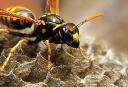
The appearance of a nest varies depending on the species. Some wasps construct papery nests using chewed wood fibres mixed with saliva. These structures may appear grey, brown or beige and can have a rounded, layered appearance.
Other nests feature exposed cells arranged in a honeycomb-like pattern. Their size and shape depend on the species, the stage of colony development and the available space.
Not all nests are clearly visible. Some wasps establish colonies in roof cavities, wall spaces or underground locations, making them difficult to identify without disturbing the surrounding area.
If you notice a structure that resembles a nest, avoid touching it or attempting to inspect it closely. Observe from a safe distance and seek professional advice if you suspect an active colony.
Wasps generally prefer locations that offer shelter from weather and protection from frequent disturbance. Residential properties can provide several suitable nesting sites.
Roof eaves and cavities: Overhanging roofs, ceiling spaces and small structural gaps can provide sheltered locations. Repeated flights towards the same opening may indicate that wasps are entering a concealed nest.
Garden sheds and garages: Quiet corners, storage spaces and roof sections can attract nesting wasps. Take care when opening sheds or accessing areas that have not been checked for some time.
Trees and shrubs: Some species build nests among branches or dense foliage. Increased insect activity around one section of a tree may be worth observing from a distance.
Fences and outdoor structures: Pergolas, decks, fences and other sheltered structures can provide suitable nesting locations, particularly where there is little regular activity.
Wall cavities and ground-level spaces: Certain species nest in concealed building spaces or underground. Wasps repeatedly entering a small opening may indicate a nest, although professional assessment may be needed to confirm it.
Regularly observing accessible outdoor areas can help you notice unusual activity without putting yourself at risk.
The most useful clue is often the behaviour of the insects rather than the appearance of a nest.
If wasps repeatedly fly towards and away from the same opening, they may be using it as an entrance. You might notice a consistent flight path near a roof edge, wall cavity, shed or section of garden.
Another sign is a noticeable increase in wasp activity around a particular location. However, wasps may also gather around flowering plants, fallen fruit, rubbish bins and outdoor meals because they are searching for food. Their presence alone does not confirm that a nest is nearby.
Listen and look for activity only from a safe distance. Do not approach an opening, shine lights into cavities or attempt to block access to a suspected nest. If the activity persists, a pest management professional can help determine whether a nest is present.
Wasps play a role in the natural environment, including helping control some insect populations. However, a nest close to a frequently used area can create a safety concern for residents and visitors.
Wasps may sting when they feel threatened, particularly when someone approaches or disturbs their nest. Multiple wasps may respond defensively, making it dangerous to attempt removal without suitable training and equipment.
The risk can be greater around doorways, children's play areas, outdoor dining spaces and business entrances. People with a known allergy to insect stings should take particular care to avoid suspected nesting sites.
If you discover a nest near a busy area, keep children and pets away. Avoid sudden movements close to the nest and do not throw objects at it. Anyone experiencing signs of a severe allergic reaction after a sting should seek emergency medical assistance immediately.
Removing a nest yourself may seem straightforward, particularly when it appears small or accessible. However, the visible structure may not reveal the full size of the colony or the location of its entrance.
Spraying a nest, knocking it down or sealing an opening can provoke defensive behaviour and may fail to resolve the underlying problem. Working at heights or reaching into enclosed spaces introduces additional risks.
A professional wasp exterminator can assess the situation, consider the species and nest location, and recommend an appropriate treatment method. Professional assistance is particularly useful when the nest is concealed, difficult to access or close to people.
If you are unsure whether a structure is an active nest, avoid disturbing it until the situation has been assessed.
Although it is not possible to prevent every nest, sensible property maintenance can help reduce some conditions that attract wasps.
These measures can reduce food sources and help you notice developing problems earlier. However, they cannot guarantee that wasps will not build a nest on your property.
If you repeatedly see wasps entering a wall, roof or other concealed space, avoid sealing the opening yourself. The colony may still be active, and blocking the entrance may not eliminate the nest.
Professional assistance may be appropriate when you identify a suspected nest, notice consistent flight activity around one location or find wasps entering a building cavity. It is also worth seeking advice if the nest is close to a frequently used outdoor area or cannot be accessed safely.
The appropriate treatment depends on the wasp species, nest location, level of activity and surrounding conditions. An assessment helps determine the most suitable approach rather than relying on a one-size-fits-all solution.
Residents looking for wasp removal Doncaster services or wasp control Berwick, wasp control Eltham and wasp control Clyde can contact Wasps Control Melbourne to discuss their concerns and enquire about available assistance.
Avoid disturbing the suspected nest while arranging help. Keep people and pets away from the area and explain where you have observed the wasps so the situation can be assessed appropriately.