


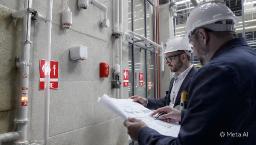
Planning and technical expertise are required for effective fire safety. Modern buildings have complex designs, varying occupancies, sophisticated systems, and unique conditions, which can make fire safety evaluation more challenging than simply applying standard design principles. Certified fire protection specialists have professional expertise that can be used to resolve fire safety issues and support sound engineering decision-making. According to Vortex Fire, "CFPS designation is the benchmark for fire protection professionals," and its engineers have received such certification. Professional competency is crucial for conducting reliable and effective fire safety consultation services.
Fire protection is an integrated discipline that considers how people, buildings, systems, and fire hazards interact. Effective fire safety may involve detection and alarm systems, suppression, smoke control, compartmentation, evacuation, structural protection, and emergency procedures.
Professionals must understand these elements as part of one coordinated strategy. For example, evacuation planning cannot always be considered separately from smoke movement, building layout, fire resistance, and occupant characteristics.
Professional certification provides evidence that an individual has demonstrated knowledge through a recognized assessment process. Vortex Fire explains that CFPS certification demonstrates education and experience in fire protection and is based on established professional practices.
This expertise can help project teams make better technical decisions. Qualified professionals can review requirements, assess risks, explain technical issues, and provide advice that considers both safety objectives and project conditions.
Experience is also important. Fire protection solutions must be practical as well as technically appropriate. Professionals with relevant project experience can understand how engineering decisions affect design coordination, construction, approval, and building operation.
Certification can provide an additional measure of confidence when selecting fire safety professionals. Building owners, developers, architects, and engineers need reliable technical advice because fire protection decisions can influence safety and regulatory outcomes.
A qualified professional can help interpret applicable fire codes and standards and assess whether proposed measures provide an appropriate response to identified risks. Their knowledge can support fire strategy preparation, technical design review, performance based engineering, and compliance assessment.
Certification should not be viewed as the only measure of competence. Professional experience, technical judgement, communication skills, and knowledge of local regulatory requirements are also important. A strong consultant should understand the specific project rather than applying a generic solution.
Continuous professional development also supports quality. Fire safety standards and engineering practices change over time. Professionals must keep their knowledge current so that their recommendations remain relevant to contemporary building design and regulatory expectations.
The combination of recognized certification, practical experience, and project specific analysis creates a stronger foundation for professional fire safety consultancy.
Complex building projects can involve challenges that require detailed fire engineering assessment. Large developments, specialized occupancies, unusual building forms, and performance based designs may require more detailed evaluation than conventional projects.
A fire protection professional can help identify risks during the early stages of design. Early technical involvement allows potential issues to be considered before architectural and engineering decisions become difficult or expensive to change.
During detailed design, specialists can review fire safety strategies and technical documentation. They can assess whether drawings, reports, calculations, and proposed systems are consistent with the overall fire safety concept.
Performance based engineering may require advanced analysis. Computational fluid dynamics and evacuation modelling can provide information about smoke movement and occupant behaviour when properly applied. However, the value of such analysis depends on appropriate assumptions, methods, interpretation, and documentation.
Professional review helps ensure that technical conclusions are properly connected to the building's fire safety objectives and applicable requirements.
Third Party Peer Review provides an objective examination of fire safety design and technical information. Vortex Fire explains that its service can provide independent verification for complex and high risk developments where compliance with fire safety legislation, codes, and standards must be assessed.
The scope can include fire safety strategies and reports, fire protection system designs and layouts, complex computational fluid dynamics, evacuation modelling, and performance based fire engineering solutions. It can also include specified inspection and onsite compliance assessment activities.
The independent nature of the review is important because the reviewer does not prepare the original design. This separation allows the proposed approach to be examined objectively. The reviewer can identify unclear assumptions, inconsistencies, missing information, and technical matters that may need further consideration.
A professional review should provide useful findings rather than simply list problems. Clear recommendations can help designers understand what requires attention and support efficient resolution.
For project stakeholders, an independent assessment can provide another level of quality control and technical confidence before a project moves toward regulatory approval or construction.
Fire safety compliance requires more than having individual protection systems installed. The overall design must demonstrate that the relevant risks have been properly considered and that proposed measures satisfy applicable requirements.
Independent assessment can help project teams examine their fire safety documentation before submission. This can reveal inconsistencies between reports and drawings or identify areas where additional technical evidence may be necessary.
For authorities, an independent review can provide additional confidence that significant fire safety matters have received appropriate professional attention. For developers and owners, it can support due diligence and reduce uncertainty around important design decisions.
For designers, peer assessment can provide valuable technical feedback. An independent reviewer may identify an alternative interpretation, question an assumption, or highlight a requirement that needs clearer documentation.
The process is most effective when findings are communicated clearly and project teams have sufficient opportunity to respond. Cooperation between the reviewer and design team can help resolve technical concerns while maintaining the independence of the assessment.
Professional fire safety requires knowledge, experience, careful engineering, and objective verification. Certified Fire Protection Specialists provide recognized fire protection expertise that can support project teams with technical decisions, fire strategy, compliance, and performance based design. Third Party Peer Review adds an independent assessment of fire safety strategies, reports, protection system designs, modelling, and other technical solutions.
For complex developments, these professional capabilities can help identify technical gaps before they become larger project issues. They can also support regulatory compliance, improve documentation, and provide greater confidence to owners, designers, authorities, and other stakeholders. Using qualified expertise and independent assessment can contribute to a more reliable and defensible fire safety approach.
CFPS is a professional fire protection certification that demonstrates relevant knowledge and experience through a recognized assessment.
Developers, building owners, architects, engineers, and project teams can benefit when specialist fire safety knowledge is required.
The review may cover fire strategies, reports, protection system designs, CFD, evacuation modelling, and performance based fire engineering.
The reviewer is independent from the original design process, allowing the technical approach to be assessed from a separate professional perspective.
No. It supports technical assessment and compliance but does not replace the authority's final approval decision.
| No comments yet. Be the first. |
