


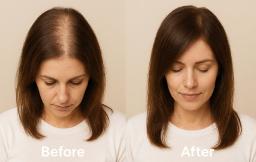
You have probably started noticing it — more hair in the shower drain, a widening part, or a hairline that seems to be retreating a little more each month. Hair loss is incredibly common, but that does not make it any less distressing. The good news? The world of hair restoration has come a long way, and one of the most talked-about breakthroughs right now is exosome therapy. If you have been searching for answers about what exosomes are, how exosomes treatment works, and whether it is right for you — you are in exactly the right place.
Let us start with the exosomes meaning in plain language. Exosomes are tiny vesicles — think of them as microscopic bubbles — that your cells produce naturally. They are part of how your body's cells talk to each other. When a cell wants to send a message to another cell (perhaps telling it to repair itself, grow, or reduce inflammation), it packages that message into an exosome and releases it into the surrounding fluid.
These nano-sized messengers carry proteins, growth factors, and genetic material called RNA. Scientists have spent years studying them, and the medical world is now using their regenerative power in treatments for everything from joint repair to skincare — and, most relevantly for you, hair restoration. In a clinical setting, exosomes used for hair treatments are typically derived from stem cells, giving them an especially potent regenerative profile.
People are turning to exosomes for hair loss for a very simple reason: conventional treatments often fall short. Minoxidil works for some, but it requires lifelong daily use and does not work for everyone. Finasteride comes with the risk of hormonal side effects. Hair transplant surgery is expensive, invasive, and not always suitable for diffuse thinning. Exosomes hair treatment sits in an exciting middle ground — it is biologically sophisticated, minimally invasive, and works with your body rather than against it.
When delivered to the scalp, stem cell-derived exosomes flood the hair follicles with regenerative signals. They stimulate the growth phase of the hair cycle, reduce the inflammation that can cause follicle miniaturisation, and improve blood supply to follicles — all of which translate to thicker, stronger hair over time. Exosomes for hair growth essentially wake up dormant follicles and give them the biological tools they need to function at their best again.
Walking into a clinic for exosomes treatment can feel nerve-wracking if you do not know what to expect. Here is a straightforward walkthrough of what the process typically looks like. First, your practitioner will assess your scalp and hair loss pattern to confirm that exosome therapy is appropriate for you. They will review your medical history and may take photographs to track your progress over time.
On the day of treatment, the scalp is cleaned and a topical numbing cream is applied to minimise discomfort. The exosome solution is then delivered in one of two main ways: via exosomes injection (using fine needles to inject directly into targeted areas of the scalp) or through microneedling with exosomes. During microneedling with exosomes, a device with tiny needles creates micro-channels across the scalp. The exosome solution is applied over these channels, allowing it to penetrate deeply into the skin and reach the follicles more effectively. The micro-injuries created by the needles also stimulate collagen production and activate the scalp's natural healing response — effectively doubling down on regeneration.
The entire appointment typically takes between 45 minutes and 90 minutes. You may notice some redness and mild scalp tenderness afterward, but most people return to their normal activities the same day or the following morning. Most treatment plans involve two to four sessions spaced several weeks apart, with visible improvements often appearing within two to four months.
One of the first questions most people ask is: what is the exosome hair therapy cost? It is a fair question, and the honest answer is that it varies. Factors that affect the price include the clinic's location and reputation, the quality of the exosome product being used (pharmaceutical-grade stem cell-derived exosomes cost more than lower-tier alternatives), and whether you are having injections, microneedling with exosomes, or a combination approach.
In India, Most clinics offer packages that bundle multiple sessions at a reduced per-session rate. While exosome therapy is not cheap, many patients consider it a worthwhile investment compared to the ongoing cost of topical treatments or the larger upfront cost of a hair transplant. It is also worth noting that results can be long-lasting, particularly when combined with a maintenance regimen and healthy lifestyle habits.
Exosomes hair treatment works best when follicles are still present but weakened or dormant. This makes it especially effective for: early to mid-stage androgenetic alopecia in both men and women, postpartum hair loss and stress-related shedding, alopecia areata in mild to moderate cases, hair thinning associated with nutritional deficiencies or hormonal imbalances, and scalp inflammation-related hair loss. If you have been completely bald in an area for many years, exosome therapy alone may not be sufficient, as follicles that have long since closed cannot be regenerated without transplant. However, combining exosome therapy with a hair transplant can significantly improve graft success rates and speed up recovery.
You may be weighing up exosomes treatment against other options you have heard about. Here is a quick honest comparison. PRP (Platelet-Rich Plasma) therapy has been popular for years and uses growth factors from your own blood — but results vary significantly because the quality depends on each patient's individual blood composition. Exosomes, by contrast, are standardised and consistently potent, and they carry a much wider array of regenerative signals than PRP.
Minoxidil (Rogaine) is accessible and affordable but only works as long as you keep using it. Once stopped, any regrowth is lost. Finasteride is effective for male-pattern baldness but carries potential hormonal side effects and is not suitable for women of childbearing age. Exosome therapy offers a more targeted biological approach with a strong safety profile and no long-term dependency — making it increasingly attractive to patients and practitioners alike.
One of the biggest advantages of exosome therapy is how well it works in combination with other treatments. Many clinicians are using exosomes as a powerful adjunct alongside hair transplant surgery (to improve healing and graft uptake), low-level laser therapy (LLLT) to further stimulate follicle activity, topical growth factor serums applied between clinic sessions, and nutritional supplementation protocols tailored to hair health.
This integrative approach — combining exosomes hair treatment with complementary therapies — tends to produce the most impressive, lasting results. Your practitioner can build a bespoke protocol based on the severity and pattern of your hair loss.
Hair loss does not have to be permanent, and you do not have to accept it. With exosome therapy now available at specialist clinics, there has never been a more exciting time to explore what regenerative medicine can do for your hair. Whether you opt for targeted exosomes injection into areas of concern or the comprehensive coverage offered by microneedling with exosomes, you are tapping into one of the most advanced and scientifically grounded hair restoration treatments available today.
The key is to act before hair loss progresses too far — the earlier follicles receive regenerative support, the better the outcome. Book a consultation with a qualified trichologist or hair restoration specialist, ask about exosome hair therapy cost in your area, and take the first step toward reclaiming your confidence and your hair.
| No comments yet. Be the first. |

