


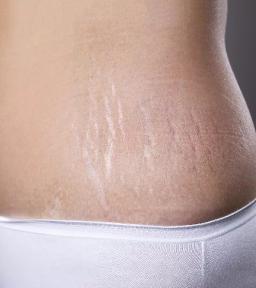
Stretch marks are long, narrow streaks that develop when the skin stretches or shrinks quickly. These marks commonly appear on areas like the abdomen, thighs, hips, breasts, and arms. While they’re completely harmless, many people look for ways to reduce or remove stretch marks due to cosmetic concerns.
They form when the skin’s collagen and elastin fibers break due to sudden stretching. Over time, stretch marks fade but rarely disappear completely without treatment.
Understanding the types of stretch marks helps you choose the right treatment.
These are fresh stretch marks. They appear red, purple, or pink due to blood vessels showing through the skin. At this stage, treatment is more effective.
These are older stretch marks. They turn white or silver and are harder to treat because collagen damage is already established.
Stretch marks occur due to multiple reasons. Let’s break it down.
Pregnancy stretch marks are one of the most common types. As the belly expands rapidly, the skin stretches beyond its limit, causing tearing in deeper layers.
Rapid weight fluctuations can stretch the skin, leading to marks. Bodybuilders and people undergoing sudden weight loss often experience this.
Hormones like cortisol weaken skin fibers, making it easier for stretch marks to form. Teenagers during puberty are especially prone.
If you’re wondering how to reduce stretch marks, natural methods can help improve their appearance.
Healthy skin starts from within:
Consistency is key. While these won’t completely remove stretch marks, they can make them less noticeable.
There are several stretch marks treatment methods available today.
Over-the-counter creams can help:
For better results, dermatological treatments are recommended:
Laser stretch mark removal is one of the most advanced solutions today.
Laser treatment for stretch marks uses focused light energy to stimulate collagen production. This helps repair damaged skin and improve texture.
However, multiple sessions are usually required for best results.
Let’s be honest—completely removing stretch marks is difficult. But you can significantly reduce them.
Best approach:
Laser treatment remains the most effective long-term solution.
Prevention is always better than cure.
These simple steps can help minimize the chances of developing stretch marks.
No, but they can fade significantly with proper treatment.
Laser stretch mark removal is considered the most effective option.
They fade over time but may not disappear completely.
Usually 3–6 sessions depending on severity.
They help in early stages but are less effective on old stretch marks.
Yes, especially due to weight gain or muscle growth.
Stretch marks are a natural part of life, but that doesn’t mean you have to live with them forever. With the right combination of natural care and advanced treatments like laser stretch mark removal, you can visibly improve your skin.
| No comments yet. Be the first. |

