


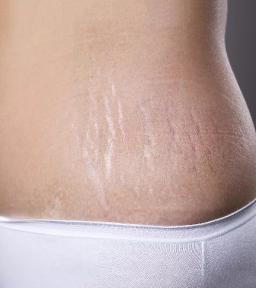
Stretch marks are linear scars that form when the skin undergoes rapid expansion or contraction. They occur when collagen fibers break, leaving visible streaks on the skin.
Commonly affected areas include:
They are especially prevalent during pregnancy, making pregnancy stretch marks one of the most searched concerns.
The skin consists of three layers:
Stretch marks form in the dermis when elasticity is compromised. Hormonal changes also weaken collagen, increasing susceptibility.
These are inflamed and respond well to treatment.
These are older and require advanced therapies.
Appear indented and need intensive treatments like laser therapy.
Reducing stretch marks requires a combination of skincare and medical treatments.
Keeps skin supple and reduces tearing.
Retinoids and collagen boosters help improve skin structure.
Enhances blood circulation and improves skin repair.
Laser treatment for stretch marks is widely considered the most effective option.
Combining microneedling with Platelet-Rich Plasma accelerates healing and enhances results.
Removes the top layer of skin, allowing new skin to form.
Useful for superficial stretch marks and pigmentation issues.
Speeding up results depends on consistency and treatment choice.
During pregnancy, safety is the priority.
Post-pregnancy, advanced treatments like laser stretch mark removal can be considered.
Multiple sessions are typically needed for best results.
Reality: They fade but rarely vanish completely without treatment.
Men also develop stretch marks due to muscle gain or weight changes.
Topical treatments help but are not sufficient for deep marks.
The best treatment depends on:
Consulting a professional ensures a personalized approach.
Stretch marks are common but manageable with the right strategy. From natural remedies to advanced laser treatment for stretch marks, modern solutions offer effective results.
Combining prevention, early care, and professional treatments ensures smoother skin and improved confidence.
| No comments yet. Be the first. |

