

supriyamaximize
supriyamaximize
@supriyamaximize

Urban Air Mobility Market Trends: Electrification, Automation, and Sustainability 2032

user image 2025-12-28
By: supriyamaximize
Posted in: Automotive and Transportation
Urban Air Mobility Market Trends: Electrification, Automation, and Sustainability 2032

Urban Air Mobility Market: Transforming the Future of Urban Transportation

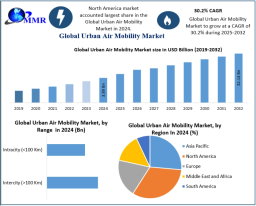
The Urban Air Mobility (UAM) Market was valued at USD 3.89 billion in 2024 and is projected to expand at a CAGR of 30.2% from 2025 to 2032, reaching nearly USD 32.14 billion by the end of the forecast period. UAM represents a revolutionary shift in urban transportation, leveraging aerial vehicles to address congestion, reduce travel time, and enable environmentally sustainable mobility solutions.

Market Overview

Urban Air Mobility refers to the transport of passengers, goods, and services using electric Vertical Take-Off and Landing (eVTOL) aircraft, drones, and other aerial vehicles within cities and suburban areas. By utilizing underused airspace above urban centers, UAM offers a practical alternative to ground-based transportation, which is often hampered by traffic congestion and limited infrastructure.

With 60% of the global population expected to live in urban areas by 2030, innovative mobility solutions are critical. UAM provides safe, low-carbon, and efficient options for city dwellers, making it an essential component of future urban planning.

Request a Free Sample Copy or View Report Summary:https://www.maximizemarketresearch.com/request-sample/207402/ 

Drivers of Market Growth

  1. Urban Congestion and Transportation Demand
    Rapid urbanization has intensified traffic congestion worldwide, increasing commute times and reducing productivity. UAM offers a faster, aerial alternative for short- to medium-distance travel, allowing passengers and goods to bypass ground traffic.
  2. Environmental Sustainability
    Electric-powered eVTOL aircraft and drones contribute to lower carbon emissions compared to traditional vehicles. By supporting cleaner urban air quality and renewable energy integration, UAM aligns with global sustainability goals.
  3. Technological Advancements
    Progress in battery technology, electric propulsion systems, lightweight composite materials, and autonomous flight capabilities has accelerated UAM development. These innovations enable longer flight ranges, enhanced safety, and improved reliability, attracting investments from aerospace companies, startups, and technology giants.
  4. Emergence of New Applications
    Beyond passenger transport, UAM opens new revenue streams in cargo delivery, medical emergency transport, last-mile logistics, and tourism, offering solutions for critical services and e-commerce operations.

Challenges and Market Constraints

  1. Safety and Public Trust
    Safety remains a primary concern for UAM adoption. Public acceptance depends on proven safety records, robust regulatory standards, and effective integration into existing airspace management systems. A single high-profile accident could significantly hinder market growth.
  2. Regulatory and Infrastructure Hurdles
    Urban airspace management, air traffic control, certification requirements, and vertiport infrastructure present major challenges. Developing a reliable network of charging stations, vertiports, and maintenance facilities requires substantial investment and collaboration with urban authorities.
  3. High Capital Investment
    Establishing UAM operations demands significant funding for aircraft development, pilot training, infrastructure, and technology integration. This financial requirement limits entry for smaller players.

Market Segmentation

By Platform

  • Air Taxis – Compact aerial vehicles for point-to-point passenger transport.
  • Air Shuttles & Air Metro – High-capacity vehicles operating on predefined routes and schedules.
  • Personal Air Vehicles – Individual commuter aircraft offering autonomous or piloted travel.
  • Cargo Air Vehicles – For rapid transport of goods, e-commerce packages, and logistics.
  • Air Ambulance & Medical Emergency Vehicles – Providing faster patient transport between hospitals.
  • Last-Mile Delivery Vehicles – Facilitating urban deliveries and reducing dependence on road transport.

By Platform Operation

  • Piloted
  • Autonomous

By Range

  • Intracity (<100 km)
  • Intercity (>100 km)

By Platform Architecture

  • Rotary Wing
  • Fixed Wing
  • Fixed Wing Hybrid

By End User

  • Ridesharing Companies
  • Scheduled Operators
  • E-Commerce Companies
  • Hospitals & Medical Agencies
  • Private Operators

Request a Free Sample Copy or View Report Summary:https://www.maximizemarketresearch.com/request-sample/207402/ 

Regional Insights

North America is a frontrunner in UAM adoption, driven by technological innovation, supportive regulations, and high traffic congestion in major urban centers. Initiatives such as Uber Air and Amazon Prime Air highlight the potential for aerial ridesharing and last-mile delivery services.

Europe benefits from a dense urban network, EU regulatory support, and strong focus on sustainable logistics. Countries like Germany and France are exploring UAM for medical emergency transport and urban air shuttles.

Asia-Pacific presents vast opportunities due to rapid urbanization, high population density, and growing demand for inter-city mobility solutions. Japan and South Korea are actively testing UAM platforms for efficient urban and regional travel.

Competitive Landscape

The UAM market is highly competitive, with major players investing in eVTOL development, autonomous systems, and urban air traffic management solutions. Key companies include:

  • Airbus
  • Airspacex
  • Aurora Flight Sciences
  • Carter Aviation
  • Embraer SA
  • EHang
  • Jaunt Air Mobility
  • Joby Aviation
  • Kitty Hawk
  • Lilium
  • Neva Aerospace
  • Opener
  • Pipistrel Group
  • Safran SA
  • Textron Inc.
  • The Boeing Company
  • Volocopter GmbH
  • Wisk Aero LLC
  • Workhorse Group Inc.

Recent industry developments include Joby Aviation’s $131 million Agility Prime contract with the U.S. Air Force, Lilium’s strategic partnership with Air-Dynamic SA, and Kakao Mobility’s preorder of Vertical’s VX4 aircraft in South Korea. These activities reflect growing investor confidence and market momentum.

Conclusion

The Urban Air Mobility Market is poised for exponential growth, transforming urban transportation through eco-friendly, fast, and technologically advanced aerial solutions. With continued investment, regulatory alignment, and public adoption, UAM has the potential to alleviate urban congestion, improve emergency response, and redefine mobility in cities worldwide. By 2032, UAM is expected to become a critical component of urban transport ecosystems, unlocking new opportunities for aerospace, technology, and service providers alike.

No comments yet. Be the first.