

When a nuclear warhead separates from a Minuteman ICBM and crashes to the bottom of a
missile silo, there's no manual that prepares you for what comes next. Yet for Bob Hicks, a
young airman with only a high school diploma, this terrifying scenario became the defining
moment that would shape four decades of service protecting American interests.
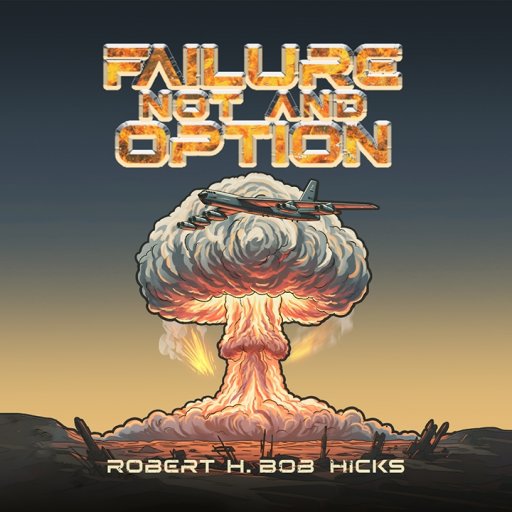
Hicks' memoir, Failure Not an Option: A Cold War Memoir from Nuclear Crisis to Senior
Federal Law Enforcement Officer, offers readers an unflinching look at decision-making under
extreme pressure. His journey from Somerset, Texas, to the most secure facilities in the world
reveals how ordinary people rise to extraordinary circumstances when lives hang in the balance.
The book opens with that pivotal 1964 incident at Ellsworth Air Force Base, where Hicks
volunteered to descend into a damaged missile silo to assess a nuclear warhead. As an Airman
Second Class one of the lowest ranks he had every reason to defer to more experienced
personnel. Instead, he recognized a simple truth: someone had to act, and he possessed the
specific knowledge needed for that moment.
What makes Robert Hicks story particularly compelling is how his small-town upbringing in Somerset,
Texas, prepared him for these high-stakes situations. His superintendent, Bill James, taught that
integrity, respect, and community service formed the foundation of personal worth. His
agriculture teacher, Kenneth Taylor, pushed students beyond perceived limits through hands-on
competition.
These weren't abstract lessons. When Hicks faced that damaged warhead, he drew on values
instilled years earlier values that emphasized doing what's right over what's comfortable, and
serving others before protecting oneself.
Explosive Ordnance Disposal work operates on an unforgiving principle: your first mistake is
likely your last. Throughout his EOD career, from Guam's B-52 operations during Vietnam to
recovering bodies from a crashed bomber, Hicks developed a decision-making framework that
readers can apply to their own challenging situations.
He learned to assess risks methodically, communicate clearly under pressure, and trust his
training even when fear screamed otherwise. When rendering safe hundreds of bombs that failed
to release over Vietnam targets, hesitation wasn't an option but neither was recklessness.
Perhaps the memoir's most valuable lessons emerge from Hicks' transition to the Air Force
Office of Special Investigations. As he rose through civilian ranks to Special Agent in Charge, he
discovered that effective leadership rarely stems from position or title.
His three-year undercover operation identifying defense contractors supplying faulty aircraft
parts demonstrates this principle. Living a double life in Oklahoma City, separated from his
family, Hicks made daily decisions that could compromise the investigation or put agents at risk.
His approach? Lead from the front, never push from the rear.
Hicks doesn't shy away from acknowledging what his career demanded from his family. His wife
Janet raised their sons largely alone, managing household crises and making major decisions
during his frequent absences. The memoir candidly addresses this sacrifice, offering readers an
honest assessment of what duty sometimes requires.
This transparency adds depth to his decision-making guidance. Critical choices don't happen in
isolation—they ripple through families, teams, and communities. Understanding these
consequences matters as much as technical expertise.
While Hicks' experiences unfolded in military and federal law enforcement contexts, his insights
apply broadly. Whether you're a manager facing a business crisis, a parent navigating family
challenges, or a professional confronting ethical dilemmas, his framework offers practical
wisdom.
He emphasizes preparation over luck, values over convenience, and team success over individual
glory. His induction into the OSI Hall of Fame in 2013 validated this approach, but the real proof
lies in the hundreds of millions recovered from fraudulent contractors and the countless lives
protected through his four decades of service.
Failure Not an Option ultimately celebrates the capacity of ordinary Americans to accomplish
extraordinary things when circumstances demand it. Hicks entered the Air Force with little
beyond his high school diploma and the values his family and community instilled. He retired as
a Senior Federal Law Enforcement Officer, having protected national security interests from
Cold War tensions to post-9/11 terrorism.
For readers seeking guidance on making critical decisions when stakes are high, Hicks offers
more than techniques he provides a lived example of courage, integrity, and unwavering
commitment to mission and team. His story reminds us that failure isn't an option when others
depend on us, and that ordinary backgrounds can produce extraordinary results when values meet
opportunity.
| No comments yet. Be the first. |
