


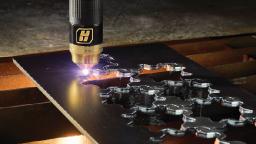
Choosing the right plasma cutter can make a significant difference to productivity, cut quality, and long-term costs in Australian workshops. Whether you run a small fabrication shop, an automotive workshop, or a large-scale manufacturing facility, investing in the right equipment ensures cleaner cuts, faster turnaround times, and better efficiency. With so many options on the market, understanding what matters most before buying is essential.
Understanding What a Plasma Cutter Does
A plasma cutter uses an electrically conductive gas to cut through metals such as steel, stainless steel, and aluminum. It’s widely valued for its speed, accuracy, and ability to handle both thin and thick materials. For Australian workshops working across construction, mining, agriculture, and custom fabrication, plasma cutting has become a reliable and versatile solution.
Before buying, it’s important to assess how often you’ll use the machine, the type of materials you cut, and the level of precision required for your projects.
Cut Capacity and Material Thickness
One of the first things to check when buying a plasma cutter is its cut capacity. This refers to the maximum thickness of metal the machine can cut effectively. Many workshops underestimate this requirement, which can lead to poor performance and premature wear.
For light fabrication and maintenance work, a lower-amp plasma cutter may be sufficient. However, workshops handling structural steel or heavy-duty jobs should consider higher-capacity machines. Always choose a cutter that comfortably exceeds your typical material thickness rather than operating at its limit.
Power Supply and Workshop Setup
Australian workshops need to consider power availability before purchasing. Plasma cutters come in both single-phase and three-phase options. Smaller units often run on single-phase power, making them suitable for mobile or home-based workshops. Larger industrial machines may require three-phase power, which is common in commercial and industrial settings.
Also consider airflow requirements. Plasma cutters rely on clean, dry compressed air. Investing in a good air compressor and filtration system will significantly improve cut quality and extend consumable life.
Consumables and Running Costs
When comparing plasma cutters, don’t focus solely on the upfront price. Consumables such as electrodes and nozzles are ongoing costs that vary between brands and models. Machines with better arc stability and air quality control often use consumables more efficiently, saving money over time.
It’s also wise to check local availability of spare parts and service support in Australia. Reliable after-sales support can minimise downtime and protect your investment.
Manual vs CNC Plasma Systems
For workshops focused on precision, repeatability, and higher production volumes, a CNC plasma cutter in Australia is becoming increasingly popular. CNC systems allow automated cutting based on digital designs, making them ideal for complex shapes, batch production, and consistent results.
Manual plasma cutters are still a great option for repair work, custom jobs, and on-site cutting. Many Australian workshops start with a manual system and later upgrade to CNC as demand grows. The right choice depends on your workflow, budget, and growth plans.
Safety and Ease of Use
Modern plasma cutters come with built-in safety features such as thermal overload protection, pilot arc control, and voltage detection. These features not only protect the machine but also improve operator safety.
Ease of use matters too. Clear control panels, lightweight torches, and intuitive settings reduce training time and operator fatigue. For workshops with multiple users, simplicity and consistency are key.
Making the Right Choice for Your Workshop
Ultimately, the best plasma cutter is one that aligns with your workshop’s needs today while allowing room for future growth. Consider your typical projects, power setup, budget, and whether automation could improve efficiency down the line.
By taking the time to evaluate cut capacity, power requirements, manual versus CNC options, and long-term costs, Australian workshops can invest confidently in a plasma cutter that delivers reliable performance, cleaner cuts, and better productivity for years to come.
| No comments yet. Be the first. |
