

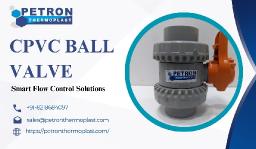
In modern industrial piping systems, precision, safety, and long-term reliability are essential. Whether it is chemical processing, water treatment, manufacturing, or fluid distribution, industries need valves that can withstand pressure, temperature variations, and continuous operations. CPVC Ball Valves have emerged as one of the most dependable solutions in flow control, thanks to their robust construction, corrosion resistance, and smooth operation.
Among these, Heavy Duty CPVC Ball Valves are specially engineered to deliver superior performance and enhanced safety, even in demanding environments. Their ability to resist aggressive chemicals, pressure fluctuations, and wear makes them a top choice for industrial and commercial facilities worldwide.
This blog explores the features, benefits, working applications, and reasons why industries rely on heavy-duty CPVC ball valves for safe flow regulation.
What Makes Heavy Duty CPVC Ball Valves Unique?
A CPVC (Chlorinated Polyvinyl Chloride) ball valve is designed using a high-grade thermoplastic material known for its excellent chemical resistance and durability. The “heavy-duty” classification indicates reinforced body strength, improved sealing mechanisms, and enhanced structural reliability for challenging industrial conditions.
Here’s what sets them apart:
CPVC is naturally resistant to a wide range of corrosive chemicals, including acids, alkalis, chlorinated compounds, salts, and aggressive fluids. This makes heavy-duty CPVC ball valves an ideal choice for:
Unlike metal valves, CPVC valves don’t corrode, rust, or scale, ensuring long service life and safe flow control.
Heavy-duty CPVC ball valves can easily handle temperatures up to 93°C (200°F), depending on the application. This makes them suitable for hot water flow, chemical processing lines, and industrial heating systems.
While CPVC is significantly lighter than metal, it offers exceptional strength and rigidity. Its low weight simplifies transportation, installation, and maintenance, while its mechanical strength ensures reliable operation under high pressure.
Another major advantage of CPVC valves is their inherent thermal insulation properties. They minimize heat loss during fluid transfer, improving system efficiency and reducing operational costs.
Heavy-duty CPVC ball valves feature precision-engineered ball mechanisms and high-quality sealing seats. The leak-proof design prevents fluid loss, contamination, and system failures, making them ideal for sensitive and hazardous industries.
How Heavy Duty CPVC Ball Valves Enhance Safety?
Metal valves deteriorate over time due to corrosion. When used with chemicals, they may generate rust particles that contaminate fluids. CPVC eliminates this risk entirely.
CPVC has a high Limiting Oxygen Index (LOI), meaning it is less likely to catch fire. This makes CPVC ball valves safer for environments exposed to heat or flammable chemicals.
The material does not deform or degrade easily. This prevents:
Stability ensures the entire piping network remains secure and efficient for years.
With precision-molded components, the handle and ball movement are extremely smooth. Operators can quickly open, close, or throttle the flow without applying excessive force.
Common Industrial Applications
Heavy-duty CPVC ball valves are widely used across industries that require high-performance flow control solutions. Some major applications include:
Used for potable water, sewage conveyance, chemical dosing, and disinfection systems.
Ideal for acids, alkalis, solvents, and aggressive chemicals used in:
Safe for hygienic and contamination-free fluid handling.
Chlorine, bromine, and other treatment chemicals are safely managed with CPVC valves.
Their heat resistance makes them suitable for hot fluid distribution.
Used in pickling, plating, etching, and rinsing tanks.
Whether the requirement is for continuous operation or strategic flow isolation, heavy-duty CPVC ball valves deliver reliable results.
Key Benefits of Heavy Duty CPVC Ball Valves
With chemical resistance, high mechanical strength, and zero corrosion, these valves last significantly longer than metal or PVC counterparts.
While offering advanced features, CPVC valves remain affordable. Reduced maintenance and long lifespan further add to cost savings.
No rusting, scaling, or frequent lubrication is required.
The material does not leach harmful chemicals into water, ensuring safety and purity.
Available in different sizes, pressure ratings, handle designs, and end connections.
Why CPVC Ball Valves Are Better Than Metal Valves?
Metal valves often struggle in chemical, humid, or high-temperature conditions. CPVC ball valves outperform them because they offer:
Why Industries Prefer Heavy Duty CPVC Ball Valves?
Industries select CPVC ball valves because they ensure:
Choosing the Right CPVC Ball Valve
When selecting a heavy-duty CPVC ball valve, consider the following:
Conclusion
Heavy Duty CPVC Ball Valves are one of the most reliable solutions for safe flow control across industrial, commercial, and chemical applications. Their corrosion resistance, high-temperature tolerance, durability, and leak-proof performance make them indispensable in modern piping systems. Whether you’re upgrading your existing line or installing a new network, CPVC ball valves ensure long-term safety, efficiency, and operational stability.
Businesses that prioritize safety and performance continue to choose CPVC ball valves as their preferred flow control solution. If you need high-quality CPVC Ball Valves, feel free to ask—we can create product pages, classified ads, or promotional content for Petron Thermoplast as well.
| No comments yet. Be the first. |
