


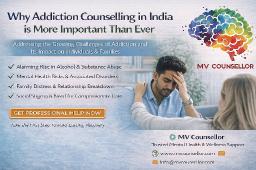
India is at a critical crossroads when it comes to mental health and behavioral well-being. Rapid urbanization, changing family structures, academic and career pressures, economic uncertainty, and increased exposure to digital lifestyles have significantly altered how individuals cope with stress. Against this backdrop, addiction in its many forms has become a growing concern across age groups and social backgrounds. This is why Addiction Counselling India is no longer optional but essential for individuals, families, workplaces, and society at large. Organizations such as MV Counsellor are playing an increasingly important role by offering structured, professional, and culturally sensitive counselling support.
Addiction in India has evolved far beyond traditional substance dependence. While alcohol and drug misuse remain serious concerns, behavioral addictions such as excessive smartphone use, online gaming, social media dependency, and compulsive online spending are rising sharply. These patterns are particularly visible among adolescents, young professionals, and urban populations, but they are no longer limited to metros alone.
In many parts of India, addiction often goes unrecognized until it begins to affect health, relationships, or professional life. Social stigma, denial, and lack of awareness prevent early intervention. As a result, many individuals seek help only when the problem has reached a crisis stage. Addiction counselling addresses this gap by offering early identification, structured intervention, and long-term recovery strategies.
Addiction is not a moral failure or lack of willpower; it is a complex interaction of psychological, biological, and social factors. When untreated, it contributes to mental health disorders, chronic stress, family conflict, domestic violence, academic failure, and workplace burnout. In severe cases, it can lead to self-harm, financial instability, and long-term health complications.
Addiction counselling provides a safe and confidential space where individuals can understand the root causes of their behavior. Professional counsellors work to uncover emotional triggers, unresolved trauma, stress patterns, and environmental influences that sustain addictive habits. In the Indian context, this approach is especially important because cultural expectations often discourage open conversations about emotional distress.
In India, family systems play a central role in shaping behavior and recovery outcomes. Addiction rarely affects only one person; it impacts parents, spouses, siblings, and even children. Counselling helps families move away from blame and toward understanding, communication, and healthy boundaries.
Addiction counselling also supports families in learning how to respond constructively rather than enabling harmful behaviors. When families are involved in the recovery process, individuals are more likely to sustain long-term change. This systemic approach is particularly effective in North Indian households, where joint family structures and interdependence strongly influence personal decisions.
One often overlooked impact of addiction is its effect on career growth and professional identity. Substance use, digital addiction, or emotional dependency can reduce concentration, decision-making ability, and motivation. Over time, this leads to poor performance, job insecurity, and loss of confidence.
This is where the overlap between Career Counselling India and addiction counselling becomes highly relevant. Professionals struggling with addiction often face confusion about career direction, workplace stress, or fear of failure. Counselling helps individuals rebuild self-discipline, set realistic goals, and restore professional confidence. By addressing both behavioral patterns and career concerns together, recovery becomes more holistic and sustainable.
Addiction places immense strain on personal relationships. Trust breaks down, communication becomes defensive, and emotional distance grows. Partners and family members may feel neglected, betrayed, or emotionally exhausted. In many cases, unresolved relationship conflict becomes both a cause and consequence of addictive behavior.
This is why Relationship Counselling North India is increasingly integrated with addiction recovery programs. Counsellors help individuals and couples understand how emotional needs, attachment styles, and unresolved conflicts contribute to dependency patterns. Through guided sessions, clients learn healthier ways to express emotions, manage conflict, and rebuild trust. This integrated approach strengthens both recovery outcomes and relationship resilience.
One of the key challenges in addressing addiction in India is the lack of culturally aligned mental health support. Western models of therapy do not always translate seamlessly into Indian social realities, where family expectations, societal norms, and collective identity strongly influence behavior.
Professional counselling services offered by organizations like MV Counsellor are designed with cultural sensitivity in mind. Counsellors understand the pressures of academic competition, societal comparison, marriage expectations, and workplace hierarchy. This cultural awareness allows clients to feel understood rather than judged, making them more open to change and healing.
The growing importance of addiction counselling in India is also tied to prevention. Early counselling helps individuals recognize unhealthy coping mechanisms before they turn into full-blown addictions. For students, early intervention can prevent academic decline. For professionals, it can prevent burnout and career derailment. For families, it can stop cycles of conflict and emotional distress from passing to the next generation.
Addiction counselling focuses not only on stopping harmful behavior but also on building emotional resilience, stress management skills, and healthy routines. These skills are essential in today’s high-pressure environment, where constant connectivity and competition make emotional overload common.
With increasing digital awareness, counselling services in India are becoming more accessible through online platforms, tele-counselling, and hybrid models. This is especially important for individuals in smaller cities and towns who may not have access to in-person mental health services.
The future of addiction counselling lies in normalization and integration. As awareness grows, counselling will increasingly be seen as preventive care rather than a last resort. Employers, educational institutions, and families are beginning to recognize that mental well-being directly affects productivity, relationships, and overall quality of life.
Addiction counselling in India is more important than ever because the challenges people face today are more complex, interconnected, and emotionally demanding than in previous generations. Addiction is no longer limited to substances; it reflects deeper struggles with stress, identity, relationships, and purpose.
By addressing these challenges through structured, compassionate, and culturally relevant counselling, individuals can reclaim control over their lives. With its integrated focus on addiction recovery, career clarity, and relationship healing, MV Counsellor represents a modern approach to mental health support in India. As awareness grows and stigma reduces, addiction counselling will continue to play a vital role in building healthier individuals, stronger families, and a more emotionally resilient society.
| No comments yet. Be the first. |
