


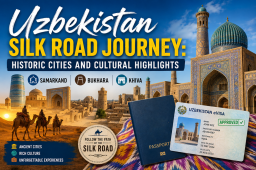
Uzbekistan is a captivating destination for travelers drawn to ancient history, impressive architecture, and traditional culture. For centuries, it played an important role along the Silk Road, connecting traders, scholars, and travelers between Asia and Europe. Today, the historic cities of Samarkand, Bukhara, and Khiva preserve remarkable monuments and traditions from this fascinating era. Before traveling, visitors should review the latest entry rules and arrange an Uzbekistan eVisa if required and eligible.
Samarkand: The Heart of the Silk Road
Samarkand is one of the most important stops on any Silk Road journey through Uzbekistan. With a history stretching back more than two thousand years, the city developed into a major center of commerce, education, science, and culture.
Registan Square is the city's most famous landmark. Its three magnificent madrasas feature detailed tilework, grand arches, and elaborate geometric designs. The square becomes especially impressive in the evening as the changing light highlights its architectural details.
Other notable attractions include the Gur-e-Amir Mausoleum, associated with Timur, and the Bibi-Khanym Mosque, an impressive example of Timurid architecture. The Shah-i-Zinda complex is another highlight, featuring a collection of beautifully decorated mausoleums covered in colorful ceramic tiles.
Eligible travelers can arrange an Uzbekistan eVisa before their journey to help prepare for entry into the country. It is important to check passport requirements, eligibility conditions, and other application details before submitting the necessary information.
Bukhara: A City of Historic Character
Bukhara presents another fascinating side of Uzbekistan's Silk Road heritage. For centuries, the city was an important center for trade, scholarship, and religion, welcoming merchants and intellectuals from different parts of the region.
Its historic center is filled with narrow lanes, traditional buildings, mosques, madrasas, and old trading areas. The Kalyan Minaret is among the city's best-known landmarks, standing beside the Kalyan Mosque and Mir-i-Arab Madrasa.
The Ark of Bukhara, a large fortified complex, offers a glimpse into the city's long political history. Another popular area is Lyabi-Hauz, built around a historic pool and surrounded by traditional structures, restaurants, and pleasant walking areas.
When completing an Uzbekistan eVisa Application, travelers should provide accurate passport information, travel details, and any other required information. Reviewing the application carefully before submission can help reduce avoidable errors.
Khiva: Inside an Ancient Walled City
Khiva provides a unique opportunity to experience a remarkably preserved Silk Road setting. The historic district of Itchan Kala is enclosed by imposing walls and contains numerous monuments, mosques, madrasas, and traditional buildings.
Walking through its narrow streets offers a strong sense of the city's historic character. The Kalta Minor Minaret, recognized for its striking turquoise decoration, is one of Khiva's most recognizable landmarks. The Juma Mosque is also notable for its remarkable interior, which contains rows of intricately carved wooden columns.
Visitors can also seek out elevated viewpoints for panoramic views over the old city's rooftops and the surrounding landscape. The combination of historic architecture, quiet pathways, and traditional surroundings makes Khiva a memorable destination.
Before making travel arrangements, visitors should check whether an Uzbekistan Tourist Visa applies to their nationality and circumstances. Visa requirements can vary, so travelers should rely on the latest official information when preparing their trip.
Culture and Traditions Along the Silk Road
Uzbekistan's heritage is not limited to monuments and historic buildings. Traditional food, crafts, textiles, music, and celebrations continue to play an important role in the country's cultural identity.
Plov is one of Uzbekistan's most famous dishes and is traditionally made with rice, meat, carrots, and seasonings. Travelers can also sample local favorites such as lagman, samsa, and freshly baked traditional bread. Local bazaars are another important part of the experience, offering fresh ingredients, spices, dried fruits, and handmade products.
The country also has a strong tradition of craftsmanship. Ceramics, carpets, embroidered textiles, and colorful suzani decorations showcase the artistic skills passed down through generations. Buying handmade items directly from local artisans can provide a special souvenir while supporting traditional craftsmanship.
Tips for a Comfortable Uzbekistan Trip
Good preparation can make a Silk Road journey more enjoyable. Travelers should check passport validity and entry requirements before departure and complete their Uzbekistan eVisa Application in advance if an eVisa is required and available for their nationality.
It is also useful to keep a digital copy of the approved Uzbekistan eVisa along with important travel documents. Travelers should ensure that the information provided during the application matches their passport details.
When building an itinerary, allow sufficient time in each city. Samarkand is well suited to travelers interested in monumental architecture, Bukhara provides a closer look at historic urban life, while Khiva offers an atmospheric setting within its preserved defensive walls.
Weather is another factor to consider. Spring and autumn are generally comfortable periods for sightseeing, while summer temperatures can become very high in some parts of the country. Since many attractions are located within historic districts, comfortable footwear can make walking between sites much easier.
Following the Ancient Silk Road
A journey through Uzbekistan brings together ancient architecture, historic cities, traditional cuisine, colorful handicrafts, and centuries of cultural heritage. Samarkand's grand monuments, Bukhara's historic streets, and Khiva's fortified old city each provide a different perspective on the country's Silk Road past.
Before departure, travelers should confirm whether they need an Uzbekistan Tourist Visa or Uzbekistan eVisa based on their nationality and travel plans. Completing the Uzbekistan eVisa Application accurately and preparing the required documents ahead of time can make the pre-travel process more straightforward.
From magnificent madrasas and ancient mausoleums to bustling markets and traditional crafts, Uzbekistan offers a memorable way to follow the legacy of the Silk Road while experiencing its living culture today.
| No comments yet. Be the first. |

