


A lot of people think cleaning diamond jewelry is simple. Put it in warm water, add a little soap, scrub it gently, rinse it, done. That sounds easy enough, and sometimes it is. But what most people miss is that cleaning a diamond is not only about making it sparkle again. It is also about protecting the setting, avoiding damage you may not notice right away, and understanding that not every piece should be cleaned the exact same way.
That is where many jewelry owners get it wrong.
A diamond can be one of the hardest natural materials on earth, but the jewelry holding it together is not invincible. The prongs, the metal, the tiny spaces under the stone, and even the buildup from lotion and hand soap all matter more than people realize. A beautiful diamond ring can lose its shine fast, not because the diamond changed, but because the surfaces around it collected layers of everyday grime. And sometimes, people clean so aggressively that they create a bigger problem than the dirt itself. It happens more often than people think.
If you own a favorite piece of diamond jewelry for women, or you are planning to buy a diamond jewelry gift for someone special, knowing how proper cleaning works can help that piece stay gorgeous for years. A little knowledge here really goes a long way.
The biggest mistake is focusing only on the diamond.
When people look at their jewelry, their eyes go straight to the stone. That makes sense. The sparkle is the whole reason they fell in love with it in the first place. But a diamond does not shine at its best if the setting is dirty, if the bottom of the stone is coated in residue, or if the metal around it has become dull.
Think about a diamond ring that gets worn every day. It touches hand cream, shampoo, cooking oil, sunscreen, dust, and soap residue. Over time, that buildup settles underneath the stone where it is hard to see. So even if the top looks sort of clean, the light passing through the diamond gets blocked. That is why it starts looking cloudy or lifeless. Many people assume something is wrong with the diamond itself, but really, it just needs careful cleaning in the areas they keep missing.
Yes, mild soap and warm water is a common and safe option for many pieces. But the details matter.
The water should be warm, not hot. The soap should be gentle, not loaded with harsh chemicals, moisturizers, or strong fragrance oils. Many hand soaps today contain extra ingredients that leave behind a film. That means you may clean your diamond jewelry and still end up with a weird residue that makes it look less bright. Kinda frustrating, honestly.
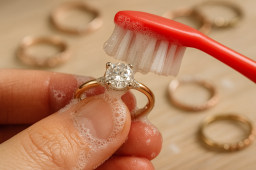
A soft toothbrush can help, but only if you use it lightly. Scrubbing too hard can wear down metal over time, especially around prongs. Tiny areas that hold the stone are delicate, and rough brushing is not something you want to repeat every week for years.
People also forget to rinse thoroughly. That sounds obvious, but soap left behind can make the piece look dull as soon as it dries. Then they wonder why the sparkle never really came back.
The setting is where a lot of trouble starts.
A diamond may be durable, but the prongs or bezel holding it in place can loosen over time. If you are cleaning without checking those details, you may be missing warning signs. One loose prong can turn a routine day into an expensive disaster. You look down and the stone is gone. No one wants that.
Before cleaning any diamond ring, look closely at the setting. If anything looks bent, uneven, or worn down, skip the deep cleaning at home and take it to a jeweler. The same goes for vintage pieces or heirlooms. They can be more delicate than they appear, even when they still look beautiful on the outside.
This matters even more when you are caring for a sentimental piece, like a diamond jewelry gift from a partner or a jewelry gift for her that marks a major life moment. Jewelry tied to memories deserves more care, not less.
When most people think of dirty jewelry, they picture dust or maybe kitchen grease. But some of the worst buildup comes from products you use every single day.
Hand lotion is a major one. It leaves a soft coating that clings under stones and around metal. Liquid soap can create film. Hairspray can settle on earrings and necklaces. Makeup can dull the brilliance of a pendant. Even body oils slowly collect over time. The result is a diamond that looks tired, even though it is technically not scratched or damaged.
That is why regular light cleaning is often better than waiting until a piece looks obviously dirty. Once buildup gets thick, people tend to clean more aggressively, and that is when mistakes happen.
This is another thing people miss all the time. A diamond ring worn daily needs different care than a necklace worn a few times a month. Stud earrings collect oils and hair product. Bracelets knock against desks, bags, and countertops. Rings go through everything.
So the cleaning routine should match the way the piece is worn.
A diamond ring usually needs the most attention because hands are constantly exposed to products and grime. Diamond earrings may need careful cleaning around the posts and backs. Necklaces might need less frequent washing, but they still collect skin oils near the clasp and lower setting.
If you own several types of diamond jewelry for women, it helps to stop thinking of them as one category. Each piece lives a different life, pretty much, and it shows.
A lot of people hear about ultrasonic cleaners and assume they are a smart shortcut. Sometimes they are. Sometimes they are absolutely not.
These machines can shake loose dirt, but they can also shake loose stones if the setting is already weak. That means they are not ideal for all jewelry, especially older pieces, heavily worn rings, or anything with a questionable setting. If you do not know the condition of the prongs, using one can be risky.
This is one reason professional inspection matters. A jeweler can tell you whether your piece is sturdy enough for more intense cleaning methods. That advice is worth more than guessing at home.
People rush the drying step and then wonder why the jewelry still looks streaky or spotted.
After rinsing, use a soft lint free cloth. Let the piece dry fully before putting it away. Avoid paper towels because they can leave fibers behind, and they are rougher than people think. Letting water sit in tight areas can also leave mineral spots, depending on your water.
It is a small detail, but it changes the final result. Clean jewelry should look bright and polished, not smeared or cloudy.
Even perfectly cleaned jewelry can lose its appeal fast if it is stored carelessly.
When pieces rub against each other, they can scratch metal or create tiny marks that affect the look of the setting. Tossing a diamond ring into a drawer with other pieces is just asking for trouble. Store items separately in soft pouches or lined compartments. Keep them away from humidity when possible.
This is especially important if you bought a diamond jewelry gift for someone and want it to stay special for a long time. Presentation matters on day one, sure, but condition matters even more one year later.
Home cleaning is useful, but it is not always enough.
If your diamond still looks dull after careful washing, the issue may be trapped buildup in hard to reach areas. Or the metal may need polishing. Or the setting may need repair. A professional cleaning can restore details you simply cannot manage at home without the right tools.
This is smart for engagement rings, anniversary jewelry, and any jewelry gift for her that gets worn often. A yearly professional check can catch loose stones, worn prongs, and subtle damage before it becomes serious.
Honestly, that inspection is one of the most overlooked parts of jewelry care. People wait until something looks wrong, but by then the damage may already be done.
This one surprises people. Just because a diamond looks sparkling clean does not mean the jewelry is in good shape.
A ring can shine beautifully and still have a loose prong. An earring can look polished but have a weak clasp. A necklace can be spotless but close to breaking near the chain loop. Cleaning improves appearance, but it is not the same as maintenance.
That is why every cleaning session should double as a quick inspection. Look at the stone. Look at the metal. Check the backs, clasps, and prongs. Wiggle nothing, force nothing, but pay attention.
The best cleaning tip is honestly prevention. If you build a few simple habits, your jewelry will need less intense cleaning and stay beautiful longer.
Take off your diamond ring before applying lotion or cleaning products. Remove jewelry before swimming. Put necklaces and earrings on after hairspray and makeup, not before. Wipe pieces gently after wearing them, especially if the day was hot or busy.
These habits are simple, but they protect both appearance and structure. They also make every future cleaning easier.
What most people miss when they clean diamond jewelry is that sparkle is only part of the story. The real goal is to care for the whole piece, not just the stone. That means paying attention to buildup under the diamond, checking the setting, using gentle products, drying properly, and knowing when professional help makes more sense.
A diamond ring can look timeless for years when it is cared for the right way. The same goes for earrings, necklaces, bracelets, and every kind of diamond jewelry for women. Whether you bought it for yourself or received it as a meaningful diamond jewelry gift, proper cleaning protects both beauty and value.
And when that piece happens to be a jewelry gift for her, the care behind it matters just as much as the sparkle. Maybe more, really. Because jewelry is never only about how it looks. It is about what it means, who gave it, when it was worn, and the little memories attached to it. Keeping it clean is part of keeping those memories bright too.
| No comments yet. Be the first. |
