


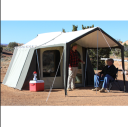
New campers often assume any waterproof tent performs the same in bad weather. Experienced campers know that assumption falls apart the first time a storm rolls through at two in the morning.
Where the Misconception Comes From
Tent marketing tends to lead with a single number, square footage or person capacity, because it is easy to compare at a glance. That number says nothing about how a canvas camping tent handles wind, sustained rain, or a week of daily condensation.
What Experienced Campers Actually Check First
Seasoned campers look at fabric weight and weave before anything else. A heavier canvas weave sheds water more reliably and resists tearing on branches or rocky ground. They check seam construction next, since a tent almost never fails through the fabric itself. It fails at the stitching.
Pole and frame material comes third. Steel and aluminum frames hold shape in wind far better than the fiberglass poles found in many budget tents. Zippers are the fourth check, since a torn or jammed zipper in the rain can ruin a trip just as fast as a leaking seam.
None of these checks show up clearly in a product photo. They only show up in the fine print, which is exactly why so many first-time buyers miss them.
The Principles Behind Their Choices
The pattern behind all three checks is the same: prioritize the parts of a tent that fail first under real conditions, not the parts that look impressive in a product photo. Durability lives in details most buyers never think to ask about.
This is also why seasoned campers rarely chase the newest color or the largest floor plan. They chase the version of a familiar design that has quietly fixed last year's weak points.
How to Apply This at Any Budget
This approach does not require the most expensive tent on the shelf. It requires asking better questions before buying one: what is the fabric weight, how are the seams finished, and what is the frame made from. Those three answers predict performance far better than price alone.
The Bottom Line
Camping now supports a $66 billion economic footprint across North America, according to KOA, and that scale has made better-built gear more accessible than it used to be. The tools to shop smart are available. Most campers simply have not been shown what to look for.