


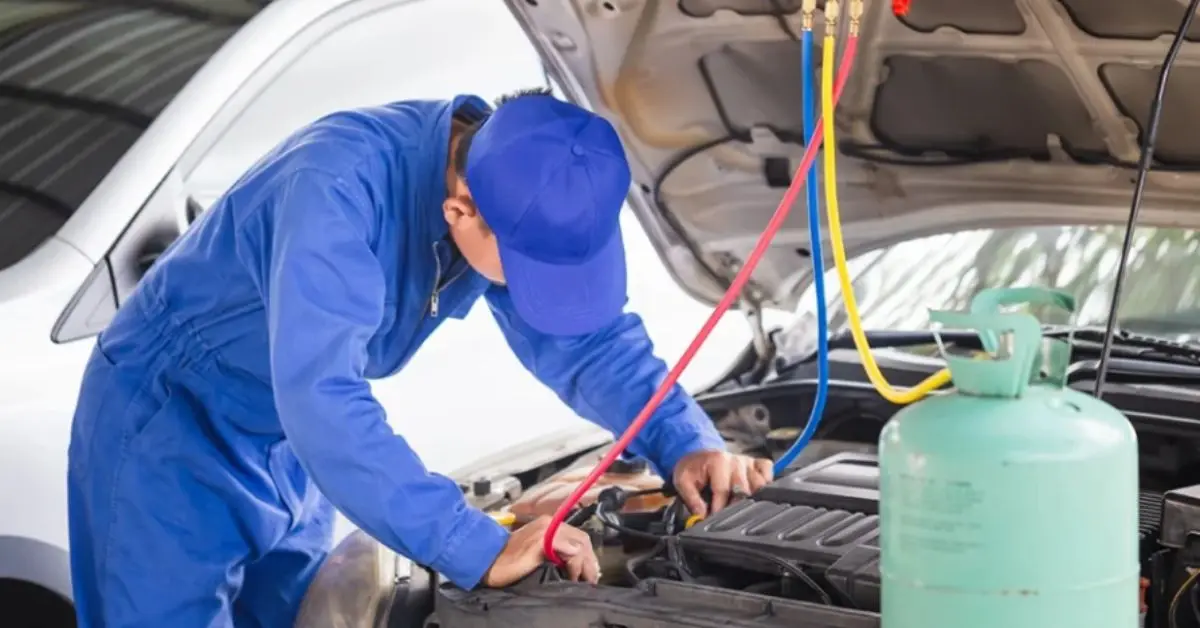
 In Dubai, a working car air conditioner is not a luxury. With summer temperatures often climbing above 45°C and cabin interiors heating up within minutes, a failing AC can turn a simple drive into an uncomfortable and even unsafe experience. The good news is that most cooling problems have identifiable causes. Understanding them helps you spot trouble early and avoid expensive repairs.
Refrigerant is the substance that absorbs heat from the cabin and carries it out of the vehicle. When the level drops, the system simply cannot cool the way it should. You may notice air that is only mildly cool, or air that starts cold and gradually warms up.
An AC system is sealed, so low refrigerant almost always means there is a leak somewhere. Simply topping it up without finding the source is only a temporary fix. Over time, the gas escapes again, and you are back to warm air. A proper inspection should locate the leak and repair it first.
The compressor is the heart of the air conditioning system. It pressurizes the refrigerant and keeps it circulating. If it wears out or fails, cooling stops completely or becomes very weak.
Warning signs include grinding or squealing noises when the AC is switched on, a compressor clutch that does not engage, and warm air despite the system being full of refrigerant. Heavy daily use in Dubai's heat puts extra strain on this component, so it is one of the more common parts to fail. Replacing it early can prevent metal debris from spreading through the rest of the system.
Dust and sand are a fact of life in the UAE, and your cabin air filter takes the brunt of it. When it becomes clogged, airflow into the cabin drops sharply. The AC may still be producing cold air, but very little of it reaches you through the vents.
A dirty filter can also cause musty smells and aggravate allergies. Replacing it is inexpensive and quick, and it is one of the easiest ways to restore proper airflow. In dusty conditions, checking it more often than the manufacturer's standard interval is a smart habit.
Leaks can develop in hoses, seals, the condenser, or the evaporator. Heat, vibration, and age cause rubber parts to crack and metal connections to loosen. A leak may be tiny at first, but it gradually reduces cooling performance until the system stops working altogether.
This is where professional Car AC Repair Dubai services make a real difference. Technicians use specialized tools such as UV dye and electronic leak detectors to find even small leaks, then repair or replace the damaged parts, vacuum the system, and recharge it with the correct amount of refrigerant. Handling this properly protects the compressor and restores lasting cooling rather than a short-term fix.
The condenser sits at the front of the car, usually near the radiator, and releases the heat collected from the cabin. Because of its position, it collects dirt, insects, sand, and road debris. When it is blocked, heat cannot escape efficiently, and cooling suffers, particularly in slow traffic when airflow is already limited.
If your AC cools reasonably well at highway speed but struggles at traffic lights or in congestion, a dirty or poorly ventilated condenser could be the reason. A professional cleaning often brings a noticeable improvement.
The condenser relies on cooling fans to move air across it when the car is stationary or moving slowly. If a fan motor fails, a relay burns out, or a fuse blows, the system can overheat and lose cooling power. In Dubai's heat, this problem becomes obvious very quickly.
Symptoms include the AC working well while driving but turning warm when idling, along with a rising engine temperature in some cases. Fan faults should be addressed promptly, since they can affect engine cooling as well as the air conditioning.
Modern car AC systems depend on switches, sensors, relays, and control modules. A blown fuse, a faulty pressure switch, or a malfunctioning climate control unit can shut the system down even when the mechanical parts are fine. Blend door actuators can also fail, causing the air to remain warm on one side of the cabin or refuse to change temperature.
Diagnosing these issues requires a scan tool and electrical testing, as the symptoms often look similar to those of mechanical failures.
The expansion valve or orifice tube controls how much refrigerant enters the evaporator. If it becomes clogged with debris or moisture, refrigerant flow is restricted, and cooling drops. Moisture inside the system can also freeze, causing the AC to cool intermittently. Regular servicing and a proper system flush help prevent this.
A few simple habits go a long way. Service your AC at least once a year, ideally before summer begins. Replace the cabin filter regularly, run the system briefly even in cooler months to keep seals lubricated, and park in shade when possible to reduce the load on the system. If you notice weaker cooling, strange smells, or unusual noises, get it checked early instead of waiting for a complete failure.
An air conditioner that stops cooling rarely fails without warning. Low refrigerant, a worn compressor, clogged filters, leaks, and electrical faults are the most common causes, and most can be fixed more affordably when caught early. In a city where heat is relentless, regular maintenance and timely repairs are the best way to stay comfortable and keep your car running reliably.
| No comments yet. Be the first. |
