


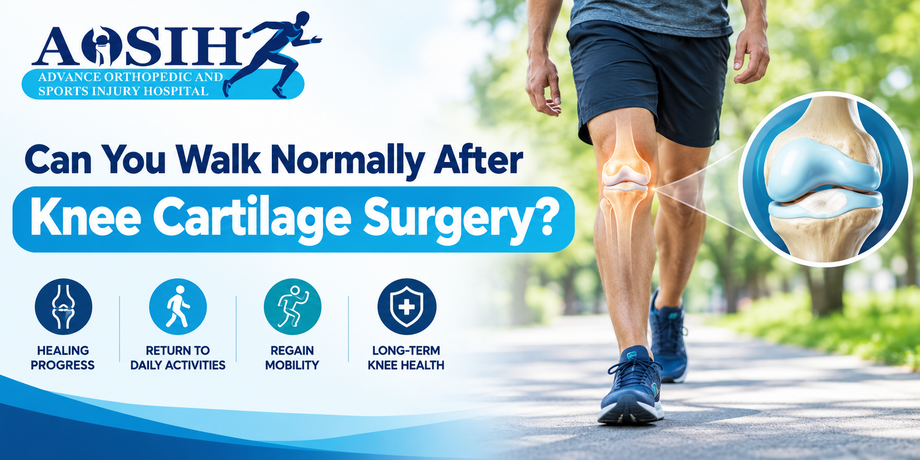
Knee cartilage surgery is performed to repair or treat damaged cartilage that may cause pain, stiffness, swelling, and difficulty with movement. One of the most common concerns patients have before treatment is whether they will be able to walk normally again. In most cases, walking ability gradually improves as the knee heals and strength returns. The recovery timeline, however, depends on the type of cartilage injury, the surgical technique used, and the patient's overall health. If you are considering Knee Cartilage Surgery in Jaipur, understanding what to expect during recovery can help you prepare for the rehabilitation process.
Immediately after surgery, walking may be difficult because the knee needs time to heal. Depending on the procedure, patients may need crutches, a walker, or other support for a specific period. Weight-bearing restrictions are often used to protect the repaired cartilage and allow the knee to recover properly.
Not every cartilage procedure has the same recovery plan. Some patients may begin putting weight on the operated leg relatively early, while others may need to limit weight-bearing for several weeks. Your surgeon will determine the appropriate approach based on the location and extent of cartilage damage.
The time required to walk comfortably varies from patient to patient. During the early stage, the focus is usually on controlling pain and swelling while protecting the repaired area. Gentle movements and prescribed exercises may be introduced under professional guidance.
As healing progresses, patients generally begin increasing weight-bearing and walking more independently. Physiotherapy plays an important role during this stage because it helps improve knee movement, muscle strength, balance, and stability.
It is important not to increase walking distance too quickly. Even if the knee starts feeling better, the repaired cartilage may still require protection.
Yes, many patients can eventually return to a normal walking pattern after successful knee cartilage surgery and appropriate rehabilitation. However, "normal walking" does not usually happen immediately after the procedure.
Initially, you may notice stiffness, weakness, or a slight change in your walking pattern. These issues often improve as swelling decreases and the muscles around the knee become stronger.
The rehabilitation program should be followed consistently. Your Orthopedic Doctor in Jaipur may recommend specific exercises and activity restrictions according to your surgical procedure and recovery progress.
Several factors can contribute to a smoother recovery:
Quadriceps weakness is common after knee surgery and can affect walking. Strengthening the quadriceps and other supporting muscles can gradually improve stability and confidence while walking.
Recovery time varies considerably. Minor cartilage procedures may have a shorter rehabilitation period, while procedures involving extensive cartilage repair can require several months of structured recovery.
Your age, activity level, cartilage damage, surgical technique, and adherence to rehabilitation can all influence recovery. Returning to demanding activities before the knee is ready may increase the risk of complications or reinjury.
Dr. Naveen Sharma at Advance Orthopedic and Sports Injury Hospital can evaluate the condition of the knee and recommend an appropriate treatment and rehabilitation plan based on the individual case.
Knee cartilage surgery and knee replacement are different procedures used for different types and stages of knee problems. Cartilage repair aims to preserve and restore damaged areas of the existing knee joint, while Knee Replacement Surgery in Jaipur involves replacing damaged joint surfaces with artificial components.
The appropriate treatment depends on factors such as the extent of cartilage damage, age, symptoms, activity level, and the overall condition of the knee. A detailed evaluation is therefore important before deciding on treatment.
Walking normally after knee cartilage surgery is often a gradual process rather than an immediate outcome. With appropriate surgical care, rehabilitation, and patience, many patients can progressively return to comfortable walking and everyday activities. Following medical advice and avoiding premature high-impact activity are essential for protecting the healing knee.
If you are experiencing persistent knee pain, swelling, locking, or difficulty walking, an orthopedic evaluation can help identify whether cartilage damage is contributing to your symptoms.
Walking may be possible with crutches or another walking aid, depending on the procedure. Your surgeon will provide specific weight-bearing instructions to protect the healing knee.
The timeline varies depending on the type of surgery and extent of cartilage damage. Some patients progress within weeks, while more extensive procedures may require several months of rehabilitation.
Physiotherapy is commonly an important part of recovery. It can help restore knee movement, muscle strength, balance, and functional walking.
Cartilage procedures may help preserve the natural joint in appropriately selected patients, but they cannot guarantee that knee replacement will never be needed. The long-term outlook depends on the condition of the entire knee joint.
Return to sports depends on the procedure, healing progress, muscle strength, and functional testing. High-impact activities should only be resumed when your orthopedic surgeon and rehabilitation team consider the knee ready.