Using AI is no longer the hard part. Making it pay off is. McKinsey's State of AI 2026 survey, which gathered responses from 1,719 participants across 97 countries, found that 89 percent of respondents say their organizations regularly use AI in at least one business function, yet only 37 percent report any positive contribution to operating profit (EBIT). That gap suggests that many companies start with big ideas and unclear goals, instead of small projects with measurable results. To help you avoid that trap, here are seven generative AI use cases that are practical, easy to explain to your team, and realistic to begin with.
A good starter project usually meets these four conditions:
Strong results depend on simple rules that everyone understands:
Simple tools can work well for writing and summarizing. However, connecting AI to your own data, systems, and security requirements is a bigger task. In that case, generative AI development services can help you design the solution, test it safely, and fit it into your existing workflows. A good partner will also ask about your goals first, instead of pushing a tool before they understand the problem.
Success with generative AI for business comes from focus, not from doing everything at once. In the same McKinsey survey, 80 percent of respondents said AI improved their own productivity, but that personal benefit does not automatically become company-wide profit. The lesson is to choose one use case, redesign the workflow around it, and track the results honestly before you expand.
Choose one repetitive, low-risk task, such as drafting emails or summarizing documents, and test it with a small team.
Not for simple tools. Custom solutions connected to your data or systems usually need developers and security review.
It can be, but only with approved tools, clear policies, and proper access controls. Avoid sharing sensitive data with public tools.
Track a clear metric, such as time saved, response speed, or error rates, and compare it with the results before AI.
It mostly handles routine parts of tasks, while people still provide judgment, creativity, and customer relationships.

Buying or renting a property often involves multiple steps, from exploring listings and comparing prices to scheduling site visits and contacting agents. Real estate businesses can make this process more convenient by offering customers a dedicated mobile application. According to the National Association of REALTORS®' 2025 Technology Survey, 82% of surveyed real estate professionals said their clients responded positively or very positively to technology used during the buying and selling process. This highlights the value of useful digital tools in modern real estate.
A standard property website may display listings, but a custom Android application can bring property searches, customer communication, lead management, and appointment scheduling into one place. With the right features, businesses can provide a smoother experience for buyers, sellers, tenants, and property agents.
Working with a reliable real estate app development company helps businesses build an application around their specific goals instead of relying on features that may not fit their workflow.
Customers can browse property listings, filter results by location and budget, view photos, and save their favorite properties. Map integration and detailed property information can help users shortlist suitable options before contacting an agent.
A custom app can include enquiry forms, callback requests, appointment booking, and notifications. When connected to a customer relationship management system, it can help agents organize enquiries and follow up with interested buyers more efficiently.
Generative AI in real estate can support conversational property searches, draft listing descriptions, summarize property details, and answer common questions. For example, users could describe the type of home they want in everyday language instead of selecting multiple filters.
AI-generated information should be checked for accuracy, and property recommendations should use reliable data while respecting customer privacy.
Property photos, video walkthroughs, and virtual tours allow potential buyers to explore properties remotely. Push notifications can also inform users about new listings, appointment confirmations, price updates, and changes in property availability.
Real estate applications may handle personal details, contact information, and financial documents. Secure authentication, appropriate access controls, encrypted data transmission, and regular security updates can help protect this information.
When comparing Android app development services, look for a team that understands property listing workflows, third-party integrations, application security, and future maintenance. Discuss your requirements before development begins, including whether you need custom dashboards, agent accounts, payment integration, or AI-powered features.
Professional custom Android app development services and dependable Android development services should align with your business requirements, budget, and growth plans. The goal is to build an application that solves real problems rather than adding unnecessary features.
A custom Android app can help real estate businesses improve property discovery, organize enquiries, communicate with customers, and introduce useful AI-powered features. Choosing the right development partner and prioritizing security, usability, and accurate property information can help create a dependable digital experience that supports long-term business growth.
Financial operations are becoming increasingly digital, and businesses need software that can handle their specific workflows efficiently. According to the Bank for International Settlements (BIS), digital innovation is improving access to payments, credit, savings, and other financial services, while also creating new risks that businesses need to manage carefully. This makes secure and flexible financial technology increasingly important.
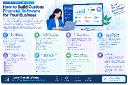
Custom Financial Software Development allows businesses to build solutions around their actual financial processes instead of adjusting their operations to fit a generic product. Here is how businesses can approach the development process.
Before development begins, identify the financial problem the software needs to solve. A clear objective helps the development team choose the right features, technology, and integrations.
Defining the problem first prevents unnecessary features and keeps development focused on measurable business needs.
Every business has different financial requirements, so the feature set should match the company's workflow. Common features may include:
Businesses can start with essential features and add advanced capabilities as their needs grow.
Financial software handles sensitive information, so security should not be treated as a final development step. Security requirements should be considered throughout the design and development process.
Important measures can include secure authentication, role-based access control, encryption, secure APIs, activity monitoring, regular testing, and appropriate data protection practices. Strong security can help reduce the risks associated with unauthorized access, fraud, and data exposure.
The technology stack should support the current requirements while leaving room for future growth. Depending on the project, developers may select modern programming languages, frameworks, databases, cloud infrastructure, APIs, and security tools.
A scalable architecture makes it easier to add users, features, integrations, and transaction volumes without rebuilding the entire application.
A well-defined development process helps control scope, improve quality, and reduce unexpected problems.
Custom financial software often needs to communicate with other business tools. Integrations can connect the system with accounting platforms, payment gateways, banking services, CRM systems, ERP software, payroll systems, or other internal applications.
Well-planned integrations reduce duplicate data entry and help businesses maintain a more connected financial workflow.
Choosing an experienced development partner is an important part of building reliable financial software. Look for a company with experience in custom software development, financial technology, API integrations, security, testing, and scalable application architecture.
Before starting the project, review the company's portfolio, technical expertise, development process, communication practices, security approach, pricing structure, and post-launch support.
Building custom financial software requires more than selecting a technology stack and developing features. Businesses need to understand their financial workflows, prioritize security, plan for scalability, integrate existing systems, and follow a structured development process.
With the right approach and an experienced financial software development company, businesses can create solutions that improve efficiency, simplify financial operations, and support long-term growth.

Booking a doctor's appointment should be simple for patients and manageable for healthcare teams. But managing appointments can be tricky with phone calls, scheduling conflicts, cancellations, and doctors' availability changes. These are problems that digital scheduling can help solve.
The American Medical Association reported that Sutter Health patients self-scheduled more than 4 million appointments in 2024. The health system saw a 27% drop in scheduling request messages after expanding online scheduling.
It's a good example of why a well-designed scheduling platform can be more than a booking tool for clinics and health care businesses. If it has the right features, it can improve appointment management, reduce administrative work and make healthcare access more convenient.
Doctor appointment scheduling app enable users to find medical practitioners, see available appointment slots, make appointments, and receive notifications through an online portal.
For doctors and clinic administration, the application serves as a platform to manage schedules, appointment types, cancellations, patient details, and availability all from one place.
A good scheduling system is also capable of automating tasks, thus enabling staff to attend to patients more.
The correct features will be determined by the health facility and the services it offers. A typical scheduling application should include the following:
Enable patients to create accounts and manage their information.
Show specialities, consultation fee, experience, availability, and any other information.
Let the patient choose a doctor, the date, time, and the type of appointment.
Assist doctors and staff in managing the available and unavailable slots.
Remind patients about the appointment using push notifications, emails, and SMS.
Enable patients to change appointments according to the clinic's policy.
Enable the user to pay for the consultation where possible.
Provide control to the admin over doctors, patients, appointments, and schedules.
Incorporate virtual consultations where virtual consultations are offered.
Monitor bookings, cancellations, and usage.
The system must not only show the schedule but also calculate how many appointments the doctor can do, taking into account breaks between appointments, the doctor's schedule and vacations, the type of appointments, etc.
Thus, the smart scheduling system must be able to calculate the available time and avoid suggesting an appointment that coincides with another appointment or break. If a patient cancels the appointment, then the slot becomes available, and the system can propose it again, following the clinic's scheduling policy.
A waitlist can also help fill in cancelled slots. When an appointment is cancelled, the patients can be notified that an earlier appointment is available.
Scheduling needs to do more than just show a schedule. It needs to take into account the doctor's availability, appointment length, break times, holidays, appointment type, and current appointments before giving out an appointment time.
This way, when the doctor has a 30-minute consultation followed by an unavailable slot, the appointment is not scheduled. Furthermore, when a patient cancels an appointment, the slot can be reused by the system based on the scheduling guidelines of the clinic.
Having a waitlist could assist the clinic in filling slots that patients cancel. This way, patients can be notified when a slot opens up.
To develop an appointment booking app, first of all, you need to identify the scheduling challenges you want to address in your healthcare company.
Determine what type of appointments, who are going to use the system, how and where payments should be processed, etc.
Develop the rules for scheduling and the calculations of time availability, appointment time, breaks, vacation, appointment cancellations, rescheduling and recurring appointment scheduling. This is one of the most important aspects of the project.
Choose the mobile technology platforms, back-end architecture, database, push notification services, payment gateway services, and other integrations necessary for the app.
The development team can now develop the patient app, doctor interface, admin panel, and all APIs or healthcare system integrations.
Test the process under different circumstances, including double booking, cancellation, time zone differences, unavailability of doctors, failed payment, and heavy booking activity.
After deployment, evaluate the performance of the application. Regular updates will enhance usability and security.
A good doctor scheduling app can help ease the process of scheduling appointments and avoid scheduling conflicts, making appointment bookings easier for both patients and doctors. With the proper choice of features and technologies, companies will be able to create a good scheduling app for effective healthcare and business development.

Mobile apps are now a basic need for many businesses. Companies use apps to sell products, provide services, and stay connected with customers. However, building apps for both Android and iOS can take a lot of time and money if developers create two separate applications.
Because of this, many companies now work with a flutter app development agency to build apps faster and at a lower cost. Flutter is a framework created by Google that allows developers to build apps for multiple platforms using a single codebase.
Over the last few years, Flutter has become one of the most popular tools for mobile app development. According to Statista (2023), about 46% of software developers worldwide use Flutter, making it the most widely used cross-platform mobile framework.This popularity shows why many businesses prefer Flutter when building modern mobile apps.
Flutter is an open-source framework developed by Google. It helps developers build applications for Android, iOS, web, and desktop platforms using a single programming language called Dart.
Instead of creating two separate apps, developers write the code once and deploy it on multiple platforms.
Flutter is widely used by well-known companies such as:
These companies use Flutter because it allows them to build powerful apps quickly while maintaining good performance.
The framework has also grown rapidly. According to Google developer reports, more than 1 million apps have been built using Flutter across different platforms.
One of the main reasons businesses prefer Flutter is its ability to reduce development time.
In traditional mobile development, companies must build separate applications for Android and iOS. This requires two development teams, more testing, and higher maintenance costs.
Flutter simplifies this process by allowing developers to reuse most of the code.
The table below shows the difference.
| Development Approach | Code Requirement | Average Development Time | Maintenance |
|---|---|---|---|
| Native Development | Separate code for Android and iOS | Longer development cycle | Two systems to maintain |
| Flutter Development | Single shared codebase | Up to 30–40% faster development | Easier updates |
Because of this efficiency, businesses can launch apps faster and start reaching customers earlier.
Flutter provides several advantages that help businesses build modern and reliable applications.
Flutter allows developers to write one codebase that works on both Android and iOS devices. This greatly reduces development effort and ensures that both versions of the app work in the same way.
For businesses, this means faster development and fewer compatibility issues between platforms.
Flutter includes a feature called hot reload. This feature allows developers to instantly see the changes they make in the code.
Because of this feature, developers can test designs and fix bugs much faster. This reduces development time and helps launch apps more quickly.
Flutter provides ready-made design components called widgets. These widgets help developers create attractive user interfaces that work well on different screen sizes.
A consistent interface improves user experience and helps businesses maintain a strong brand identity.
Using one codebase reduces the need for multiple development teams. According to industry estimates, cross-platform frameworks like Flutter can reduce maintenance costs by up to 40% compared with separate native apps.
This cost advantage is one reason why many startups choose Flutter.
Performance is very important for mobile apps. Users expect apps to open quickly and run smoothly.
Flutter performs well because it uses its own rendering engine called Skia. This engine allows Flutter apps to display graphics directly on the screen instead of relying on native components.
This approach provides several performance benefits:
Flutter can display animations at 60 frames per second, which makes apps feel smooth and responsive.
Because the interface is built using Flutter’s engine, the app can load screens faster.
Flutter apps work well on both Android and iOS devices with minimal differences.
These advantages help businesses provide a better user experience.
Building a successful mobile app requires skilled developers and proper planning. Many companies therefore choose to work with a professional flutter app development agency.
These agencies provide specialized services such as:
Working with experts ensures that the application follows best practices and performs well.
Many businesses also partner with a custom mobile application development company to create Flutter apps tailored to their specific requirements.
Flutter is flexible and can be used in many industries.
Some common types of applications built with Flutter include:
| Industry | Example Mobile Apps |
|---|---|
| Ecommerce | Shopping apps, product catalogs |
| Healthcare | Telemedicine apps, patient management systems |
| Education | Online learning platforms |
| Finance | Digital banking and payment apps |
| Travel | Booking and travel planning apps |
Because Flutter supports many types of applications, it is suitable for businesses in different sectors.
Although Flutter offers many benefits, businesses should also understand a few challenges.
Flutter uses Dart, which may require training for developers who are new to the framework.
Very complex apps may need additional performance tuning.
Older enterprise systems sometimes require custom integration.
However, these challenges can usually be solved by working with experienced developers.
The demand for cross-platform apps continues to grow as businesses try to reach users on multiple devices. Flutter provides a practical solution that balances performance, cost, and development speed.
With strong support from Google, a large developer community, and growing industry adoption, Flutter is expected to remain an important technology in mobile app development.
According to industry reports, the cross-platform development market is projected to grow steadily as businesses focus on faster development and lower costs.
By working with a reliable flutter app development agency, businesses can build high-quality apps that perform well and provide excellent user experiences.Flutter’s combination of speed, flexibility, and cost efficiency makes it one of the most attractive frameworks for modern mobile application development.

In today’s fast-moving digital world, businesses rely heavily on big data technologies to stay competitive and make smarter decisions. The growing demand for instant insights has increased the benefits of real-time analytics, especially for companies that want to respond quickly to changing conditions. At the same time, organizations are exploring big data future trends to understand how data-driven strategies can shape long-term growth.
Real-time analytics is no longer a luxury. It has become a necessity for businesses that want to improve customer experience, reduce risks, and operate efficiently. By using data instantly, companies can make better decisions and stay ahead in a highly competitive market.
What Are the Latest Big Data Future Trends in Real-Time Analytics?
Real-time analytics is evolving rapidly, and several big data future trends are influencing how businesses use data today. Companies are focusing more on speed, intelligence, and scalability to gain maximum value from their data.
How Does Real-Time Big Data Analytics Work?
To understand how real-time big data analytics works, it is helpful to look at the process step by step. This approach makes it easier to understand how raw data turns into useful insights.
What Are the Key Benefits of Real-Time Analytics for Businesses?
The benefits of real-time analytics are significant because they help businesses become more responsive and efficient. Companies can use real-time insights to improve both operations and customer experience.
What Are Some Real-Time Analytics Examples in Business?
There are many real-time analytics examples in business that show how powerful this technology can be. Different industries are using it to improve performance and deliver better results.
What Is the Difference Between Real-Time vs Batch Processing?
Understanding real-time vs batch processing helps businesses choose the right approach for their needs. Both methods are useful, but they differ in speed, usage, and efficiency.
|
Factor |
Real-Time Processing |
Batch Processing |
|
Speed of Processing |
Data is processed instantly as soon as it is generated. This allows businesses to take immediate action and respond to situations quickly. |
Data is collected over time and processed later in groups. This results in delayed insights and slower response times. |
|
Use Cases |
Used in fraud detection, live recommendations, and monitoring systems where quick decisions are required. It supports fast-paced business environments. |
Used in payroll systems, reporting, and historical analysis where immediate action is not necessary. It is suitable for scheduled tasks. |
|
Data Handling |
Handles continuous streams of data from multiple sources. This ensures that insights are always current and relevant. |
Handles large volumes of stored data at once. It focuses more on past data rather than live data streams. |
|
Decision-Making |
Enables instant decision-making with up-to-date insights. This helps businesses stay competitive in dynamic markets. |
Decisions are based on past data, which may not reflect current situations. This limits responsiveness. |
|
Complexity and Cost |
Requires advanced big data technologies and higher initial investment. However, it provides long-term value and efficiency. |
Easier to implement and more cost-effective for basic needs. It does not require complex infrastructure. |
How Do Big Data Technologies Support Real-Time Analytics?
Big data technologies are essential for real-time analytics because they allow businesses to process large volumes of data quickly and efficiently. Without these technologies, real-time processing would not be possible.
Modern tools like streaming platforms and distributed systems help manage high-speed data flows. They ensure that data is processed without delays and insights are generated instantly.
In addition, integration with Data Visualization Services makes it easier to present complex data in a simple format. This helps both technical and non-technical users understand insights and take action confidently.
How Does Enhanced Data Security & Privacy Impact Real-Time Analytics?
Enhanced Data Security & Privacy is a major concern for businesses using real-time analytics. Since data is processed continuously, protecting sensitive information becomes very important.
What Is the Cost of Real-Time Data Analytics Solutions?
The cost of real-time data analytics solutions depends on several factors, including tools, infrastructure, and business requirements. Although the initial investment may be high, the long-term benefits often justify the cost.
|
Cost Factor |
Explanation |
|
Infrastructure and tools |
Setting up real-time systems requires advanced platforms and technologies. Cloud-based solutions can help reduce costs by offering flexible and scalable options. |
|
Implementation and integration |
Businesses may need custom integrations to connect different data sources. This can increase initial costs but improves overall efficiency. |
|
Maintenance and support |
Ongoing costs include updates, monitoring, and technical support. These are important for maintaining system performance. |
|
Return on investment |
Real-time analytics improves efficiency, reduces risks, and increases revenue. Over time, these benefits outweigh the initial investment. |
How Does Real-Time Analytics Compare with Business Intelligence?
Understanding the Difference Between Business Analytics and Business Intelligence helps clarify the role of real-time analytics. Business intelligence focuses mainly on analyzing past data to generate reports and insights.
Real-time analytics, on the other hand, works with live data and provides immediate insights. It helps businesses understand what is happening now and take quick action.
While business intelligence supports long-term planning, real-time analytics enables faster and more proactive decision-making. Therefore, many organizations use both approaches together to get better results.
Why Is Real-Time Big Data Analytics the Future of Decision-Making?
Real-time analytics is becoming essential for modern businesses because it allows them to act quickly and stay competitive. With the support of big data technologies, companies can process and analyze data instantly, leading to better outcomes.
As organizations continue to adopt advanced tools and strategies, real-time analytics will play a key role in shaping their future. It not only improves efficiency but also helps businesses deliver better experiences and make smarter decisions in a rapidly changing environment.
Related Article:
How Data Visualization Services Help You Make Better Business Decisions?
How You Can Optimize Your Retail Business with Advanced Data Analytics?
How Much Does SaaS Development Cost? Features & Tech Stack
Data Visualization in Marketing Campaign Performance Tracking

Customer experience has become one of the most important factors in business success. Today, customers expect fast service, smooth digital platforms, and personalized interactions. If a company fails to meet these expectations, customers quickly move to competitors.
This is why many businesses are investing in custom software solutions. Instead of relying on generic tools, they prefer systems designed specifically for their operations and customers. With the help of custom software development consulting, companies can build platforms that match their business processes and deliver better experiences to users.
Why Do Businesses Choose Custom Software for Customer Experience?
Every business operates differently. However, most ready-made software products are designed for general use. They often include unnecessary features while missing the specific capabilities a business actually needs.
Custom software solves this problem by focusing on the exact requirements of a company and its customers. When software is designed around real user needs, it becomes easier for customers to interact with the business.
Some key advantages of custom solutions include:
Companies that work with an experienced offshore software development company often gain access to skilled development teams while controlling development costs. This approach allows businesses to create tailored solutions without exceeding their budgets.
How Does Custom Software Improve Customer Interaction?
Customer interaction happens through multiple digital touchpoints such as websites, mobile apps, support systems, and service platforms. When these systems are disconnected or poorly designed, the customer experience suffers.
Custom software helps unify these systems. It allows businesses to create a consistent experience across all platforms.
For example, a custom-built platform can connect customer data, service requests, and transaction history into a single system. This enables businesses to respond faster and provide more personalized service.
Improved interaction often leads to:
Companies that invest in tailored software solutions often see stronger relationships with their customers.
What Role Does Custom Software Play in Personalization?
Personalization is becoming a key part of customer engagement. Customers prefer businesses that understand their preferences and offer relevant recommendations.
Custom software makes this possible because it can collect and analyze customer data more effectively. Instead of generic interactions, businesses can provide personalized services based on user behavior.
For example, a custom system can track customer activity and recommend products or services that match their interests. This improves both customer satisfaction and business performance.
These capabilities reflect growing custom software development trends where businesses focus on building systems that support data-driven personalization.
How Does Custom Software Support Better Business Processes?
Customer experience does not depend only on front-end applications. Internal processes also play a major role.
When employees struggle with outdated systems or disconnected tools, service quality can decline. Custom software improves internal efficiency by simplifying workflows and automating routine tasks.
The enterprise software development process often focuses on building systems that connect various departments such as customer support, sales, and operations.
With better internal systems, businesses can:
This directly contributes to a smoother customer experience.
How Is Custom Software Different From Off-the-Shelf Solutions?
Businesses often compare bespoke vs custom software when exploring technology options. Both approaches involve software designed for specific needs, but they differ slightly in scope.
The main differences include:
|
Aspect |
Off-the-Shelf Software |
Custom Software |
|
Flexibility |
Limited |
Fully customizable |
|
Integration |
May require adjustments |
Built to fit existing systems |
|
Scalability |
Restricted by vendor features |
Easily expandable |
|
User Experience |
General design |
Tailored to customers |
Custom software provides greater control over functionality and design. Businesses can prioritize features that directly improve customer interaction.
Working with a reliable custom software development company in usa allows organizations to build scalable solutions that support both current and future business needs.
Why Do Many Companies Use Offshore Development for Custom Software
Developing custom software requires skilled developers, designers, and project managers. For many companies, building an in-house development team can be expensive.
An offshore software development company provides access to global talent while maintaining cost efficiency. This approach allows businesses to develop high-quality software without significantly increasing operational costs.
Offshore teams can also support continuous development, updates, and maintenance. This ensures that the software evolves along with changing customer expectations.
Why Is Custom Software Important for Long-Term Customer Engagement?
Customer engagement is not achieved through one-time interactions. It requires consistent, positive experiences over time.
Custom software allows businesses to adapt their digital platforms as customer needs change. New features, improved interfaces, and better integrations can be introduced whenever necessary.
By investing in custom software development consulting, companies gain expert guidance on designing systems that support long-term growth and customer satisfaction.
In a competitive market, businesses that focus on customer experience stand out. Custom software provides the flexibility and innovation needed to create meaningful interactions, build trust, and strengthen customer loyalty over time.
Related Article:
Complete Information About Agile Methodology In Software Development
Most Popular Cross-Platform Frameworks
Why Custom Product Development Gives You a Real Advantage?
Offshore Software Development: Trends, Benefits & Best Practices in 2026

The property management industry is undergoing a major digital transformation. With technology advancing rapidly, landlords, real estate agencies, and property developers are increasingly turning to digital solutions to improve efficiency, tenant satisfaction, and profitability.
In 2025, the focus has shifted from simple automation to intelligent, connected, and data-driven property management systems. Businesses across the real estate ecosystem are investing in property management app development to meet the growing demand for smart, flexible, and mobile-first property solutions.
This blog explores the latest property management software development trends shaping the industry in 2025 and how your business can leverage them to stay ahead.
The property management sector has historically been slow to digitize. However, the rise of remote management, tenant portals, and smart building technologies has accelerated the adoption of property management software USA solutions.
From small landlords to large-scale developers, every stakeholder is now seeking software that simplifies leasing, accounting, communication, and maintenance management — all in one place.
1. AI-Powered Predictive Analytics for Smarter Decisions
Artificial Intelligence is leading the way in property tech innovation. Advanced property management software development services are now integrating AI algorithms to analyze data, predict maintenance needs, and forecast occupancy rates.
Key Benefits
AI-driven insights empower property managers to make faster, more accurate decisions, leading to improved profitability and better tenant experiences.
2. IoT Integration for Smart Property Management
The Internet of Things (IoT) is revolutionizing how properties are maintained and monitored. IoT-enabled sensors and devices allow property managers to remotely track energy consumption, HVAC performance, and security systems in real time.
In 2025, property management app development increasingly focuses on IoT integration to support smart building initiatives.
Advantages of IoT Integration
3. Cloud-Based Property Management Software
The demand for flexibility and scalability has made cloud-based property management software a top trend. Cloud solutions allow property managers to access data, reports, and communication tools from anywhere — anytime.
These systems are especially beneficial for growing enterprises managing multiple properties or locations.
Why Cloud-Based Systems Matter
With cloud technology, property management software USA providers are making data-driven property management more accessible and cost-efficient than ever before.
4. Mobile-First Property Management Apps
The rise of mobile workforces has made mobile accessibility essential. In 2025, property management app development is increasingly focused on building mobile-first experiences.
From on-the-go inspections to tenant communication, mobile apps ensure that property managers can handle daily operations without being tied to a desk.
Mobile App Features to Expect
5. Integration with B2B Ecommerce for Property Management
The concept of B2B ecommerce for property management is emerging as a powerful trend. Property managers and developers now require digital platforms to purchase supplies, manage vendor relationships, and order renovation materials online.
By integrating ecommerce modules within property management software development services, businesses can automate procurement, reduce costs, and improve transparency.
6. Focus on Sustainability and Energy Efficiency
Environmental responsibility has become a major concern for property developers and tenants alike. In 2025, property management software USA solutions are increasingly embedding sustainability features such as energy tracking, waste management reports, and carbon footprint analysis.
By analyzing utility usage patterns, property managers can identify inefficiencies and take action to reduce energy costs — benefiting both tenants and the environment.
7. Enhanced Data Security and Privacy Controls
With the rise of digital transactions and tenant portals, cybersecurity is now a top priority in property management app development.
Modern property management systems come with multi-layered encryption, biometric access controls, and GDPR-compliant data policies to protect sensitive information such as payment records and tenant details.
Security-First Development Approach
8. Integration with Property Renovation and Maintenance Software
Property renovation and maintenance play a critical role in long-term property value. Integration of property renovation software with management systems allows property owners to monitor renovation projects, manage contractor bids, and track expenses in real time.
By combining renovation and management functionalities, businesses can reduce downtime, improve coordination, and ensure quality assurance at every stage of a project.
9. Affordable and Modular Software Development Models
The conversation around property management software development cost continues to evolve in 2025. Companies now prefer modular and scalable systems that grow with their needs.
Instead of investing heavily upfront, businesses can start small — focusing on core features — and expand as requirements evolve.
Factors Affecting Property Management Software Prices
Flexible pricing models make professional property management software development services accessible to startups and established enterprises alike.
The next wave of property management innovation will revolve around AI, automation, and predictive analytics. Software systems will not only manage operations but also provide proactive insights for investment planning, market forecasting, and tenant engagement.
With the global property tech market expected to grow exponentially, investing in property management app development is no longer optional — it’s a strategic imperative for staying competitive.
As we move further into 2025, technology will continue redefining how property managers, landlords, and real estate companies operate. From AI-powered analytics to cloud-based scalability and mobile-first accessibility, the future of property management software USA is smarter, faster, and more connected than ever.
Partnering with an experienced property management software development service provider like Dreamer Technoland ensures your business stays ahead of the curve with cutting-edge solutions built for the modern property landscape.