


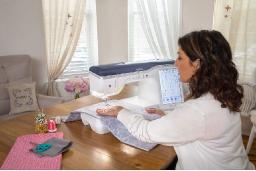
Imagine taking a beautiful digital design and watching it come to life as intricate stitches on fabric. This magic happens through digitized embroidery, where artwork becomes a language your embroidery machine understands. Whether you're personalizing gifts, creating custom apparel, or building an embroidery business, understanding this process unlocks endless creative possibilities.
In this guide, we'll walk through the fascinating journey from screen to stitch, covering everything from how digitizing works to pro tips for flawless results. You'll learn why some designs stitch perfectly while others fail, and how to ensure your creations look professional every time.
Digitized embroidery is the process of converting digital artwork into a file that tells an embroidery machine exactly how to stitch your design. Unlike regular image files, these specialized files (like .PES, .DST, or .EXP) contain:
Precise stitch placement and types
Thread color sequences
Stitch density and direction
Machine commands for jumps and trims
This transformation turns pixels into physical stitches with perfect precision.
You might wonder why you can't just upload any image to your embroidery machine. Here's why proper digitizing matters:
Fabric Considerations: Designs must account for material stretch and stability
Stitch Limitations: Embroidery can't replicate all printed effects
Durability: Proper digitizing prevents unraveling and maintains shape
Visual Quality: Expert digitizing creates dimension and preserves details
Without good digitizing, even beautiful designs can end up puckered, distorted, or missing important elements.
Best practices for your source file:
Vector files (AI, EPS) work best for clean conversions
Simplify complex designs before digitizing
Consider final size - small details may disappear
High contrast helps maintain definition
The building blocks of your design:
Satin stitches (for borders and text)
Fill stitches (for large color areas)
Running stitches (fine details and outlines)
The hidden foundation that makes designs pop:
Edge run for crisp satin stitch borders
Center walk stabilizes large fill areas
Zigzag provides flexibility for stretch fabrics
Professional touches that elevate your work:
Adjusting stitch density for different fabrics
Setting proper pull compensation
Optimizing stitch sequence to minimize jumps
The step beginners often skip (but shouldn't):
Always stitch a sample on scrap fabric
Make adjustments based on real results
Save multiple versions for different applications
Wilcom EmbroideryStudio (industry standard)
Pulse Ambassador (great for advanced users)
Hatch Embroidery (user-friendly professional option)
Embrilliance (excellent for beginners)
SewArt (affordable with good basic features)
Ink/Stitch (free open-source option)
Graphics tablet for precise editing
Quality embroidery threads for testing
Various fabric types to test different settings
Overcomplicating Small Designs
Simplify logos under 3 inches
Remove unnecessary details
Ignoring Fabric Characteristics
Digitize differently for stretchy vs. stable fabrics
Adjust density based on material
Poor Stitch Sequencing
Plan efficient stitch paths
Minimize jumps between sections
Skipping the Test Stitch
Always check your design on scrap fabric
Make adjustments before final production
Using Too Many Colors
Limit palette for cleaner results
Combine similar shades when possible
Use foam underlay for raised designs
Layer stitches for shadow effects
Vary stitch angles to create texture
Convert gradients using layered fills
Use directional stitching for lifelike textures
Combine stitch types for depth
Metallic thread techniques
Appliqué integration
Mixed-media combinations
Exciting developments changing the craft:
AI-assisted digitizing for faster turnarounds
Augmented reality previews of stitched designs
Cloud-based collaboration for design teams
Eco-friendly digitizing to reduce waste
Online courses (Domestika, Udemy, Embroidery Legacy)
YouTube tutorials (John Deer, Anita Goodesign)
Community forums (Reddit's r/MachineEmbroidery)
Start with simple shapes and text
Practice on stable fabrics like cotton twill
Master basic stitches before attempting complex effects
Be patient - every mistake teaches you something
Digitized embroidery is where technology meets tradition, transforming digital art into tactile creations. While the learning curve can seem steep at first, each project builds your skills and confidence. Remember that even the most intricate designs begin with mastering the basics.
Whether you choose professional software or start with free tools, the key is consistent practice. Test every design, learn from each stitch-out, and don't be afraid to experiment. Your perfect stitch awaits - what will you create first?
| No comments yet. Be the first. |
