


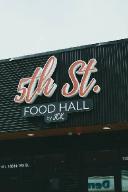
Seasonal promotions give Los Angeles businesses opportunities to connect with customers throughout the year. Retail stores may introduce holiday collections, restaurants may promote limited-time menus, and service providers may advertise seasonal offers. These campaigns often require temporary signage that communicates information quickly while fitting the business's existing visual identity.
The challenge is that promotional displays can accumulate. A storefront may have posters, window stickers, banners, digital displays, and printed notices competing for attention. When every campaign introduces a different style, the business can begin to look disorganized.
A planned approach to temporary signage allows businesses to communicate timely messages without weakening their overall brand presentation.
Before designing a seasonal sign, businesses should decide what customers need to know. A promotional display might announce a limited-time offer, introduce a new product, communicate holiday hours, or direct customers toward a specific service.
Each sign should have one main message. If a single display attempts to explain several offers, include lengthy descriptions, and advertise unrelated products, customers may struggle to understand its purpose.
A useful planning exercise is to write the message in one sentence before beginning the design. The headline should communicate the main benefit, while secondary information can provide details such as dates, conditions, or a location.
This approach helps businesses avoid overcrowded layouts.
Seasonal campaigns may use different themes, but they should still look like they belong to the same business. A recognizable logo, consistent typography, and a stable color system can connect temporary promotions with permanent storefront signage.
Businesses can create a simple set of design rules for promotional materials. These rules might define logo placement, headline size, background colors, image treatment, and the amount of text allowed on each display.
For example, a retailer might use a consistent logo position and typeface throughout the year while changing the accent colors to suit individual campaigns.
Well-designed vinyl signs los angeles businesses use for promotional applications can support this strategy when the material and adhesive are appropriate for the surface and duration of the campaign.
Not every promotion belongs on the storefront window. The sign's placement should reflect where customers need the information.
A limited-time offer may be appropriate near the entrance, while a product announcement might work better near the relevant display. Information about a service could be positioned at a reception counter or consultation area.
Businesses should map their customer journey and identify natural points where information will be useful. This reduces the temptation to cover every available surface with advertising.
For window displays, businesses should preserve enough clear glass to maintain visibility into and out of the premises where appropriate. Excessive coverage can make a storefront appear closed or prevent customers from seeing the products inside.
A strong promotional sign gives customers a clear reading path. The headline should attract attention, the supporting message should explain the offer, and the final detail should tell customers what to do next.
For example, a restaurant promotion might use this order:
Seasonal menu announcement.
A short description of the featured offering.
The promotion's valid dates.
A simple instruction for ordering or asking staff.
The same principle applies to retail stores and service businesses. The main message should be visible first, with secondary information presented in a smaller but readable format.
Businesses should avoid using too many font styles, decorative effects, or competing colors. A simple layout can often communicate more effectively than a complicated one.
Promotional signage may be displayed in windows, on exterior walls, near checkout counters, or throughout the interior. Each environment creates different design requirements.
Outdoor displays must account for sunlight, dust, wind, and occasional rain. Materials should be selected according to the expected exposure period and mounting surface.
Inside a store, lighting and customer movement influence visibility. A sign positioned behind a reflective glass case may be difficult to read, even if its design looks clear on a computer screen.
Businesses planning los angeles custom indoor sign displays for seasonal campaigns should consider viewing distance, lighting, wall color, and the amount of information customers need at that location.
A design review should include actual photographs or measurements of the intended installation area rather than relying only on a digital mock-up.
One common problem with seasonal displays is that they remain in place after the promotion ends. Outdated offers can confuse customers and make the business appear poorly maintained.
Every temporary sign should have an assigned start date and removal date. Businesses can maintain a simple promotional calendar that records:
The campaign name.
The installation location.
The display start date.
The promotion's end date.
The person responsible for removal.
Whether the sign can be reused or must be replaced.
This process is especially useful for businesses running several promotions throughout the year.
The removal process should also protect the surface beneath the sign. Adhesives and mounting methods should be suitable for the material so that taking down a display does not damage windows, painted walls, or other finishes.
A primary business sign should communicate the company's identity. Temporary promotions should support that identity rather than compete with it.
Businesses should avoid changing permanent sign designs every time a new campaign begins. Instead, they can use removable promotional graphics, freestanding displays, or dedicated information areas.
This separation helps customers distinguish the business itself from its current offers. It also allows permanent signage to remain consistent over time.
Seasonal promotions can attract attention and communicate useful information, but too many temporary displays can make a business look cluttered. Los Angeles businesses can avoid this problem by defining each campaign's purpose, using consistent design rules, choosing appropriate locations, and removing outdated displays promptly.
A well-managed promotional signage plan gives customers clear information while preserving the storefront's overall appearance. The most effective seasonal displays are not necessarily the largest or brightest. They are the ones that communicate the right message in the right place.