


Kitchen lighting is one of those renovation details that doesn't always make the top of the priority list. Homeowners planning a full kitchen remodel tend to focus on cabinets, countertops, and appliances first, which makes sense given the cost involved. But lighting is one of the most cost-effective updates a Columbus homeowner can make, and it has an outsized effect on how a kitchen looks and functions day to day. Here's a look at why lighting matters, what the options are, and how an upgrade pays off.
Why Kitchen Lighting Is Worth Prioritizing
Most kitchens in Columbus homes built before 2000 have one or two ceiling fixtures doing all the work. A single flush-mount light in the center of the ceiling leaves most of the counter space in shadow, which makes food prep harder and makes the kitchen feel darker and smaller than it actually is. Overhead lighting alone, regardless of how bright the bulb is, doesn't solve the problem because it creates shadows on any work surface that falls below a cabinet.
Good kitchen lighting uses multiple layers working together. Ambient lighting provides overall room illumination. Task lighting directs light specifically to the areas where work gets done. Accent lighting highlights design features or adds warmth to the space. When all three layers are working, a kitchen feels noticeably different, brighter without being harsh, and more functional without any change to the cabinets, countertops, or appliances.
The Most Impactful Lighting Upgrades for Columbus Kitchens
Recessed Lighting
Switching from a single ceiling fixture to a grid of recessed lights is one of the most common lighting upgrades in Columbus kitchen renovations. Recessed lighting, also called can lighting, distributes light more evenly across the ceiling and reduces the harsh shadows that come with a single central source. In Columbus kitchens, a typical layout might include six to ten recessed fixtures depending on the size of the room, wired to a dimmer so the brightness can be adjusted based on the time of day or activity.
The cost of adding recessed lighting to an existing kitchen in Columbus typically runs between $1,500 and $4,000 depending on how many fixtures are added and how much new wiring is required. It's one of the higher-return lighting investments because it's immediately visible and consistently noticed by buyers during showings.
Under-Cabinet Lighting
Under-cabinet lighting is the single most functional lighting upgrade available for counter work. LED strips or puck lights mounted to the underside of upper cabinets direct light exactly where food prep happens, eliminating the shadow cast by the cabinet itself. In Columbus kitchens where counter space is limited and the existing lighting doesn't reach the work surface, under-cabinet lighting makes a noticeable practical difference.
Hardwired under-cabinet lighting is the cleaner solution and the one most Columbus contractors recommend, since it eliminates visible cords and can be connected to the same switch or dimmer as the rest of the kitchen lighting. Plug-in options are available as well, but they tend to look less finished. The Kitchen Consultants and similar Columbus remodeling firms often include under-cabinet lighting as part of a full kitchen renovation package because it contributes meaningfully to how the finished kitchen functions and photographs.
Pendant Lights Over Islands & Peninsulas
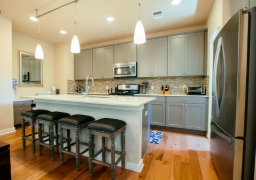
Pendant lights over a kitchen island or peninsula serve both a functional and a design purpose. They bring light closer to the work and seating surface, which is more effective than relying solely on ceiling fixtures for that area, and they add a visual element that gives the island more presence in the overall room. In Columbus kitchens, pendant lights are typically hung in sets of two or three, spaced evenly over the island at a height of about 30 to 36 inches above the countertop surface.
The style range for pendants is wide, from simple glass globes to industrial metal shades to more decorative options. Columbus homeowners are currently leaning toward finishes that coordinate with the cabinet hardware and faucet finish, most commonly matte black, brushed gold, and brushed nickel.
Dimmer Controls
Adding dimmer controls to kitchen lighting upgrade columbus oh is an inexpensive upgrade that significantly increases the flexibility of any lighting setup. The ability to lower ambient light during dinner while keeping task lighting brighter, or to bring the whole room down to a warmer level in the evening, changes how the kitchen feels across different times of day. In Columbus homes where the kitchen opens to a dining or living area, dimmers also help the two spaces feel more connected when entertaining.
How Kitchen Lighting Affects Resale in Columbus
Buyers notice lighting, even if they don't consciously register why a kitchen feels more or less appealing than another. A well-lit kitchen photographs better, which matters in a market where most buyers start their search online. It also shows better in person because bright, evenly distributed light makes the space feel larger and more inviting.
Columbus real estate agents consistently include lighting as one of the low-cost, high-impact updates they recommend before listing a home. Recessed lighting in particular tends to come up as a feature that buyers associate with a well-finished, updated kitchen even when other elements haven't been renovated. The return on a lighting upgrade isn't always captured in a specific dollar figure at appraisal, but it tends to generate better buyer response and support a stronger negotiating position.
Starting With a Lighting Assessment
For Columbus homeowners planning any level of kitchen update, getting a lighting assessment as part of the planning process makes sense. A contractor or designer who looks at the existing layout can identify which fixtures are underperforming, where shadows are falling, and what combination of changes will deliver the most improvement for the budget available. Lighting is rarely the only thing being updated in a kitchen renovation, but it deserves more attention in the planning process than it typically gets.
| No comments yet. Be the first. |
