


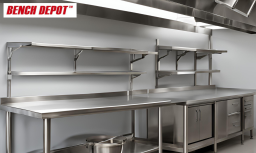
Walk into any busy workshop or warehouse, and you’ll notice something right away when the workspace isn’t set up properly, everything slows down. Tools go missing, workers struggle with uncomfortable setups, and productivity quietly takes a hit.
That’s where the right industrial work benches come in. They’re not just surfaces to work on they’re the foundation of efficiency, safety, and long-term performance. Choosing the right one isn’t about picking the first sturdy table you find. It’s about matching your workspace needs with a solution that actually supports how work gets done.
This guide breaks it down in a practical, no-nonsense way so you can make a decision that pays off for years, not months.
At a glance, they might look like heavy-duty tables, but industrial workbenches are purpose-built for demanding environments. Unlike standard tables, they’re designed to handle weight, withstand wear, and support repetitive tasks without breaking down.
You’ll typically find them in:
What sets them apart is their structure and intent. These benches are engineered to support tools, equipment, and workflows not just hold items temporarily.
Start with Your Workspace Needs (Don’t Skip This Step)
Before looking at materials or features, take a step back and ask a simple question:
What exactly are you going to use it for?
It sounds obvious, but this is where many buyers go wrong.
Think about:
A bench that works perfectly in a lab might fail in a fabrication unit. The better you understand your needs upfront, the easier it becomes to filter out the wrong options.
This is non-negotiable. Every workspace has weight demands, and your bench needs to meet them without compromise.
Overloading a bench doesn’t just reduce its lifespan it creates safety risks. Always choose a capacity that exceeds your daily requirements, not just matches them.
The material you choose directly affects durability, maintenance, and usability.
Each material serves a purpose it’s less about “best” and more about “best for your use.”
A bench that’s too large wastes space. Too small, and it limits productivity.
Measure your workspace carefully and consider:
Standard sizes work for many setups, but if your operations are specific, custom sizing can make a noticeable difference.
A good workbench doesn’t just hold tools it organizes them.
Look for:
Features like these reduce clutter and improve efficiency, especially in fast-paced environments.
Most people focus on strength and ignore comfort but that’s a mistake.
Comfort isn’t a luxury it’s a productivity tool.
Poor ergonomics lead to fatigue, slower work, and even injuries over time. On the other hand, a well-designed bench:
Height-adjustable benches are especially useful in environments where multiple users share the same workspace.
Not all workspaces are static.
If your workflow changes often, mobility can be a major advantage. But for high-load applications, stability should always come first.
Different industries demand different features, and overlooking this can lead to poor performance.
Choosing a generic option for a specialized task usually ends up costing more in the long run.
Even experienced buyers slip up here.
Some of the most common mistakes include:
A slightly higher upfront investment in the right bench often saves high costs down the line.
It’s easy to think of a workbench as just another expense but in reality, it’s an investment in how your workspace performs every day.
High-quality industrial work benches:
When you factor in downtime, repairs, and productivity losses, the cheapest option rarely turns out to be the most economical.
The product matters but so does where you get it from.
A reliable supplier should offer:
This is where a brand like Bench Depot stands out. With a focused range of industrial-grade solutions, they offer workbenches designed for real-world demands not just catalog specs.
Choosing the right industrial work benches isn’t about ticking boxes it’s about understanding how your workspace operates and selecting a solution that supports it.
From load capacity and materials to ergonomics and industry-specific needs, every detail plays a role. Get it right, and you’ll see the difference in productivity, safety, and overall efficiency.
Take your time, evaluate your requirements carefully, and invest in a solution that’s built to last. Because in a demanding work environment, the right foundation makes all the difference.
| No comments yet. Be the first. |
