


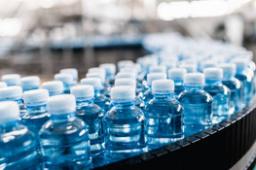
Bottled water has a distinctive role in Israel's beverage landscape because hydration is closely connected with the country's hot, dry climate and recurring water-resource pressures. Beyond routine consumption, households may also consider bottled water as part of emergency preparedness, creating demand patterns that differ from those of many discretionary beverages.
According to the supplied Vyansa Intelligence analysis, the Israel bottled water sector was valued at USD 550 million in 2025 and is projected to reach USD 615 million by 2032, representing a 1.61% CAGR from 2026 to 2032.
Still bottled water accounts for approximately 60% of the sector, making it the leading water category in Israel. The supplied analysis associates this position with the product's neutral taste, everyday usability, perceived reliability, and suitability for consumers across different age groups.
Still water also fits naturally into household preparedness. Unlike flavoured or more specialized beverages, it can be stored and consumed across a wide range of situations. Its simplicity makes it suitable for both routine hydration and stockpiling.
This dual role helps explain why bottled water can function as more than a conventional beverage purchase in Israel.
Israel experiences long, dry summers and periods of high temperatures, conditions that increase the importance of regular hydration. The supplied report identifies climate stress and heatwaves as a central factor supporting bottled-water demand.
The effect is particularly relevant during extended periods of hot weather, when consumers may increase their attention to water availability and portability.
For bottled-water producers, climate conditions therefore create a relatively practical demand environment. The category is associated with an everyday need rather than depending entirely on changing tastes or discretionary spending.
Preparedness has become another factor influencing household purchasing behaviour. The supplied report notes that emergency-readiness guidance since late 2023 has encouraged households to maintain sufficient water reserves, supporting demand for bulk bottled-water formats.
This creates a consumption pattern that differs from ordinary beverage purchasing. Consumers may buy water not only for immediate use but also to maintain household reserves.
Larger bottles and multi-pack formats can therefore become particularly relevant because they support stockpiling and reduce the frequency of individual purchases.
Trust in drinking-water quality is an important consideration for both bottled and tap water. Israel's Ministry of Health operates an online database providing drinking-water laboratory results and states that it monitors water quality through microbiological and chemical testing across the supply chain.
The Ministry's drinking water framework includes regular monitoring of microbial and chemical indicators, with regulations defining parameters, testing locations, and testing frequency.
This regulatory environment provides broader context for bottled-water consumption. Product quality, transparency, and consumer confidence remain important considerations when water is purchased specifically for drinking and household preparedness.
Off-trade channels account for approximately 85% of bottled-water sales, according to the supplied report. Grocery retailers, convenience stores, supermarkets, hypermarkets, and smaller local retailers form the core distribution network.
This structure fits the everyday and preparedness-oriented nature of bottled-water purchases. Consumers can obtain water during regular grocery trips, while supermarkets and other larger outlets can support bulk purchasing.
Convenience stores also remain relevant because they provide immediate access to individual bottles, particularly for consumers travelling or spending time outdoors during hot weather.
Pack size is particularly relevant to the Israeli bottled-water category. While smaller bottles provide portability, larger containers and multipacks can support household storage.
The supplied report identifies climate-adaptive and preparedness-led product positioning as an opportunity, including larger formats, durable containers, and convenient bulk packs.
This does not necessarily mean that consumers are moving away from smaller formats. Instead, different pack sizes can serve distinct occasions. Individual bottles address mobility and immediate hydration, while larger formats support household consumption and emergency reserves.
Health and wellness are also influencing beverage choices. The supplied analysis identifies a shift toward simpler hydration products and lower-sugar consumption, creating an environment favourable to still and lightly flavoured bottled water.
Water can occupy a relatively straightforward position within this shift because it does not require consumers to balance hydration with sugar or other ingredients commonly associated with soft drinks.
This health-oriented positioning may help bottled water maintain its relevance even when consumers become more selective about discretionary beverage purchases.
Israel's water environment also creates an important contradiction. The same resource pressures that reinforce attention to hydration can create challenges for the broader bottled-water supply chain.
The supplied report identifies structural water stress and supply reliability concerns as a major challenge, noting that water scarcity increases vulnerability to drought, heatwaves, and operational pressures.
The Ministry of Health's extensive monitoring framework illustrates the importance placed on maintaining safe drinking-water supplies. Its regulations cover microbiological, chemical, and other quality parameters, while periodic reports provide public information on testing results.
Bottled water also creates packaging considerations. PET remains important because it provides portability, durability, and relatively efficient transportation.
However, packaging waste and material use can become more visible as consumers and policymakers focus on environmental performance.
For producers, packaging decisions increasingly involve balancing convenience with material efficiency, recyclability, transport requirements, and consumer expectations. Larger formats can potentially reduce packaging relative to the volume of water supplied, while smaller formats remain important for portability.
The supplied report indicates an opportunity for brands to position bottled water around reliability, heat resilience, hydration, and household preparedness rather than relying primarily on premiumisation.
This is a notable distinction. In many beverage categories, premium positioning is associated with enhanced flavours, ingredients, or branding. In Israel's bottled-water environment, practical functionality can be equally relevant.
Products and pack formats that make sense for everyday hydration, outdoor activity, travel, or household reserves can therefore address concrete consumer requirements.
The strong share of off-trade sales also demonstrates the importance of accessibility. Bottled water needs to be available where consumers routinely shop, particularly when demand is driven by everyday hydration rather than occasional indulgence.
Supermarkets can support larger household purchases, while convenience retailers can address immediate needs. E-commerce provides another channel, although the supplied analysis indicates that it remains complementary to established physical retail.
This combination gives bottled-water producers several routes to consumers while maintaining the importance of traditional grocery distribution.
Israel's bottled-water landscape is likely to remain shaped by practical hydration requirements rather than rapid shifts in discretionary beverage preferences.
Still water should continue to form the core of consumption, supported by its simplicity, everyday usability, and suitability for household storage. Off-trade retailers will remain important because they provide the accessibility and volume options required for both routine purchases and preparedness.
Climate conditions, health-oriented beverage choices, water-quality expectations, and emergency readiness will continue to influence consumer behaviour. At the same time, producers will need to manage packaging considerations and the logistical implications of supplying water within a structurally water-stressed environment.
Overall, the sector's development will be shaped by climate adaptation, household preparedness, water quality, retail accessibility, health-conscious hydration, packaging efficiency, and reliable supply. These factors give bottled water a distinctive role within Israel's broader beverage and household-consumption landscape.
| No comments yet. Be the first. |
