


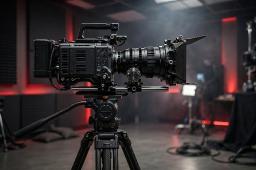
Businesses need clear and engaging ways to explain their products, services, and values to potential customers. Professional video production dubai services can help companies communicate complicated ideas through visual storytelling, meaningful messages, and carefully planned scenes. However, successful content requires more than attractive footage. It needs a defined audience, a clear purpose, and a message that viewers can understand quickly. Companies can also extend their digital experiences through interactive products, including games that encourage participation rather than passive viewing. By connecting creative planning with practical business objectives, brands can develop content that supports awareness, communication, and customer engagement.
Before cameras, lighting equipment, or editing software enter the process, businesses should decide what the video must achieve. A corporate film may introduce a company to potential partners, while a product demonstration may explain how a particular solution works. An event video might capture important moments for future marketing, internal communication, or public relations.
A useful brief answers four questions: Who should watch the video? What information should they remember? What action should they take afterward? Where will the finished content appear?
For example, a property developer introducing a new residential project may need a film showing the location, amenities, architecture, and lifestyle. The same developer might require short vertical videos for social platforms and a longer presentation for prospective investors. Planning these deliverables together can reduce repeated filming and improve consistency.
A written objective also helps the production team make better creative decisions. Every scene should contribute to the main message rather than exist simply because it looks impressive.
Effective video storytelling focuses on the viewer's needs. Instead of beginning with a long list of company achievements, a business can introduce a problem its audience recognises and explain how its service addresses that problem.
A practical corporate video structure includes an opening that captures attention, a middle section that explains the solution, and an ending that provides a clear next step. This approach gives viewers a logical reason to continue watching.
Consider a technology company launching a business application. The video could first show employees struggling with disconnected systems. It could then demonstrate how the application simplifies everyday tasks before explaining where interested customers can learn more.
Authenticity matters throughout this process. Real demonstrations, accurate product details, relevant examples, and clear narration help audiences understand what a company actually offers. Unsupported promises may attract attention briefly, but they can weaken trust when the product fails to match the presentation.
Businesses should also consider language, accessibility, cultural context, and viewing habits when developing scripts for audiences across the UAE.
Different messages require different visual approaches. Live-action filming works well when viewers need to see real people, locations, products, or workplace activities. Two-dimensional animation can simplify processes, while three-dimensional animation can demonstrate equipment, buildings, and products that are difficult to film.
A combination of live action and animation may suit projects involving both human experiences and technical explanations. Editing, colour grading, sound design, subtitles, and visual effects then bring the material together into a consistent final presentation.
Format selection also affects production planning. A widescreen corporate film may work well on a website or presentation screen, while vertical versions can suit mobile viewing. Planning these formats before filming helps the crew capture suitable compositions and prevents important information from being lost during cropping.
Businesses considering video production should request a delivery list that identifies aspect ratios, resolutions, subtitles, duration, and intended platforms. Clear specifications make approval easier and reduce unnecessary revisions.
Video can introduce an idea, explain a product, or demonstrate a brand's personality. Interactive experiences provide another way for audiences to participate. For example, an exhibition stand might use a short introductory film to attract visitors and then invite them to try a branded game on a touchscreen.
This combination can make a campaign more memorable because visitors can move from watching information to exploring it themselves. A manufacturer could create a simple challenge that teaches users about product features, while a training provider might develop a simulation that tests decision-making.
The interactive element must still serve a clear purpose. Complicated controls, unclear instructions, and unnecessarily long sessions can discourage participation. Designers should make the first action obvious and ensure that the experience works reliably on its intended hardware.
Businesses planning such projects can explore Zaini Media's game development services, which cover mobile, PC, web, branded, and interactive experiences. Selecting the right format depends on audience behaviour, project scope, distribution, and available resources.
A structured workflow helps creative projects remain organised. The process usually begins with discovery and strategy, followed by scripting, storyboarding, production, editing, review, and delivery.
During pre-production, teams should confirm locations, schedules, participants, permissions, equipment, and the required deliverables. These decisions reduce avoidable delays on filming days.
During production, a shot list helps ensure that essential scenes are captured. For instance, a corporate film may need an exterior building shot, employee interviews, workplace activity, product demonstrations, and supporting footage for transitions.
Post-production then turns these materials into a coherent story. Reviewers should check factual accuracy, spelling, audio clarity, branding, subtitles, and technical specifications. One person should consolidate feedback wherever possible, because conflicting comments from several reviewers can extend editing unnecessarily.
Testing the final files on relevant devices is equally important. A video that looks clear on a desktop may contain small text that becomes difficult to read on a phone. Early checks help prevent such problems before publication.
Creative quality matters, but businesses also need to understand whether their content achieves its intended purpose. Suitable performance measures depend on the campaign objective.
For awareness campaigns, teams may examine reach, impressions, and completed views. Educational videos may be evaluated through viewing duration, audience questions, or visits to supporting resources. Sales-focused content may require tracking enquiries, conversions, and qualified leads.
For example, if viewers leave a product video before reaching its main demonstration, the introduction may be too long. If viewers complete the video but rarely visit the product page, the call to action may need improvement.
Results should be interpreted alongside campaign context. A low number of enquiries does not automatically mean the video failed; the landing page, audience targeting, offer, and distribution may also influence outcomes.
Documenting these findings creates a useful reference for future campaigns and helps teams make decisions based on evidence rather than assumptions.
Businesses can create stronger digital experiences by combining clear objectives, relevant storytelling, suitable production formats, and measurable outcomes. A professional video project should explain a meaningful message rather than simply display attractive images. Interactive experiences can extend that message when participation supports the campaign's purpose.
Working with a creative studio that understands both content and digital development can help organisations coordinate these elements. Companies evaluating video production dubai services should review relevant work, clarify deliverables, and agree on approval stages before production begins.
A business exploring interactive campaigns can also consider a mobile game development company when its objectives involve branded games, product education, customer participation, or training.
Prepare the objective, target audience, key message, preferred platforms, budget range, deadline, and any existing brand materials. These details help the production team develop a realistic proposal.
The timeline depends on scripting, filming requirements, animation, approvals, and editing. A clear brief and timely feedback can help reduce delays.
Yes. With advance planning, a main film can produce shorter edits, vertical clips, subtitled versions, and presentation formats. Each version should remain appropriate for its intended audience.
Games can support exhibitions, product education, training, and promotional activities when participation provides genuine value. The format should match the audience, objective, and available technology.
| No comments yet. Be the first. |
