


Buying SOL is only the beginning of your journey with the Solana network. Once those tokens are sitting in your wallet, you have a choice. You can leave them untouched, or you can use them to take part in the network through staking.
Many people hear about staking rewards and assume the process is simple. Delegate your SOL, wait for rewards, and watch your balance grow. While the idea is straightforward, the amount you may receive is influenced by several factors working together.
Learning what affects staking rewards can help you make better decisions and set realistic expectations. Whether you are new to Solana staking or looking to improve your current approach, knowing how the process works is a valuable first step.
Solana uses a Proof of Stake consensus mechanism to keep the network secure and process transactions. Instead of relying on mining, the network depends on validators that verify transactions and maintain blockchain operations.
When you delegate your SOL to a validator, your stake helps support the validator's participation in the network. In return, eligible participants may receive staking rewards based on network rules and validator performance.
These rewards are designed to encourage participation while helping maintain a secure and decentralized blockchain.
It is easy to think that every validator offers the same results, but that is not how staking works. Several elements can affect the rewards you receive over time.
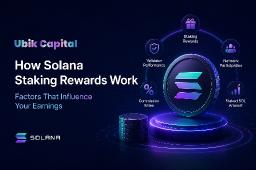
Some of the biggest factors include:
Since these factors can change, staking rewards may also vary over time.
One of the most important decisions you will make is selecting a validator.
Validators are responsible for processing transactions and participating in consensus. A well-operated validator with strong performance is generally better positioned to earn rewards consistently than one with frequent downtime.
When choosing a validator, consider looking at:
Taking a little extra time to research validators can make a meaningful difference over the long term.
Validators typically charge a commission on staking rewards. This fee helps cover the costs of operating and maintaining validator infrastructure.
A lower commission may sound attractive, but it should not be the only factor guiding your decision. Reliable infrastructure, consistent performance, and long-term commitment to the network are equally important.
Rather than focusing on fees alone, look at the overall quality of the validator's service.
Your rewards are not fixed because the Solana network itself continues to evolve.
Several network conditions may influence reward levels, including:
These changes are a normal part of how Proof of Stake networks operate. Reward rates may increase or decrease over time based on these conditions.
While rewards are an attractive part of staking, they are only one piece of the bigger picture.
When you stake Solana, you also help strengthen the network by supporting validators that keep the blockchain running securely. Greater participation contributes to decentralization, making the network more resilient over time.
For many long-term SOL holders, supporting the network is just as important as the rewards they may receive.
It can be tempting to compare reward rates every few weeks, but staking is generally better suited for people who take a longer-term view.
Before choosing a validator, ask yourself a few questions:
Looking beyond short-term fluctuations can help you choose an approach that aligns with your broader goals.
Successful staking is not about chasing the highest advertised numbers. It is about making informed choices and selecting a validator that consistently supports the network.
A reliable validator, realistic expectations, and patience often create a better staking experience than focusing only on short-term reward changes. If you are looking for trusted validator infrastructure, Ubik Capital supports multiple Proof of Stake networks with a focus on security, transparency, and consistent performance. They are committed to helping users participate in staking while contributing to the security and decentralization of blockchain networks.
Connect with them to learn how they can support your staking journey.
| No comments yet. Be the first. |
