


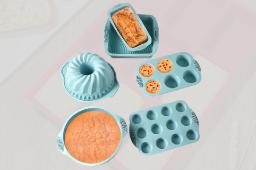
Food-grade silicone mold making cost usually depends on the mold's size, complexity,
material, and production volume. Small businesses should start with a prototype or low-
cavity mold to reduce upfront costs before investing in a larger production mold. Also, they
should choose a custom, food-grade silicone mold option rather than beginning with general
silicone manufacturing because custom molds can help businesses create specific shapes,
sizes, and product designs.
Through custom tooling, companies can develop products that standard molds may not
accommodate. These can also withstand the temperatures required for many baking,
freezing, and confectionery applications. This blog covers the cost factors, budgeting
considerations, and planning process involved in ordering food-grade custom silicone molds
for small businesses.
● Intended Food Application: Manufacturers use mold design and materials
depending on the intended use. They can make molds for uses including baking,
chocolate making, candy making, ice, frozen foods, and decorative purposes.
● Baking and Chocolate Use: Baking molds can handle oven temperatures and
repeated handling during product release. Chocolate molds may need smooth
cavities that support clean shapes and easy removal.
● Candy, Ice, and Frozen Foods: Candy molds can bear intricate designs and
multiple uses during the production process. The manufacturing team ensures molds
used for ice or frozen food are flexible enough even under cold temperatures.
● Material Suitability: They also make sure that the right silicone material is used for
the food application and expected operating conditions for the Custom Silicone
Molds Food Grade process. They consider temperature exposure, flexibility,
durability, repeated use, and intended food contact when selecting the material.
● Compliance and Testing: The skilled engineering team conducts rigorous quality
checks to ensure they meet compliance requirements based on the intended market
and application during the Food Grade Silicone Mold Making process. Businesses
should confirm available testing, documentation, and applicable requirements directly
with the manufacturer.
● Small-Batch Production: A bakery making a few hundred products may need a
practical mold that supports flexible production without unnecessary complexity. In
this case, cavity count, mold size, storage, and expected usage can affect the choice.
The cost of custom food-grade silicone molds depends on more than the silicone itself. A
small business should review each part of the project because design complexity, production
needs, and development work can all change the final price.
Shape, size, surface detail, number of cavities, and mold construction can influence the
amount of design and manufacturing effort necessary. Close tolerances and intricate shapes
can also call for more accurate manufacturing techniques.
Manufacturers can begin with an initial design and prototype before the final mold is
manufactured through the Food Grade Silicone Mold Making process. The expert team
doing thorough testing can reveal changes needed in dimensions, cavity details, or mold
structure, which can add development time and cost.
Silicone Material Selection:
Different silicone formulations and grades may have different prices based on their intended
use and performance. Businesses should consider flexibility, temperature conditions,
durability, and expected reuse before selecting the material.
Production Quantity:
In the case of small production batches, there can likely be high mold costs per unit due to
the high initial mold cost being shared by only a few units. With medium or large orders,
however, this high mold cost can be shared among more units.
When requesting a quote, businesses should ask about mold design, material, cavity
configuration, prototype requirements, production quantity, testing requirements, and
packaging or finishing needs. A reliable Silicone Food Grade Mold Manufacturer can use
these details to prepare a quote that reflects the actual project requirements.
For businesses doing Food Grade Silicone Mold Making, reviewing these cost elements
before production helps small businesses understand what they are paying for. Therefore,
they should consider the final price of Custom Silicone Molds Food Grade alongside the
mold's expected production use and service life.
Start With the Final Product
Before asking for a price, businesses should define the product that the mold must create.
They should keep in mind its dimensions, shape, intended food, expected production
volume, and how long the mold should last.
Separate One-Time and Recurring Costs
Then they must separate design and development expenses from the actual mold-making
cost. Also account for per-unit production, testing, quality checks, and other recurring
expenses to build a clearer budget for Food Grade Silicone Mold Making.
Compare Quotes Using the Same Specifications
Two quotes may look different because suppliers are pricing different materials, mold sizes,
cavity numbers, or production volumes. When comparing Custom Silicone Molds Food
Grade, they should make sure each manufacturer is working from the same specifications
and quality requirements
Ask for a Detailed Quote
After that, they have to give the manufacturer complete project information before requesting
a final price. An experienced Silicone Food Grade Mold Manufacturer can provide a more
useful quote when the required design, material, quantity, and production conditions are
clearly defined.
Thus, with this approach, manufacturers can also make Custom Silicone Molds Food
Grade easier to budget because each major cost can be reviewed before production begins.
Not all Food Grade Silicone Mold projects have set prices. The total price may often depend
on design, materials, quantity, customization, and required quality. It is important that small
businesses know what kind of product and molds they need before getting quotes to
compare. By having a clearly defined specification, the manufacturer can provide a more
precise quote for Food Grade Silicone Mold Making. By looking at each cost component,
they can budget more effectively for Custom Silicone Molds Food Grade.
Small businesses need more than a basic mold price. Design complexity, material selection,
sampling, and order volume can affect costs. Share your product requirements with
FoodSafe Silicone Molds to discuss your project needs. Their team can evaluate suitable
mold construction, production requirements, and potential cost factors. This creates a clearer
starting point before committing to production.
1. How can mold geometry affect the total tooling cost beyond the initial
design?
Cavity depth issues, thin wall sections, tight tolerances, undercuts, and hard release areas
may make production and tooling more complicated. This process can be made easier
through the consideration of how the geometry will perform in production rather than just its
appearance.
Product teams should confirm cavity dimensions, expected cycle volume, operating
temperatures, material requirements, tolerances, and expected mold life. Businesses must
review Custom Silicone Molds Food Grade against the actual production process to avoid
approving a design that creates problems during manufacturing.
An increased initial cost can be justified where the tooling offers improved durability,
reliability, or a design that suits larger production quantities in the future. In the case of
Custom Silicone Molds Food Grade, OEM should assess the initial tooling cost in relation to
production quantities.
A professional Silicone Food Grade Mold Manufacturer should be able to explain its
material options, production capabilities, quality controls, tolerances, testing support, and
inspection process. OEM teams should also clarify how design changes, tooling revisions,
defects, and replacement molds will be handled.
Changes made to cavity sizes, material specifications, tolerances, finishes, or manufacturing
quantities at a later time may entail additional development or tooling activity. Product
managers should establish important specifications earlier and determine which
specifications remain fixed prior to accepting Custom Silicone Molds Food Grade.
| No comments yet. Be the first. |
