


The global industrial landscape relies heavily on the integrity of structural connections and heavy machinery. As infrastructure expands and industrial operations scale up, the need for precise, high-capacity fastening tools has become more critical than ever. Central to these operations is the hydraulic torque wrench, a specialized tool engineered to apply precise torque to large bolted joints. According to a comprehensive market study by The Insight Partners, the global hydraulic torque wrench market is on a robust growth trajectory, driven by increasing automation, stringent safety regulations, and expanding heavy industries worldwide.
The industrial sector’s shift toward optimized efficiency and advanced mechanical tools is reflected in the market's financial projections. The global Hydraulic Torque Wrench Market size is projected to reach US$ 838.11 Million by 2034 from US$ 503.44 Million in 2025. This steady expansion represents a calculated compound annual growth rate (CAGR) of 5.7% during the forecast period from 2026 to 2034.
This growth is primarily fueled by the accelerating demands of sectors such as oil and gas, power generation (including wind, thermal, and nuclear energy), manufacturing, and mining. In these environments, standard manual tightening tools are inadequate for the large-diameter bolts used in pipeline construction, pressure vessels, and wind turbine towers. The precision offered by hydraulic models minimizes the risk of joint failure, which is crucial for operational safety and preventing costly downtime.
Several key factors are propelling the expansion of the hydraulic torque wrench market. First, the global boom in renewable energy particularly wind energy requires the assembly and maintenance of massive structures that depend on precise tensioning. Hydraulic torque wrenches provide the repeatability and high-powered output necessary to secure wind turbine tower bolts securely.
Second, industrial safety regulations have tightened significantly. Regulatory bodies now enforce strict guidelines regarding joint integrity to prevent catastrophic leaks or structural collapses. Because hydraulic wrenches allow operators to pre-set torque limits with extreme precision, they ensure compliance with these rigid safety mandates. Furthermore, ergonomics play a vital role. These tools reduce human error and minimize the physical strain placed on operators compared to traditional manual heavy impact tools, driving widespread adoption across modern workshops and field construction sites.
Get a PDF Sample– https://www.theinsightpartners.com/sample/TIPRE00022033
The hydraulic torque wrench market features a competitive landscape populated by several major players and specialized engineering firms. These manufacturers continually innovate to develop lighter, more compact, and digitally integrated tools that provide real-time torque data logging. Some of the prominent key players operating in this marketplace include:
ENERPAC – A global leader in high-pressure hydraulic tools, known for robust engineering and heavy-duty industrial solutions.
HTL Group Ltd. – A specialist in controlled bolting and joint integrity solutions, heavily serving the oil and gas sector.
Hydratight Limited – Renowned for providing world-class joint integrity services and specialized industrial bolting equipment.
HYTORC – A pioneer in the industrial bolting industry, famous for introducing innovative, calibration-free, and spark-free hydraulic systems.
ITH GmbH and Co. KG – A leading system provider for fastening technology, offering high-capacity bolting tools and tensioners.
Maschinenfabrik Wagner GmbH and Co. KG – Creators of Plarad bolting systems, focusing on precision, safety, and torque accuracy.
NORWOLF TOOLS – An innovator in unique mechanical and hydraulic bolting tools designed for confined spaces.
Powermaster Engineers Pvt. Ltd. – A major manufacturer and exporter of heavy-duty industrial bolting and maintenance equipment.
TorcUP Inc. – Celebrated for its heavy-duty industrial torque wrenches featuring sleek, highly durable aluminum-titanium alloy designs.
Torq/Lite – A dedicated manufacturer specializing exclusively in the design and production of advanced hydraulic bolting tools.
Future Outlook
Looking ahead, the future of the hydraulic torque wrench market is deeply intertwined with the "Industry 4.0" revolution. The next generation of hydraulic wrenches is shifting toward intelligent systems equipped with Bluetooth connectivity, digital displays, and IoT capabilities. These smart tools allow field technicians to log and store torque data automatically, providing a digital audit trail for critical joint assemblies. Furthermore, the market will likely see a surge in the development of lightweight, ultra-compact profile tools designed to access highly restricted geometries in modern machinery. As infrastructure projects accelerate across emerging economies in Asia-Pacific and Latin America, and the global transition to clean energy intensifies, the reliance on high-performance hydraulic torque wrenches will expand, ensuring steady market progression well into the next decade.
Related Reports-
About Us
The Insight Partners is a one-stop industry research provider of actionable intelligence. We help our clients in getting solutions to their research requirements through our syndicated and consulting research services. We specialize in industries such as Semiconductor and Electronics, Aerospace and Defense, Automotive and Transportation, Biotechnology, Healthcare IT, Manufacturing and Construction, Medical Devices, Technology, Media, and Telecommunications, as well as chemicals and Materials.
Contact Us
If you have any queries about this report or if you would like further information, don’t hesitate to get in touch with us:
Contact Person: Ankit Mathur
E-mail: ankit.mathur@theinsightpartners.com
Phone: +1-646-491-9876
Driven by a strong emphasis on fuel diversification and long-haul fleet modernization, the North American hybrid train market is experiencing substantial growth momentum. Because a vast portion of the continent's extensive freight rail network relies heavily on conventional traction over non-electrified routes, full electrification is often financially and structurally impractical. As a result, major rail operators in the United States and Canada are actively investing in electro-diesel and battery-hybrid locomotives to bridge the gap. This shift is highly accelerated by stringent environmental mandates from federal bodies, along with dedicated financial incentives aimed at reducing idle fuel consumption and minimizing carbon footprints in dense urban corridors.
The global transportation sector is undergoing a profound paradigm shift as industries and governments align to combat climate change, reduce greenhouse gas emissions, and transition away from traditional fossil fuels. At the forefront of this evolution is the rail industry, where hybrid locomotives are rapidly emerging as a viable solution for sustainable, high-efficiency transport. According to a comprehensive study by The Insight Partners, the global Hybrid Train Market size is expected to reach US$ 41.75 Billion by 2034 from US$ 24.09 Billion in 2025. The market is anticipated to register a CAGR of 6.3% during the forecast period 2026–2034. This steady growth reflects a worldwide commitment to modernizing transit infrastructure, optimizing operational expenditures, and meeting stringent environmental targets.
Key Market Drivers and Dynamics
The continuous expansion of the hybrid train market is primarily propelled by escalating regulatory pressures and evolving economic variables:
Environmental Regulations and Sustainability: Governments across Europe, North America, and Asia-Pacific are enforcing rigid carbon emission standards. Hybrid trains—which combine traditional internal combustion engines with advanced electric propulsion and energy storage systems—drastically cut emissions and fuel consumption, making them incredibly attractive to eco-conscious rail operators.
Fluctuating Fuel Costs: Volatile global diesel prices impose a heavy financial burden on rail networks. Hybrid locomotives offer a dual-source energy fallback, relying on battery power or overhead electricity during low-speed urban transits and utilizing alternative fuels or diesel engines for long-haul routes. This flexibility protects operators from energy price shocks.
Technological Innovations: Rapid breakthroughs in high-energy-density lithium-ion batteries and regenerative braking systems have revolutionized transit efficiency. Energy normally lost during deceleration is recaptured and stored, extending the operational range of trains running exclusively on electric energy.
Get a PDF Sample– https://www.theinsightpartners.com/sample/TIPRE00004333
Market Segmentation and Infrastructure Opportunities
The hybrid train ecosystem spans various operational structures tailored to modern transit needs. Segmented by operating speeds, the market caters to lines below 100 km/h, 100–200 km/h, and high-speed corridors exceeding 200 km/h. Its applications are split between passenger services—where reducing city noise and air pollution is vital—and freight shipping, which demands high tractive effort balanced with fuel-saving capabilities.
Furthermore, rapid global urbanization is pushing public transit networks to their limits. Rapidly expanding cities require mass transit solutions that do not contribute to local smog. This urban sprawl opens massive commercial avenues for light rail and commuter hybrid trains. Concurrently, governments are funneling heavy investments into upgrading rail infrastructure, presenting rolling stock manufacturers with historic opportunities to establish charging grids, localized maintenance hubs, and modernized rail networks through lucrative public-private partnerships.
Key Industry Players
The competitive landscape features a blend of veteran rolling stock manufacturers, automotive giants, and industrial engineering conglomerates driving technological innovation.
The key players spearheading the market include:
Alstom
Bombardier
Construcciones y Auxiliar de Ferrocarriles (CAF)
Cummins Inc.
GENERAL ELECTRIC (GE)
HYUNDAI ROTEM COMPANY
Kawasaki Heavy Industries, Ltd.
Siemens
Toshiba India Pvt. Ltd.
Toyota Kirloskar Motor
These companies are heavily investing in research and development to scale up diverse propulsion systems, including electro-diesel, battery-powered, liquefied natural gas (LNG), compressed natural gas (CNG), and hydrogen fuel cell technologies.
Future Outlook
The future of the hybrid train market points toward total systems intelligence and cross-industry technical convergence. Over the next decade, the industry will transition beyond basic fuel efficiency to focus heavily on the integration of digital technologies, such as IoT-enabled predictive maintenance, real-time battery degradation tracking, and automated energy management algorithms that dynamically switch propulsion modes based on topography. Furthermore, collaborative innovation will take center stage as traditional rail manufacturers form strategic joint ventures with specialized automotive battery producers and hydrogen infrastructure developers. As alternative fuels like hydrogen and solar integration mature alongside next-generation solid-state batteries, hybrid trains will solidify their position as the structural backbone of green, long-distance intercity transportation and sustainable urban logistics.
Related Reports-
Automatic Train Wash System Market
Autonomous Train Technology Market
About Us
The Insight Partners is a one-stop industry research provider of actionable intelligence. We help our clients in getting solutions to their research requirements through our syndicated and consulting research services. We specialize in industries such as Semiconductor and Electronics, Aerospace and Defense, Automotive and Transportation, Biotechnology, Healthcare IT, Manufacturing and Construction, Medical Devices, Technology, Media, and Telecommunications, as well as chemicals and Materials.
Contact Us
If you have any queries about this report or if you would like further information, don’t hesitate to get in touch with us:
Contact Person: Ankit Mathur
E-mail: ankit.mathur@theinsightpartners.com
Phone: +1-646-491-9876
The North America region commands a dominant position in the global traction control system market, primarily accelerated by early and strict vehicle safety mandates implemented by agencies like the National Highway Traffic Safety Administration (NHTSA). The market across the United States and Canada is heavily driven by a strong consumer preference for large passenger vehicles, particularly Sport Utility Vehicles (SUVs) and light-duty commercial trucks, which require highly sophisticated traction management hardware to handle their elevated centers of gravity and diverse weather conditions
The automotive industry is undergoing a monumental shift driven by technological innovations, stringent safety regulations, and an increasing consumer preference for intelligent vehicle systems. At the forefront of active vehicle safety is the Traction Control System (TCS). Designed to prevent wheel slip and maintain optimal traction between the vehicle's tires and the road surface especially during acceleration on slippery, wet, or uneven terrains TCS has evolved from a premium luxury feature into a standard automotive requirement.
According to comprehensive research by The Insight Partners, the global Traction Control System Market size is expected to reach US$ 10.56 billion by 2031. The market is anticipated to register a compound annual growth rate (CAGR) of 4.5% during the forecast period from 2025 to 2031. This steady and robust growth is primarily fueled by the escalating production of passenger vehicles, commercial trucks, and electric vehicles (EVs) globally, alongside a rising awareness of road safety.
Government mandates across major regions including North America, the European Union, and parts of Asia-Pacific requiring Electronic Stability Control (ESC) and Anti-lock Braking Systems (ABS), which natively integrate TCS, act as a primary catalyst for market expansion. Furthermore, the integration of these systems into entry-level and mid-tier vehicles in emerging economies is broadening the market's geographic footprint.
The primary objective of a Traction Control System is to maximize longitudinal tire force while maintaining lateral stability. When the system detects a wheel spinning faster than the others, it automatically applies braking pressure to that specific wheel or reduces engine power to regain grip. This capability significantly reduces the risk of hydroplaning and loss of control during sharp cornering or sudden acceleration.
The rapid electrification of the automotive sector is another massive driver for the TCS market. Electric vehicles deliver instant torque, making them highly susceptible to wheel spin during initial acceleration. Consequently, manufacturers are developing advanced, faster-responding electronic TCS architectures tailored specifically for electric and hybrid powertrains. Additionally, the growing consumer demand for Advanced Driver Assistance Systems (ADAS) and autonomous driving features is cementing the importance of next-generation traction management systems, as self-driving platforms require ultra-reliable, real-time chassis and wheel control.
Get a PDF Sample– https://www.theinsightpartners.com/sample/TIPRE00004321
The global market is characterized by intense competition, with leading automotive component manufacturers continuously investing in research and development to introduce lightweight, cost-effective, and highly responsive safety systems. The prominent industry participants driving innovation in this market include:
ADVICS Co., Ltd
Autoliv Inc
Continental AG
Denso Corporation
Hitachi Automotive Systems Americas Inc
Hyundai Mobis Co., Ltd
Nissin Kogyo Co., Ltd
Robert Bosch GmbH
WABCO Holdings Inc
ZF Friedrichshafen AG
These key players are focusing on strategic collaborations, mergers, acquisitions, and technological expansions to consolidate their market presence. Innovations such as integrated braking systems, which consolidate the ABS, ESC, and TCS software into a single hardware control unit, are becoming the standard offering among these industry giants to reduce overall vehicle weight and manufacturing complexity.
Future Outlook
The future of the Traction Control System market points toward complete software integration and predictive vehicle dynamics. As the automotive industry transitions from traditional mechanical hardware to software-defined vehicles (SDVs), traction control logic will increasingly rely on cloud-connected telemetry, artificial intelligence, and machine learning algorithms. Future TCS architectures will not merely react to wheel slip after it occurs; instead, they will utilize predictive analytics by analyzing real-time weather forecasts, GPS terrain data, and sensor inputs to adjust torque distribution proactively before a tire ever loses grip. Furthermore, the expansion of high-performance multi-motor electric vehicles, which utilize independent torque vectoring at each wheel, will revolutionize the traditional concept of traction control. This technological leap will ensure that the TCS market remains an indispensable, high-value segment of the global automotive ecosystem for decades to come.
Related Reports-
Railway Traction Motors Market
About Us
The Insight Partners is a one-stop industry research provider of actionable intelligence. We help our clients in getting solutions to their research requirements through our syndicated and consulting research services. We specialize in industries such as Semiconductor and Electronics, Aerospace and Defense, Automotive and Transportation, Biotechnology, Healthcare IT, Manufacturing and Construction, Medical Devices, Technology, Media, and Telecommunications, as well as chemicals and Materials.
Contact Us
If you have any queries about this report or if you would like further information, don’t hesitate to get in touch with us:
Contact Person: Ankit Mathur
E-mail: ankit.mathur@theinsightpartners.com
Phone: +1-646-491-9876
The North America inspection drone market leads the global industry due to early automation adoption and strict infrastructure safety regulations. The region’s growth is heavily propelled by the rapid modernization of aging utility grids, expansive oil and gas networks, and massive commercial construction projects. Furthermore, supportive regulatory frameworks established by the Federal Aviation Administration (FAA) are accelerating complex Beyond Visual Line of Sight (BVLOS) operations. Key regional players continually integrate advanced artificial intelligence and sensor payloads to lower asset downtime and eliminate human risk in hazardous industrial environments.
The global industrial landscape is undergoing a massive transformation, driven by automation, digital twins, and advanced robotics. At the forefront of this evolution is the commercial Unmanned Aerial Vehicle (UAV) sector. According to a comprehensive research report by The Insight Partners, the global inspection drone market size is expected to reach US$ 34.4 billion by 2031 from US$ 11.6 billion in 2024. This rapid expansion represents a robust market development, with the industry anticipated to register a compound annual growth rate (CAGR) of 16.8% during the forecast period of 2025–2031.
Historically, asset monitoring across heavy industries such as oil and gas refineries, major power grids, expansive transportation networks, and construction sites depended entirely on manual labor. Workers regularly climbed tall scaffolding, rappelled down wind turbines, or entered hazardous, oxygen-depleted confined spaces to verify structural integrity. These methods are inherently slow, financially draining, and present substantial safety risks. Inspection drones mitigate these challenges by offering automated, high-resolution aerial imaging and advanced data collection tools. They deliver significant cost savings and actionable insights while completely removing human operators from dangerous environments.
Core Market Dynamics and Technological Drivers
The surge in market demand is heavily driven by aging utility infrastructure globally, alongside stricter corporate safety regulations. Modern inspection drones are no longer simple flying cameras; they have evolved into highly specialized flying data-collection platforms. Outfitted with cutting-edge payloads like Light Detection and Ranging (LiDAR), advanced thermal sensors, and multispectral imaging systems, these aerial systems capture precise structural data points that are invisible to the naked human eye.
Structurally, rotary-wing designs currently lead the market due to their capacity to hover stably, take off vertically in tight environments, and closely monitor complex equipment geometries. Simultaneously, the market is seeing a major shift toward automated operations. This shift allows drones to navigate GPS-denied environments such as deep underground mines or heavy metallic indoor boilers completely independently.
Regionally, North America and Europe retain a major portion of global revenue due to their early adoption of predictive maintenance frameworks and stringent infrastructure safety mandates. However, the Asia-Pacific region is emerging as the fastest-growing geographical market. Rapid urbanization, massive smart city initiatives, and expanding energy grids in developing economies like India and China are fueling massive procurement of commercial drone technology.
Get a PDF Sample– https://www.theinsightpartners.com/sample/TIPRE00014697
Competitive Landscape and Strategic Key Players
The global inspection drone market features an incredibly intense competitive field. Leading manufacturers and software developers continuously innovate to improve flight endurance, strengthen airframe durability, and design industry-specific sensor packages.
The prominent organizations shaping the trajectory of this industry include:
Terra Drone Corp.
ScoutDI AS
Flyability SA
Flybotix SA
Voliro AG
Skydio, Inc.
SZ DJI Technology Co Ltd
AeroVironment Inc
Parrot SA
Delair SAS
Acecore Technologies
These market participants actively focus on strategic expansions, venture capital investments, and collaborative partnerships with global energy and construction conglomerates. By introducing resilient systems such as collision-tolerant indoor cages and omnidirectional aerial platforms these companies successfully lower asset downtime for corporate clients.
Future Outlook
Looking ahead, the future of the inspection drone market will be defined by the deeper convergence of artificial intelligence (AI), machine learning (ML), and cloud analytics. Rather than requiring human operators to manually scrub through hours of raw flight video, next-generation drone ecosystems will deploy AI algorithms directly at the edge to identify structural micro-cracks, corrosion patterns, and thermal anomalies in real-time. Additionally, as global aviation authorities establish standardized regulatory frameworks for Beyond Visual Line of Sight (BVLOS) flights, operations will shift toward decentralized, automated docking stations. These "drone-in-a-box" systems will automatically execute scheduled inspections across hundreds of miles of remote pipelines or electrical grids without a physical pilot on site. Ultimately, this paradigm shift from reactive troubleshooting to autonomous predictive maintenance will solidify drones as indispensable infrastructure assets across the global industrial economy.
Related Reports-
Inspection Drone for Confined Space Market
Drone Inspection and Monitoring Market
About Us
The Insight Partners is a one-stop industry research provider of actionable intelligence. We help our clients in getting solutions to their research requirements through our syndicated and consulting research services. We specialize in industries such as Semiconductor and Electronics, Aerospace and Defense, Automotive and Transportation, Biotechnology, Healthcare IT, Manufacturing and Construction, Medical Devices, Technology, Media, and Telecommunications, as well as chemicals and Materials.
Contact Us
If you have any queries about this report or if you would like further information, don’t hesitate to get in touch with us:
Contact Person: Ankit Mathur
E-mail: ankit.mathur@theinsightpartners.com
Phone: +1-646-491-9876

The global industrial landscape is placing a profound emphasis on occupational safety, environmental sustainability, and operational efficiency. Central to this evolution is the deployment of industrial dust collectors essential systems engineered to filter out harmful particulate matter, gases, and airborne contaminants generated during manufacturing processes. According to a comprehensive research report by The Insight Partners, the Industrial Dust Collector Market size is expected to reach US$ 16.18 Billion by 2034 from US$ 10.2 Billion in 2025. The market is estimated to record a CAGR of 5.26% from 2026 to 2034.
Key Market Drivers and Trends
The expansion of the industrial dust collector market is fueled by a combination of strict regulatory frameworks and a growing awareness of health hazards in the workplace. Regulatory bodies globally have established rigorous permissible exposure limits (PELs) to guard against long-term respiratory ailments like silicosis, which are common in mining, construction, and manufacturing environments.
Beyond protecting human health, industrial dust collectors safeguard heavy machinery.Uncontrolled particulate accumulation can settle onto moving machine elements, accelerating equipment degradation, increasing mechanical failure rates, and driving up routine maintenance costs.Furthermore, managing combustible dust is paramount across sectors like woodworking, chemical processing, and food production, where excessive atmospheric dust significantly elevates the risks of catastrophic workplace explosions.
Technological evolution is also altering the market landscape. Modern manufacturing plants are shifting away from traditional systems that operate uniformly at maximum capacity, which strains electrical grids and increases facility costs. Instead, current design paradigms focus heavily on energy optimization, integrating advanced pulse-jet cleaning systems with automated pulse intervals and intelligent variable speed drives. These intelligent systems alter power usage dynamically depending on real-time operational loads, promoting eco-friendly, energy-efficient manufacturing.
Get a PDF Sample– https://www.theinsightpartners.com/sample/TIPRE00009160
Industry Key Players
The global industrial dust collector marketplace features a mixture of established multinational engineering corporations and specialized filtration technology providers. These players are focused on continuous product development, strategic partnerships, and regional expansions to meet evolving clean-air standards.
Key players operating in the industrial dust collector market include:
3M
Aerotech Inc.
Alstom SA, Ltd
American Air Filter Company, Inc.
Atlas Copco
Beltran Technologies, Inc
Camfil APC
CECO Environmental
Donaldson Company, Inc
Nederman Holding AB
These organizations are progressively engineering modular, highly adaptable filtration configurations. These systems help diverse industrial end-users minimize their ecological footprint while maintaining compliance with local workplace regulations.
Market Segmentation and Insights
The market is analyzed across various parameters, including technology types, product categories, and end-user industries. By technology, the market includes:
Baghouse Dust Collectors: Widely preferred for heavy-duty industrial processing because of their ability to handle immense volumes of gas and highly diverse, coarse particulate streams.
Cartridge Collectors: Highly valued in facilities with limited space where high-efficiency filtration of fine, sub-micron airborne dust is necessary.
Cyclone Dust Collectors: Utilizing centrifugal forces to isolate larger, abrasive particles before they can reach secondary filters, lowering overall equipment wear.
Electrostatic Precipitators (ESPs): Utilizing electrical charging fields to trap ultra-fine particulates from exhaust gases with very little resistance to industrial airflow.
From an end-user standpoint, key sectors such as cement production, pharmaceutical manufacturing, metallurgy, chemicals, and food processing remain the primary consumers. The continuous mechanization and automation within these spaces demand consistent, high-capacity air filtration to sustain peak manufacturing uptime.
Future Outlook
Looking ahead, the future of the industrial dust collector market will be defined by the integration of Industry 4.0 technologies and the push toward net-zero industrial emissions. The deployment of Internet of Things (IoT) sensors within dust collection systems is moving the market from reactive maintenance to predictive servicing. Real-time tracking of filter pressure drops, airflow velocities, and particulate emissions will allow operations teams to address system inefficiencies before component failures occur.
Related Reports-
About Us
The Insight Partners is a one-stop industry research provider of actionable intelligence. We help our clients in getting solutions to their research requirements through our syndicated and consulting research services. We specialize in industries such as Semiconductor and Electronics, Aerospace and Defense, Automotive and Transportation, Biotechnology, Healthcare IT, Manufacturing and Construction, Medical Devices, Technology, Media, and Telecommunications, as well as chemicals and Materials.
Contact Us
If you have any queries about this report or if you would like further information, don’t hesitate to get in touch with us:
Contact Person: Ankit Mathur
E-mail: ankit.mathur@theinsightpartners.com
Phone: +1-646-491-9876

The global infrastructure landscape is undergoing a massive transformation, driven by rapid urbanization, aging municipal systems, and a heightened public focus on hygiene and sanitation. At the heart of this transformation is the maintenance of vital underground utilities. The Sewer and Drain Cleaning Services Market size is expected to reach US$ 8,415.25 million by 2031 from US$ 5,565.87 million in 2024. The market is estimated to register a CAGR of 6.0% during 2025–2031. This steady trajectory reflects the indispensable nature of specialized plumbing, maintenance, and wastewater management infrastructure in both residential and industrial sectors worldwide.
Market Drivers and Changing Infrastructure Demands
Several macro-economic and technical factors are propelling the sewer and drain cleaning services sector forward. In many developed regions, municipal pipeline networks have been operational for decades, making them highly susceptible to structural deterioration, root intrusion, and severe blockages. Concurrently, expanding urban centers in developing economies are putting an unprecedented load on existing wastewater frameworks.
Environmental regulations have also become considerably stricter. Regulatory authorities are increasingly penalizing commercial entities and municipalities for sewage overflows or untreated wastewater leaks, prompting a shift from reactive emergency repairs to proactive, scheduled maintenance protocols. Furthermore, extreme weather events caused by shifting global climates have resulted in frequent flooding, placing immense pressure on storm drains and demanding immediate, high-capacity cleaning interventions.
Technological Advancements Reshaping the Market
The industry is moving away from purely mechanical, invasive rod-and-cable methods toward sophisticated, technology-driven diagnostic and cleaning procedures. High-definition closed-circuit television (CCTV) camera inspections have become standard practice, allowing technicians to locate structural defects or blockages with pin-point accuracy without digging.
For clearance, hydro-jetting technology which utilizes ultra-high-pressure water streams to blast away grease, scale, and debris is heavily favored for its efficiency and eco-friendliness, as it eliminates the need for harsh chemical cleaners. Additionally, trenchless pipe rehabilitation techniques like Cured-in-Place Pipe (CIPP) lining are gaining popularity, enabling service providers to repair internal pipe structures from within existing access points, saving clients both time and significant excavation costs.
Get a PDF Sample– https://www.theinsightpartners.com/sample/TIPRE00040907
Key Industry Players
The competitive arena of the sewer and drain cleaning services market features a mix of massive, franchised commercial networks and highly specialized regional industrial contractors.
Key players operating in this space include:
Clean-Co Systems
Len The Plumber
Rooter Hero Plumbing
Benjamin Franklin Franchising SPE LLC.
Roto-Rooter Group Inc
Modern Plumbing Industries, Inc.
Mr. Rooter
Bob Oates
Haller Enterprises
Neptune Plumbing
Augusta Industrial Services
Frank’s Repair Plumbing, Inc.
These organizations are actively sustaining their market dominance by investing in advanced fleet vehicles, expanding their geographic service footprints through franchise networks, and implementing digital scheduling and dispatch platforms to enhance customer experience.
Future Outlook
Looking ahead, the sewer and drain cleaning services market is poised to become smarter and more integrated. The future of the industry lies in the adoption of Internet of Things (IoT) sensors within municipal and commercial plumbing networks, allowing for real-time monitoring of flow rates and sediment accumulation. This shift will enable service providers to transition completely into predictive maintenance models, clearing structural vulnerabilities before a physical backup even occurs. Additionally, as water scarcity escalates globally, technologies that recycle hydro-jetting water directly inside service trucks are expected to gain widespread adoption. Backed by expanding smart city initiatives and an unyielding global demand for sanitary living conditions, the market will remain a resilient and highly lucrative sector of the broader utility infrastructure industry through 2031 and beyond.
Related Reports-
About Us
The Insight Partners is a one-stop industry research provider of actionable intelligence. We help our clients in getting solutions to their research requirements through our syndicated and consulting research services. We specialize in industries such as Semiconductor and Electronics, Aerospace and Defense, Automotive and Transportation, Biotechnology, Healthcare IT, Manufacturing and Construction, Medical Devices, Technology, Media, and Telecommunications, as well as chemicals and Materials.
Contact Us
If you have any queries about this report or if you would like further information, don’t hesitate to get in touch with us:
Contact Person: Ankit Mathur
E-mail: ankit.mathur@theinsightpartners.com
Phone: +1-646-491-9876
Driven by early technology adoption and a mature aviation ecosystem, the North America airline retailing market is experiencing substantial modernization. The United States, in particular, acts as a primary hub for this transition, as major carriers aggressively integrate IATA’s New Distribution Capability (NDC) standards to bypass legacy distribution bottlenecks. North American airlines are heavily prioritizing hyper-personalization, utilizing cloud infrastructure and artificial intelligence to offer tailored ancillary options such as customized baggage pricing, premium lounge access, and co-branded credit card loyalty rewards directly through mobile applications. Furthermore, the presence of major travel technology providers in the region guarantees continuous software innovation, ensuring that North American passenger experiences remain highly frictionless and retail-centric throughout the travel journey.
The commercial aviation landscape is undergoing a massive paradigm shift. Driven by a transition from traditional ticketing to dynamic, customer-centric commerce, the global aviation industry has embraced advanced digital strategies. Today, airlines no longer view themselves as mere transport providers; they operate as modern digital retailers.
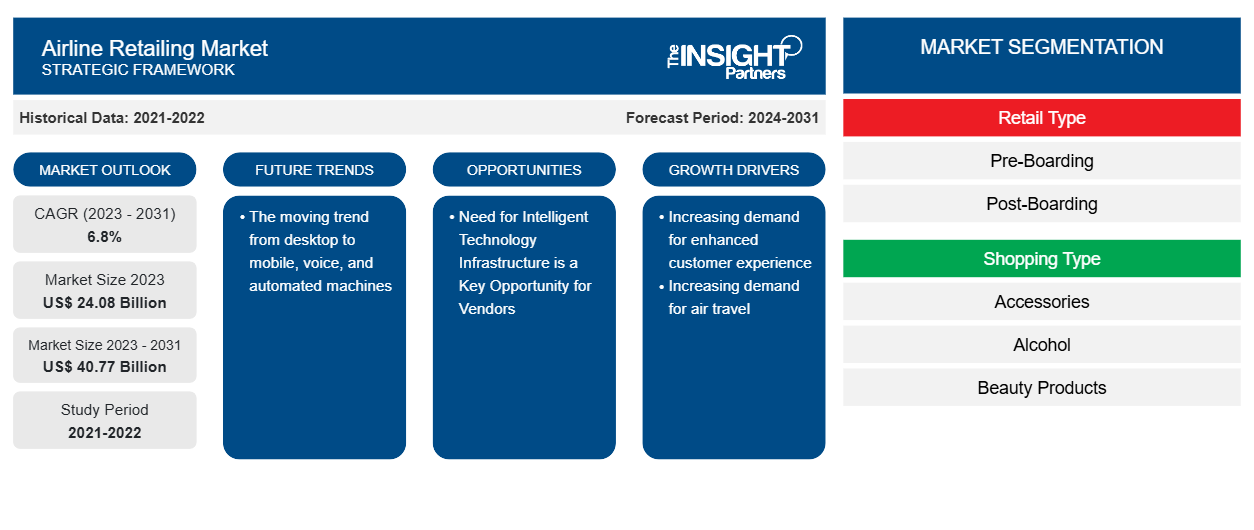
According to a comprehensive study by The Insight Partners, the global Airline Retailing Market size is projected to reach US$ 40.77 billion by 2031 from US$ 24.08 billion in 2023. The market is expected to register a CAGR of 6.8% during the forecast period of 2023–2031. This steady growth highlights the rapid adoption of digital storefronts, personalized ancillary services, and artificial intelligence-driven dynamic pricing models designed to elevate the traveler experience.
Bearings are fundamental components in modern engineering, serving as the invisible backbone for virtually everything that rotates, rolls, or moves. From massive industrial wind turbines to the micro-motors found in medical devices, these precision-engineered components are critical for reducing friction and handling heavy mechanical loads. According to a comprehensive research report by The Insight Partners, the global bearing industry is currently experiencing a transformative growth phase, driven by rapid industrialization, automation, and the global shift toward cleaner energy systems.
Market Valuation and Growth Trajectory
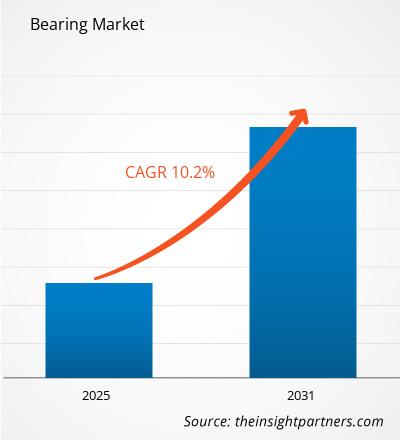
The Bearing Market size is projected to reach US$ 210.864 billion by 2031 from US$ 127.912 billion in 2024. The market is expected to register a CAGR of 7.51% during 2025–2031. This robust growth trajectory highlights an escalating demand across diverse sectors, particularly automotive, aerospace, heavy machinery, and robotics.
As developing economies expand their manufacturing infrastructure and developed nations modernize their industrial plants with IoT-enabled technologies, the reliance on high-quality, long-lasting bearings has never been higher. The steady Compound Annual Growth Rate (CAGR) reflects a market that is not just expanding in volume, but also shifting toward higher-value, specialized bearing solutions.
Primary Growth Drivers
Several macro-economic and technological trends are fueling this market expansion:
The Electric Vehicle (EV) Revolution: The automotive industry is undergoing its most significant shift in a century. EVs require specialized bearings that can operate smoothly at much higher rotational speeds (RPMs) while minimizing noise, vibration, and harshness (NVH). Furthermore, these bearings must offer low friction to maximize battery range and prevent electrical arcing from damaging internal components.
Industrial Automation and Robotics: The rise of Industry 4.0 has led to widespread deployment of automated manufacturing lines and robotic arms. These systems demand high-precision miniature and slewing bearings capable of precise, repetitive movements over millions of cycles without failure.
Renewable Energy Infrastructure: The global push for green energy has led to massive investments in wind power. Wind turbines rely heavily on large-diameter main shaft and gearbox bearings that can withstand extreme, unpredictable aerodynamic loads and harsh environmental conditions over a multi-decade lifespan.
Get a PDF Sample– https://www.theinsightpartners.com/sample/TIPTE100000700
Key Market Players
The global bearing market is highly competitive, characterized by a mix of established legacy manufacturers who continually innovate to maintain their market share. The prominent companies leading the industry include:
SKF (Sweden) – A global leader recognized for its extensive range of rolling bearings, seals, and lubrication systems, heavily focusing on digital monitoring and sustainability.
Schaeffler Group (Germany) – Renowned for its INA and FAG brands, driving innovation in high-precision components for automotive engines, transmissions, and industrial applications.
The Timken Company (USA) – A specialist in tapered roller bearings, widely trusted for heavy-duty industrial machinery, rail, and aerospace applications.
NSK Ltd. (Japan) – One of the foremost suppliers of ball bearings and automotive components, known for exceptional reliability and motion control technologies.
NTN Corporation (Japan) – A major global supplier specializing in eco-friendly bearing designs and constant velocity joints for the automotive sector.
NACHI-FUJIKOSHI CORP. (Japan) – A versatile manufacturer integrating bearing production with cutting tools, hydraulics, and industrial robotics.
JTEKT CORPORATION (Japan) – Known for its Koyo bearing brand, providing advanced steering systems and high-performance bearings across global supply chains.
These industry giants are aggressively investing in Research and Development (R&D) to develop "smart bearings" equipped with integrated sensors. These sensors monitor temperature, vibration, and lubrication levels in real time, allowing operators to perform predictive maintenance before a catastrophic failure occurs.
Future Outlook
The future of the bearing market points toward a convergence of material science and digital technology. Over the coming years, expect to see accelerated adoption of ceramic and hybrid bearings which utilize silicon nitride ceramic balls inside steel rings due to their superior heat resistance, lower weight, and electrical insulation properties. Furthermore, sustainability will become a core focus; manufacturers are increasingly utilizing recycled steel and carbon-neutral production processes to meet strict corporate environmental goals. As industries across the globe continue to prioritize energy efficiency, the development of ultra-low-friction bearings will remain paramount, solidifying the bearing industry's role as a vital catalyst for global economic and technological progress.
Related Reports-
About Us
The Insight Partners is a one-stop industry research provider of actionable intelligence. We help our clients in getting solutions to their research requirements through our syndicated and consulting research services. We specialize in industries such as Semiconductor and Electronics, Aerospace and Defense, Automotive and Transportation, Biotechnology, Healthcare IT, Manufacturing and Construction, Medical Devices, Technology, Media, and Telecommunications, as well as chemicals and Materials.
Contact Us
If you have any queries about this report or if you would like further information, don’t hesitate to get in touch with us:
Contact Person: Ankit Mathur
E-mail: ankit.mathur@theinsightpartners.com
Phone: +1-646-491-9876