



Hydraulic systems serve as the critical circulatory framework for modern industrial machinery. Within this ecosystem, hydraulic hoses function as the flexible, heavy-duty conduits tasked with transferring high-pressure fluids to power mechanical components. As industrial automation sweeps across manufacturing floors and infrastructural expansion drives the demand for heavy construction equipment, the global reliance on robust fluid-conveying systems has never been higher.
According to a comprehensive industry study, the global Hydraulic Hose Market size is expected to reach US$ 8.16 Billion by 2034, climbing from a valuation of US$ 5 Billion in 2025. This expansion represents an estimated compound annual growth rate (CAGR) of 5.59% across the forecast period extending from 2026 to 2034. This steady trajectory reflects an era of intense technological evolution, where traditional mechanical setups are consistently replaced by advanced, precise, and highly efficient hydraulic networks.
Key Drivers of Market Expansion
Several macroeconomic and industrial trends are converging to accelerate the adoption of advanced hydraulic hose technologies worldwide:
The Global Infrastructure Boom: Rapid urbanization in developing economies throughout the Asia-Pacific region and extensive infrastructure modernization projects in North America and Europe are driving high demands for construction equipment. Excavators, cranes, loaders, and bulldozers rely intensely on hydraulic systems to lift, dig, and move massive structural weights.
Agricultural Mechanization: To maximize crop yields and manage vast farmlands efficiently, the agricultural sector is shifting toward high-capacity machinery. Tractors, combine harvesters, and automated irrigation equipment heavily integrate hydraulic networks to manage complex, continuous attachments.
The Rise of Smart Industrial Manufacturing: Factory floors are rapidly automating. Precision manufacturing systems use specialized hydraulic hoses designed to handle consistent, low-to-medium pressure cycles with minimal down-time or fluid contamination risks.
Get a PDF Sample– https://www.theinsightpartners.com/sample/TIPRE00014736
Deconstructing the Market: Product Types and Pressure Classes
Hydraulic hoses are fundamentally not "one-size-fits-all" products. They are meticulously engineered to handle extreme environmental stressors, rigorous motion, abrasive chemicals, and massive pressure shifts. The market is broadly categorized across multiple dimensions:
1. By Product Type
Reinforced Hoses: These are the traditional workhorses of the industry, constructed with wire braids or spiral-wound textile layers to prevent bursting under immense load forces.
Coiled Hoses: Excellent for space-constrained or highly mobile settings where elasticity and compact storage are critical.
Corrugated and Articulated Hoses: Highly flexible options designed to maintain structural integrity while experiencing frequent bends or continuous mechanical vibrations.
2. By Pressure Rating
Pressure requirements dictate the core materials and thickness of the hose walls. Low-pressure hoses are typically utilized for air, water, and light lubricating oil lines. Medium-pressure hoses generally transport mineral oils and hydraulic fluids across standard industrial automation systems. Meanwhile, high-pressure hoses are heavily reinforced to withstand the brutal environments characteristic of heavy mining equipment, deep-sea drilling operations, and large-scale earthmoving vehicles.
Primary End-User Industries
The addressable market for hydraulic hoses spans an incredibly diverse array of critical sectors:
Construction & Mining: Requiring ruggedized, abrasion-resistant outer coatings that can handle gravel, dirt, and extreme outdoor weather conditions.
Manufacturing & Transportation: Focusing on longevity, leak prevention, and tight turning radiuses to keep factory lines and transit fleets operating smoothly.
Agriculture: Emphasizing eco-friendly, bio-degradable hydraulic fluid compatibility alongside weather-resistant compositions.
Pharmaceutical & Chemical Processing: Demanding sterile, highly specialized hoses capable of handling aggressive fluids without degrading or leaching impurities.
Competitive Landscape and Key Players
The global hydraulic hose ecosystem is highly competitive, populated by well-established industrial conglomerates and specialized fluid-power engineering firms. These manufacturers focus heavily on materials innovation such as developing bio-based synthetic rubbers and ultra-durable steel-braid wire coatings to deliver higher pressure capacities and longer operating lifespans.
The prominent players driving the development and distribution of hydraulic hose technologies globally include:
Alfagomma S.p.A.
Bridgestone Corporation
ContiTech AG
Eaton Corporation plc
Gates Corporation
Hansa-Flex AG
Parker-Hannifin Corporation
RYCO Hydraulics Pty Ltd.
Semperit
Yokohama Rubber Co., Ltd.
These companies maintain their market shares by catering to custom client specifications, investing in global distribution hubs, and providing comprehensive lifecycle support services to prevent unexpected, costly operational downtime for their clients.
Future Outlook
Looking toward the horizon, the hydraulic hose market is setting its sights on the concepts of sustainability and digital integration. As industries face stricter regulations regarding chemical leaks and environmental footprints, manufacturers are actively embracing eco-friendly, recyclable materials that do not sacrifice pressure performance. Furthermore, the industry is entering the initial stages of a smart technology revolution. The integration of sensor-embedded smart hydraulic systems will allow operators to track micro-fissures, internal pressure spikes, and material degradation in real-time. This transition from reactive repairs to predictive maintenance models will optimize efficiency, maximize heavy machinery safety, and solidify the role of hydraulic systems in the next generation of industrial growth.
Related Reports-
Automotive Hydraulic Cylinders Market
Axial Piston Hydraulic Motors and Pumps Market
Hydraulic Torque Wrench Market
About Us
The Insight Partners is a one-stop industry research provider of actionable intelligence. We help our clients in getting solutions to their research requirements through our syndicated and consulting research services. We specialize in industries such as Semiconductor and Electronics, Aerospace and Defense, Automotive and Transportation, Biotechnology, Healthcare IT, Manufacturing and Construction, Medical Devices, Technology, Media, and Telecommunications, as well as chemicals and Materials.
Contact Us
If you have any queries about this report or if you would like further information, don’t hesitate to get in touch with us:
Contact Person: Ankit Mathur
E-mail: ankit.mathur@theinsightpartners.com

In an era defined by intensifying geopolitical conflicts, multi-domain warfare, and a renewed global focus on modernizing infantry equipment, protecting ground troops remains an absolute priority for defense departments worldwide. As battlefield threats transition toward asymmetric warfare and high-velocity fragmentations, personal protective gear has evolved from basic steel coverings into high-tech, integrated survival systems. At the center of this transformation is the military tactical headgear. According to a comprehensive research report published by The Insight Partners, the global Military Bulletproof Helmet Market size is projected to reach US$ 1.54 billion by 2034 from US$ 1.19 billion in 2025. The market is anticipated to register a compound annual growth rate (CAGR) of 3.28% during the forecast period from 2026 to 2034.
Strategic Market Dynamics and Growth Drivers
The expansion of the military bulletproof helmet industry is deeply tied to rising national defense budgets and the acceleration of soldier modernization initiatives across both developed and emerging nations. As global military expenditures continue to reach record highs, defense ministries are shifting their procurement strategies toward advanced life-safety equipment that offers maximum structural integrity with minimal weight burden.
Historically, traditional ballistic helmets relied heavily on dense metal compositions, which protected against shrapnel but severely restricted a soldier’s mobility and caused long-term neck strain. Today, material science breakthroughs are driving market growth. The integration of advanced composites such as ultra-high-molecular-weight polyethylene (UHMWPE) and next-generation aramid fibers has revolutionized the industry. These non-metal materials deliver exceptional energy absorption, dispersing the kinetic energy of oncoming projectiles or high-velocity fragments over a wide area while significantly dropping the overall weight of the helmet. Consequently, military forces are actively decommissioning legacy gear to supply their infantry with lightweight, high-performance combat platforms.
Get a PDF Sample– https://www.theinsightpartners.com/sample/TIPRE00019422
Industry Segmentation and Applications
The global market is broadly analyzed by material type and primary end-use applications:
Material Typology: While composite materials dominate recent contract awards due to their superior strength-to-weight ratios, metal and specialized non-metal variants still hold functional roles depending on operational requirements, environmental variables, and budgetary constraints.
Operational Applications: While the military sector accounts for the largest share of market demand due to intensive combat deployment and large-scale procurement programs, law enforcement and homeland security agencies represent a rapidly growing segment. Modern tactical police units and counter-terrorism forces increasingly require military-grade ballistic headgear to combat urban tactical threats and high-caliber active shooter scenarios.
Competitive Landscape and Key Players
The global military bulletproof helmet ecosystem features a mix of prominent defense conglomerates and specialized protective armor manufacturers. These entities heavily invest in research, development, and stringent ballistic testing protocols to secure long-term government supply contracts.
Key prominent entities operating in this market include:
3M: Known for its advanced materials science division, 3M delivers highly specialized ballistic protection systems that prioritize ergonomics and integration with other protective hardware.
ARGUN s.r.o.: A well-regarded European manufacturer focusing on specialized body armor, ballistic vests, and protective helmets for armed forces and police units.
ArmorSource: An innovative leader in manufacturing high-end ballistic head protection, recognized for pushing the envelope in ultra-lightweight combat helmets.
BAE Systems: A global aerospace and defense titan that designs and integrates state-of-the-art protection systems within its vast portfolio of soldier systems.
Concept East Ltd: A dedicated provider focused on designing robust tactical gear capable of withstanding severe environmental and physical combat conditions.
Hard Shell: An international provider specializing in complete personal protection solutions, utilizing advanced composite layering techniques to enhance ballistic resistance.
MKU LIMITED: A leading defense contractor supplying lightweight ballistic protection solutions across dozens of countries, prominently securing large-scale military fleet upgrades.
Point Blank Enterprises, Inc.: A heavyweight in the development and manufacturing of advanced tactical body armor and protective headgear solutions for military and law enforcement sectors.
Protection Group Danmark: A specialist firm focused on delivering high-performance, cost-effective aramid and UHMWPE-based ballistic helmets and plates engineered to European standards.
Sarkar Tactical: A trusted global manufacturer supplying high-specification ballistic helmets, body armor, and tactical equipment to elite military units and government agencies worldwide.
Future Outlook
Looking ahead, the next decade will witness a profound paradigm shift from passive protection platforms to smart, integrated ecosystem hubs. The future of military bulletproof helmets lies in the seamless incorporation of modular electronics. Manufacturers are actively designing shells that can host integrated heads-up displays (HUD), built-in night vision device (NVD) mounts, chemical/biological filtration respirators, and advanced tactical communication lines without compromising structural ballistic coverage. Additionally, research into bio-synthetic fibers and eco-friendly manufacturing methodologies will begin reshaping production lines. As geopolitical uncertainties persist, the demand for scalable, modular, and technology-enabled ballistic helmets will remain a cornerstone of defense procurement, ensuring stable and resilient growth across the global marketplace.
Related Reports-
Aerospace Helmet Mounted Display Market
About Us
The Insight Partners is a one-stop industry research provider of actionable intelligence. We help our clients in getting solutions to their research requirements through our syndicated and consulting research services. We specialize in industries such as Semiconductor and Electronics, Aerospace and Defense, Automotive and Transportation, Biotechnology, Healthcare IT, Manufacturing and Construction, Medical Devices, Technology, Media, and Telecommunications, as well as chemicals and Materials.
Contact Us
If you have any queries about this report or if you would like further information, don’t hesitate to get in touch with us:
Contact Person: Ankit Mathur
E-mail: ankit.mathur@theinsightpartners.com
The global aerospace sector is undergoing a massive transformation, driven by the relentless pursuit of fuel efficiency, lighter structures, and enhanced structural durability. At the core of this engineering evolution is the adoption of advanced manufacturing processes. Among these, cold forging has emerged as a critical technique for producing high-strength, high-precision components that can withstand extreme operational stresses.
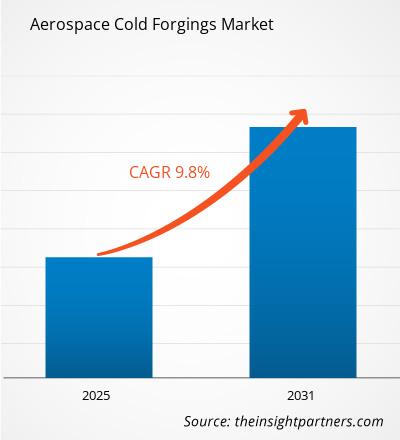
According to a comprehensive market analysis, the Aerospace Cold Forgings Market size is expected to reach US$ 7.24 Billion by 2034, expanding significantly from US$ 2.54 Billion in 2025. This robust trajectory reflects an estimated Compound Annual Growth Rate (CAGR) of 13.99% during the forecast period from 2026 to 2034. This rapid acceleration underlines a fundamental shift in how aerospace manufacturers approach metallurgical design and component sourcing.
Understanding Cold Forging in Aerospace Applications
Forging is a manufacturing process involving the shaping of metal using localized compressive forces. While hot forging requires heating metal above its recrystallization temperature, cold forging manipulates metals at or near room temperature.
For the aerospace industry, this method offers distinct structural advantages:
Enhanced Material Strength: Cold working deforms the metal while forcing its grain structure to contour to the exact shape of the part. This alignment creates superior tensile strength and fatigue resistance compared to parts machined out of raw bar stock.
Exceptional Surface Finish: Because the process occurs without high heat, it avoids scale formation or surface oxidation. The resulting components feature a smooth, pristine surface finish that minimizes post-processing steps.
Unmatched Dimensional Accuracy: Cold forging operates within extremely tight tolerances. In aviation, where a discrepancy of a fraction of a millimeter can compromise system integrity, this precision is vital.
Material Efficiency: Traditional CNC (Computer Numerical Control) machining involves cutting away vast amounts of material, leading to high scrap rates. Cold forging rearranges the metal rather than removing it, dramatically reducing material waste a critical factor when dealing with expensive aerospace alloys.
Get a PDF Sample– https://www.theinsightpartners.com/sample/TIPRE00021917
Core Market Growth Drivers
The impressive 13.99% CAGR from 2026 to 2034 is propelled by several macro-environmental and industry-specific factors. First and foremost is the surging global demand for new commercial aircraft. As commercial aviation passenger traffic continues to bounce back and expand globally, major aircraft manufacturers face record-high order backlogs. Meeting these production schedules requires a highly efficient supply chain capable of delivering reliable components at scale.
Furthermore, stricter environmental regulations are forcing aerospace engineers to design lighter, more fuel-efficient fleets. Cold forging allows for the creation of lightweight components without sacrificing structural integrity. By using high-strength aluminum, titanium, and advanced steel alloys, manufacturers can optimize the weight-to-strength ratio of fasteners, engine parts, and structural joints.
Another critical factor is safety. Aerospace components operate under intense pressure, varying thermal conditions, and continuous vibration. The superior fatigue life inherent to cold-forged parts makes them ideal for critical safety applications, including landing gear mechanisms, fuselage fasteners, and propulsion system assemblies.
Competitive Landscape and Key Players
The global aerospace cold forgings market features a mix of well-established metallurgical giants and specialized precision engineering firms. These entities continuously invest in advanced hydraulic pressing technology, automated die designs, and advanced simulation software to maintain their competitive edge.
The prominent key players shaping this market landscape include:
Precision Castparts Corp – Renowned for high-quality structural components and complex aerospace forgings.
Arconic – A leader in lightweight multi-material solutions and precision engineered products for the aviation industry.
VSMPO-AVISMA – The world's largest titanium producer, deeply integrated into global aerospace supply chains.
Scot Forge Company – An employee-owned leader specializing in custom forging configurations and advanced metallurgy.
Eramet Group – A global mining and metallurgical group providing high-performance alloy parts via its aerospace divisions.
Shaanxi Hongyuan Aviation Forging Co Ltd – A key Asian manufacturer focused heavily on military and commercial aviation forgings.
ATI Metal (Allegheny Technologies) – Specializes in technically advanced specialty materials and complex forged components.
STS Intelli – An innovative provider leveraging advanced manufacturing technologies to supply high-tolerance industrial components.
Rostec – The Russian state corporation encompassing various high-tech industrial and aerospace manufacturing holdings.
Bharat Forge – An Indian multinational industrial conglomerate with rapidly expanding capabilities in critical aerospace components.
Future Outlook
The future of the Aerospace Cold Forgings Market looks incredibly promising as it aligns with the broader push toward Industry 4.0 and sustainable manufacturing practices. Over the next decade, the market will likely see an increased integration of predictive AI (Artificial Intelligence) and advanced finite element analysis (FEA) software. This technology allows engineers to simulate the stresses of the cold forging process digitally, optimizing die geometries and preventing material defects before physical production even begins. Additionally, as the industry transitions toward hybrid and electric aircraft concepts, the demand for highly specialized, intricate, and ultra-lightweight forged components will skyrocket. Backed by a strong 13.99% CAGR, the cold forging sector is securely positioned as an indispensable pillar of modern aerospace engineering, ensuring that the aircraft of tomorrow are lighter, stronger, and more efficient than ever before.
Related Reports-
North America Aircraft Engine Forging Market
Aircraft Engine Forging Market
About Us
The Insight Partners is a one-stop industry research provider of actionable intelligence. We help our clients in getting solutions to their research requirements through our syndicated and consulting research services. We specialize in industries such as Semiconductor and Electronics, Aerospace and Defense, Automotive and Transportation, Biotechnology, Healthcare IT, Manufacturing and Construction, Medical Devices, Technology, Media, and Telecommunications, as well as chemicals and Materials.
Contact Us
If you have any queries about this report or if you would like further information, don’t hesitate to get in touch with us:
Contact Person: Ankit Mathur
E-mail: ankit.mathur@theinsightpartners.com

The global industrial manufacturing landscape is witnessing an unprecedented wave of modernization, driven by the need for enhanced efficiency, strict compliance with safety regulations, and the optimization of production costs. At the heart of many processing industries lies the critical requirement for precise, uniform, and reliable moisture removal. Tray dryers, a staple in conventional and advanced thermal processing, remain vital components across a wide spectrum of sectors. According to a comprehensive market analysis by The Insight Partners, the global tray dryers market is poised for robust expansion over the next decade. The Tray Dryers Market size is expected to reach US$ 4.61 Billion by 2034 from US$ 2.69 Billion in 2025. The market is estimated to record a CAGR of 6.19% from 2026 to 2034. This significant growth reflects the escalating demand for high-quality drying solutions in pharmaceuticals, food processing, chemicals, and material sciences.
Understanding the Mechanics and Market Dynamics
Tray dryers operate on a simple yet highly effective principle of convective heat transfer. Materials to be dried are placed on a series of trays stacked within an insulated chamber where heated air is continuously circulated using energetic blower fans. This process ensures uniform drying, reducing moisture levels without damaging the structural or chemical integrity of the products.
The steady market trajectory is primarily fueled by the exponential growth of the pharmaceutical and food processing industries worldwide. In pharmaceuticals, tray dryers are indispensable for the dehydration of granules, powders, active pharmaceutical ingredients (APIs), and crude drugs. Similarly, the food industry heavily relies on these systems to extend the shelf life of fruits, vegetables, spices, and nutraceutical ingredients. The ability of modern tray dryers to control temperature parameters with high precision makes them ideal for sensitive materials that are prone to thermal degradation.
Moreover, rigorous hygiene regulations imposed by authorities such as the US Food and Drug Administration (FDA) and the European Medicines Agency (EMA) have forced manufacturers to upgrade their existing setups. Current tray dryers are heavily constructed using high-grade stainless steel (such as SS 316 or SS 304) to prevent cross-contamination and facilitate easy cleaning, which further propels their market demand.
Get a PDF Sample– https://www.theinsightpartners.com/sample/TIPRE00020782
Competitive Landscape and Key Players
The global tray dryers market features a highly competitive environment characterized by a mix of established international corporations and specialized regional manufacturers. Companies are actively focusing on technological innovations, such as integrating programmable logic controllers (PLCs), enhancing energy recovery mechanisms, and introducing vacuum-assisted tray drying systems to stay ahead in the market.
Prominent players operating in the global tray dryers market include:
Arizon Thermal Systems
Aero Therm Systems
Bomby Pharma Equipment
Changzhou Chuangke Drying Granulating Equipment
Disha Engineering Works
Karamson Engineering
Mark Maker Pharma Engineering
Prakash Engineering Works
Pharma Basix
Ultra Febtech
These manufacturers are increasingly focusing on customized equipment designs to cater to specific niche requirements, such as explosion-proof configurations for chemical applications and laboratory-scale tray dryers for research and development activities.
Technological Advancements Driving Growth
A primary catalyst for the US$ 4.61 billion valuation by 2034 is the evolution of drying technologies. Traditional electrical heating methods are being rapidly replaced or supplemented by steam, hot water, and gas-fired systems to minimize energy footprints. Energy efficiency has shifted from a mere cost-saving feature to a critical regulatory necessity as industries move toward sustainable and green manufacturing practices.
Furthermore, the integration of automation and Industry 4.0 standards is redefining the market. Modern tray dryers are frequently equipped with digital touchscreen interfaces, real-time moisture monitoring sensors, and automated data logging capabilities. These features allow operators to supervise the entire drying cycle remotely, ensuring batch-to-batch consistency, minimizing human error, and creating strict compliance audits required in regulated sectors.
Future Outlook
The future outlook for the global tray dryers market remains exceptionally bright, characterized by a transition toward smarter, eco-friendly, and highly adaptive drying solutions. Over the forecast period from 2026 to 2034, the market will likely see an increased adoption of vacuum tray dryers, which operate under reduced pressure to dry heat-sensitive materials at significantly lower temperatures. As emerging economies in the Asia-Pacific and Latin American regions accelerate their industrial capabilities and expand their healthcare infrastructure, the volume of local manufacturing units requiring thermal processing equipment will swell. Industrial players will lean heavily toward equipment that provides a balanced mix of low capital investment, operational longevity, and minimal environmental footprint. Consequently, the tray dryers market is set to solidify its footprint as an indispensable pillar of global industrial manufacturing, steadily unlocking new opportunities for engineering innovation and commercial expansion.
Related Reports-
About Us
The Insight Partners is a one-stop industry research provider of actionable intelligence. We help our clients in getting solutions to their research requirements through our syndicated and consulting research services. We specialize in industries such as Semiconductor and Electronics, Aerospace and Defense, Automotive and Transportation, Biotechnology, Healthcare IT, Manufacturing and Construction, Medical Devices, Technology, Media, and Telecommunications, as well as chemicals and Materials.
Contact Us
If you have any queries about this report or if you would like further information, don’t hesitate to get in touch with us:
Contact Person: Ankit Mathur
E-mail: ankit.mathur@theinsightpartners.com
The management of municipal and industrial wastewater has emerged as a critical global challenge. As urbanization accelerates and industrial production expands, the volume of generated wastewater sludge continues to climb. Sludge dewatering the process of separating solid and liquid components to reduce sludge volume has become an indispensable step in modern waste treatment. By minimizing the weight and volume of waste, dewatering significantly lowers transportation and disposal costs while optimizing resource recovery. Driven by stringent environmental regulations and a global push toward circular economy practices, the sludge dewatering equipment market is experiencing a period of sustained growth and technical evolution.
Market Size and Forecast
According to a comprehensive study by The Insight Partners, the global Sludge Dewatering Equipment Market size is projected to reach US$ 8.13 billion by 2034 from US$ 5.29 billion in 2025. The market is anticipated to register a CAGR of 4.89% during the forecast period 2026-2034.
This steady growth highlights the rising capital expenditure by both municipal authorities and private industrial sectors aimed at upgrading aging wastewater infrastructure. As conventional disposal methods like landfilling and incineration face tighter legal restrictions and rising operational costs, modernizing facilities with efficient dewatering machinery has transitioned from an operational preference to a regulatory necessity.
Key Market Drivers
Several intersecting factors are fueling the expansion of the global sludge dewatering equipment market:
Stringent Environmental Regulations: Environmental protection agencies worldwide are introducing rigorous standards regarding effluent discharge and sludge disposal. Governments are aggressively penalizing the untreated discharge of industrial waste, forcing manufacturing facilities to adopt advanced on-site dewatering solutions.
Rising Operational and Disposal Costs: Landfill space is shrinking globally, leading to a steep increase in tipping fees. Because dewatering equipment significantly lowers the moisture content of sludge often reducing total volume by up to 60-80% it directly diminishes the logistics and handling costs associated with waste disposal.
Focus on Resource Recovery and Energy Generation: Modern wastewater treatment plants are transforming into "resource recovery centers." Dewatered sludge, or biosolids, can be utilized as nutrient-rich fertilizer in agriculture or as a fuel source for waste-to-energy plants through anaerobic digestion. Maximizing the dryness of the cake is vital to maximizing its caloric value for energy production.
Rapid Industrialization and Urbanization: Developing economies across Asia-Pacific and Latin America are witnessing unprecedented urban growth and industrial diversification. Sectors such as chemical manufacturing, pharmaceuticals, food and beverage, and oil and gas generate heavy volumes of sludge that demand specialized dewatering solutions.
Get a PDF Sample– https://www.theinsightpartners.com/sample/TIPRE00027568
Technology Insights
The market utilizes various equipment configurations designed to handle different sludge characteristics, flow rates, and desired cake dryness:
Belt Filter Presses: Renowned for their continuous operation and reliability, belt filter presses use a series of chemical conditioning stages and rollers to mechanically squeeze water out of the sludge. They remain highly popular in municipal plants handling steady, large-scale volumes.
Centrifuges (Decanters): Utilizing high-speed rotational forces to separate solids from liquids based on density differences, decanter centrifuges offer a compact footprint, excellent odor containment, and the capability to process highly concentrated or variable sludge feeds.
Screw Presses: Emerging as a highly efficient alternative, screw presses operate at low speeds, which translates to minimal energy consumption, low wear and tear, and reduced noise levels. They are increasingly favored by mid-sized municipal and industrial plants targeting lower total cost of ownership.
Filter Presses (Plate and Frame): For applications demanding the highest possible solid concentration (dry cake), filter presses apply high-pressure filtration. While often operated in batches, they are highly effective for challenging industrial sludges.
Competitive Landscape
The global market is characterized by a mix of established multinational engineering firms and specialized water technology providers. These players focus on continuous R&D to introduce automation, energy-efficient motors, and smart monitoring systems that align with Industry 4.0 trends.
Key players operating in the global sludge dewatering equipment market include:
Alfa Laval AB
Andritz AG
Veolia Environnement SA
HUBER SE
AMCON
Kontek Process Water Management
Evoqua Water Technologies
SUEZ
Gruppo Pieralisi
Hitachi Zosen Corporation
These companies frequently employ strategic initiatives such as mergers, acquisitions, geographical expansions, and collaborative partnerships to strengthen their market footprint and deliver comprehensive, turnkey wastewater solutions to diverse global client bases.
Future Outlook
Looking ahead, the future of the sludge dewatering equipment market lies at the intersection of digital optimization and decarbonization. The integration of Internet of Things (IoT) sensors, artificial intelligence (AI), and real-time data analytics is set to revolutionize operations, allowing plants to dynamically adjust chemical dosing and mechanical pressure based on fluctuating sludge characteristics. This shift toward "smart dewatering" will minimize polymer consumption and power usage, directly tackling the high operational costs traditionally associated with these systems. Furthermore, as global industries strive toward net-zero carbon goals, the demand for energy-neutral or energy-positive wastewater plants will drive the adoption of low-power technologies like advanced screw presses. Ultimately, the transformation of sludge from a costly liability into a valuable source of green energy and agricultural nutrients ensures that dewatering equipment will remain a foundational pillar of sustainable infrastructure for decades to come.
Related Reports-
About Us
The Insight Partners is a one-stop industry research provider of actionable intelligence. We help our clients in getting solutions to their research requirements through our syndicated and consulting research services. We specialize in industries such as Semiconductor and Electronics, Aerospace and Defense, Automotive and Transportation, Biotechnology, Healthcare IT, Manufacturing and Construction, Medical Devices, Technology, Media, and Telecommunications, as well as chemicals and Materials.
Contact Us
If you have any queries about this report or if you would like further information, don’t hesitate to get in touch with us:
Contact Person: Ankit Mathur
E-mail: ankit.mathur@theinsightpartners.com
The automotive industry is undergoing a profound transformation driven by the pursuit of fuel efficiency, stringent emission regulations, and the rapid integration of electronics in modern vehicles. At the heart of this transformation are advanced sensor technologies that optimize engine performance. Among these, the Manifold Absolute Pressure (MAP) sensor plays a critical role. By measuring the air pressure within the engine's intake manifold, the MAP sensor provides vital data to the Engine Control Unit (ECU) to calculate the optimum air-fuel mixture for efficient combustion.
According to a comprehensive analysis by The Insight Partners, the global automotive MAP sensor market is poised for steady expansion. The Automotive MAP Sensor Market is expected to register a CAGR of 3.89% from 2026 to 2034, with the market size expanding from US$ 22.22 Billion in 2025 to US$ 31.33 Billion by 2034. This growth underscores the enduring importance of internal combustion engines (ICE) and hybrid powertrains, both of which rely heavily on precise pressure sensing to meet modern environmental and performance standards.
Market Dynamics and Growth Drivers
The primary catalyst driving the automotive MAP sensor market is the global mandate for reduced vehicular emissions. Regulatory bodies across North America, Europe, and Asia-Pacific have continuously tightened limits on carbon dioxide and greenhouse gas emissions. To comply with these standards, automakers must maximize combustion efficiency. MAP sensors ensure that the engine receives the exact amount of fuel required based on the real-time air density in the manifold, preventing incomplete combustion and reducing harmful exhaust output.
Another significant factor is the rising popularity of turbocharged and supercharged engines. Downsizing engines while keeping or boosting power via turbocharging has become a standard strategy for automakers. Turbocharged engines experience rapid fluctuations in manifold pressure, making highly accurate and responsive MAP sensors indispensable. Furthermore, the surging demand for hybrid electric vehicles (HEVs) and plug-in hybrid electric vehicles (PHEVs) keeps the demand for MAP sensors strong, as these vehicles still utilize internal combustion engines alongside electric motors.
Technological advancements have also reshaped the market landscape. The transition from legacy electromechanical sensors to Micro-Electro-Mechanical Systems (MEMS)-based MAP sensors has drastically improved accuracy, reduced sensor size, and enhanced durability under harsh under-hood conditions.
Get a PDF Sample– https://www.theinsightpartners.com/sample/TIPRE00020719
Key Industry Players
The global automotive MAP sensor market is characterized by a mix of established automotive component giants and specialized electronic technology firms. These players focus on continuous research and development to introduce highly durable and precise sensing solutions. Key prominent players operating in this market include:
Aptiv
Avertronics
Bosch
Continental
Denso
FineMEMS Inc.
Hebei Mattel Electronic technology
Hella
Hyundai Kefico
Inzi controls
These companies continuously engage in strategic partnerships, mergers, acquisitions, and product innovations to expand their global footprint and cater to the evolving technical demands of original equipment manufacturers (OEMs).
Regional Insights
Geographically, the Asia-Pacific region dominates a substantial share of the automotive MAP sensor market. This dominance is driven by massive vehicle production volumes in countries like China, India, Japan, and South Korea. The implementation of stringent emission norms, such as China VI and Bharat Stage VI (BS-VI) in India, has mandated the integration of advanced electronic fuel injection systems, fueling market expansion.
Meanwhile, North America and Europe remain mature yet highly lucrative markets. The focus in these regions heavily leans toward high-performance sensors capable of integrating with complex diagnostic systems (OBD-II). The high penetration of luxury and turbocharged vehicles in these territories ensures a steady demand for premium-grade MAP sensors.
Future Outlook
The future of the automotive MAP sensor market will be characterized by both resilience and adaptation. As the automotive industry transitions deeper into the era of electrification and smart mobility, MAP sensor manufacturers will increasingly tailor their products to support hybrid architectures, ensuring optimal synergy between thermal engines and electric batteries. Moreover, the integration of smart diagnostic capabilities and the Internet of Things (IoT) within vehicular frameworks will require MAP sensors to not only measure pressure but also communicate diagnostic health data to prevent vehicle breakdowns. While the long-term rise of battery electric vehicles (BEVs) poses a structural shift, the massive existing global fleet of ICE vehicles and the projected decade-long expansion of hybrid vehicles guarantee that the MAP sensor market will remain a multi-billion-dollar cornerstone of automotive electronics through 2034 and beyond.
Related Reports-
Automotive Fuel Quality Sensor Market
Automotive Temperature Sensor Market
Automotive Exhaust Sensor Market
About Us
The Insight Partners is a one-stop industry research provider of actionable intelligence. We help our clients in getting solutions to their research requirements through our syndicated and consulting research services. We specialize in industries such as Semiconductor and Electronics, Aerospace and Defense, Automotive and Transportation, Biotechnology, Healthcare IT, Manufacturing and Construction, Medical Devices, Technology, Media, and Telecommunications, as well as chemicals and Materials.
Contact Us
If you have any queries about this report or if you would like further information, don’t hesitate to get in touch with us:
Contact Person: Ankit Mathur
E-mail: ankit.mathur@theinsightpartners.com
The modern automotive industry is transitioning through a massive paradigm shift, evolving from simple transportation machinery to highly integrated, technology-driven mobile platforms. At the heart of this evolution is the digital cockpit, where driver-vehicle interaction is being fundamentally reimagined. Among the technologies leading this charge, the automotive head-up display (HUD) has transformed from a premium novelty into an essential active safety and comfort feature.
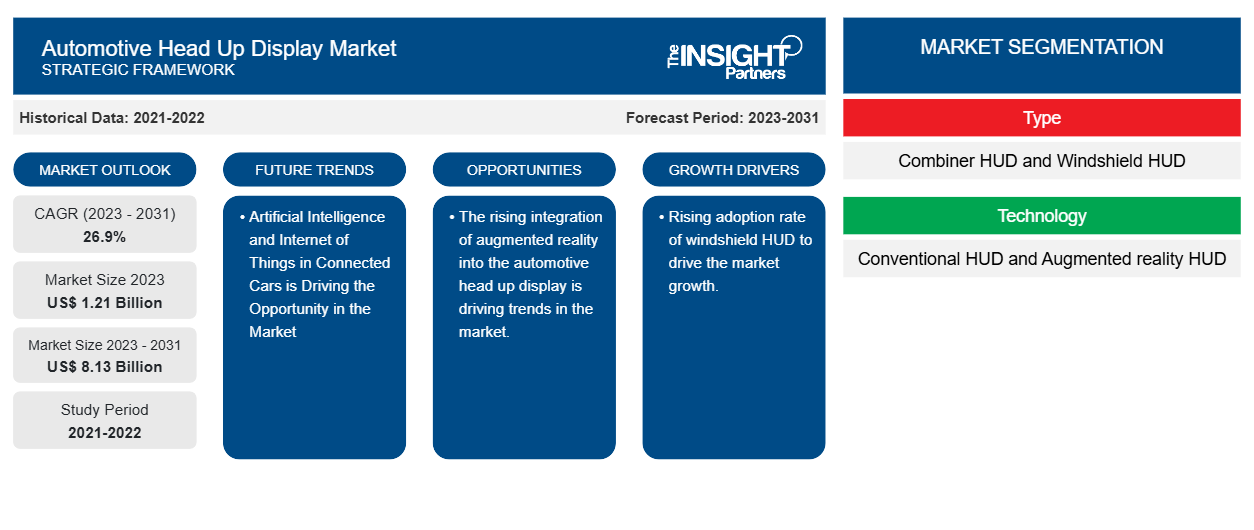
According to an exhaustive market analysis published by The Insight Partners, the Automotive Head Up Display Market size is projected to reach US$ 8.13 billion by 2031 from US$ 1.21 billion in 2023. The market is expected to register a CAGR of 26.9% during 2023–2031. This remarkable growth trajectory highlights the accelerating adoption of digital visual aids in modern vehicles and points to a future where augmented realities and digital overlays become standard aspects of the everyday commute.
Market Dynamics and Primary Growth Catalysts
The immense growth anticipated over the forecast period can be primarily attributed to a surging regulatory focus on driver safety and a parallel consumer demand for advanced driver assistance systems (ADAS). Traditional instrument clusters require drivers to momentarily divert their eyes from the road to check basic metrics like speed or fuel levels. Automotive HUDs eliminate this micro-distraction by projecting critical telemetry, turn-by-turn navigation data, and safety warnings directly into the driver’s natural line of sight.
Furthermore, a significant rise in vehicle production globally, paired with growing disposable income across developing economies, has allowed original equipment manufacturers (OEMs) to democratize HUD technology. Previously restricted to elite, high-end luxury vehicles, automakers like Maruti Suzuki, Hyundai, and BMW are actively integrating sophisticated HUD units into their mass-market and mid-range portfolios.
Technological advancements have also bifurcated the market into distinct offerings: Windshield HUDs and Combiner HUDs. While Combiner units use a small independent screen on the dashboard and offer a cost-effective solution, Windshield HUDs which use the glass surface itself as the screen currently dominate market share. This dominance is driven by the immersive, seamless experience they provide, which blends naturally with advanced liquid crystal displays (LCDs) and light-emitting diodes (LEDs) to yield vibrant, daylight-visible imagery.
Get a PDF Sample– https://www.theinsightpartners.com/sample/TIPTE100000500
Collaborative Ecosystems and Technological Evolution
Another major pillar supporting the market's explosive CAGR is the widespread adoption of the Internet of Things (IoT) and Artificial Intelligence (AI) in connected cars. Modern HUD units no longer operate in isolation; they are deeply tied to the vehicle's sensor suites, cameras, and external cloud networks. For example, AI-driven HUDs can dynamically adjust brightness based on ambient sunlight or prioritize visual alerts depending on the driver's current cognitive workload and real-time road conditions. This synthesis converts the windshield into an active, intelligent layer of communication rather than just a protective pane of glass.
Key Industry Players
The competitive landscape of the automotive HUD market features a blend of tier-1 automotive suppliers and specialized electronics manufacturers investing aggressively in research and development. The leading market participants shaping this industry include:
Continental AG: A pioneer in automotive electronics, widely recognized for high-volume programs and advanced optical components.
Denso Corporation: Continues to lead high-precision manufacturing, delivering reliable windshield-based projection modules globally.
Robert Bosch GmbH: Leverages its deep expertise in ADAS systems to deliver holistic, safety-first cockpit solutions.
Harman International: Focuses on immersive user experiences, notably through software-hardware products like their "Ready Vision" AR suite.
Yazaki Corporation: Contributes vital underlying electronic interfaces and display systems tailored for various vehicle architectures.
Valeo: Drives innovation through localized display solutions and next-generation driver-assistance technologies.
Nippon Seiki Co., Ltd: Holds substantial market footprint specifically specializing in instrument clusters and advanced HUD optics.
Panasonic Automotive Systems Europe GmbH: Expands the boundaries of in-car tech, notably pushing AI-based holographic and dual-plane views.
HUDWAY, LLC: Acts as a key innovator in portable and aftermarket HUD applications, making the tech accessible across retrofitted segments.
Japan Display Inc: Provides the fundamental high-resolution, high-brightness panel technologies critical to keeping displays visible in extreme daylight.
Future Outlook
Looking ahead, the automotive head-up display market is set to experience an exciting evolutionary leap as the industry transitions fully to electric vehicles (EVs) and autonomous driving environments. Moving beyond the conventional 2D projection systems of the past, the future belongs entirely to Next-Gen Augmented Reality HUDs (AR-HUDs). These advanced displays use sophisticated holographic waveguides to place graphics, such as destination points and lane warnings, at a true depth that corresponds to the physical road layout ahead. As autonomous driving capabilities mature, the role of the HUD will expand from an informational driving tool to an expansive, context-aware entertainment and communication interface. Driven by declining optical module costs and an industry-wide push for software-defined vehicles, the windshield is destined to become the primary interactive layer of the future mobility ecosystem.
Related Reports-
Airport Display Systems Market
About Us
The Insight Partners is a one-stop industry research provider of actionable intelligence. We help our clients in getting solutions to their research requirements through our syndicated and consulting research services. We specialize in industries such as Semiconductor and Electronics, Aerospace and Defense, Automotive and Transportation, Biotechnology, Healthcare IT, Manufacturing and Construction, Medical Devices, Technology, Media, and Telecommunications, as well as chemicals and Materials.
Contact Us
If you have any queries about this report or if you would like further information, don’t hesitate to get in touch with us:
Contact Person: Ankit Mathur
E-mail: ankit.mathur@theinsightpartners.com
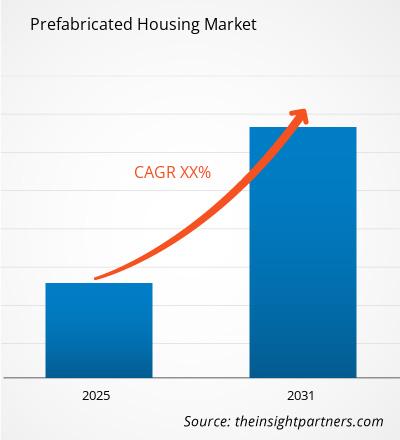
The construction industry is undergoing a massive paradigm shift, driven by the critical need for speed, sustainability, and cost efficiency. At the forefront of this evolution is the prefabricated housing sector. Prefabricated housing, which involves manufacturing building components or entire structures in a controlled factory environment before transporting them to a site for final assembly, has transformed from a niche alternative into a core pillar of modern residential development.
According to a comprehensive industry study by The Insight Partners, the global Prefabricated Housing Market size is projected to reach US$ 292.72 billion by 2034 from US$ 168.81 billion in 2025. The market is anticipated to register a CAGR of 6.31% during the forecast period 2026-2034. This significant growth trajectory highlights the accelerating adoption of off-site construction methods worldwide as governments, developers, and consumers seek smarter alternatives to traditional brick-and-mortar building processes.
Related Reports-
About Us
The Insight Partners is a one-stop industry research provider of actionable intelligence. We help our clients in getting solutions to their research requirements through our syndicated and consulting research services. We specialize in industries such as Semiconductor and Electronics, Aerospace and Defense, Automotive and Transportation, Biotechnology, Healthcare IT, Manufacturing and Construction, Medical Devices, Technology, Media, and Telecommunications, as well as chemicals and Materials.
Contact Us
If you have any queries about this report or if you would like further information, don’t hesitate to get in touch with us:
Contact Person: Ankit Mathur
E-mail: ankit.mathur@theinsightpartners.com
Phone: +1-646-491-9876