


The global automotive landscape is undergoing a monumental shift, and the commercial transportation sector is at the forefront of this revolution. Driven by stringent environmental regulations, corporate sustainability targets, and advancements in battery technology, the adoption of electric powertrains is accelerating rapidly. Among various segments, the electric light commercial vehicle (e-LCV) market is emerging as a crucial focal point for urban logistics, last-mile delivery, and municipal services.
According to market research, the Electric Light Commercial Vehicle Market size is expected to reach US$ 61.15 Billion by 2034 from US$ 27.98 Billion in 2025. The market is estimated to record a Compound Annual Growth Rate (CAGR) of 10.27% from 2026 to 2034. This steady expansion highlights the transition from niche pilot projects to large-scale fleet deployments globally.
Key Drivers of Market Growth
Several interconnected factors are propelling the expansion of the e-LCV ecosystem:
1. The Last-Mile Delivery Boom
The exponential growth of e-commerce has dramatically altered logistics. Fleet operators are facing unprecedented demand for urban deliveries, which simultaneously increases city congestion and emissions. Electric light commercial vehicles, such as delivery vans and small trucks, are perfectly suited for these stop-and-go urban routes, offering a cleaner, quieter alternative to traditional internal combustion engines.
2. Regulatory Pressures and Zero-Emission Zones
Governments worldwide are implementing aggressive climate policies. Many major metropolitan areas are establishing low- or zero-emission zones (ZEZs) that restrict access for diesel and petrol commercial vehicles. To maintain access to these high-density urban markets, logistics companies have no choice but to electrify their fleets. Furthermore, tax incentives, purchase subsidies, and favorable manufacturing policies continue to lower the entry barrier for businesses.
3. Lower Total Cost of Ownership (TCO)
While the initial acquisition cost of an electric van remains higher than its diesel counterpart, the long-term economics favor electrification. Electric drivetrains have significantly fewer moving parts, which minimizes routine maintenance and downtime. Combined with lower operational costs per mile especially when utilizing smart charging infrastructure during off-peak energy hours e-LCVs offer an increasingly attractive TCO for businesses aiming to optimize their margins.
Competitive Landscape and Industry Giants
The market features a robust mix of legacy automotive giants, commercial vehicle specialists, and rapidly emerging global manufacturers. These organizations are investing billions in dedicated electric platforms, scalable battery packs, and vehicle-to-grid (V2G) capabilities to win over commercial clients.
The key players driving innovation and scaling production in this market include:
BYD Auto Co., Ltd. – A dominant force in global electrification, leveraging its robust vertical integration and advanced blade battery technology to deploy e-LCVs across Asian and European logistics networks.
Ford Motor Company – Capitalizing on commercial trust with highly successful platforms like the E-Transit, cementing its position in North American and European fleet markets.
PIAGGIO VEHICLES PRIVATE LIMITED – Focused intensely on intra-city cargo logistics, offering agile electric three-wheelers and light three/four-wheeled cargo solutions tailored for dense urban spaces.
Daimler AG – Leading the premium and heavy-duty urban segments with vehicles like the Mercedes-Benz eSprinter, focusing on long-range efficiency and smart connectivity tools.
The Hyundai Motor Company – Pushing boundaries with highly adaptable, purpose-built electric commercial platforms and exploring both battery-electric and hydrogen fuel-cell applications.
Groupe Renault – A pioneer in the European electric van space, continuing its legacy with highly successful modular electric iterations of its Kangoo and Master lines.
Groupe PSA – Driving multi-brand electrification strategies across its portfolio to deliver versatile, shared electric van platforms engineered for payload efficiency.
Volkswagen AG – Capitalizing on scalable architecture to roll out nostalgic yet highly practical commercial variants, securing a stronghold in both consumer and delivery segments.
Mahindra Electric Mobility Limited – Playing a foundational role in emerging markets by introducing accessible, rugged electric light commercial options designed for regional distribution networks.
Tata Motors Limited – Actively revolutionizing the South Asian commercial ecosystem with scalable electric small commercial vehicles, targeting major corporate last-mile delivery partnerships.
Future Outlook
The future of the Electric Light Commercial Vehicle market is intrinsically tied to infrastructure maturation, battery energy density improvements, and the integration of autonomous technologies. Over the next decade, we will likely see a transition toward standardizing ultra-fast charging networks optimized specifically for commercial vehicle dimensions and schedules. Furthermore, the concept of Purpose-Built Vehicles (PBVs) where the cabin and chassis are highly customized for specific corporate workflows will redefine fleet procurement. As battery costs continue to decline and grid integration becomes more sophisticated, e-LCVs will evolve from simple transportation assets into active nodes within the smart energy grid, securing their role as the backbone of sustainable urban commerce.
Related Reports-
Commercial Vehicle Exhaust Brake Market
Climate Control System for Commercial Vehicle Market
About Us
The Insight Partners is a one-stop industry research provider of actionable intelligence. We help our clients in getting solutions to their research requirements through our syndicated and consulting research services. We specialize in industries such as Semiconductor and Electronics, Aerospace and Defense, Automotive and Transportation, Biotechnology, Healthcare IT, Manufacturing and Construction, Medical Devices, Technology, Media, and Telecommunications, as well as chemicals and Materials.
Contact Us
If you have any queries about this report or if you would like further information, don’t hesitate to get in touch with us:
Contact Person: Ankit Mathur
E-mail: ankit.mathur@theinsightpartners.com
The global logistics and transportation sectors are undergoing a massive transformation, driven by booming e-commerce, expanding cold chain operations, and a relentless focus on operational safety. At the center of this heavy-duty evolution is a crucial, often overlooked component of the semi-trailer setup: the truck landing gear. Used to support the trailer when it is disconnected from the tractor block, landing gear systems ensure that thousands of pounds of freight remain stable during loading, unloading, and staging operations.
According to a comprehensive study by The Insight Partners, the Truck Landing Gear Market size is expected to reach US$ 3.39 Billion by 2034 from US$ 2.28 Billion in 2025. The market is estimated to record a CAGR of 4.47% from 2026 to 2034. This steady upward trajectory highlights the expanding dependency on freight transportation and the technological shift towards more durable, low-maintenance, and automated landing gear systems.
Understanding the Market Dynamics
The truck landing gear market is fundamentally tied to the global commercial vehicle production index and the total volume of freight moved across highways. As consumer expectations for rapid, same-day delivery continue to grow, logistics companies are expanding their trailer fleets to manage complex "drop-and-hook" operations. In a drop-and-hook model, a driver drops off a loaded trailer at a distribution center and immediately hooks up to another pre-loaded one. This operational model multiplies the frequency of landing gear deployments, requiring highly resilient components capable of enduring repeated wear, variable weather, and massive loads.
Technological advancements are heavily shaping the product landscape. While traditional, manually cranked landing gear systems remain a standard due to cost-effectiveness, automated and hydraulic variants are gaining traction. Automated landing gear reduces the physical strain on drivers, significantly lowering workplace injuries and expediting turnaround times at shipping docks.
Furthermore, material innovation has become a major differentiator for manufacturers. Companies are moving away from traditional heavy steel toward high-tensile steel, aluminum alloys, and composite materials. This transition helps logistics operators reduce the overall empty weight (tare weight) of the trailer, allowing them to carry more cargo while simultaneously staying compliant with strict highway weight regulations and improving fuel economy.
Comprehensive Regional Insights
Geographically, the demand for truck landing gear is shifting across dominant manufacturing hubs:
North America and Europe: These regions hold substantial market shares due to highly mature logistics infrastructure, strict safety guidelines, and a high concentration of advanced fleet operators. The demand here is increasingly driven by replacement cycles and the integration of smart, sensor-enabled landing gear.
Asia-Pacific: This region stands as a high-growth zone. Rapid industrialization, substantial investments in cross-border highway infrastructure, and the continuous expansion of manufacturing networks in countries like China and India are creating an immense need for new semi-trailers.
Get a PDF Sample– https://www.theinsightpartners.com/sample/TIPRE00016112
Prominent Market Participants
The competitive landscape features a blend of established global automotive component manufacturers and specialized heavy-duty parts suppliers. These players focus heavily on expanding their distribution networks and investing in research and development to offer anti-corrosive coatings and ergonomic designs.
Key players operating in the truck landing gear market include:
AXN Heavy Duty
BPW Bergische Achsen KG
Butler Products Corp.
haacon hebetechnik GmbH
JOST-Werke Deutschland GmbH
Power-Packer, Inc.
SAF-HOLLAND SE
SINOTRUK (HOWO) LIMITED
York Transport Equipment (Asia) Pte Ltd.
Zhenjiang Baohua Semi-Trailer Parts Co., Ltd.
Future Outlook
Looking forward, the truck landing gear market is well-positioned for continuous transformation as the transportation industry pivots toward smart technology and green logistics. The future will likely see an accelerated adoption of electrified and autonomous landing gears that synchronize seamlessly with autonomous trucking software. This integration will enable trailers to adjust their height or deploy stabilizers independently during automated coupling processes. Additionally, as the industry pushes for a lower carbon footprint, the emphasis on lightweighting will intensify, pushing manufacturers to explore structural designs that offer maximum load bearing capabilities with minimal component mass. Driven by infrastructure growth across developing economies and continuous innovation from key industry players, the market is set to remain a rock-solid cornerstone of global supply chain infrastructure through 2034 and beyond.
Related Reports-
About Us
The Insight Partners is a one-stop industry research provider of actionable intelligence. We help our clients in getting solutions to their research requirements through our syndicated and consulting research services. We specialize in industries such as Semiconductor and Electronics, Aerospace and Defense, Automotive and Transportation, Biotechnology, Healthcare IT, Manufacturing and Construction, Medical Devices, Technology, Media, and Telecommunications, as well as chemicals and Materials.
Contact Us
If you have any queries about this report or if you would like further information, don’t hesitate to get in touch with us:
Contact Person: Ankit Mathur
E-mail: ankit.mathur@theinsightpartners.com
Growing geopolitical tensions and rising defense budgets are creating new opportunities for military display manufacturers. Nations are investing in advanced defense capabilities, resulting in increased procurement of sophisticated display technologies that enhance battlefield communication, surveillance, and operational effectiveness across multiple military branches.
According to a comprehensive study by The Insight Partners, the Military Display Market size is expected to reach US$ 3.06 Billion by 2034 from US$ 1.54 Billion in 2025. The market is estimated to record a CAGR of 8.96% from 2026 to 2034. This steady growth reflects a broader geopolitical shift toward defense modernization, where cognitive overmatch the ability to process information and make decisions faster than an adversary is deemed the ultimate tactical advantage.
Key Market Drivers and Technological Catalysts
The impressive growth trajectory of the military display sector is propelled by several interconnected factors, ranging from escalating global defense budgets to breakthroughs in commercial display technology adapted for defense applications.
1. Rising Defense Budgets and Modernization Programs
Geopolitical tensions across Europe, the Middle East, and the Asia-Pacific region have prompted nations to re-evaluate their military readiness. Governments are aggressively funding modernization programs to upgrade aging fleets of vehicles, aircraft, and naval vessels. Integrating high-definition, ruggedized display units into existing platforms during mid-life upgrade (MLU) cycles is a cost-effective method to drastically extend a platform’s operational viability.
2. The Quest for Enhanced Situational Awareness
Modern combat environments generate an overwhelming flood of data from unmanned aerial vehicles (UAVs), ground sensors, satellite feeds, and radar systems. To prevent cognitive overload, military personnel require smart displays capable of synthesizing this information into a cohesive, easily digestible visual format. High-resolution displays allow commanders and infantry alike to map terrains, track friendly and hostile forces, and execute precision strikes with unprecedented accuracy.
3. Commercial Tech Migration: LCD, LED, and OLED
The military display market benefits immensely from innovations born in the consumer electronics space. Technologies such as Liquid Crystal Displays (LCDs) and Light Emitting Diodes (LEDs) remain industry mainstays due to their reliability and sunlight-readability. However, Organic Light Emitting Diode (OLED) and Active-Matrix OLED (AMOLED) systems are seeing rapid adoption. These technologies offer deeper contrast ratios, faster refresh rates, and lower power consumption, which are essential properties for night-vision compatibility and battery-powered portable gear.
Get a PDF Sample– https://www.theinsightpartners.com/sample/TIPRE00024947
Market Segmentation: An Operational ViewThe military display ecosystem is highly diverse, categorized by its technology, form factor, and operational deployment:
By Type: The market is divided between Conventional Displays and Smart Displays. Smart displays feature embedded computing power, enabling them to process data locally without relying entirely on a centralized vehicle or aircraft computer.
By Product Type: Applications range from handheld devices used by dismounted soldiers, computer displays in command centers, vehicle-mounted screens for armored units, simulators for realistic pilot training, to advanced wearables like Helmet-Mounted Displays (HMDs).
By End User: Land, Airborne, and Naval domains all utilize tailored display solutions. Airborne systems require ultra-lightweight, high-altitude resilient screens, while naval variants must resist extreme salt-water corrosion and high-impact vibrations.
Competitive Landscape and Key Players
The global military display market features a blend of aerospace giants and niche electronics specialists. These entities continually form strategic partnerships, secure defense contracts, and invest heavily in research and development to maintain a competitive edge.
Key players driving innovation in this market include:
Collins Aerospace
BAE Systems
IDCLCD
L3Harris Technologies, Inc.
Elbit Systems Ltd.
General Dynamics Mission Systems, Inc.
Leonardo S.p.A.
ASELSAN AS
CURTISS-WRIGHT ORGANISATION
MILCOTS, LLC.
These companies focus on ruggedization ensuring that displays comply with strict military standards (such as MIL-STD-810G and MIL-STD-461G) to withstand extreme temperatures, shock, vibration, and electromagnetic interference.
Future Outlook
The future of the military display market points toward a deeply integrated, intuitive, and augmented ecosystem. Over the next decade, the industry will move beyond flat-panel screens into the realm of advanced Augmented Reality (AR) and Virtual Reality (VR) soldier wearables. These systems will overlay tactical data directly onto a operator's field of view, creating a seamless blend of physical environments and digital intelligence. Furthermore, the integration of artificial intelligence (AI) will enable displays to predictively highlight threats and filter out non-essential data, mitigating human fatigue during high-stress operations. As defense forces prioritize mobility and data-driven tactics, the demand for lighter, power-efficient, and structurally flexible display technologies will remain a cornerstone of defense procurement strategy through 2034 and beyond.
Related Reports-
Aerospace Helmet Mounted Display Market
Multi-Function Display (MFD) Market
Airport Display Systems Market
Optical Display and Targeting Market
About Us
The Insight Partners is a one-stop industry research provider of actionable intelligence. We help our clients in getting solutions to their research requirements through our syndicated and consulting research services. We specialize in industries such as Semiconductor and Electronics, Aerospace and Defense, Automotive and Transportation, Biotechnology, Healthcare IT, Manufacturing and Construction, Medical Devices, Technology, Media, and Telecommunications, as well as chemicals and Materials.
Contact Us
If you have any queries about this report or if you would like further information, don’t hesitate to get in touch with us:
Contact Person: Ankit Mathur
E-mail: ankit.mathur@theinsightpartners.com
Digitalization initiatives across the maritime sector are accelerating the expansion of the Maritime VSAT industry. Shipping companies are deploying Internet of Things (IoT) devices, artificial intelligence, and predictive analytics to optimize vessel performance. VSAT networks provide the communication backbone that enables these digital technologies to exchange large volumes of operational data between ships and shore-based facilities.
The global maritime industry is experiencing a massive digital transformation. Long gone are the days when ships at sea were completely cut off from land-based operations, relying on spotty, low-bandwidth radio communications. Today, modern maritime vessels operate as floating offices and data centers. At the heart of this transformation is Maritime VSAT (Very Small Aperture Terminal) technology a crucial satellite communication system that provides high-speed, two-way broadband connectivity to vessels navigating the world's oceans.
Market Size and Growth Trajectory
The demand for continuous, reliable data transfer on the high seas is driving substantial investments in satellite infrastructure. According to market research, the global Maritime VSAT Market size is projected to reach US$ 7.49 billion by 2034 from US$ 4.27 billion in 2025. This expansion represents a steady and robust market maturation, with the sector anticipated to register a compound annual growth rate (CAGR) of 6.43% during the forecast period of 2026–2034.
This growth trajectory is fueled by several converging factors. Commercial shipping fleets, luxury cruise liners, oil and gas offshore platforms, and naval forces are all upgrading their communication architectures to support data-heavy applications. As the maritime sector increasingly relies on automation, real-time analytics, and cloud computing, VSAT technology has evolved from a luxury asset into an absolute operational necessity.
Key Drivers Accelerating Market Expansion
Several critical dynamics are pushing the maritime VSAT market forward:
Digitalization and IoT Integration: Modern vessel management depends on the Internet of Things (IoT). Ships utilize hundreds of sensors to monitor engine performance, fuel consumption, weather patterns, and structural integrity. VSAT networks enable the seamless transmission of this telemetry data to onshore teams, optimizing route planning, lowering fuel costs, and allowing for predictive maintenance that prevents expensive mid-journey breakdowns.
Crew Welfare and Recruitment: Attracting and retaining skilled mariners has become a major challenge for shipping companies. Today's crew members expect the same level of digital connectivity at sea that they enjoy at home. Reliable VSAT systems provide crew members with high-speed internet access to video call families, stream entertainment, and access online training, which directly boosts morale and mental health during long months away from home.
Regulatory Compliance and Maritime Safety: International maritime organizations are continually tightening regulations around safety, environmental protection, and carbon emissions. High-bandwidth VSAT connections allow vessels to immediately report emissions data, access real-time navigational updates, and comply with strict maritime security protocols.
Get a PDF Sample– https://www.theinsightpartners.com/sample/TIPTE100001278
Competitive Landscape: Major Industry Pioneers
The maritime VSAT market is highly competitive and characterized by continuous technological innovations, strategic mergers, and infrastructure expansions. Major defense contractors, dedicated satellite operators, and specialized service providers actively shape the ecosystem.
Key players driving the industry forward include:
L3Harris Corporation – Delivers highly secure, ruggedized communication systems tailored for military and government naval vessels.
Hughes Network Systems LLC – A pioneer in satellite networking providing managed services and high-capacity terminal hardware.
Inmarsat plc – A global leader in mobile satellite communications, renowned for its reliable global coverage and safety services.
KVH Industries, Inc. – Renowned for its compact, high-efficiency mini-VSAT antennas and flexible "Connectivity-as-a-Service" models.
Viasat Inc. – A global communications giant expanding its reach through high-capacity satellite constellations to offer premium broadband to commercial maritime sectors.
Iridium Communications Inc. – Offers unique, cross-linked L-band and companion VSAT services ensuring true pole-to-pole global coverage.
OmniAccess S.L. – Specializes in providing high-end, custom maritime broadband solutions specifically targeted at the luxury superyacht and cruise industries.
Raytheon Technologies Corporation – Focuses on advanced defense systems, secure tactical satellite communications, and marine navigation intelligence.
VT iDirect, Inc. – A foundational IP-satellite technology provider whose ground infrastructure solutions power many of the world's maritime VSAT networks.
NSSLGlobal Technologies AS – An independent provider delivering robust, integrated satellite communications and IT solutions for diverse maritime fleets.
Future Outlook
Looking ahead, the future of the maritime VSAT market lies in the emergence of multi-orbit connectivity. The industry is rapidly shifting away from a reliance solely on traditional Geostationary Earth Orbit (GEO) satellites. Over the next decade, the market will increasingly feature hybrid networks that seamlessly blend GEO capabilities with newly deployed Low Earth Orbit (LEO) and Medium Earth Orbit (MEO) satellite constellations.
This multi-orbit integration will drastically lower latency (the delay in data transmission) and unlock unprecedented broadband speeds for ships worldwide, even in challenging polar regions. Furthermore, as autonomous shipping transitions from experimental prototypes to real-world deployment, the need for zero-fail, high-speed connectivity will cement maritime VSAT networks as the foundational backbone of tomorrow's global supply chain.
Related Reports-
Maritime Patrol Aircraft Market
Marine Navigation System Market
About Us
The Insight Partners is a one-stop industry research provider of actionable intelligence. We help our clients in getting solutions to their research requirements through our syndicated and consulting research services. We specialize in industries such as Semiconductor and Electronics, Aerospace and Defense, Automotive and Transportation, Biotechnology, Healthcare IT, Manufacturing and Construction, Medical Devices, Technology, Media, and Telecommunications, as well as chemicals and Materials.
Contact Us
If you have any queries about this report or if you would like further information, don’t hesitate to get in touch with us:
Contact Person: Ankit Mathur
E-mail: ankit.mathur@theinsightpartners.com
Digitalization is reshaping the Automotive Thermal System industry through the integration of intelligent sensors, predictive diagnostics, and artificial intelligence. Smart thermal management systems continuously monitor vehicle temperatures and automatically adjust cooling or heating strategies based on driving conditions. These technologies enhance reliability while reducing maintenance requirements and operational costs.
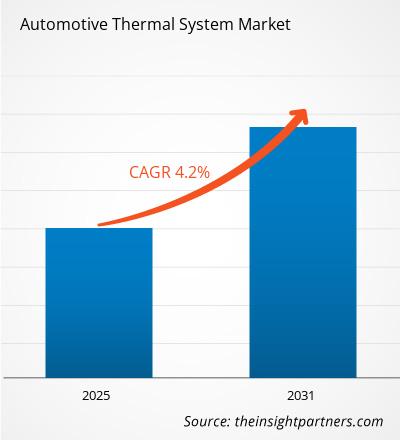
The global automotive sector is undergoing a massive transformation, moving from traditional internal combustion engines (ICE) toward electrification, intelligence, and high efficiency. At the heart of this evolution is the vehicle's thermal management infrastructure. According to a comprehensive research study by The Insight Partners, the Automotive Thermal System Market size is expected to reach US$ 85.68 Billion by 2034 from US$ 47.31 Billion in 2025. The market is estimated to record a compound annual growth rate (CAGR) of 6.82% from 2026 to 2034. This strong expansion highlights how vital sophisticated heating, ventilation, air conditioning (HVAC), and powertrain cooling architectures have become to modern vehicular performance and cabin comfort.
The Evolving Role of Vehicle Thermal Management
Historically, automotive thermal components primarily existed to keep combustion engines from overheating and to keep passengers comfortable. While those roles remain essential, the rapid adoption of electric and connected vehicles has completely reshaped the landscape.
In a traditional vehicle, standard components manage heat using relatively straightforward liquid loops.
In newer electric architectures, however, thermal management is far more complex. Electric vehicles (EVs) require precise, multi-zone temperature regulation to maintain the safety, efficiency, and longevity of lithium-ion battery packs. Because batteries operate optimally within a narrow temperature window, advanced Battery Thermal Management Systems (BTMS) have quickly evolved from a specialized sub-segment into a core driver of total market growth.
Primary Market Drivers: Regulations and Electrification
The steady 6.82% CAGR is propelled by a combination of tight environmental policies and changing consumer expectations.
Strict Emission Guidelines: Environmental regulatory frameworks worldwide such as Euro 6 in Europe and Tier 3 in the United States force automakers to squeeze every bit of efficiency out of their powertrains. Optimizing engine thermal mass reduction and utilizing Exhaust Gas Recirculation (EGR) cooling help lower fuel consumption and tailpipe emissions.
The Rise of Electric Vehicles: The transition from hybrid electric vehicles (HEVs) to full battery electric vehicles (BEVs) drastically alters a car's thermal map. Without the waste heat of an internal combustion engine to warm the passenger cabin, engineers must implement highly efficient heat pumps and specialized positive temperature coefficient (PTC) heaters.
Connected and Autonomous Integration: Modern vehicles increasingly depend on complex on-board computers and sensor arrays. The electronics driving autonomous capabilities generate substantial heat, creating an entirely new need for localized liquid cooling systems to protect sensitive computational hardware.
Get a PDF Sample– https://www.theinsightpartners.com/sample/TIPRE00010094
Market Segmentation and Technical Highlights
The Automotive Thermal System Market is analyzed across several core segments to track where innovation and investments are flowing:
By Vehicle Type
The market spans passenger cars, light commercial vehicles (LCVs), trucks, buses, as well as hybrid electric vehicles (HEVs) and battery electric vehicles (BEVs). While passenger cars dominate overall production volume, the BEV category represents the highest growth rate due to its reliance on integrated thermal loops.
By Technology
Key technology segments shaping modern vehicle platforms include:
Active Transmission Warm-Up: Minimizes friction losses early in the drive cycle.
Exhaust Gas Recirculation (EGR): Curbs combustion temperatures to limit harmful emissions.
Engine Thermal Mass Reduction: Helps vehicles achieve optimal operating temperatures much faster.
Reduced HVAC System Loading: Uses smart glass, recirculation loops, and targeted air deployment to conserve vital battery range.
Competitive Landscape: Key Market Players
As automotive original equipment manufacturers (OEMs) demand more modular, lightweight, and integrated systems, the global supply chain relies heavily on top-tier engineering firms. The leading enterprises steering innovation in this market space include:
DENSO CORPORATION
BorgWarner Inc
Dana Limited
GENTHERM
Hanon Systems
Johnson Electric Holdings Limited
MAHLE GmbH
Robert Bosch GmbH
Schaeffler Group
Valeo
These industry leaders are actively engaging in strategic partnerships, heavy research and development investments, and mergers to secure proprietary heat pump designs, coolant valves, and advanced thermal control software.
Future Outlook
Looking ahead toward 2034, the automotive thermal system market is set to transition from standalone components to highly integrated, intelligent thermal hubs. Instead of running independent cooling circuits for the battery, cabin, and electric motor, future vehicle architectures will utilize integrated centralized networks that route heat dynamically wherever it is needed most. For example, waste heat generated by electric motors can be redirected to warm the battery pack in freezing temperatures or heat the cabin, saving valuable energy. As solid-state batteries and ultra-fast charging stations roll out, the need for rapid cooling will grow even stronger. This will push manufacturers to move past basic glycol-water mixtures and adopt advanced dielectric fluids and immersion cooling techniques. Over the next decade, the thermal management system will become one of the defining factors in determining an electric vehicle's range, charging speeds, and overall market success.
Related Reports-
Automotive Battery Thermal Management System Market
Military Thermal Imaging Market
Regenerative Thermal Oxidizer Market
About Us
The Insight Partners is a one-stop industry research provider of actionable intelligence. We help our clients in getting solutions to their research requirements through our syndicated and consulting research services. We specialize in industries such as Semiconductor and Electronics, Aerospace and Defense, Automotive and Transportation, Biotechnology, Healthcare IT, Manufacturing and Construction, Medical Devices, Technology, Media, and Telecommunications, as well as chemicals and Materials.
Contact Us
If you have any queries about this report or if you would like further information, don’t hesitate to get in touch with us:
Contact Person: Ankit Mathur
E-mail: ankit.mathur@theinsightpartners.com
The mining industry relies heavily on robust Fluid Power Pump and Motor capable of operating in harsh environments with high loads and continuous duty cycles. Equipment durability, resistance to contamination, and minimal maintenance are key factors influencing product selection.
The global Fluid Power Pump and Motor Market size is expected to reach US$ 85.42 Billion by 2034 from US$ 51.16 Billion in 2025. The market is anticipated to register a CAGR of 5.86% during the forecast period 2026–2034. This steady expansion underscores the indispensable nature of fluid power systems across both traditional industrial frameworks and emerging smart factory ecosystems.
Driving Forces Behind Market Expansion
The impressive growth of the fluid power pump and motor market can be attributed to several overlapping macroeconomic and technological trends. First and foremost is the surging demand from the construction and agricultural sectors. Rapid urbanization across developing regions, particularly in Asia-Pacific and parts of Latin America, has necessitated massive infrastructure investments. Modern excavators, loaders, and cranes rely extensively on hydraulic pumps and motors to deliver the massive force required for heavy lifting and earthmoving operations.
Similarly, modern agriculture has shifted toward highly mechanized practices to optimize yields. Advanced tractors and harvesting combines use fluid power systems for precise control, steering, and implement handling. As global food demand rises, the adoption of specialized agricultural machinery acts as a consistent catalyst for market volume.
Beyond heavy machinery, the manufacturing sector's shift toward Industry 4.0 is reshaping component design. Manufacturing facilities are prioritizing machinery that offers high precision, repeatability, and minimal downtime. Fluid power systems, known for their high power density compared to purely electrical alternatives, remain unmatched in applications requiring extreme force in compact spaces. Furthermore, manufacturers are increasingly retrofitting older manufacturing lines with smart hydraulic components to extend equipment life cycles and improve operational visibility.
Get a PDF Sample– https://www.theinsightpartners.com/sample/TIPRE00015994
Key Market Players
The global marketplace features a mix of massive, diversified industrial giants and specialized engineering firms. These companies continuously invest in research and development to introduce next-generation components that are quieter, more efficient, and capable of operating under extreme environmental conditions.
Prominent players driving innovation and holding significant market share include:
Bosch Rexroth Corporation – A pioneer in drive and control technologies, delivering highly integrated, digitally connected hydraulic systems.
Bucher Hydraulics GmbH – Known for high-efficiency hydraulic pumps and valve technology tailored for mobile and industrial applications.
FluiDyne – Highly regarded for providing robust, high-quality replacement hydraulic pumps, motors, and parts with rapid turnaround times.
Gardner Denver – A leading global provider of mission-critical flow control technologies and highly engineered compressors and pumps.
Hydro-Gear – A dominant force in the design and manufacture of high-performance hydrostatic drive systems, particularly for lawn and garden equipment.
McNally Industries – Specializes in custom engineering and precision manufacturing, offering ruggedized fluid power solutions for defense and aerospace applications.
Oilgear – Renowned for heavy-duty, high-pressure hydraulic pumps and systems engineered to withstand severe environments like oilfields and marine applications.
PARKER HANNIFIN CORP – A global leader in motion and control technologies, offering a vast portfolio of hydraulic, pneumatic, and electromechanical products.
RVS s.r.l. – Focused on designing customized hydraulic systems and power units tailored to specific industrial configurations.
Sulzer Ltd – A global leader in fluid engineering, celebrated for its advanced pumping, agitation, and mixing solutions across diverse processing industries.
Technological Evolution: The Rise of Electro-Hydraulics
Historically, standard hydraulic systems faced criticism for energy losses and acoustic noise. However, contemporary market dynamics are defined by the convergence of electronics and hydraulics, often termed electro-hydraulics. By pairing traditional fluid power pumps with electronic sensors, digital control units, and variable-speed electric drives, manufacturers have drastically curbed energy waste.
Smart pumps can now adjust their displacement or rotational speed in real-time based on actual load demand, preventing the wasteful bypass of pressurized fluid. This integration not only reduces a factory's carbon footprint but also allows for predictive maintenance. Sensors embedded within pumps can track fluid temperature, vibration, and pressure spikes, alerting operators to potential wear before a catastrophic failure occurs.
Future Outlook
Looking ahead, the fluid power pump and motor market is poised for a dynamic future characterized by ecological sustainability and deeper digital integration. As global regulatory bodies enforce stricter emissions standards, the development of eco-friendly, biodegradable hydraulic fluids and leak-proof sealing technologies will become a core focus for R&D departments. Additionally, the rapid electrification of commercial and off-highway vehicles will challenge manufacturers to design hybrid hydraulic-electric architectures that maximize battery life without sacrificing mechanical torque. The incorporation of artificial intelligence and machine learning algorithms into fluid systems will further transition the industry toward automated self-optimization, ensuring that fluid power remains a foundational, modern pillar of global industrial progress over the next decade.
Related Reports-
About Us
The Insight Partners is a one-stop industry research provider of actionable intelligence. We help our clients in getting solutions to their research requirements through our syndicated and consulting research services. We specialize in industries such as Semiconductor and Electronics, Aerospace and Defense, Automotive and Transportation, Biotechnology, Healthcare IT, Manufacturing and Construction, Medical Devices, Technology, Media, and Telecommunications, as well as chemicals and Materials.
Contact Us
If you have any queries about this report or if you would like further information, don’t hesitate to get in touch with us:
Contact Person: Ankit Mathur
E-mail: ankit.mathur@theinsightpartners.com

Rental services have become an important segment within the truck mounted concrete pump industry, allowing contractors to access advanced equipment without significant capital investment. Small and medium-sized construction companies often prefer renting truck mounted pumps for short-term projects, enabling them to control operational costs while benefiting from the latest pumping technologies and professional maintenance services provided by rental companies.
The global Truck Mounted Concrete Pump Market size is projected to reach US$ 8.92 billion by 2034 from US$ 5.62 billion in 2025. The market is anticipated to register a CAGR of 5.28% during the forecast period 2026-2034. This positive trajectory highlights the accelerating transition away from slower, manual bucket-pouring methods toward highly mechanical, efficient, and mobile solutions capable of tackling intense project timelines.
Key Factors Fueling Market Expansion
Several macroeconomic and industry-specific factors are driving the truck mounted concrete pump industry forward:
Massive Infrastructure Investments: Governments worldwide are injecting significant capital into public transport networks, bridges, dams, airports, and highway networks. High-volume concrete pouring is vital for these foundational developments, turning heavy-duty truck pumps into standard equipment on modern jobsites.
The Urbanization Wave: As urban population density continues to spike, residential and commercial architectures are scaling vertically. High-rise apartment complexes, towering office spaces, and multi-tier shopping districts require long-reach boom pumps capable of lifting concrete dozens of stories into the air safely and systematically.
A Shift to Technological Efficiency: Contractors are operating under tighter margins and stricter deadlines. Truck-mounted units offer high mobility, rapid deployment times, and unparalleled pumping volume per hour, directly reducing structural build times and on-site labor overheads.
Sector Segmentation: Where Demand Centers Lie
The market is generally segmented by product types and final construction applications. By type, options range across standard truck-mounted boom pumps, trailer line systems, and specialized usage pumps engineered for unique architectural environments. Truck-mounted boom pumps remain highly favored for large-scale operations due to their remote-controlled articulating arms, which seamlessly maneuver over obstacles and directly to the pouring site.
In terms of application, the market is split into:
Residential Construction: Driven by global housing demands, low-to-mid rise developments, and suburban housing expansions.
Industrial and Commercial Construction: This remains the dominant revenue generator. Warehouses, manufacturing hubs, skyscrapers, and energy plants rely heavily on high-pressure, continuous concrete deliveries that only heavy-duty vehicle pumps can reliably supply.
Get a PDF Sample– https://www.theinsightpartners.com/sample/TIPTE100001224
Regional Market Landscapes
Geographically, the momentum varies across different territories:
Asia-Pacific: This region stands as a powerhouse for the truck mounted concrete pump market. Swiftly expanding economies like China and India are managing unprecedented structural growth, driving continuous sales for local and international pump suppliers.
North America and Europe: These mature markets are largely driven by the replacement of aging fleet vehicles and strict regulatory updates regarding emissions. Additionally, there is a strong regional pivot toward integrating eco-friendly machinery and retrofitting older public infrastructure.
Competitive Landscape and Key Players
The global landscape features an array of established engineering conglomerates alongside specialized heavy machinery producers. These entities focus on expanding their international footprint, refining boom arm lengths, and engineering lighter, high-strength structural materials.
The prominent players operating in the truck mounted concrete pump market include:
Xiamen XGMA Machinery Co.
Everdigm
Putzmeister America, Inc.
Liebherr Group
Sany Group
Sebhsa
Sermac Srl
Schwing Stetter GmbH
Concord Concrete Pumps
XCMG Group
Strategic acquisitions, collaborative ventures with chassis manufacturers, and specialized localized service networks remain the chief tactics deployed by these market leaders to maintain dominance and expand their customer bases.
Future OutlookLooking ahead, the truck mounted concrete pump market is primed to step into an era defined by intelligent automation and strict sustainability standards. The next decade will likely see the widespread rollout of hybrid and fully electric pump systems designed to drastically lower emissions and noise levels on urban worksites. Furthermore, the integration of IoT (Internet of Things) telematics, automated clean-out cycles, and real-time sensor feedback will allow fleet managers to monitor concrete consistency and pump mechanics remotely. As smart cities transition from blueprints to reality, compact, eco-friendly, and highly automated pumping machinery will become the gold standard, ensuring steady market growth well into the future.
Related Reports-
Truck Mounted Concrete Mixer Market
Concrete Curing Equipment Market
About Us
The Insight Partners is a one-stop industry research provider of actionable intelligence. We help our clients in getting solutions to their research requirements through our syndicated and consulting research services. We specialize in industries such as Semiconductor and Electronics, Aerospace and Defense, Automotive and Transportation, Biotechnology, Healthcare IT, Manufacturing and Construction, Medical Devices, Technology, Media, and Telecommunications, as well as chemicals and Materials.
Contact Us
If you have any queries about this report or if you would like further information, don’t hesitate to get in touch with us:
Contact Person: Ankit Mathur
E-mail: ankit.mathur@theinsightpartners.com
Market Size and Growth Trajectory
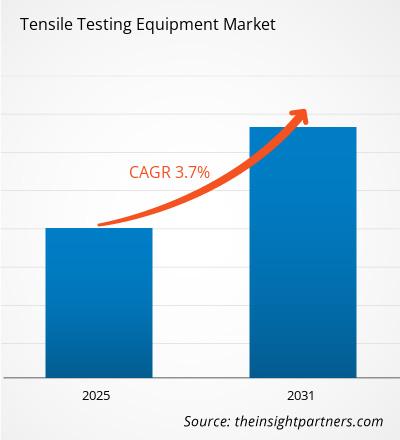
According to a comprehensive study by The Insight Partners, the global Tensile Testing Equipment Market size is projected to reach US$ 670.18 million by 2034 from US$ 506.39 million in 2025. The market is anticipated to register a CAGR of 3.16% during the forecast period 2026-2034.
This steady and consistent growth indicates an industry that is adjusting to heightened regulatory standards, advanced materials testing requirements, and the globalization of supply chains. As manufacturers face mounting pressure to eliminate product defects, avoid liability, and satisfy precise engineering standards, the reliance on high-precision mechanical testing solutions is accelerating.
Key Market Drivers
Several macro-economic and industrial trends are responsible for driving the demand for tensile testing equipment over the forecast timeline:
Rise of Advanced Materials: The transition from traditional metals to lightweight composites, engineered plastics, and multi-material alloys in the automotive and aerospace industries requires sophisticated testing equipment. Advanced composites exhibit complex failure mechanisms that necessitate high-precision tensile and universal testing systems.
Stringent Regulatory Standards: Global bodies such as ASTM International, ISO, and DIN frequently update materials compliance standards. Industries like aerospace, defense, and medical devices are governed by strict quality controls, making validated tensile testing a non-negotiable step in product development and batch validation.
Automotive Technical Revolution: The shift toward Electric Vehicles (EVs) is altering vehicle weight distribution and battery containment structural needs. Carmakers are actively leveraging ultra-high-strength steel (UHSS) and lightweight aluminum alloys, creating a renewed demand for high-capacity tensile testing infrastructure.
Get a PDF Sample– https://www.theinsightpartners.com/sample/TIPMC00002760
Application Analysis
The application spectrum for tensile testing machinery spans virtually every major manufacturing sector. In construction and infrastructure, testing structural rebar, wiring, and concrete reinforcement materials is critical to civil engineering safety. In the packaging sector, tensile equipment measures film elongation, puncture resistance, and seal strength to prevent degradation during shipping.
Additionally, the textile industry relies heavily on dedicated fabric strength and seam rupture testing to satisfy both apparel durability goals and technical textile requirements (such as airbags, geotextiles, and safety harnesses).
Prominent Market Competitors
The global market features a blend of diversified industrial conglomerates and specialized material testing equipment manufacturers. These players actively compete through product innovation, software upgrades, and strategic geographic expansion.
Prominent key players operating in the global tensile testing equipment market include:
ADMET, Inc.
AMETEK, Inc.
Com-Ten Industries
KOKUSAI CO., LTD.
Labthink
Mecmesin
Qualitest International Inc
Shimadzu Corporation
TESTEX Textile Testing Instruments
TestResources, Inc.
These market entities are heavily focused on developing multi-axis testing capabilities, expanding cross-industry compliance suites, and incorporating modular grip setups to accommodate varying specimen geometries.
Regional Insights
Geographically, North America and Europe continue to hold significant market shares due to their deeply established aerospace, automotive, and defense manufacturing hubs. However, the Asia-Pacific region is recognized as the fastest-growing market block. Rapid industrialization across developing nations like China, India, Vietnam, and Thailand, combined with a rising volume of manufacturing outsourcing, is stimulating substantial localized investments in manufacturing quality control frameworks.
Future Outlook
The future of the tensile testing equipment market points directly toward cloud-connected data systems, intelligent test automation, and predictive analytical integration. The ongoing expansion of Industry 4.0 paradigms will encourage operators to replace standalone, manually operated legacy systems with fully automated, software-driven testing cells that can feed mechanical performance data directly into central enterprise resource planning (ERP) systems. The market will see an increased emphasis on optical extensometers and non-contact digital image correlation (DIC) tools that map stress patterns dynamically without physically altering the sample material. As advanced, highly custom 3D-printed materials enter commercial use, the demand for modular, highly sensitive, and adaptive software-integrated tensile testing solutions will firmly sustain market progression through 2034.
Related Reports-
Ductility Testing Machines Market
Rubber Testing Equipment Market
About Us
The Insight Partners is a one-stop industry research provider of actionable intelligence. We help our clients in getting solutions to their research requirements through our syndicated and consulting research services. We specialize in industries such as Semiconductor and Electronics, Aerospace and Defense, Automotive and Transportation, Biotechnology, Healthcare IT, Manufacturing and Construction, Medical Devices, Technology, Media, and Telecommunications, as well as chemicals and Materials.
Contact Us
If you have any queries about this report or if you would like further information, don’t hesitate to get in touch with us:
Contact Person: Ankit Mathur
E-mail: ankit.mathur@theinsightpartners.com