


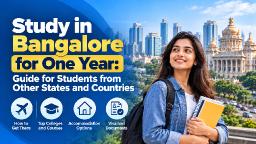
Bangalore draws students from every part of India and from around the world. Its mix of universities, technology companies, startups, and a generally mild climate makes it a popular destination for a one-year program. But moving to a new city for a year takes planning, especially when it comes to admissions, visas, housing, and budgeting.
This guide walks students from other Indian states and from other countries through the practical steps of studying in Bangalore for a year. Rules, fees, and policies change often, so confirm details with the institution and official authorities before you commit.
Range of programs. The city has public universities, private universities, autonomous colleges, and specialized institutes covering management, technology, law, science, media, and healthcare.
Industry access. Bangalore's technology and startup ecosystem creates opportunities for internships, projects, and networking that are hard to match elsewhere.
A diverse student community. Students from across India and many other countries live and study here, so newcomers usually find people from their own region.
Weather. The climate is moderate for most of the year, which many students find easier than the extremes in other Indian cities.
Language flexibility. Kannada is the state language, but English is widely used in colleges and workplaces, and Hindi, Tamil, Telugu, and Malayalam are commonly spoken as well.
Most institutions in Bangalore admit students from all states. Some points to check:
International students should first confirm that the institution accepts foreign applicants and that the program is open to them. Check these points:
Foreign nationals typically need a student visa to study in India for a year. In general:
Visa rules change often. Rely on the official Indian government visa portal and the institution's international office rather than agents or social media posts.
Depending on your country, you may need medical documents, vaccination records, or health insurance. Ask the international office what is required, and keep copies of every document you submit.
The Government of India runs a program that promotes higher education for international students. Some institutions in Bangalore participate. Ask whether your target institution is part of it and whether related scholarships apply.
Housing is one of the biggest concerns for newcomers.
Campus hostels. Many universities offer hostels, which are convenient and safe, but seats can be limited. Apply as early as possible.
Paying guest (PG) accommodation. These are widely available near colleges and tech corridors. They usually include meals and basic amenities and are common with students and young professionals.
Shared flats. Renting a flat with roommates can cost less per person, but expect a security deposit, often several months of rent.
Serviced apartments. These cost more, but they can work for short stays while you look for permanent housing.
Tips for choosing.
Bangalore is one of the more expensive Indian cities, mainly because of rent. Your budget should include:
Track your spending during the first month and adjust. Keep an emergency fund for unexpected expenses, such as a deposit or a medical visit.
Bangalore has a metro network that continues to expand, a large bus network, and app-based cab and auto services. Traffic can be heavy at peak hours, so choosing housing close to your campus or a metro line can save you a lot of time. Many students also use bicycles or two-wheelers, but check licensing and insurance rules if you plan to ride.
Open a bank account. Ask your institution about accounts for students and the documents needed. International students may need extra documentation.
Get a local SIM card. You will need identity proof, and foreigners may need additional verification.
Learn a few Kannada phrases. Locals appreciate the effort, even though English and Hindi work in most student areas.
Join student communities. Clubs, alumni groups, and regional associations help with friendships and practical advice.
Look after your health. Find a nearby clinic or hospital, and check what your insurance covers.
Stay safe. Keep copies of important documents, share your address with a trusted contact, and follow local rules.
Explore these options early:
Can students from other states study in Bangalore?
Yes. Most institutions admit students from all states, though some public seats may prefer Karnataka residents.
Do I need to speak Kannada?
No. English is widely used in colleges and workplaces, though learning a little Kannada helps in daily life.
Can international students do one-year programs in Bangalore?
Yes, if the institution accepts international applicants and the program meets visa requirements.
Do international students need an equivalence certificate?
Often, for degrees from outside India. Ask the institution whether an AIU equivalence is needed.
Is hostel accommodation guaranteed?
Not always. Apply early, and keep a backup option such as a PG or shared flat.
Can I work part-time while studying?
Indian students may have options, subject to college rules. International students usually face restrictions, so read your visa terms carefully.
Is Bangalore safe for students?
It is generally considered welcoming, but like any large city it requires normal precautions, especially at night.
Studying in Bangalore for one year can be a rewarding experience, both academically and personally. The key is preparation. Verify your program and institution, sort out documents and visas early, plan your housing and budget realistically, and give yourself time to settle in.
https://www.chiguu.com/articles/one-year-courses-in-bangalore-after-bcom-ba-or-bsc-best-options-by-stream
https://mcmglobaleducation.blogspot.com/2026/09/One-Year-Courses-in-Bangalore-After-Graduation.html
https://sites.google.com/view/one-year-degree-bangalore/home
telodosocial.it/blogs/55731/One-Year-Master-s-Programs-in-Bangalore-for-Working-Professionals
news.bangboxonline.com/Best-PG-Diploma-Courses-in-Bangalore
www.mcmacademy.in/graduation-degree-one-year-in-dubai/
www.mcmacademy.in/b-ed-in-one-year/
www.mcmacademy.in/fast-track-courses/
www.mcmacademy.in/blog/top-10-llm-specializations-in-demand/
www.mcmacademy.in/blog/best-ece-colleges-in-india/
| No comments yet. Be the first. |
