


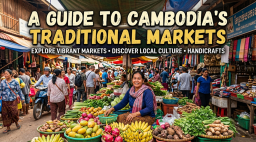
Cambodia’s traditional markets are a great way to experience everyday life, local food, handmade products, and regional culture. From busy city markets to smaller community stalls, each place has its own character and range of goods. Travelers can shop for souvenirs, taste local dishes, and see how residents buy fresh produce and household items. Before traveling, visitors should also check entry requirements and arrange a Cambodia eVisa if required.
Central Market in Phnom Penh
Central Market, known locally as Phsar Thmei, is one of Phnom Penh’s best-known shopping areas. The distinctive Art Deco building houses stalls selling clothing, jewelry, watches, souvenirs, electronics, and food. The market can become lively during the morning and afternoon, making it a good place to experience the energy of the capital.
Visitors should compare prices before purchasing items, especially when buying souvenirs or clothing. A little polite bargaining is common in many market areas.
Russian Market
Another popular market in Phnom Penh is the Russian Market, or Phsar Tuol Tom Poung. It has a wide selection of clothing, handicrafts, artwork, accessories, spices, and Cambodian food. The narrow walkways can be busy, but they make the market feel lively and local.
The market is also useful for travelers looking for handmade gifts. Silk products, carved items, small decorations, and locally produced crafts can make practical souvenirs.
Old Market in Siem Reap
The Old Market, or Psar Chas, is located in the heart of Siem Reap. It is surrounded by restaurants, cafés, hotels, and streets popular with visitors. Stalls sell souvenirs, clothes, spices, fresh food, artwork, and traditional Cambodian products.
The market is especially convenient for travelers staying in central Siem Reap. After visiting nearby attractions, visitors can spend some time browsing the stalls and trying local snacks. Travelers who have completed their Cambodia visa arrangements can also include the market as part of a relaxed evening itinerary.
Local Markets and Fresh Food
Traditional markets are not only places for souvenirs. They are important parts of daily life in Cambodia. Local shoppers visit them for vegetables, fruits, meat, seafood, herbs, spices, and prepared meals.
Food markets can be particularly interesting for visitors who want to try Cambodian dishes. Popular choices may include noodle dishes, grilled meats, rice-based meals, fresh fruit, and sweet snacks. Travelers should choose busy food stalls with good customer turnover and take normal care with food and water.
Tips for Shopping at Cambodian Markets
Carrying small amounts of Cambodian riel can be useful when shopping at traditional markets, although some sellers may also accept other payment methods. Keeping smaller notes makes it easier to pay for inexpensive purchases.
Bargaining may be acceptable in some tourist-oriented markets, but it should be done politely. Visitors should also ask about prices before taking an item and check purchases carefully before leaving.
When buying antiques, wildlife-related products, or other culturally sensitive items, travelers should be cautious and check whether the item can legally be taken out of Cambodia.
Enjoying the Market Experience
Cambodia’s traditional markets offer more than shopping. They provide a closer look at local food, crafts, customs, and everyday routines. Phnom Penh’s Central Market and Russian Market, along with Siem Reap’s Old Market, are good choices for travelers who want to experience this side of the country.
With travel documents prepared and a Cambodia e Visa arranged when necessary, visitors can spend more time enjoying local markets and the experiences they offer.
| No comments yet. Be the first. |


