


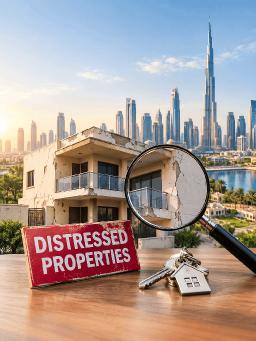
Distressed properties Dubai investors look for are usually units sold below comparable market prices because the seller is under financial or time pressure. The discount can be real, but it is often smaller than online headlines suggest, and the savings can disappear quickly if you skip due diligence. One 2026 market guide notes that the discount is real but smaller than the 40 to 50 percent that investors expect from other markets.
This guide from Takween AlDar explains how distressed deals work in Dubai, what returns are realistic, which costs to budget for, and how to plan your exit before you buy.
A distressed property in Dubai is a unit sold at a discount, typically because the seller is under financial pressure, facing mortgage default, or needs to sell an asset quickly. In practice, these deals come in several forms:
Figures vary by source, so treat any single number with caution. One developer-published guide says distressed properties are generally priced 10% to 35% below comparable units in the same area. Other investor blogs quote wider ranges, but those are often marketing material.
A safer way to judge a deal:
A property that looks cheap may simply be overpriced to begin with.
The main appeal of distressed properties Dubai investors buy is a higher yield on a lower entry price. Here is an illustrative example, not a forecast:
|
Item |
Market-Price Purchase |
15% Distressed Purchase |
|---|---|---|
|
Purchase price |
AED 1,500,000 |
AED 1,275,000 |
|
Annual rent |
AED 100,000 |
AED 100,000 |
|
Gross yield |
About 6.7% |
About 7.8% |
In this example, the same rent produces a gross yield about 1.1 percentage points higher. The logic is that a lower acquisition cost raises the rental yield on the same unit. Net returns will be lower once you subtract service charges, maintenance, vacancy and purchase costs.
Many investors focus on the discount and forget the full cost stack. Plan for:
Fees and rules change, so confirm current rates with the Dubai Land Department or a licensed professional.
Specialist guides describe four main channels: court execution auctions, the DLD's own auction platform, bank-direct disposals and private distress sales, each with different deposits, timelines and risks.
Supply is limited. Repossession inventory is described as structurally low in 2026, since few borrowers default long enough for a property to reach auction. That means most genuine opportunities are private motivated-seller deals found through brokers and market networks, not dramatic foreclosure sales.
Before you pay a deposit, verify:
A good distressed investment starts with a clear exit. Consider these routes:
Hold and rent. Best when you buy in an area with steady demand and a strong yield. This gives income while you wait for capital growth.
Renovate and resell. Works if the refurbishment cost is modest and the market price gap is clear. Build in time for works, listing and negotiation.
Quick resale. Possible if you buy well below market, but transaction costs of around 6% or more on the buy side can eat into a short-term gain.
Refinance and hold. Some investors refinance after improving the property, subject to lender rules.
Before you commit, ask yourself:
Tax rules and regulations can change, so check the current position with a qualified adviser.
|
Factor |
Distressed |
Standard Resale |
Off-Plan |
|---|---|---|---|
|
Price |
Often below comparable units |
Market price |
Developer pricing |
|
Speed |
Can be fast or slow, depending on channel |
Normal |
Wait until handover |
|
Due diligence |
Higher |
Standard |
Developer and project checks |
|
Main risk |
Hidden liabilities, overstated discount |
Overpaying |
Delivery delay |
|
Best for |
Experienced or well-advised buyers |
Most buyers |
Buyers who like staged payments |
The best distressed deals are rarely the loudest ones. They need local market knowledge, verified pricing data and careful legal checks. Takween AlDar helps investors compare opportunities, check numbers and avoid common mistakes.
Q: What are distressed properties in Dubai?
A: They are properties sold under financial or time pressure, often at a discount to comparable units. They can come from motivated sellers, bank disposals, court auctions or off-plan resales.
Q: How much discount can I expect on distressed properties in Dubai?
A: It varies by location, property type and seller urgency. Some sources cite ranges such as 10% to 35%, but you should verify every discount against recent transaction data.
Q: Can foreigners buy distressed properties in Dubai?
A: Foreign investors can generally buy freehold property in designated areas, and foreigners can bid on freehold units at court auctions. Confirm the freehold status and the rules for the specific sale.
Q: Are distressed properties in Dubai a good investment?
A: They can be, if you buy at a verified discount in an area with strong rental demand and have a clear exit plan. A cheap price alone does not make a good investment.
Q: What are the biggest risks when buying a distressed property?
A: The main risks are overestimating the discount, hidden liabilities such as unpaid fees, poor property condition and weak resale or rental demand. Thorough checks reduce these risks.
Distressed properties Dubai investors target can offer a lower entry price and a stronger yield, but the opportunity is narrower and more demanding than many headlines suggest. Realistic discounts, full cost planning and a defined exit strategy matter more than the headline price. Do your checks, work with licensed professionals and decide your holding plan before you buy.
Ready to explore your options? Contact Takween AlDar for guidance on property opportunities that match your investment goals.
| No comments yet. Be the first. |
