
Blogs

An SEO agency in Birmingham and a trusted SEO company in Belfast UK can help businesses improve rankings and attract genuine, local customers.
Working with an SEO agency in Birmingham has become one of the most practical steps a business can take to compete in a crowded online market. Customers no longer flip through directories or rely purely on word of mouth. They search, scan a handful of results and make a decision within seconds. If your business is not visible at that moment, you are likely losing customers to a competitor who simply showed up first. This guide covers the fundamentals that genuinely move the needle, without relying on shortcuts or short lived tricks.
Why Visibility Matters More Than Ever
Search behaviour has changed dramatically over the past decade. People expect instant answers, and they trust businesses that appear prominently and consistently across search results. That trust translates directly into enquiries, bookings and sales.
For smaller businesses especially, strong visibility can level the playing field against larger competitors with bigger advertising budgets. Good search performance is not about spending the most money, it is about being genuinely useful and easy to find.
Get Your Business Information Right First
Before anything else, make sure your business name, address and contact details are accurate and consistent everywhere they appear online. Even small inconsistencies, like a different phone number on one directory listing, can confuse search engines and cost you potential customers.
Complete your online business profile fully, with accurate categories, services and genuine photos. This single step is often overlooked, yet it makes a real difference to how easily customers can find and trust you.
Create Content That Solves Real Problems
Think about the questions your customers actually ask before choosing a business like yours, then answer those questions clearly on your website. This approach naturally attracts the kind of visitors who are ready to take action, rather than casual browsers who leave quickly.
Avoid repeating the same phrases unnaturally throughout your content. Search engines have become far better at recognising genuinely helpful writing, and customers can tell the difference too.
Pay Attention to Technical Performance
A slow or clunky website undermines even the best written content. Compress large images, remove unnecessary plug-ins and choose reliable hosting so your pages load quickly on every device. Broken links and confusing navigation frustrate visitors and quietly damage your credibility.
Test your website regularly on mobile phones, since most searches now happen there first. Small technical fixes often lead to noticeably better results across the board.
Build Trust Through Genuine Reviews
Customer reviews carry real weight, both for search rankings and for convincing new visitors to choose you. Ask happy customers to leave honest feedback shortly after their experience, while it is still fresh in their mind.
Respond to every review, including any negative ones, with a calm and professional tone. This shows potential customers that you take feedback seriously and are committed to improving.
Consider Expert Support for Faster Progress
As competition increases, bringing in outside expertise can save considerable time and prevent expensive mistakes. A dependable SEO company in Belfast UK businesses trust can assess exactly where your website currently stands and prioritise the improvements that will make the biggest difference to your visibility.
Look for guidance that explains its recommendations clearly, focuses on steady, sustainable growth and avoids promising guaranteed rankings, since no honest provider can make that claim.
Also, Read
- Is Instagram Down? How to Check & Fix It Fast!
- Is Janitor AI Down? Real-Time Status, Fixes & Better Alternatives
Measure Results That Actually Matter
Traffic numbers alone do not tell the full story. Focus instead on tracking phone calls, form submissions and other genuine enquiries that connect directly to your bottom line. Review these figures regularly to understand what is working and what needs adjusting.
Use this information to refine your approach over time, rather than making decisions based on assumptions or guesswork about what customers want.
Avoid the Mistakes That Hold Businesses Back
Many businesses fall into familiar traps, chasing quick fixes, neglecting their online listings or giving up too soon when progress feels slow. Others copy competitors too closely instead of developing their own genuine voice and strengths.
Patience and consistency tend to outperform shortcuts every time, even when the results take a little longer to show clearly.
Final Thoughts
Strong search visibility comes down to mastering the basics and staying consistent over the long term. Keep your business information accurate, create genuinely helpful content, encourage honest reviews and address the technical details that shape how customers experience your website. With steady, thoughtful effort, search visibility can become one of the most dependable ways to keep new customers finding and choosing your business.
To explore how Quantum IT Innovation can help grow your business, connect with their team today and talk to our experts for the right guidance.
Construction Lubricants Market Demand Rises Across Heavy Equipment Applications
By nilajadhav123, 2026-09-30

Polaris Market Research reports that the global construction lubricants market was valued at USD 11.23 billion in 2023 and is projected to reach USD 15.65 billion by 2032, expanding at a CAGR of 3.8% from 2023 to 2032. Construction lubricants play an important role in maintaining heavy machinery, earthmoving equipment, material handling systems, and other equipment used across infrastructure and building projects.
Analyst Commentary on Construction Lubricants Market Growth
“Growing construction activity, infrastructure investment, equipment automation, and demand for longer-lasting machinery are supporting the adoption of specialized construction lubricants,” said a Polaris Market Research analyst. “The development of high-performance and environmentally conscious lubricants is also creating opportunities for manufacturers seeking to improve equipment efficiency and reduce maintenance requirements.”
Construction Lubricants Market Statistics at a Glance
- 2023 Market Size: USD 11.23 billion
- 2032 Projected Market Size: USD 15.65 billion
- CAGR (2023–2032): 3.8%
- Largest Region: Asia Pacific
- Leading Base Oil: Mineral Oil
- Major Product Segment: Hydraulic Fluid
- Key Equipment Segment: Earthmoving Equipment
Key Growth Drivers, Major Companies and Segments Covered
Increasing urbanization, population growth, and infrastructure development are supporting demand for construction machinery and, consequently, construction lubricants. Emerging economies including India, China, and Brazil are investing heavily in infrastructure projects, creating additional requirements for excavators, loaders, bulldozers, cranes, and other heavy equipment.
High-performance lubricant development is another important market trend. Synthetic lubricants can provide improved oxidative stability, viscosity performance, wear protection, and equipment life. Environmentally friendly formulations are also gaining attention as construction companies look for ways to reduce environmental impact.
Key Players
- Royal Dutch Shell
- ExxonMobil
- PetroChina Company
- British Petroleum (BP)
- Chevron Corporation
- Sinopec
- Indian Oil Corporation
- BP
- Fuchs Petrolub SE
- QALCO
- Schaeffer Manufacturing Co.
- Addinol Lube Oil GmbH
These companies participate across different lubricant categories and construction equipment applications.
Browse More Information:
https://www.polarismarketresearch.com/industry-analysis/construction-lubricants-market
Market Segmentation
The market is segmented by base oil, product type, equipment type, and region.
- By Base Oil: Synthetic Oil, Mineral Oil
- By Product Type: Engine Oil, Hydraulic Fluid, Automatic Transmission Fluid, Gear Oil, Compressor Oil, Grease, Others
- By Equipment Type: Heavy Construction Vehicles, Earthmoving Equipment, Material Handling Equipment, Others
- By Region: North America, Europe, Asia Pacific, Latin America, Middle East & Africa.
Recent Developments in the Construction Lubricants Market
January 2025: TotalEnergies opened a new R&D center in France focused on high-performance and eco-friendly construction lubricants.
May 2025: Chevron won a contract to supply lubricants for a $2 billion construction project in the Middle East.
June 2025: Sinopec launched a synthetic lubricant range designed for heavy construction equipment.
September 2025: Fuchs Petrolub opened a blending facility in Brazil to address construction lubricant demand in Latin America.
Polaris also reports earlier developments involving Shell and Komatsu in lubricant development and Chevron's Delo 600 ADF diesel engine oil.
Regional Snapshot: Asia Pacific Leads the Market
Asia Pacific dominated the global construction lubricants market and is expected to maintain its leading position during the forecast period. Rapid urbanization, population growth, infrastructure development, and government investment in highways, railways, airports, and ports are supporting demand across the region.
China, India, and Japan are important contributors to regional demand. The presence of construction equipment manufacturers and increasing awareness of equipment maintenance further supports market development.
Why It Matters for Companies Evaluating Market Entry
For lubricant manufacturers, construction equipment companies, distributors, and investors, the market offers opportunities across synthetic and mineral oils, hydraulic fluids, gear oils, engine oils, and greases.
Understanding demand by equipment type is particularly important because earthmoving machinery such as excavators, loaders, bulldozers, and graders requires continuous lubrication to support performance and reduce maintenance costs.
The Road Ahead
The future of construction lubricants is expected to be influenced by equipment automation, higher-performance formulations, sustainability requirements, and the increasing use of advanced construction machinery. Synthetic and environmentally friendly lubricants may gain additional attention as equipment operators seek longer service intervals and improved efficiency.
Conclusion
In conclusion, the global construction lubricants market is positioned for steady expansion as infrastructure development and construction equipment usage continue to increase. With the market projected to reach USD 15.65 billion by 2032 at a 3.8% CAGR, demand is expected to remain closely connected to machinery maintenance, equipment efficiency, lubricant innovation, and construction activity.
More Trending Latest Reports By Polaris Market Research:
Patient Handling Equipment Market
Carbon Footprint Management Market
Rapid Medical Diagnostic Kits Market
Rapid Medical Diagnostic Kits Market
Polaris Market Research today announced findings from its latest report, projecting the global Building Thermal Insulation market to grow from USD 34.2 billion in 2024 to USD 53.8 billion by 2034, at a CAGR of 4.6%. The report profiles major companies and examines market segments, regional dynamics, growth drivers, and industry developments.
Analyst Commentary on Building Thermal Insulation Market Growth
“Energy efficiency requirements and the need to reduce building operating costs are keeping thermal insulation central to construction decisions. The report points to opportunities in retrofit activity and new residential and commercial projects.” said a Polaris Market Research analyst.
Building Thermal Insulation Market Statistics at a Glance
- 2024 Market Size: USD 34.2 billion
- 2034 Projected Size: USD 53.8 billion
- CAGR (2024-2034): 4.6%
- Largest Region (2024): Europe
Key Growth Drivers, Major Companies and Segments Covered
Growth Drivers: energy conservation efforts, lower building energy costs, awareness of energy saving, and rising adoption of wall and roof insulation.
Major Companies Covered: CertainTeed Corporation; Roxul, Inc.; Dow Building Solutions; Owens Corning Corporation; Saint-Gobain S.A.; Kingspan Group PLC; Rockwool International A/S; GAF Materials Corporation; Huntsman International LLC; Johns Manville Corporation.
Segments Covered: By Product, By Application, By End-Use, By Region.
Read More @ https://www.polarismarketresearch.com/industry-analysis/building-thermal-insulation-market
Recent Developments in the Building Thermal Insulation Market
- May 2025: AkzoNobel launched a thermal insulation coating system.
- June 2024: Nuvoco Vistas Corp.
- Ltd.
- launched Ecodure Thermal Insulated Concrete.
Regional Snapshot: Europe Leads, Asia Pacific Fastest-Growing
Europe held the largest market share in 2024, supported by European Commission and REACH initiatives. Asia Pacific is expected to grow fastest due to urbanization, infrastructure development, energy costs, and stricter building energy codes.
Why It Matters for Buyers Evaluating Building Thermal Insulation Market Opportunities
For stakeholders researching Building Thermal Insulation market opportunities, the underlying report benchmarks market size, company positioning, segment-level trends, and regional developments through 2034. These insights can support market-entry research, sourcing, partnership evaluation, and strategic planning.
More Trending Latest Reports By Polaris Market Research:
singapore-malaysia-and-china-corporate-secretarial-services-market
listing-the-top-10-lingerie-market-companies-globally-in-2025
millimeter-wave-technology-market
distributed-fiber-optic-sensor-market

Smartphone apps can make everyday routines easier when they focus on practical problems instead of adding unnecessary complexity. From finding locations to planning routes and creating videos, the right tools can save time and reduce the number of separate apps users need to open during the day.
For people who want location-related tools in one place, GPS Location & Number Tracker offers features such as GPS tracking, number search, family or friend location sharing with approval, live maps, coordinates, altitude information, and location details. It can be useful when users need to share or check locations while keeping the experience centered around consent-based tracking.
Travel planning is another area where a dedicated map app can help. Live GPS Satellite View Maps combines satellite views with route finding, traffic maps, 3D maps, offline maps, saved routes, and trip-tracking tools. These features can help users prepare for journeys, check road conditions, and keep useful travel information available even when connectivity is limited.
Content creation has also become easier with mobile tools. Text to AI Video Generator is designed for users who want to turn ideas into video content more quickly. It includes video templates, AI script writing, presenter options, image-to-video tools, captions, hooks, title suggestions, and planning features that can support social media, marketing, educational, or business content.
Each of these apps serves a different purpose, but they share one practical goal: helping users complete everyday tasks with fewer steps and more useful tools available from their phones.
Polaris Market Research today announced findings from its latest report, projecting the global Domestic Tourism market to grow from USD 1,670.34 billion in 2022 to USD 7,970.78 billion by 2032, at a CAGR of 16.9%. The report profiles major companies and examines market segments, regional dynamics, growth drivers, and industry developments.
Analyst Commentary on Domestic Tourism Market Growth
“Domestic tourism is being shaped by rising disposable income, digital discovery, and demand for distinctive local experiences. The report highlights opportunities across tour types, booking channels, and emerging regional travel markets.” said a Polaris Market Research analyst.
Domestic Tourism Market Statistics at a Glance
- 2022 Market Size: USD 1,670.34 billion
- 2032 Projected Size: USD 7,970.78 billion
- CAGR (2022-2032): 16.9%
- Largest Region (2022): Europe
Key Growth Drivers, Major Companies and Segments Covered
Growth Drivers: rising disposable income, growing middle-class travel demand, social-media influence, rural tourism, and easier online reservations.
Major Companies Covered: Expedia Group; Cox and Kings Ltd.; Kensington Tours; Micato Safari; Scott Dunn Ltd.; Tauck; Thomas Cook India Ltd.; La Vacanza Travel; Butterfield & Robinson.
Segments Covered: By Tour Type (Adventure, Spiritual/Cultural, Sports, Weekend getaways, Others), By Tourism Type (Local travel, Interstate travel), By Mode of Booking (Online, Offline), By Region.
Read More @ https://www.polarismarketresearch.com/industry-analysis/domestic-tourism-market
Recent Developments in the Domestic Tourism Market
- August 2025: Expedia Group introduced an AI-driven personalization feature for customized travel recommendations.
- April 2023: Expedia launched a ChatGPT-powered travel-planning feature in beta.
Regional Snapshot: Europe Leads, Asia Pacific Fastest-Growing
Europe dominated the global market in 2022, while Asia Pacific is anticipated to experience a high CAGR through 2032, supported by rising middle-class incomes and domestic travel demand.
Why It Matters for Buyers Evaluating Domestic Tourism Market Opportunities
For stakeholders researching Domestic Tourism market opportunities, the underlying report benchmarks market size, company positioning, segment-level trends, and regional developments through 2032. These insights can support market-entry research, sourcing, partnership evaluation, and strategic planning.
More Trending Latest Reports By Polaris Market Research:
atomic-force-microscopy-market
aluminum-composite-panel-market
containerized-battery-energy-storage-system-market
PRP treatment for hair loss: a complete guide to how it works, benefits and cost
By vcareclinic, 2026-09-30

Hair loss affects millions of Indian men and women, and for many it begins quietly with a wider parting, a thinner ponytail or a receding hairline. Among the non-surgical options available today, PRP treatment for hair loss has become one of the most trusted, because it uses the body's own healing resources to support weak follicles. This guide explains what PRP is, how the procedure works, the benefits of PRP for hair, what results to expect and what influences the PRP hair treatment cost.
Understanding why hair thins
Hair grows in cycles: growth (anagen), transition (catagen) and rest (telogen). In conditions like androgenetic alopecia, hormones gradually shrink the follicles and shorten the growth phase, so each new strand is finer than the last. Stress, nutritional deficiencies, thyroid imbalance, postpartum changes and illness can also push more hair into the shedding phase. Identifying the cause matters, because it decides whether PRP for hair loss alone is enough or whether it should be combined with other care.
What is PRP therapy for hair loss?
Platelet-rich plasma is a concentrated portion of your blood that contains a higher-than-normal level of platelets. PRP therapy for hair loss uses this plasma as a natural source of growth factors such as PDGF, VEGF and IGF-1. When injected into the scalp, these signalling proteins help create an environment in which weakened follicles can recover. Because the plasma is made from your own blood, PRP hair treatment is well tolerated by most patients.
How the procedure works
- Consultation and scalp diagnosis: at VCare, assessments such as TrichoScan and Differential Scalp Analysis map thinning areas and confirm suitability.
- Blood collection: a small sample, similar to a routine blood test, is drawn from the arm.
- Centrifugation: the sample is spun to separate the platelet-rich plasma from the red cells.
- Scalp preparation: the scalp is cleansed, and a numbing cream may be applied for comfort.
- Injection: the plasma is injected with fine needles across the target areas.
The entire session typically takes 45 to 60 minutes, and most people return to work the same day.
The science behind PRP treatment for hair growth
Studies on PRP treatment for hair growth suggest that growth factors stimulate the dermal papilla cells that control follicle activity, encourage new blood vessel formation around the follicles and extend the anagen phase. For suitable candidates, the result is less shedding, thicker hair shafts and improved density. PRP for hair growth works best on follicles that are weakened but still alive, which is why starting early makes a meaningful difference.
Key benefits of PRP for hair
- Non-surgical, with no incisions, grafts or stitches
- Uses your own plasma, so the risk of allergy is minimal
- Little to no downtime between sessions
- Suitable for both men and women
- Strengthens existing hair and improves thickness
- Supports hair transplant healing and pairs well with medical treatment
These benefits of PRP for hair make it a practical first-line option for early to moderate thinning.
PRP combined with other treatments
At VCare, PRP is often one part of a personalised plan. Depending on the diagnosis, trichologists may combine it with GFC (growth factor concentrate), ExoGro exosome therapy, nutritional correction guided by Hair Mineral Analysis or post-transplant care for FUE patients. Combining therapies tackles hair loss from more than one direction.
Results timeline and aftercare
A typical course involves 4 to 6 sessions spaced about a month apart. Reduced hair fall is often the first change, noticed within 6 to 8 weeks, while improved density usually becomes visible between the fourth and sixth month. Maintenance sessions every 4 to 6 months help sustain the results.
After each session, avoid washing your hair for the period your doctor advises, skip strenuous workouts, steam and swimming for a day or two, postpone hair colouring for a few days, stay well hydrated and eat a protein-rich diet.
What affects PRP hair treatment cost?
The PRP hair treatment cost varies from person to person. The main factors are the degree of hair loss, the number of sessions needed, the preparation technique, whether PRP is combined with other therapies and the medical expertise of the clinic. When comparing PRP hair treatment cost in Chennai, check whether the consultation, scalp diagnostics and follow-up visits are included. A fair fee from an experienced team usually delivers better value than repeated sessions somewhere less qualified.
Choosing a clinic for PRP hair treatment near me
A search for PRP hair treatment near me will bring up many options. Look for trained trichologists, sterile protocols, diagnosis-led treatment planning and transparent pricing. VCare Hair and Skin Clinics has been treating hair concerns since 2004, with 83+ ISO-certified clinics across India, NABH accreditation and more than 20 lakh clients served.
Conclusion
PRP treatment for hair loss is not an overnight fix, but for the right candidate it is a safe, science-backed way to slow shedding and restore density. Book a consultation at VCare for a detailed scalp assessment and a personalised plan, or call +91-8925933352 to speak with our team today.
RF Signal Chain Components Market Advances With High Performance Communication Components
By nilajadhav123, 2026-09-30

Modern wireless systems depend on a complex network of radio-frequency components that amplify, filter, mix, divide, switch, and otherwise manage signals. The continuing expansion of smartphones, wireless infrastructure, satellite communications, connected devices, and aerospace and defense technologies is increasing demand for advanced RF components. According to Polaris Market Research, the global RF signal chain components market was valued at USD 43.45 billion in 2023 and is projected to reach USD 128.87 billion by 2032, growing at a CAGR of 12.8%.
Analyst Commentary on RF Signal Chain Components Market Growth
“The continuing evolution of wireless connectivity is increasing performance requirements throughout the RF signal chain,” said a Polaris Market Research analyst. “Demand for efficient, compact, high-performance components is creating opportunities across telecommunications, consumer electronics, satellite communications, aerospace and defense, medical equipment, and other applications.”
Key Growth Drivers, Major Companies and Segments Covered
The growth of wireless connectivity is one of the central factors supporting the RF signal chain components market. The evolution from earlier mobile technologies toward 4G, LTE Advanced, and 5G has increased the need for components capable of supporting greater spectrum requirements and power efficiency.
The expansion of smartphones and connected consumer electronics is also contributing to demand. Modern devices increasingly include advanced sensors, wireless connectivity, AI-enabled capabilities, and longer battery-life requirements, creating additional design requirements for RF components.
The market is segmented by product, material type, application, and region. Products include amplifiers, power dividers, mixers, filters, switches, diplexers, couplers, and others. Materials include gallium arsenide, gallium nitride, silicon, and silicon germanium. Applications include consumer electronics, telecom infrastructure, SATCOM, aerospace and defense, medical applications, and others.
Key Players:
- Analog Devices Inc.,
- Qorvo Inc.,
- MACOM,
- Murata Manufacturing Co.,
- National Instruments Corporation,
- CPI International Inc.,
- NXP Semiconductors,
- Infineon Technologies AG,
- Broadcom,
- Renesas Electronics Corporation,
- Taiwan Semiconductor Manufacturing Co. Ltd.,
- TDK Corporation,
- Fujitsu Limited,
- Epitaxy Plc.
Browse More Information:
https://www.polarismarketresearch.com/industry-analysis/rf-signal-chain-components-market
Regional Snapshot
Asia Pacific is expected to expand at a high growth rate during the forecast period, supported by infrastructure investment, electronics manufacturing, expanding telecommunications networks, and strong consumer demand. The region's large electronics ecosystem also provides opportunities for RF component manufacturers and suppliers.
North America remains an important technology market, particularly across advanced wireless systems, aerospace and defense, satellite communications, and semiconductor development.
Why It Matters for Companies Evaluating Market Entry
For RF component manufacturers, telecom equipment suppliers, electronics companies, semiconductor businesses, and investors, the market offers opportunities across multiple product and application categories.
Material selection is also important. Gallium arsenide has represented a significant portion of market revenue, while gallium nitride is gaining attention for applications requiring high power and strong thermal performance. Product-level analysis can therefore help companies identify areas of technological demand and application growth.
The Road Ahead
Future market development is expected to be closely connected to higher-frequency communications, advanced wireless standards, satellite systems, connected devices, and increasingly sophisticated electronics. Filters are expected to remain an important category because wireless systems require effective management of interference and spectrum.
The continuing development of telecommunications, consumer electronics, aerospace and defense, medical technologies, and connected transportation systems should provide additional application opportunities for RF signal chain components.
Conclusion
In conclusion, the RF signal chain components market is positioned at the intersection of semiconductor innovation and the rapid expansion of wireless connectivity. With the market projected to reach USD 128.87 billion by 2032 at a 12.8% CAGR, manufacturers are likely to focus on performance, power efficiency, miniaturization, advanced materials, and application-specific designs. Continued investment in telecommunications, consumer electronics, SATCOM, aerospace and defense, and other connected technologies will remain closely linked to the evolution of RF component demand.
More Trending Latest Reports By Polaris Market Research:
A Complete Approach to Work at Height Permit Management
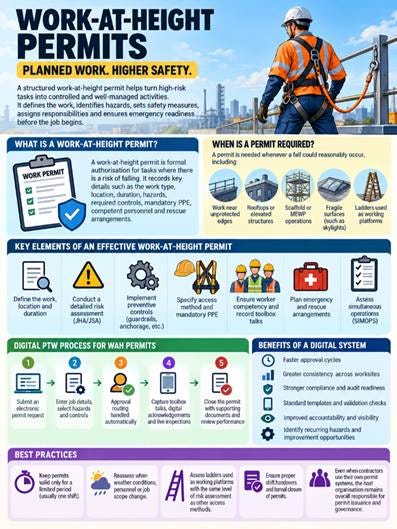
Working at height carries inherent risk, and ordinary activities can quickly turn hazardous when the right controls are missing. A small loss of balance beside an exposed edge, or a slip while working from scaffolds, ladders, or mobile elevating work platforms (MEWPs), may lead to serious injuries, disrupted operations, and costly delays. To manage these hazards, organisations use structured work at height (WAH) permit procedures that turn potentially dangerous work into planned, controlled, and closely supervised activities. Such permits establish the job scope, allocate responsibilities, record essential precautions, and set emergency arrangements before work starts. When integrated with a digital permit to work (PTW) platform, the workflow can become faster and clearer through automated approvals, immediate visibility, and protected digital records that support compliance and auditing needs.
A WAH permit provides formal authorisation for work involving fall hazards. It captures essential details such as the task being carried out, the precise worksite, and the planned duration. It also identifies foreseeable hazards, states required preventive controls, lists mandatory personal protective equipment (PPE), and confirms that qualified workers are assigned to the activity. The permit further verifies that rescue arrangements are prepared and that necessary approvals have been completed before work begins. Unlike general work permits, WAH permits focus specifically on controlling fall risks and ensuring readiness for emergencies.
A WAH permit is needed whenever a fall could reasonably occur and result in harm. This includes work beside unprotected edges, on rooftops or raised structures, during scaffold or MEWP activities, across fragile surfaces such as skylights, and during situations where ladders are being used as working platforms rather than simply for access. While some organisations may establish particular height limits for permit requirements, the key consideration should remain the existence of a fall hazard, not height by itself.
An effective WAH permit process is more than paperwork because it builds a consistent safety framework around the task. The process starts by defining the work, location, and anticipated duration, ensuring the permit applies to a clearly defined period rather than remaining open without limit. A thorough risk assessment, commonly completed through Job Hazard Analysis (JHA) or Job Safety Analysis (JSA), considers conditions such as changing weather, nearby electrical hazards, and falling object risks while establishing suitable control measures for the activity.
Preventive measures should take precedence over reactive protection wherever possible. When practical, fixed safeguards such as guardrails and permanent anchorage systems should be established before relying on fall arrest equipment, including harnesses or self retracting lifelines. The permit should identify the chosen access method, whether scaffolding, ladders, or MEWPs, and confirm that the method fits the task. Worker competence also matters, covering suitable training, physical capability, and effective communication about the work. Pre job discussions, often delivered as toolbox talks, should be recorded formally so every worker understands the hazards, required precautions, rescue arrangements, and individual responsibilities.
Emergency readiness is another essential part of the WAH permit process. This means appointing a rescue coordinator, keeping rescue equipment readily available, maintaining dependable communication, and setting response steps before the work begins. The permit should also consider simultaneous operations (SIMOPS) and detect possible conflicts with other higher risk work, including hot work, lockout/tagout (LOTO), confined space entry, lifting activities, or jobs taking place in areas accessible to the public.
The workflow concludes with formal authorisation, organised shift handovers when necessary, and proper permit closure. Closing the permit requires confirmation that the work area has been restored to a safe condition. It should also capture observations and lessons learned so that future safety performance and operational planning can be improved.
WAH permits deliver greater value when they form part of a wider PTW system that standardises processes and helps minimise operational conflicts. In a digital setup, the workflow generally starts with an electronic permit request completed through a predefined format. Work information is entered, hazards and controls are chosen from standardised selections, and the approval path is managed automatically. During the job, teams can document toolbox talks, collect digital acknowledgements, and complete live safety inspections while still retaining the ability to stop or pause work when site conditions change. After completion, the permit is formally closed with relevant supporting documents, while dashboards and time stamped activity logs can be used to review performance trends.
Digital WAH permit systems can provide substantial operational benefits. They can reduce approval times, improve consistency between worksites, and strengthen compliance management. Standard templates, validation checks, mobile access, and secure audit trails help increase accountability and maintain visibility across the process. Digital workflows can also make recurring hazards, process weaknesses, and improvement opportunities easier to identify, supporting ongoing improvements in both safety management and operational performance.
As a best practice, permits should remain active only for a controlled period, commonly a single work shift, and should be reassessed whenever weather, personnel, or job scope changes. Ladders used as working platforms should receive the same thorough risk assessment applied to other elevated access methods. Even where contractors follow their own permit arrangements, the host organisation continues to hold overall responsibility for permit issuance and PTW governance, helping maintain consistent safety controls across the operation at every stage.
Book a free demo at
https://www.toolkitx.com/blogsdetails.aspx?title=Work-at-height-permit-(2025-guide):-rules,-checklist,-and-PTW-tips
Oilfield Integrity Management Market Growth Supported by Increasing Focus on Asset Safety
By nilajadhav123, 2026-09-30

Oil and gas companies operate complex assets that can be exposed to corrosion, scale, mechanical degradation, and other conditions that affect operational reliability. As operators seek to improve asset performance and manage maintenance requirements, oilfield integrity management has become an important part of modern energy operations. According to Polaris Market Research, the global oilfield integrity management market was valued at USD 14.05 billion in 2023 and is projected to reach USD 26.57 billion by 2032, expanding at a CAGR of 7.34%.
Analyst Commentary on Oilfield Integrity Management Market Growth
“Digitalization and the growing focus on asset reliability are creating stronger requirements for predictive maintenance, inspection, corrosion management, and real-time monitoring,” said a Polaris Market Research analyst. “These capabilities can help operators improve visibility into asset conditions while supporting maintenance planning and operational efficiency.”
Key Growth Drivers, Major Companies and Segments Covered
The market is being supported by investment in oil and gas development, the increasing adoption of digital technologies, and the need to manage asset integrity throughout the operating lifecycle.
Oilfield integrity management can incorporate planning, predictive maintenance, inspection, data management, corrosion management, and monitoring systems. Digital technologies such as IoT, cloud computing, and AI are also increasingly relevant because they can support real-time data collection and analysis. Polaris Market Research has identified safety, digitalization, and regulatory compliance as important factors shaping the market's future direction.
The market is segmented by management type, component, application, and region. Management types include planning, predictive maintenance and inspection, data management, corrosion management, and monitoring systems. Components include software and services, while applications cover onshore and offshore operations.
Key Players:
- Aker Solutions,
- Bureau Veritas, Baker Hughes Company,
- Emerson Electric Company,
- Halliburton Limited,
- IBM Inc.,
- John Wood Group PLC,
- National Oilwell Varc,
- Oceaneering International Group,
- Oracle Corporation,
- Schlumberger Limited,
- Saipem limited Company,
- Siemens Limited,
- SGS SA Corporation,
- Weatherford Group
Browse More Information:
https://www.polarismarketresearch.com/industry-analysis/oilfield-integrity-management-market
Regional Snapshot
North America represents a major regional market, supported by established oil and gas operations and demand for advanced asset-management technologies. Asia Pacific also represents an important market because of continuing investment in oil and gas exploration and production.
The Middle East and Africa provide additional opportunities because of their significant oil and gas activities and the need to maintain and optimize assets. Regional market development is therefore closely connected to exploration, production, infrastructure investment, and the management of mature fields.
Why It Matters for Energy Companies Evaluating Market Entry
For oil and gas operators, engineering companies, software providers, and service companies, integrity management provides opportunities across both technology and services. Organizations can evaluate demand for predictive maintenance, inspection, corrosion management, monitoring, and data-management solutions.
Digital systems can also help connect information from multiple operational areas, enabling companies to build a more comprehensive view of asset condition and maintenance requirements.
The Road Ahead
The future of oilfield integrity management is likely to involve deeper integration of sensors, analytics, predictive maintenance, remote monitoring, and digital asset-management platforms. As operators seek to optimize mature assets and manage increasingly complex operations, real-time data and predictive capabilities can become more important components of integrity strategies.
Conclusion
In conclusion, the oilfield integrity management market is increasingly connected to the broader digital transformation of the energy industry. With the market projected to reach USD 26.57 billion by 2032 at a 7.34% CAGR, demand is expected to remain linked to asset reliability, predictive maintenance, corrosion control, monitoring, and operational efficiency. Technology providers and energy companies can explore opportunities across software, services, onshore operations, and offshore applications.
More Trending Latest Reports By Polaris Market Research:
Hemodynamic Monitoring Devices Market
Lip Softening Tools Market Gains Momentum Through Beauty Product Innovation
By nilajadhav123, 2026-09-30

Beauty and personal-care consumers are increasingly looking beyond conventional cosmetics toward tools and devices that support everyday skincare routines. Lip care is part of this shift, with consumers showing greater interest in products designed to exfoliate, soften, enhance, and plump the lips. According to Polaris Market Research, the global lip softening tools market was valued at USD 247.96 million in 2023 and is projected to reach USD 395.69 million by 2032, growing at a CAGR of 5.3%.
Analyst Commentary on Lip Softening Tools Market Growth
“Growing consumer attention to lip care, self-care routines, and appearance-focused beauty products is supporting demand for specialized lip softening tools,” said a Polaris Market Research analyst. “The expansion of online retail and product innovation is also giving consumers greater access to new lip-plumping, enhancing, and perfecting solutions.”
Key Growth Drivers, Major Companies and Segments Covered
Increasing awareness of lip care and protection, interest in fuller-looking lips, social-media beauty trends, and demand for at-home beauty products are supporting the market.
Lip softening tools are designed to exfoliate, massage, ease, and plump the lips. The popularity of lip-enhancing beauty trends has helped create consumer interest in specialized products that can complement conventional lip cosmetics. Polaris also identifies the influence of social media and growing awareness of self-care as important factors behind demand.
The market is segmented by product type, distribution channel, and region. Product categories include lip plumping tools, lip enhancer tools, lip-perfecting tools, and others. Distribution is divided between offline channels and online retail stores, including company websites and e-commerce platforms.
Key Players:
- BIRCHBOX
- CandyLipz
- Derol Cosmetics.
- Fullips
- JuvaLips
- Kao Corporation
- KISSIO
- PROTOUCH Pro-lips Lip Device
- RéVive Skincare
- Procter & Gamble
- Unilever
Browse More Information:
https://www.polarismarketresearch.com/industry-analysis/lip-softening-tools-market
Regional Snapshot
North America is expected to register significant growth during the forecast period, supported by demand for lip-care products and consumer spending on beauty and personal-care products. Asia Pacific also represents an important opportunity because of growing beauty awareness, skincare trends, and interest in K-Beauty-inspired products.
Online channels are particularly important because consumers can compare products, access discounts, and discover specialized beauty tools that may not be available through traditional retail outlets.
Why It Matters for Beauty Brands Evaluating Market Entry
For beauty brands, retailers, manufacturers, and investors, the market provides opportunities across several product categories and distribution models. Companies can evaluate demand for plumping, enhancing, and perfecting tools while also considering the differences between physical retail and e-commerce.
The growth of digital beauty commerce provides companies with additional opportunities to communicate product benefits, demonstrate usage, and reach niche consumer audiences.
The Road Ahead
The future of the market is expected to involve greater product specialization, online distribution, multifunctional designs, and continued consumer interest in at-home beauty routines. Sustainable materials and personalized beauty experiences may also influence future product development.
Conclusion
In conclusion, the lip softening tools market is developing alongside broader trends in personal care, self-care, social-media-driven beauty, and e-commerce. With the market projected to reach USD 395.69 million by 2032 at a 5.3% CAGR, manufacturers and retailers have opportunities to develop innovative products across plumping, enhancing, and perfecting categories while expanding their digital distribution strategies.
More Trending Latest Reports By Polaris Market Research: