
Blogs
Rotary Hammer Drill Market: Market Trends, Key Applications, and Growth Opportunities
By durvapatel, 2026-10-29
According to the latest report published by Data Bridge Market Research, the Rotary Hammer Drill Market
Global Rotary Hammer Drill Market Segmentation, By Product (Wired and Wireless), Application (Household, Construction, Decoration, Manufacturing, Metal Working, Professional Service, and Others), End-Users (Residential and Commercial), Distribution Channel (Online and Offline) - Industry Trends and Forecast to 2032
Rotary Hammer Drill Market business report estimates each segment of the global market in a very detailed pattern so that readers can be informed about future opportunities and high-growth areas of the industry. Besides, it provides a complete study of crucial market dynamics, including growth drivers, restraints, challenges, trends, and opportunities. The reliable Rotary Hammer Drill Market report makes clients focus on the more important aspects of the market like what the market recent trends are. Readers are given with accurate facts and figures related to the market and its significant factors such as consumption, production, revenue growth, and CAGR.
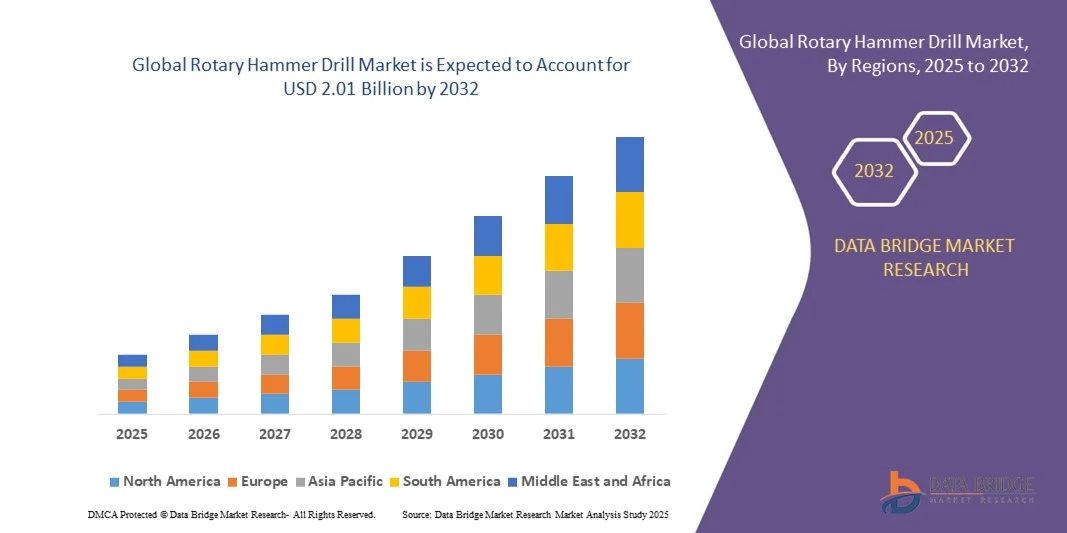
Stay informed with our latest keyword market research covering strategies, innovations, and forecasts. Download full report: https://www.databridgemarketresearch.com/reports/global-rotary-hammer-drill-market
Rotary Hammer Drill Market Segmentation and Market Companies
Segments
- By Application:
The global rotary hammer drill market can be segmented based on application into residential, commercial, and industrial sectors. The residential sector is expected to witness significant growth due to increasing home improvement and DIY activities. The commercial sector is also anticipated to grow as construction projects continue to rise worldwide. The industrial sector, including manufacturing and infrastructure development, will also contribute to the market growth.
- By Product Type:
In terms of product type, the market can be segmented into corded and cordless rotary hammer drills. Cordless rotary hammer drills are gaining popularity due to their convenience and portability. The corded segment, however, still holds a significant market share owing to its consistent power supply and reliable performance.
- By Sales Channel:
The sales channel segment includes offline and online channels. Offline channels, such as retail stores and specialty shops, are crucial for reaching customers who prefer in-person interactions. Online channels, on the other hand, are experiencing rapid growth with the increasing trend of e-commerce and digital platforms.
Market Players
- Bosch Power Tools:
Bosch is a prominent player in the global rotary hammer drill market, known for its innovation and quality products. The company offers a wide range of rotary hammer drills suitable for various applications, catering to both professionals and DIY enthusiasts.
- Makita Corporation:
Makita is another key player in the market, recognized for its durable and high-performance rotary hammer drills. The company focuses on technological advancements and customer satisfaction, positioning itself as a leading choice in the industry.
- Hilti Corporation:
Hilti is a renowned name in the construction tools sector, offering robust rotary hammer drills for industrial and commercial applications. The company's focus on precision engineering and user-friendly designs sets it apart in the market.
- DEWALT (Stanley Black & Decker):
DEWALT, a subsidiary of Stanley Black & Decker, is a well-established brand in the power tools industry. The company's rotary hammer drills are known for their reliability and efficiency, catering to the diverse needs of construction professionals.
- Metabo Power Tools:
Metabo Power Tools is a trusted player in the rotary hammer drill market, delivering durable and high-performance tools for various applications. The company's commitment to quality and innovation has solidified its position in the competitive landscape.
The global rotary hammer drill market is dynamic and competitive, with key players focusing on product development, strategic partnerships, and market expansion to gain a competitive edge. (Source: Data Bridge Market Research )The global rotary hammer drill market is experiencing significant growth driven by various applications across residential, commercial, and industrial sectors. In the residential segment, the market is seeing a surge in demand due to the increasing trend of home improvements and DIY activities among homeowners. The commercial sector, characterized by ongoing construction projects globally, is a key driver for market expansion. The industrial segment, which includes manufacturing and infrastructure development, is also contributing to the market growth with the need for high-performance tools for heavy-duty tasks.
Product segmentation plays a crucial role in catering to the diverse needs of consumers in the rotary hammer drill market. The cordless segment is witnessing increasing popularity owing to the convenience and portability it offers to users, especially in scenarios where mobility is essential. On the other hand, the corded segment still commands a significant market share due to the consistent power supply and reliable performance it provides, making it a preferred choice for certain applications that require continuous usage without the need for recharging.
Sales channels also play a vital role in reaching and engaging with customers in the rotary hammer drill market. Offline channels, including retail stores and specialty shops, continue to be essential for customers who prefer in-person interactions, product demonstrations, and immediate assistance from sales staff. However, online channels are experiencing rapid growth, driven by the increasing trend of e-commerce and digital platforms. Online channels offer convenience, a wide range of product options, and the ability to compare prices and features easily, attracting a growing number of consumers towards online purchases.
Key market players such as Bosch Power Tools, Makita Corporation, Hilti Corporation, DEWALT (Stanley Black & Decker), and Metabo Power Tools are driving innovation and quality in the global rotary hammer drill market. These companies focus on product development, technological advancements, and customer satisfaction to maintain a competitive edge in the market. Strategic partnerships and market expansion strategies are also crucial for these players to enhance their presence in key regions and target new customer segments.
In conclusion, the global rotary hammer drill market is characterized by dynamic competition and continuous innovation. The market players mentioned above are leading the industry with their focus on quality, performance, and customer-centric approaches. As the market continues to evolve, companies need to adapt to changing consumer preferences, technological advancements, and market trends to stay competitive and meet the growing demand for high-quality rotary hammer drills across various sectors.The global rotary hammer drill market is a dynamic and competitive landscape driven by the increasing demand across residential, commercial, and industrial sectors. One of the primary growth drivers in the residential segment is the growing trend of DIY activities and home improvement projects, leading to a surge in demand for rotary hammer drills. In the commercial sector, ongoing construction projects worldwide are fueling market expansion, as these drills are essential tools for various construction applications. The industrial segment, encompassing manufacturing and infrastructure development, is also contributing significantly to the market growth by requiring high-performance tools for heavy-duty tasks, highlighting the versatility of rotary hammer drills across different industries.
Product segmentation is crucial in meeting the diverse needs of consumers within the rotary hammer drill market. Cordless rotary hammer drills are gaining popularity due to their convenience and portability, especially in scenarios where mobility is essential. On the other hand, corded rotary hammer drills still maintain a considerable market share due to their consistent power supply and reliable performance, making them preferable for applications that require continuous usage without the need for recharging.
Sales channels play a vital role in reaching customers and driving sales in the rotary hammer drill market. Offline channels such as retail stores and specialty shops remain crucial for customers seeking in-person interactions, product demonstrations, and immediate assistance. However, online channels are experiencing rapid growth with the rise of e-commerce and digital platforms, offering convenience, a wide range of product options, and easy price and feature comparisons, attracting a growing number of consumers to online purchases.
Key market players such as Bosch Power Tools, Makita Corporation, Hilti Corporation, DEWALT (Stanley Black & Decker), and Metabo Power Tools are at the forefront of driving innovation, quality, and customer satisfaction in the global rotary hammer drill market. These companies are dedicated to product development, technological advancements, and strategic partnerships to maintain a competitive edge and expand their market presence. The industry's focus on quality, performance, and customer-centric approaches underscores the competitive nature of the market and the importance of continuous innovation to meet evolving consumer preferences and market trends. Moving forward, companies in the rotary hammer drill market need to stay agile, adapt to changing dynamics, and leverage technological advancements to capture new opportunities and sustain growth in this highly competitive landscape.
Frequently Asked Questions About This Report
What are the signs of a Market Rebound for Rotary Hammer Drill Market?
What are the key players in the Rotary Hammer Drill Market for manufacturing?
How are smart Rotary Hammer Drill Market solutions gaining traction?
How do high initial costs act as a restraint for the Rotary Hammer Drill Market?
How is the Cold Chain (if applicable) impacting Rotary Hammer Drill Market quality?
What is the competitive intensity of the Rotary Hammer Drill Market (Porter’s Five Forces)?
How is Market Saturation affecting the Rotary Hammer Drill Market industry in North America?
What is the competitive intensity of the Rotary Hammer Drill Market (Porter’s Five Forces)?
What are the technical limitations hindering Rotary Hammer Drill Market expansion?
How is the Rotary Hammer Drill Market evolving in the Entertainment industry?
What are the latest breakthroughs in Rotary Hammer Drill Market R&D?
How are customized/personalized Rotary Hammer Drill Market offerings performing?
What are the logistics challenges in the Rotary Hammer Drill Market across different regions?
Browse More Reports:
Global Consumer Electronics Packaging Market
Global Corporate Web Security Market
Global Counter-IED Market
Global Cranial Implants Treatment Market
Global Crimean-Congo Haemorrhagic Fever Market
Global Critical Infrastructure Protection Market
Global Cylinder Deactivation System Market
Global Dental Wax Market
Global Detox Drinks Market
Global Diagnostic Tape Market
Global Diamond Coatings Market
Global Digital Badges Market
Global Digital Inspection Market
Global DNA Profiling Kits Market
Global Docking Station Market
Contact Us:
Data Bridge Market Research
US: +1 614 591 3140
UK: +44 845 154 9652
APAC : +653 1251 980
Email:- corporatesales@databridgemarketresearch.com"
The USA is a key player in the Pine-Derived Chemicals Market. Its large forests and strong paper industry supply raw material. Adhesive, coating, and ink makers use the output every day. Local firms keep working on new, cleaner grades.
What Is Driving the Market?
Bio-based chemistry is the first driver. Industries are moving toward sustainability and away from conventional oil-based inputs. Pine-based chemicals are gaining momentum in automotive, textile, and packaging uses. Buyers want greener materials without a drop-in performance.
Adhesives, sealants, and coatings are the second driver. Rosin and its derivatives are widely used in these products. A growing construction sector adds demand. So, does the call for eco-friendly adhesives in packaging, automotive, and building materials.
Get exclusive insights into the Pine-Derived Chemicals Market – https://www.theinsightpartners.com/sample/TIPRE00010691
Cosmetics is the third driver. Terpenes and pine oil have natural fragrance, antibacterial, and anti-inflammatory traits. As shoppers favor natural and organic ingredients, pine-derived chemicals are a popular pick in skin care, hair care, and beauty products.
Supply is a factor to watch. Output depends on pine tapping and on the by-products of pulp making, so volumes can follow forestry and paper trends.
Which Segment Leads?
By type, the report covers tall oil fatty acid, tall oil rosin, gum turpentine, gum rosin, sterols, pitch, and other pine-derived chemicals. Tall oil fatty acid is the type with the largest market share, according to the report. Rosin products also play a central role across adhesives and coatings.
By application, the market spans paints and coatings, adhesives and sealants, surfactants, printing inks, and others. By source, it covers living trees, dead pine stumps and logs, and by-products of sulfate pulping, known as the kraft process. By process, the report looks at kraft and tapping. This wide spread shows how flexible pine chemistry is.
Which Region Leads?
Asia Pacific is expected to record the highest growth rate among all regions during the forecast period. The report covers China, India, and Japan within the region.
The United States is a key market. Support comes from the rise of bio-based chemicals, strong demand in adhesives, sealants, and coatings, and a growing taste for natural cosmetic ingredients.
The report also covers Europe, South and Central America, and the Middle East and Africa. Europe adds steady demand through Germany, France, the UK, and Italy. Brazil and Argentina give South and Central America room to grow.
Which Companies Are Prominent?
The report profiles these market leaders:
- Arakawa Chemical Industries, Ltd.
- Arizona Chemical Company, LLC
- DRT (Dérivés Résiniques ET Terpéniques)
- Eastman Chemical Company
- Foreverest Resources Ltd.
- Georgia-Pacific Chemicals LLC.
- Harima Chemicals Group Inc.
- Ingevity Corporation
- Mentha and Allied Products Pvt. Ltd.
- Renessenz LLC.
The field mixes global chemical groups with focused resin and terpene specialists. Firms compete on product range, quality, and access to raw material. Many are working to turn pine resin and by-products into higher-value chemicals. Companies that offer products for several industries can spread their risk.
What Is Changing in 2026?
Technology is widening the field. Better methods to convert pine resin and by-products into valuable chemicals can improve the economics.
Clean energy is a growing area. Pine-derived chemicals are being used in biofuels and biomass-based energy. As the world focuses on cutting carbon, demand for bio-based feedstocks like these may climb.
Sustainable packaging is the third shift. Rosin-based resins are being studied for biodegradable packaging and coatings. This points to new openings in a market that wants natural, lower-impact solutions.
What Are the Investment Opportunities?
Bioplastics and sustainable packaging offer a big opening. Rosin derivatives help make biodegradable polymers, which matches the shift toward greener packaging and consumer goods.
Food and beverages is another promising field. Pine-derived natural antioxidants and flavoring agents can serve food preservation and flavor needs, as consumers lean toward natural and organic products.
Paints and coatings round out the list. Rosin esters and turpentine are used in sustainable products, and demand should rise as the industry seeks bio-based options. Firms that invest in cleaner processes are well placed for the next phase of growth.
Frequently Asked Questions
- Which type segment accounted for the highest share of the market?
A. The tall oil fatty acid segment accounted for the largest market share. - Which region is expected to record the highest growth?
A. Asia Pacific is expected to record the highest growth rate from 2026 to 2034. - What is driving the pine-derived chemicals market?
A. Growing demand for bio-based products is a key driver. - What is the expected CAGR of the market?
A. The market is estimated to witness a CAGR of 3.94% from 2026 to 2034.
Related Reading / Reports
Explore additional research from The Insight Partners covering related bio-based and specialty chemical markets:
- Oleochemicals Market — covers chemicals made from natural oils and fats.
- Polyoxyethylene Hydrogenated Castor Oil Market — looks at plant-based surfactants and emulsifiers.
- Paper Dry Strength Agent Market — tracks additives used in paper and pulp making.
About US:
The Insight Partners is among the leading market research and consulting firms in the world. We take pride in delivering exclusive reports along with sophisticated strategic and tactical insights into the industry. Reports are generated through a combination of primary and secondary research, solely aimed at giving our clientele a knowledge-based insight into the market and domain. This is done to assist clients in making wiser business decisions. A holistic perspective in every study undertaken form an integral part of our research methodology and makes the report unique and reliable.
Contact US
For any queries, please reach out to us:
Phone: +1-646-491-9876
E-mail: sales@theinsightpartners.com
Also Available in : Korean | German | Japanese | French | Chinese | Italian | Spanish
Soft touch and smart release keep these beads in demand. The Polyurethane (PU) Microspheres Market reflects this. It was US$ 1.95 billion in 2025 and is set to reach US$ 5.17 billion by 2034. Expect a CAGR of 11.44% between 2026 and 2034.
What Is Driving the Market?
Surface looks and touch are the first driver. PU microspheres give coatings a soft-feel effect and strong matting power. Shoppers love matte and soft-touch finishes on phones, laptops, and car interiors.
Lightweighting is the second driver. Automotive and aerospace makers want to save fuel and cut emissions. Hollow and expandable microspheres cut weight and add thermal insulation.
Get exclusive insights into the Polyurethane (PU) Microspheres Market – https://www.theinsightpartners.com/sample/TIPRE00010441
Healthcare is the third driver. Drug makers are using PU microspheres for controlled-release delivery. Encapsulation is spreading fast, especially in North America and Europe. Cosmetics also add pull, as brands look for better spreadability and skin feel.
The market does face challenges. Raw material costs run higher than those of traditional fillers. Reaching an even particle size is also technically hard. Producers that solve these issues can hold strong margins.
Which Segment Leads?
By application, the report covers encapsulation, paints and coatings, adhesives, cosmetics, and others. Paints and coatings remain the primary application, helped by growth in automotive and architectural work. Encapsulation is the fastest-rising application, enabling controlled release in medicines and agrochemicals.
Adhesives use the beads for repositionable bonds, and cosmetics use them to improve spread and skin feel.
By form, solid microspheres serve as matting agents in coatings and cosmetics. Hollow ones are the dominant volume driver, especially in automotive and construction. Expandable types help make lightweight foams and technical textiles.
Which Region Leads?
Asia Pacific is the fastest-growing region. It also leads in revenue because of its large electronics manufacturing base. China, Japan, and South Korea anchor automotive and electronics output, and support for electric vehicles adds demand for lightweight materials.
North America is a technologically advanced market. Healthcare, aerospace, and defense lead demand. Europe holds a significant share, backed by a strong car industry and strict chemical rules. Tough VOC limits are pushing makers toward waterborne and aliphatic grades.
South and Central America is emerging, with Brazil and Chile growing their factories. The Middle East and Africa offers promise in construction and specialty chemicals.
Which Companies Are Prominent?
The report profiles these market leaders:
- Aly International
- Bagavathiamman Hi-Tech Coatings
- Chase Corporation
- Covestro AG
- Heyo Enterprises Co., Ltd.
- HOS-Technik GmbH
- Kolon Industry, Inc.
- Microchem
- Sanyo Chemical Industries Ltd.
- Supercolori S.P.A
Competition is rising. Global chemical giants share the field with specialized polymer firms. Some manage the whole chain, from raw material to final particle size. Vendors stand out through premium branding, wide product ranges, and tight quality control.
Recent news shows the pace. In March 2026, Covestro presented textile coating and adhesive film solutions at Techtextil. In July 2025, it strengthened its cast polyurethane elastomer network in Taiwan to support local service and sales.
What Is Changing in 2026?
Aliphatic formulations are gaining ground. They resist UV light and keep their color, which suits outdoor coatings and high-end cosmetics.
Electric vehicles are opening a new door. Lightweight underbody coatings and battery insulation offer a clear edge to suppliers. Partnerships with carmakers and electronics firms can speed up access to these uses.
Sustainability is the third shift. Europe is moving toward low-VOC and bio-based chemistry in line with its Green Deal. North American firms are working on biocompatible and biodegradable microspheres to meet strict standards.
What Are the Investment Opportunities?
Sustainable aliphatic grades offer strong upside. Outdoor coatings and premium cosmetics both need UV stability.
Asian electronics corridors are another promising field. Ties between chemical suppliers and manufacturers in China and Vietnam may open high-margin segments, where demand for premium, clean housings is rising.
Special certifications can set suppliers apart. Biocompatibility marks for medical devices and eco-labels for green building target well-defined buyers. With a CAGR of 11.44%, the market rewards firms that invest early in technical skill and quality.
Frequently Asked Questions
- What is the projected size of the polyurethane (PU) microspheres market by 2034?
A. The market is expected to reach approximately US$ 5.17 billion by 2034, growing from US$ 1.95 billion in 2025. - Which is the fastest-growing region?
A. Asia Pacific is the fastest-growing region, with a strong focus on electronics and automotive manufacturing. - What are the main challenges in the market?
A. High raw material costs compared with traditional fillers and the technical complexity of achieving uniform particle size distribution. - What is the expected CAGR of the market?
A. The market is anticipated to register a CAGR of 11.44% during 2026 to 2034.
Related Reading / Reports
Explore additional research from The Insight Partners covering related polymer and additive markets:
- One-Component Polyurethane Foam Market — looks at polyurethane foam products used for sealing and bonding.
- Masterbatch Market — covers concentrated additives used to color and improve plastics.
- Polyethylene Masterbatch Market — tracks additive concentrates built on a polyethylene base.
About US:
The Insight Partners is among the leading market research and consulting firms in the world. We take pride in delivering exclusive reports along with sophisticated strategic and tactical insights into the industry. Reports are generated through a combination of primary and secondary research, solely aimed at giving our clientele a knowledge-based insight into the market and domain. This is done to assist clients in making wiser business decisions. A holistic perspective in every study undertaken form an integral part of our research methodology and makes the report unique and reliable.
Contact US
For any queries, please reach out to us:
Phone: +1-646-491-9876
E-mail: sales@theinsightpartners.com
Also Available in : Korean | German | Japanese | French | Chinese | Italian | Spanish
From hair gels to glue sticks, PVP does a lot. The Polyvinylpyrrolidone Market grew to US$ 2.8 billion in 2025. It is projected to reach US$ 4.2 billion by 2034, at a CAGR of 4.62% from 2026 to 2034.
What Is Driving the Market?
The pharmaceutical sector is the main driver. PVP serves as an excipient, which is the helper ingredient in a medicine. It acts as a binder, a stabilizer, and a solubilizer.
Drug delivery is getting more advanced, and that adds more pull. PVP is biocompatible, and it helps dissolve drugs that do not mix well with water. These traits make it a strong fit for newer, more complex formulations.
Get exclusive insights into the Polyvinylpyrrolidone Market – https://www.theinsightpartners.com/sample/TIPRE00017985
Global health challenges, including the recent pandemic, have sped up pharmaceutical research. New medicines need reliable excipients to prove their safety and effect. This wave of innovation opens a strong path for PVP suppliers who can deliver high-quality grades.
Like many specialty chemicals, PVP is a quality-driven business. Buyers in medicine and personal care set high bars for purity, so producers must keep investing in testing, which can add to costs.
Which Segment Leads?
By form, the market covers powder and liquid.
By application, the report looks at pharmaceuticals, adhesives, cosmetics, food and beverages, and others. Pharmaceuticals is the biggest source of demand and the core growth story, as the report ties the market's rise mainly to this sector. Cosmetics is the next major area, and it is gaining fast. Pharmaceutical use ties directly to drug delivery trends, so it stays at the center of the outlook.
Adhesives use PVP for its bonding and film traits. Food and beverage makers add further steady use. Together, these uses give the market a wide base.
Which Region Leads?
Asia Pacific is expected to register the fastest growth among all regions during the forecast period.
The United States is a key market. The report links its strength to a strong pharmaceutical sector, advances in drug delivery, and heavy research spending in the face of global health challenges.
The report also covers North America, Europe, South and Central America, and the Middle East and Africa, with country-level views for each.
Which Companies Are Prominent?
The report profiles these market leaders:
- Ashland.
- BASF SE
- Boai NKY Pharmaceuticals Ltd.
- Glide Chem Private Limited
- Hangzhou Sunflower Technology Development Co., Ltd.
- JH Nanhang Life Sciences Co.,Ltd
- Nacalai tesque, Inc.
- Nippon Shokubai Co., Ltd.
- Prakash chemicals Pvt Ltd
- Star-Tech and JRS Specialty Products Co., Ltd
The field mixes global chemical groups with focused life science and specialty firms. Competition rests on purity, consistent supply, and the range of grades on offer. Companies that serve both drug makers and personal care brands can spread their risk. Firms that invest in new grades for drug delivery and cosmetics can also stand out.
What Is Changing in 2026?
Cosmetics and personal care are taking a bigger role. Informed shoppers now read labels and want premium ingredients that perform well. PVP fits this need because it brings useful properties to many cosmetic products.
Its film-forming trait is the key. It improves the feel and stability of hair sprays, lotions, and makeup. It also lets formulators create longer-lasting results that still feel good on the skin. This pushes brands to launch new PVP-based formulas. Makers may need new grades tuned for skin feel and film strength, and early movers can lead.
Clean beauty is the third shift. Shoppers want healthy, simple products, and brands are rethinking their recipes. PVP is seen as a safe and effective ingredient, so it fits this trend well.
What Are the Investment Opportunities?
Pharmaceutical excipients offer the clearest opening. Healthcare is evolving fast, and drug makers need ingredients that improve formulas. PVP's role as a binder, stabilizer, and solubilizer places it at the heart of modern medicine.
Personalized medicine and advanced drug delivery add more promise. PVP can lift the solubility of hard-to-dissolve drugs, and it is biocompatible. As drug firms develop better treatments, demand for high-quality PVP should stay strong.
Global health challenges also help. Suppliers who can deliver safe, consistent grades are well placed for the next phase of growth.
Frequently Asked Questions
- Which region is expected to grow the fastest?
A. Asia Pacific is expected to register the fastest growth from 2026 to 2034. - What are the key trends in the polyvinylpyrrolidone market?
A. Increasing adoption of PVP in the cosmetics and personal care industry is one of the key trends. - What is driving the market?
A. Growing demand from the pharmaceutical industry is driving market growth. - What is the expected CAGR of the polyvinylpyrrolidone market?
A. The market is estimated to witness a CAGR of 4.62% from 2026 to 2034.
Related Reading / Reports
Explore additional research from The Insight Partners covering related specialty polymer markets:
- Masterbatch Market — covers concentrated additives used to color and improve plastics.
- One-Component Polyurethane Foam Market — looks at foam products used for sealing and bonding.
About US:
The Insight Partners is among the leading market research and consulting firms in the world. We take pride in delivering exclusive reports along with sophisticated strategic and tactical insights into the industry. Reports are generated through a combination of primary and secondary research, solely aimed at giving our clientele a knowledge-based insight into the market and domain. This is done to assist clients in making wiser business decisions. A holistic perspective in every study undertaken form an integral part of our research methodology and makes the report unique and reliable.
Contact US
For any queries, please reach out to us:
Phone: +1-646-491-9876
E-mail: sales@theinsightpartners.com
Also Available in : Korean | German | Japanese | French | Chinese | Italian | Spanish
Mines, factories, and farms all run heavy machines. Those machines need tough seals, belts, and liners. This demand is lifting the Polyurethane Elastomers Market, which stood at US$ 21.73 billion in 2025. It is expected to touch US$ 33.79 billion by 2034. The market should post a CAGR of 5.03% over 2026 to 2034.
What Is Driving the Market?
The need for high-performance materials is the main driver. Automotive, construction, and consumer goods are all evolving. Each wants durable, flexible, wear-resistant materials, and polyurethane elastomers fit well.
The automotive industry adds strong support. Carmakers use the material in seals, gaskets, and interior parts. It keeps its performance even in harsh conditions. As makers aim for better vehicle durability and performance, demand for the material is likely to rise.
Get exclusive insights into the Polyurethane Elastomers Market – https://www.theinsightpartners.com/sample/TIPRE00005336
Construction is another key pillar. Polyurethane elastomers show good mechanical strength and great versatility. They appear in coatings, adhesives, and flooring that must last for years. As builders focus on quality and sustainability, demand should keep growing.
The market does face hurdles. Raw materials such as isocyanates and polyols can see price swings, which makes costs harder to predict. Producers also face pressure to cut the environmental impact of petroleum-based products.
Which Segment Leads?
By type, the report covers cast polymers, thermoplastic, and thermoset grades. By process, the market includes casting, injection molding, extrusion, and others.
By raw material, isocyanates and polyols form the base of every elastomer. Additives such as fillers, flame retardants, and pigments tune the final product. By application, the report spans mining, construction, furniture, footwear, industrial machinery, oil and gas, and others.
By end-use, it looks at automotive, building and construction, footwear making, and electrical and electronics. Automotive stands out in the report's growth story, with seals, gaskets, and interior parts as core uses. Footwear and industrial machinery also remain important.
Which Region Leads?
Asia Pacific is expected to register the fastest growth among all regions during the forecast period.
The United States is a key market. Its growth rests on the rising need for high-performance materials, a healthy automotive industry, and steady use in construction.
The report also covers North America, Europe, South and Central America, and the Middle East and Africa, with country-level views for each.
Which Companies Are Prominent?
The report profiles these market leaders:
- Accella Polyurethane Systems
- BASF
- Chemtura Corporation
- Coim Group
- Covestro
- Headway Group
- Lubrizol
- Mitsui Chemicals Inc.
- Trelleborg AB
- Wanhua Chemical Gr Co.
The competitive field mixes global chemical giants with focused specialty players. Firms compete on product quality, custom grades, and new technology. Many are investing in bio-based formulations. Companies that serve fast-growing sectors such as automotive and construction can win a larger share.
What Is Changing in 2026?
Bio-based polyurethane elastomers are rising fast. Makers are replacing some petroleum-based inputs with renewable ones such as plant oils and natural polymers. This cuts the carbon footprint of production.
Sustainability pressure is strongest in automotive and construction, where firms must improve their green profile. Bio-based materials help suppliers stay competitive.
Technology is the third shift. Research teams are improving the properties of bio-based grades so they suit demanding uses. As the market for sustainable products grows, adoption is expected to climb well into the future.
What Are the Investment Opportunities?
The automobile industry offers the clearest opening. It wants light yet strong materials to improve fuel efficiency and vehicle performance. Polyurethane elastomers suit seals, gaskets, and interior parts.
Electric vehicles add a fresh layer of growth. EV makers need materials that cut weight, stay stable under heat, and perform in harsh conditions. As more EVs reach the road, the opportunity grows.
Footwear and industrial machinery add steady demand beyond cars, so makers with broad product ranges can spread their risk across sectors. Mining, oil and gas, and furniture offer further niches for tough, wear-resistant parts.
Sustainability also opens doors. Manufacturers want solutions that lower their environmental impact without losing performance. Polyurethane elastomers can be designed to meet that need. Companies that adapt to these changing needs are well placed for the next phase of growth.
Frequently Asked Questions
- Which region is expected to grow at the fastest pace?
A. Asia Pacific is expected to register the fastest growth during the forecast period from 2026 to 2034. - What are the key trends in the polyurethane elastomers market?
A. Increasing adoption of bio-based polyurethane elastomers is one of the key trends. - What is driving the market?
A. Increasing demand for high-performance materials is driving market growth. - What is the expected CAGR of the polyurethane elastomers market?
A. The market is estimated to witness a CAGR of 5.03% from 2026 to 2034.
Related Reading / Reports
Explore additional research from The Insight Partners covering related elastomer and sealing markets:
- Automotive Elastomers Market — covers elastomer materials used in vehicle parts.
- Fluoroelastomers Market — looks at heat- and chemical-resistant specialty rubbers.
- Encapsulated Gaskets and Seals Market — tracks sealing parts used in demanding industrial settings.
- Sealants Market — studies sealing materials used in building and manufacturing.
About US:
The Insight Partners is among the leading market research and consulting firms in the world. We take pride in delivering exclusive reports along with sophisticated strategic and tactical insights into the industry. Reports are generated through a combination of primary and secondary research, solely aimed at giving our clientele a knowledge-based insight into the market and domain. This is done to assist clients in making wiser business decisions. A holistic perspective in every study undertaken form an integral part of our research methodology and makes the report unique and reliable.
Contact US
For any queries, please reach out to us:
Phone: +1-646-491-9876
E-mail: sales@theinsightpartners.com
Also Available in : Korean | German | Japanese | French | Chinese | Italian | Spanish

Vasoryn Cardiovascular Support Formula is a dietary supplement intended to complement a balanced approach to heart health and overall cardiovascular wellness. Maintaining a healthy cardiovascular system is an important part of supporting general well-being, as the heart and blood vessels help circulate oxygen and nutrients throughout the body. Many adults look for practical ways to improve their daily wellness routines, and cardiovascular supplements may be one option they consider alongside nutritious food choices, regular physical activity, and healthy lifestyle habits. When exploring Vasoryn, consumers should begin by reviewing the product label and learning about its ingredients, serving instructions, and intended purpose. Understanding the formulation can help individuals make informed decisions about whether the supplement is appropriate for their personal needs. A heart-conscious lifestyle generally includes eating a variety of fruits and vegetables, choosing whole grains, incorporating suitable sources of protein, and consuming healthy fats in moderation. Regular exercise, adequate sleep, stress management, and avoiding tobacco are also important habits that contribute to long-term cardiovascular health. Vasoryn may be considered as part of this broader wellness routine, but its specific benefits depend on the actual ingredients, their amounts, and the available scientific evidence. Consumers should avoid assuming that a supplement can prevent cardiovascular disease or replace medical treatment. People who want to support healthy blood pressure and cholesterol levels should discuss appropriate strategies with a healthcare professional, especially if they have existing medical conditions or a family history of heart disease. Professional guidance is particularly important for individuals taking prescription medications because certain supplement ingredients may interact with medicines or influence blood pressure and blood clotting. Before using Vasoryn, it is sensible to verify the manufacturer's information, check the complete ingredient list, and follow the recommended directions provided on the packaging. Taking more than the suggested serving does not necessarily provide additional benefits and may increase the risk of unwanted effects. Anyone experiencing unusual symptoms after starting a supplement should stop using it and seek appropriate medical advice. Consumers should also be cautious of marketing claims that promise immediate results, dramatic improvements in circulation, or guaranteed protection against heart problems. Cardiovascular wellness is influenced by many interconnected factors, and sustainable improvements generally depend on consistent daily habits and appropriate medical care. Routine health assessments can help monitor indicators such as blood pressure and cholesterol, allowing individuals and healthcare professionals to identify concerns and discuss suitable next steps. Vasoryn Cardiovascular Support Formula may interest people seeking an additional product for their wellness routine, provided they carefully assess its formulation and suitability before use. Combining informed supplement choices with balanced nutrition, regular movement, restorative sleep, and professional guidance offers a more comprehensive approach to supporting heart health. Ultimately, the best cardiovascular wellness plan is one that reflects individual needs, prioritizes evidence-based practices, and uses supplements responsibly rather than relying on them as a substitute for healthy living or prescribed treatment. https://vasoryn.us.com/
Hygiene brands want soft, safe fibre. Builders want fibre that makes concrete tougher. Together, they help the Polypropylene Staple Fibre Market grow from US$ 1.07 billion in 2025 to US$ 1.44 billion by 2034. The expected CAGR is 3.35% between 2026 and 2034.
What Is Driving the Market?
Nonwoven fabrics are the first big driver. Industries are using more of them for industrial applications, and polypropylene staple fibre is a core raw material.
Hygiene products add steady support. Polypropylene fibre has a low static charge and stays stable in use. Makers of diapers and wipes rely on it, and the need grows as more people adopt these products.
Get exclusive insights into the Polypropylene Staple Fibre Market – https://www.theinsightpartners.com/sample/TIPRE00025302
The automotive sector in emerging countries is a third driver. Growing car output in these regions raises demand for upholstery and interior fabrics.
The fibre offers high dimensional stability and low thermal conductivity. It recovers well after stretching and resists chemicals.
The market does face two hurdles. Raw material prices move up and down, which makes planning harder for producers. Substitutes are also available, so buyers can switch if costs rise.
Which Segment Leads?
The report splits the market by application. It covers concrete, geotextile, hygiene products, upholstery fabrics, industrial fabrics, and others. In concrete, the fibre helps reinforce the mix. In geotextiles, it supports soil and drainage work. In hygiene products, it forms soft nonwoven layers. In upholstery and industrial fabrics, it brings strength. The wide spread of uses lowers the risk from any single sector.
Demand for nonwoven industrial fabrics and for hygiene products stands out among the growth factors named by the report. Together they shape much of the outlook.
Which Region Leads?
The report covers North America, Europe, Asia Pacific, and South and Central America. Its wider scope adds the Middle East and Africa, across 18 countries.
The United States is named as a key market. Sustainable innovation, a rising automotive sector, and expanding textile uses support demand there.
Emerging countries add a different kind of pull. A growing automotive sector in these places lifts demand for fabrics and fibres. The report does not publish regional share figures on its public page, so the full study is the place to compare regions in detail.
Which Companies Are Prominent?
The report profiles these market leaders:
- Beaulieu Fibres International
- Indorama Ventures
- International Fibres Group
- Nirmal Fibres
- Thrace Group
- Zenith Fibres
- PFE Extrusion
- Trevos Kostalov
- Hubei Botao Synthetic Fibre
- LCY Chemical Corp
Players use both organic and inorganic strategies. Organic moves include product launches, approvals, and patents. Inorganic moves include acquisitions, partnerships, and joint efforts. These steps help firms widen their customer base.
Competition is driven by cost control and product range. Firms that offer fibres for many uses, from hygiene to geotextiles, can serve a broader set of buyers. Those that bring in sustainable options may also win new business.
What Is Changing in 2026?
Sustainability is the strongest shift. Sustainable innovation is a clear driver of demand for polypropylene staple fibre. Buyers now prefer eco-friendly fibres, and producers are responding with greener choices and recycling efforts.
Consumer taste is shifting toward eco-friendly fibres too.
Smart textiles are the third trend. The report points to smart textile uses as a future area for polypropylene staple fibre. Fabrics that sense, react, or add new features could open fresh markets for the fibre.
What Are the Investment Opportunities?
Sustainable fibres offer the clearest opening. Companies that develop recycled or eco-friendly grades can match the new choices of buyers and regulators.
Smart textiles are another promising area. Early work may give producers a lead.
Emerging regions deserve a close look as well. Car output is growing there, and so is demand for hygiene products and industrial fabrics. Firms that build local ties and steady supply lines are well placed to benefit. With a steady 3.35% CAGR, the market rewards patient and careful investors.
Frequently Asked Questions
- What is the size of the polypropylene staple fibre market?
A. The market was valued at US$ 1.07 billion in 2025 and is expected to reach US$ 1.44 billion by 2034. - What is the expected CAGR of the market?
A. The market is estimated to record a CAGR of 3.35% during 2026 to 2034. - What are the main factors driving market growth?
A. Rising demand for nonwoven fabrics for industrial applications, growing use of hygiene products, and a growing automotive sector in emerging countries. - What are the main restraints for the market?
A. Fluctuating raw material prices and the availability of substitutes.
Related Reading / Reports
Explore additional research from The Insight Partners covering related textile markets:
- Automotive Fabric Market — covers fabrics used in vehicle interiors and seating.
- Recycled Textile Market — looks at fabrics made from reused and recycled fibres.
- Sailcloth Market — tracks high-strength fabrics used for sails.
- Denim Fabrics Market — studies demand for denim across fashion and apparel.
About US:
The Insight Partners is among the leading market research and consulting firms in the world. We take pride in delivering exclusive reports along with sophisticated strategic and tactical insights into the industry. Reports are generated through a combination of primary and secondary research, solely aimed at giving our clientele a knowledge-based insight into the market and domain. This is done to assist clients in making wiser business decisions. A holistic perspective in every study undertaken form an integral part of our research methodology and makes the report unique and reliable.
Contact US
For any queries, please reach out to us:
Phone: +1-646-491-9876
E-mail: sales@theinsightpartners.com
Also Available in : Korean | German | Japanese | French | Chinese | Italian | Spanish
Carmakers want parts that are light and strong. Appliance makers want parts that handle heat. Together, they help the Polypropylene Compounds Market grow from US$ 22.44 billion in 2025 to US$ 36.96 billion by 2034. The expected CAGR is 5.7% between 2026 and 2034.
What Is Driving the Market?
Automotive lightweighting is the leading driver. Carmakers must cut vehicle emissions and stretch electric vehicle range. Reinforced PP compounds can replace heavier metal parts inside the cabin, outside the body, and under the hood.
Electrical and electronics demand adds strong support. Smart home devices and 5G networks need flame-retardant and heat-stable compounds.
Get exclusive insights into the Polypropylene Compounds Market – https://www.theinsightpartners.com/sample/TIPRE00016556
Urban growth and infrastructure spending also play a part. Fast-growing cities in emerging economies need durable, rust-proof materials for pipes, insulation, and building profiles. PP compounds fit the bill and are replacing costlier engineering plastics.
The market does face challenges. Prices of propylene, the key raw material, can swing sharply. Recycled blends are hard to keep at high performance. Advanced composites also compete as lightweight options.
Which Segment Leads?
By type, the report covers mineral-filled PP compounds, compounded TPO, compounded TPV, glass reinforced grades, and others. Mineral-filled grades remain a dominant volume driver, used widely in car interiors and appliances for added stiffness and heat resistance. Compounded TPO is a high-growth segment, favored for bumpers and roofing membranes. Compounded TPV suits seals and gaskets that need rubber-like stretch. Glass reinforced grades are a fast-growing niche for strong structural parts.
By end user, automotive remains the primary channel for both structural parts and interior trims. Electricals and electronics, packaging, building and construction, and textiles follow.
Which Region Leads?
Asia Pacific is the fastest-growing region and the leader in production volume. China, India, and Southeast Asia anchor this strength. A huge electronics base and quick urban growth lift demand, and local compounders are adding capacity.
North America is a mature but changing market, where strict fuel rules push lightweight car materials. Europe holds a significant share, led by the car-making strengths of Germany, France, and Italy. The European Green Deal pushes firms toward recycled content.
South and Central America is emerging, with Brazil and Chile growing their factories. The Middle East and Africa is building petrochemical capacity and infrastructure.
Which Companies Are Prominent?
The report profiles these market leaders:
- LyondellBasell Industries Holdings B.V.
- Exxon Mobil Corporation
- Sumitomo Chemical Co., Ltd
- Borealis AG
- Rialti S.p.A.
- Trinseo
- SABIC
- Total
Competition is intensifying. Firms stand out through custom grades, with tuned melt flow, UV resistance, and heat stability. Many are launching product lines built on recycled polypropylene.
Recent moves show the direction. In 2025, LyondellBasell agreed to sell select European olefins and polyolefins assets to refocus on high-value compounds and circular solutions. In 2024, Borealis announced an investment of more than EUR 100 million to modernize its compounds plant in Schwechat, Austria, due to start by mid-2026.
What Is Changing in 2026?
Customized, high-performance grades are taking center stage. Buyers lean toward long-glass-fiber reinforced and mineral-filled compounds for their strength-to-weight ratio.
Recycled content is the second big shift. Compounders are adding post-consumer recycled material without losing strength. Circular product lines and local technical support help win long-term contracts.
EVs are the third shift. Flame-retardant and battery-shielding PP compounds offer a clear edge over metals.
What Are the Investment Opportunities?
Recycled polypropylene offers strong upside. Compounders that build high-quality recycled blends can meet the tough standards of automotive and packaging buyers.
Medical care is another opening. Compounds that meet USP Class VI rules give access to the high-margin medical device market, where chemical resistance and sterilization stability matter most.
Renewable energy rounds out the list. Partnerships with solar and wind equipment makers can open doors to UV-stable, weather-resistant compounds. Companies that invest in local plants and secure feedstock are well placed for the next phase of growth.
Frequently Asked Questions
- What is the projected size of the polypropylene compounds market by 2034?
A. The market is expected to reach approximately US$ 36.96 billion by 2034 from US$ 22.44 billion in 2025, at a CAGR of 5.7%. - Which region is the fastest-growing in this market?
A. Asia Pacific is the fastest-growing region, driven by its role as a manufacturing powerhouse for the automotive and electrical industries. - What are the emerging trends in regional markets?
A. Europe is moving toward recycled-content rules, North America toward high-tech compounding for EVs, and Asia Pacific toward large capacity growth for electronics hubs. - What are the main challenges facing the market?
A. Raw material price swings, the difficulty of keeping high performance in recycled blends, and competition from advanced composites.
Related Reading / Reports
Explore additional research from The Insight Partners covering related composites markets:
- Automotive Composite Market — covers lightweight composite materials used in vehicles.
- Glass Fiber Composites Market — looks at glass-reinforced materials used across industries.
- Construction Composites Market — tracks composite materials used in building and infrastructure.
- Composites Market — gives a broad view of composite materials and their uses.
About US:
The Insight Partners is among the leading market research and consulting firms in the world. We take pride in delivering exclusive reports along with sophisticated strategic and tactical insights into the industry. Reports are generated through a combination of primary and secondary research, solely aimed at giving our clientele a knowledge-based insight into the market and domain. This is done to assist clients in making wiser business decisions. A holistic perspective in every study undertaken form an integral part of our research methodology and makes the report unique and reliable.
Contact US
For any queries, please reach out to us:
Phone: +1-646-491-9876
E-mail: sales@theinsightpartners.com
Also Available in : Korean | German | Japanese | French | Chinese | Italian | Spanish
Traveling is a fantastic solution to explore new destinations, experience different cultures, and create unforgettable memories. However, transportation, accommodation, meals, and sightseeing activities can quickly increase the expense of a trip. A travel coupon offers an opportunity to reduce some of these expenses and make travel more affordable. By finding suitable discounts and planning purchases carefully, travelers can like a rewarding journey while staying of their budgets.
What Is a Travel Coupon?
A travel coupon is a promotional offer that gives a discount or special benefit on selected travel-related services. These offers may connect with airline tickets, hotel bookings, rental cars, holiday packages, train journeys, or guided tours.
Travel coupons may be distributed through travel websites, booking platforms, airlines, hotels, newsletters, and promotional campaigns. Some offers provide a portion discount, while others reduce a fixed amount from the sum total booking cost or include additional benefits.
The availability and conditions of each coupon be determined by the provider, destination, travel dates, and booking requirements.
Benefits of Using Travel Coupons
One of the main features of travel coupons is the ability to reduce travel expenses. A discount on accommodation or transportation can free up money for dining, entertainment, and other experiences throughout a trip.
Coupons may provide use of seasonal promotions, special packages, and exclusive booking deals. Travelers who compare offers prior to making reservations can identify opportunities that suit their plans.
For families, couples, solo travelers, and business professionals, these savings will make travel planning more flexible. However, the actual benefit depends on the coupon's terms and the final price of the service.
Where to Find Travel Coupon Deals
Travelers can discover coupons through official airline websites, hotel booking services, travel agencies, and dedicated promotional platforms. Subscribing to newsletters from trusted travel providers might also help users understand limited-time offers.
Social media marketing pages operated by 할인쿠폰 established travel companies may be another supply of promotional information. Before using a coupon found online, travelers should verify so it originates from a legitimate source and remains valid.
It's wise in order to avoid unfamiliar websites that request sensitive information or promise unrealistic discounts without clear booking conditions.
How to Use a Travel Coupon Effectively
Using a travel coupon usually involves selecting an eligible service, entering the promotional code during checkout, and confirming that the discount has been applied before payment.
Travelers should carefully review the minimum spending requirements, expiration dates, eligible destinations, and restrictions on travel periods. Some coupons apply only to clients, specific room categories, or selected transportation services.
Comparing the final price with other available offers is equally important. A discount does definitely not guarantee the lowest price, particularly when additional taxes, booking fees, or service charges apply.
Travel Coupons for Hotels and Flights
Hotel coupons might help travelers reduce accommodation expenses, particularly when booking longer stays or choosing participating properties. Some promotions may include discounted room rates, complimentary breakfast, or other benefits susceptible to availability.
Flight coupons may offer savings on eligible routes or selected fare categories. Because airline prices may change frequently, travelers should compare the sum total ticket price, baggage allowance, cancellation policy, and booking fees before completing a reservation.
Combining a suitable coupon with flexible travel dates and advance planning may improve the entire value of a trip.
Common Mistakes to Avoid
Travelers sometimes overlook the conditions attached with promotional offers. An expired coupon, an excluded destination, or the very least purchase requirement can prevent a discount from being applied.
Another common mistake is making a pointless purchase simply to qualify for a promotion. Spending more than planned to receive a small discount may increase the entire travel budget rather than reduce it.
Travelers also needs to read cancellation and refund policies carefully. A reduced booking may have different modification conditions from a standard reservation.
Planning an Affordable Travel Experience
A fruitful travel budget involves more than finding coupons. Comparing transportation options, choosing accommodation that fits personal needs, planning activities ahead of time, and allowing room for unexpected expenses can all subscribe to a convenient journey.
Keeping track of promotional codes and checking their validity before booking might help travelers organize their reservations efficiently. Prioritizing genuine savings over attractive marketing claims causes it to be easier to pick offers that offer meaningful value.
Conclusion
Travel coupons could be a useful resource for travelers who wish to manage expenses without quitting enjoyable experiences. From discounted flights and hotel stays to special holiday packages, the right offer will make a trip more affordable. By checking coupon conditions, comparing final prices, and booking through reliable providers, travelers will make informed decisions and get better value from their travel budgets.
Growth in the Polyethylene Foams Market is steady and sure. Sales were US$ 7.95 billion in 2025. By 2034, they should hit US$ 12.19 billion. The market will expand at a CAGR of 4.87% during 2026 to 2034.
What Is Driving the Market?
Packaging is the biggest driver. Polyethylene foam absorbs shock and protects delicate items such as electronics, glass, and furniture. As e-commerce and global trade expand, the need for safe and low-cost packs keeps rising. Buyers also want packaging that can be reused and is kinder to the environment.
The automotive sector adds strong support. Carmakers use the foam for sound absorption, vibration control, seats, and headliners. It is light, which helps with fuel use and comfort. As vehicle output grows, especially in developing regions, so does the demand for lightweight and durable materials.
Get exclusive insights into the Polyethylene Foams Market – https://www.theinsightpartners.com/sample/TIPRE00029005
Construction is another key pillar. The foam works as a moisture barrier and as thermal insulation in walls, ceilings, floors, and roofs. It also helps with soundproofing. Rising worries about energy use and a taste for green building keep boosting its use.
Still, the market has hurdles. Plastic waste worries the public, and rules on plastics keep tightening. Producers must invest in recycling and cleaner materials, which can raise costs in the near term.
Which Segment Leads?
By type, the market covers cross-linked and non-cross-linked foams. Cross-linked foam is stronger and resists wear and heat better than plain polyethylene foam. By density, the market splits into LDPE foam and HDPE foam.
By end-use, the report looks at automotive, building and construction, footwear, sports and recreation, medical, and other uses. The medical segment is expected to be the fastest-growing application during the forecast period. Foam is used in orthopedic padding, hospital bed mattresses, and medical packaging. An aging population and growing health care needs in emerging economies help this trend.
Which Region Leads?
Asia Pacific holds the largest share of the market. The strong growth of the medical and packaging industries in the region is the main reason. Busy factories and rising consumer spending add to the pull.
North America remains an important region, with the United States as a key market. Packaging growth, a larger automotive sector, and a healthy construction industry support demand there. Europe adds steady demand through Germany, France, the UK, and Italy, where green goals shape material choices. South and Central America, with Brazil and Argentina, offers room to grow. The report also covers the Middle East and Africa.
Which Companies Are Prominent?
The report profiles these market leaders:
- ARMACELL
- JSP
- ZOTEFOAMS PLC
- SEALED AIR
- RECTICEL NV
- INOAC CORPORATION
- THERMOTEC PTY LTD.
- WISCONSIN FOAM PRODUCTS
- DAFA A/S
- PALZIV INC.
Competition is steady and innovation-led. Companies are working on foams with finer control over density, texture, and thickness. Many are testing bio-based and recycled foams. Others are building stronger cross-linked products for tough jobs in cars, aircraft, and ships. Firms that tailor products for medical, electronics, and aerospace clients can stand out from the crowd.
What Is Changing in 2026?
Sustainability is shaping the market. Makers are exploring bio-based and recycled polyethylene foams, pushed by rules and by buyers who prefer green products. Many producers also want to cut the carbon emissions of their own plants.
Custom and high-performance foams are on the rise as well. Advanced foam technology allows precise tuning of density, texture, and thickness. These foams fit the needs of automotive, aerospace, medical, and electronics firms. In health care, they are shaped into protective pads, braces, and cushioning.
Cross-linked foam is also winning wider use. It handles higher strength and heat needs. Cars, aircraft, and marine craft are all adopting it for insulation and protection.
What Are the Investment Opportunities?
E-commerce offers a clear opening. Online sales need protective packs, and foam cushions fragile items well. Recyclable or biodegradable foams could meet rising consumer and regulatory demand.
Automotive and aerospace are strong prospects too. Both rely on light materials to save fuel. Foam serves as seat cushioning, interior panels, and headliners in cars, and as insulation and shock protection in aircraft.
Health care may be the brightest spot. Orthopedic padding, hospital mattresses, and medical packaging all need soft and safe foam. Suppliers who build products for these needs are well placed for the next phase of growth.
Frequently Asked Questions
- What is the future trend for the polyethylene foams market?
A. Sustainability and eco-friendly innovations are expected to be the key trends. - Which region holds the largest share of the market?
A. Asia Pacific holds the largest share, due to the strong growth of the medical and packaging industries. - Which application is growing the fastest?
A. The medical segment is expected to witness the fastest growth during the forecast period. - What is the expected CAGR of the polyethylene foams market?
A. The market is estimated to grow at a CAGR of 4.87% from 2026 to 2034.
Related Reading / Reports
Explore additional research from The Insight Partners covering related materials markets:
- Automotive Flooring Market — looks at floor materials used inside vehicles, a key end-use area for foam.
About US:
The Insight Partners is among the leading market research and consulting firms in the world. We take pride in delivering exclusive reports along with sophisticated strategic and tactical insights into the industry. Reports are generated through a combination of primary and secondary research, solely aimed at giving our clientele a knowledge-based insight into the market and domain. This is done to assist clients in making wiser business decisions. A holistic perspective in every study undertaken form an integral part of our research methodology and makes the report unique and reliable.
Contact US
For any queries, please reach out to us:
Phone: +1-646-491-9876
E-mail: sales@theinsightpartners.com
Also Available in : Korean | German | Japanese | French | Chinese | Italian | Spanish