
Blogs
How Automotive Applications Are Driving New Opportunities in the Lidar Market
By emmaverghise, 2026-10-29
The Lidar Market is gaining strategic importance as enterprises and public-sector organizations seek accurate spatial intelligence for mobility, infrastructure, and environmental applications. The market was valued at USD 1.93 billion in 2025 and is expected to rise to USD 2.27 billion in 2026 and USD 8.55 billion by 2034, expanding at a CAGR of 18.0% over 2026–2034. North America held 31.4% share in 2025, while Asia Pacific is projected to achieve the fastest regional CAGR of 18.6%.
From Remote Sensing to Operational Intelligence
LiDAR measures distance by transmitting laser pulses and analyzing their reflections, allowing systems to create three-dimensional models of environments. Remote sensing therefore supports a broad range of commercial uses, including automotive, construction, surveying, robotics, agriculture, mining, and military applications. Its ability to operate in daylight or darkness adds practical value for deployments requiring consistent sensing performance.
Solid-State Technology Creates a Cost Opportunity
The strongest technology opportunity is solid-state LiDAR, which is projected to grow at an 18.3% CAGR during the forecast period. Polaris notes that solid-state LiDAR is significantly cheaper to manufacture at scale than complex mechanical systems. This cost advantage can support wider adoption as customers evaluate the economics of integrating 3D sensing into production environments. time-of-flight LiDAR remains another important technology approach, with the market page noting that it leads adoption alongside growing demand for FMCW, phase-shift, MEMS, OPA, and flash technologies.
Mapping and Automotive Use Cases
Mapping workflows are especially relevant where organizations require accurate localization, terrain information, and environmental modeling. The aerial surveying segment held a 39.4% share in 2025, driven by monitoring roads, railways, highways, and bridges. In automotive applications, automotive LiDAR focuses on real-time object detection, helping vehicles distinguish roads, cars, people, and other objects. These contrasting use cases demonstrate the breadth of the technology across industrial and mobility workflows.
Read More @ https://www.polarismarketresearch.com/industry-analysis/lidar-market
The market’s competitive landscape includes FARO Technologies, Inc.; GeoDigital; Leica Geosystem Holdings AG; Quantum Spatial, Inc.; RIEGL USA, Inc.; Sick AG; Teledyne Optech Incorporated; Trimble Navigation Limited; Velodyne LiDAR, Inc.; and YellowScan. The presence of companies spanning surveying, sensing, mapping, and industrial applications indicates a diverse supplier environment.
Smart Cities and Long-Term Demand
LiDAR is also being adopted for environmental monitoring in smart cities, where detailed spatial information can support sustainable urban development. Smart-city deployments can help extend the technology from standalone sensing into broader urban and infrastructure workflows. With short-range systems leading in 2025, aerial surveying maintaining a strong position, and solid-state designs gaining momentum, the market is positioned for continued expansion through 2034.
Strategic B2B Perspective
Commercial deployments also rely on LiDAR laser scanners, 3D point cloud data, LiDAR mapping, and smart city LiDAR applications across sensing, localization, and urban planning workflows. These capabilities allow organizations to integrate spatial information into engineering, surveying, infrastructure, and automation processes.
More Trending Latest Reports By Polaris Market Research:
listing-top-10-circulating-tumor-cells-companies-2025
analyzing-top-10-companies-driving-growth-in-data-storage-market
us-intelligent-building-automation-technologies-market
How Data Analytics Is Creating New Opportunities in the Procurement Software Market
By emmaverghise, 2026-10-29
The Procurement Software Market is gaining traction as organizations seek to improve purchasing efficiency, manage supplier relationships, and strengthen spend transparency. The market was valued at USD 9.50 billion in 2025, is estimated at USD 10.43 billion in 2026, and is projected to reach USD 22.26 billion by 2034, growing at a CAGR of 9.92% during 2026–2034. North America accounted for approximately 40.20% of market share in 2025. Key companies include Airbase, Basware, Coupa, Epicor, GEP Worldwide, Ivalua, Jaggaer, Oracle, Precoro, Proactis, Procurify, SAP, Tipalti, Workday, and Zycus.
Visibility is a core procurement priority
Procurement platforms support supplier sourcing, purchase orders, contract administration, invoice workflows, and spend analysis. Organizations face complex supply chains, multiple supplier relationships, and compliance requirements. The report identifies demand for real-time spend visibility and supplier management as important drivers of market expansion.
spend analysis software is one of the modules covered in the market segmentation. It helps organizations examine procurement spending and supplier expenditure. Other modules include procure-to-pay, contract lifecycle management, e-sourcing, and supplier management. The module framework allows buyers to assess software according to their procurement process priorities.
Supplier management and compliance
Supplier management software is an included category, while supply chain complexity and ESG compliance mandates are identified as challenges. Global supply chains can involve multi-level suppliers, fragmented regulations, and disclosure obligations. Tracking supplier emissions, ethical sourcing, and compliance can add complexity, especially when data standards and supplier transparency are inconsistent.
supplier management software can be considered within the broader digital procurement toolkit for organizing supplier-related processes. The report also describes opportunities in embedded supply chain finance, including early payments, dynamic discounting, and working capital management, which can strengthen supplier relationships.
Read more @ https://www.polarismarketresearch.com/industry-analysis/procurement-software-market
Organization size and industry demand
Large enterprises held approximately 42.10% of the market in 2025, reflecting high procurement volumes and the need for integrated solutions. SMEs are the fastest-growing category, projected to expand at approximately 13.85% CAGR, supported by cloud-based tools, modular applications, and freemium pricing.
Retail & e-commerce represented approximately 36.55% of the market in 2025, driven by procurement volumes, SKU complexity, and cost optimization needs. Healthcare is identified as a high-growth vertical, where procurement savings can contribute to financial performance. The report also covers manufacturing, BFSI, IT & telecom, and government.
Technology and competitive activity
Cloud-based procurement software held a substantial share in 2025. Hybrid deployment is also gaining momentum as organizations combine protected internal information with cloud collaboration and analytics. AI is being applied to sourcing automation, supplier discovery, and workflow orchestration. The report notes GEP’s launch of an AI-driven total orchestration platform in March 2026.
Market participants include Coupa, Oracle, SAP, Workday, Ivalua, Jaggaer, Basware, and others. Competitive activity involves platform extensions, acquisitions, and investments in automation.
For decision-makers, the market’s projected 9.92% CAGR through 2034 underscores the role of procurement software in business digitization. Evaluation should consider module coverage, deployment model, supplier transparency, spend visibility, ERP integration, and the organization’s scale and industry requirements.
A structured review can also help teams identify where process ownership, supplier data, and approval policies need to be clarified before software deployment. The report’s segment framework offers a basis for connecting technology choices to organizational size, vertical, and deployment preferences.
More Trending Latest Reports By Polaris Market Research:
top-5-companies-in-targeting-pods-market-to-know-in-2025
testing-inspection-and-certification-market
essential-components-of-data-center-physical-infrastructure-explained
continuous-glucose-monitoring-market
Over the Top Market Outlook: Competition, Innovation, and Consumer Engagement
By emmaverghise, 2026-10-29
The Over the Top Market is changing digital media distribution by enabling consumers to access content over the internet, bypassing conventional cable, satellite, and broadcast platforms. The market was valued at USD 349.17 billion in 2025, is projected to reach USD 405.14 billion in 2026, and is expected to reach USD 1,578.30 billion by 2034, at a CAGR of 16.31% during 2026–2034. North America held the largest share in 2025 at 36.70%. Key companies include Amazon Prime Video, Apple TV+, Crunchyroll, Disney+, HBO Max, Hotstar, Hulu, iQIYI, Netflix, Peacock, Pluto TV, Roku, Tencent Video, Tubi, and YouTube.
Multiple revenue models serve varied audiences
OTT providers use subscription, advertising, and other revenue approaches to serve different customer segments. The subscription-based model accounted for 49.00% of revenue share in 2025, according to Polaris. Subscription services attract users through content libraries and recurring access. Free and ad-supported platforms also widen access for cost-conscious consumers.
ad-supported streaming platforms are an important part of the broader market context described by the report. Advertising-supported offerings can reach audiences who may not choose paid subscriptions, while platform operators can pursue audience engagement through targeted promotions and advertising.
Personalization and content strategy
Demand for on-demand content and personalized viewing experiences is driving consumer preference for OTT platforms. AI technologies can recommend films and series based on preferences and behavior, support promotions, and help analyze audience trends. The report also notes opportunities in interactive viewing and AI-enabled streaming optimization.
personalized content recommendations can support user engagement by helping viewers discover relevant programming. Providers also compete through original content and regionally relevant libraries. Netflix is recognized for global original programming, Amazon Prime Video for its ecosystem, Disney+ for exclusive franchises, and regional services such as Hotstar and Tencent Video for local-market relevance.
Devices, connectivity, and regional growth
Smartphones accounted for 42.00% of revenue share in the report’s 2025 key takeaways, while video streaming was the largest type segment at 49.90%. These figures emphasize the importance of both content and accessible viewing devices. Internet penetration and smartphone adoption are central growth drivers.
North America led the market with 36.70% share in 2025. Asia Pacific is forecast to grow at 20.42% CAGR, supported by smartphone penetration and expanding internet connectivity. The report also connects 5G with faster, more stable connectivity for high-definition streaming and reduced buffering.
Read More @ https://www.polarismarketresearch.com/industry-analysis/over-the-top-market
Competitive landscape and strategic implications
The market includes Amazon Prime Video, Apple TV+, Crunchyroll, Disney+, HBO Max, Hotstar, Hulu, iQIYI, Netflix, Peacock, Pluto TV, Roku, Tencent Video, Tubi, and YouTube. Competitive factors include content libraries, technology, personalization, regional expansion, and monetization models.
The report cites JioHotstar and Warner Bros. Discovery’s partnership expansion in April 2026 and Paramount Skydance’s definitive agreement to acquire Warner Bros. Discovery in February 2026. These developments illustrate consolidation and partnership activity.
For media businesses, OTT strategy requires balancing subscriber acquisition, content investment, advertising, and user experience. The projected market value of USD 1,578.30 billion by 2034 and CAGR of 16.31% highlight a fast-evolving sector where differentiated content and adaptable monetization remain central considerations.
More Trending Latest Reports By Polaris Market Research:
experience-travel-services-market
functional-water-benefits-types-market
europe-chemical-distribution-market
profiling-top-10-firms-in-the-connected-cars-market-2025
How Hybrid Learning Is Creating New Opportunities in the Interactive Whiteboard Market
By emmaverghise, 2026-10-29
The Interactive Whiteboard Market is developing alongside organizational digital transformation, remote collaboration, and the adoption of technology-enabled learning. The market reached USD 5.3 billion in 2025, is estimated at USD 5.7 billion in 2026, and is projected to reach USD 10.2 billion by 2034, growing at a CAGR of 7.5% during 2026–2034. Asia Pacific held 36.6% share in 2025. Major companies include BenQ Corporation, Boxlight, Epson, Google LLC, Hitachi, Microsoft Corporation, Newline Interactive, Panasonic, Samsung, and ViewSonic.
Collaboration requirements expand use cases
Interactive whiteboards combine digital content with touch or pen-based interaction. Their applications include education, corporate, and commercial environments. In workplaces, boards can support presentations, virtual meetings, digital document collaboration, and group planning. The report identifies corporate adoption as a growth area, with the corporate segment projected to expand at an 8.0% CAGR.
The use of digital collaboration boards aligns with organizations’ efforts to digitize workflows and facilitate communication between office-based and remote participants. Product selection can involve assessing screen size, technology, form, and compatibility with collaboration environments.
AI and cloud functionality
AI integration is a notable trend in the market. Reported capabilities include handwriting recognition, voice commands, real-time language translation, transcription, and automated summaries. These features can help reduce manual work and improve the accessibility of shared content.
cloud-based whiteboard software can enable real-time sharing of digital information among instructors, learners, employees, and remote teams. Integration with enterprise productivity tools, video conferencing, and learning management systems is identified as supporting work efficiency and collaboration.
The report also describes advances in display and touch technologies. 4K Ultra HD displays, multi-touch capability, gesture recognition, and high-definition styluses can improve clarity and interaction accuracy. These developments are relevant where multiple participants need to work simultaneously on shared content.
Read More @ https://www.polarismarketresearch.com/industry-analysis/interactive-whiteboard-market
Form and projection technique shape the market
The fixed and portable form categories serve different installation requirements. Fixed interactive whiteboards are expected to register the highest CAGR of 7.9%, reflecting their widespread use in educational and corporate settings. Front projection held 77.2% revenue share in 2025, partly because these systems integrate with existing projector-based setups.
North America accounted for 30.3% share in 2025. Asia Pacific led with 36.6% share and is projected to register a 7.6% CAGR from 2026 to 2034. The report connects regional growth with e-learning adoption, student information systems, internet penetration, and emphasis on remote learning and digital literacy.
Innovation and market positioning
Product developments include Cisco Board Pro G2, Samsung’s AI class assistant for interactive displays, and SHARP’s fixed 4K interactive whiteboard. The report also identifies market participants including BenQ, Boxlight, Epson, Google, Hitachi, Microsoft, Newline, Panasonic, Samsung, and ViewSonic.
For corporate technology and procurement leaders, market growth presents a case for evaluating whiteboards as part of a broader collaboration infrastructure. A sound assessment should map technology features to use cases, distinguish fixed from portable requirements, and consider integration with existing systems. Polaris projects the market to reach USD 10.2 billion by 2034, reflecting sustained demand for interactive learning and collaboration tools.
More Trending Latest Reports By Polaris Market Research:
beyond-botox-how-regenerative-biologics-are-transforming-aesthetic-medicine
beta-lactoglobulin-protein-market
how-synthetic-leather-is-redefining-style-with-sustainability
busbar-coating-material-market-share-size-trends-outlook
Mobile Virtual Network Operator (MVNO) Market Outlook: Innovation and Digital Transformation
By emmaverghise, 2026-10-29
The Mobile Virtual Network Operator (MVNO) Market is gaining relevance as mobile data consumption rises and customers seek flexible telecom offerings. The market was valued at USD 93.63 billion in 2025, with a 2026 estimate of USD 98.25 billion, and is projected to reach USD 178.84 billion by 2034. Polaris forecasts a CAGR of 5.0% for 2026–2034. Europe was the largest regional market in 2025, with 36.80% share. Key players include Consumer Cellular, DISH Wireless LLC, Drillisch Telecom, Google Fi, Grover, KDDI Mobile, KORE Wireless, and Locus Telecommunications LLC.
Understanding the MVNO operating landscape
The market report divides MVNOs by operational model, service type, subscriber, and region. The full MVNO segment held 57.83% in 2025. This segment offers greater control over operations, including network infrastructure and spectrum allocation. The report’s operational-model framework is useful for examining how providers structure their services and commercial positioning.
The full MVNO model is a central market category because of its leading share. The report also identifies growing mobile broadband speeds and the need for value-added services as contributors to market growth. Together, these factors indicate a market shaped by evolving service expectations and provider capabilities.
Customer categories and enterprise demand
The prepaid segment represented 62.5% of the market in 2025, while business or enterprise subscribers accounted for 50.6%. Prepaid services offer flexibility to customers using mobile phones. Enterprise demand is connected to organizations’ use of mobile communication services to improve performance and efficiency.
These segment insights can inform commercial planning. business mobile plans are a relevant service consideration for organizations evaluating connectivity offerings, while subscriber segmentation helps providers tailor propositions. The report does not imply that one subscriber type fits every market; instead, it shows the relative importance of prepaid and enterprise categories in 2025.
Regional outlook and competitive pressures
Europe’s leading share is associated with its highly developed telecom infrastructure. Asia Pacific is expected to grow at an 8.54% CAGR as emerging economies modernize and expand telecommunications services. Companies assessing expansion should account for the different regional profiles presented in the report.
The report identifies lower tariffs and lower profits as constraints. This creates a need to manage pricing and profitability while continuing to provide services aligned with customer expectations. Rising wireless services and smartphone advances remain important drivers, while the integration of AI and machine learning represents an opportunity.
Read More @ https://www.polarismarketresearch.com/industry-analysis/mobile-virtual-network-operator-market
Recent developments and strategic considerations
The report cites two developments in March 2026. Soracom opened pre-orders for its SGP.32-compatible IoT eSIM orchestration solution, designed for dynamic, over-the-air switching between mobile network operator profiles. Rakuten Mobile signed a 5G Open RAN supply agreement with Samsung; commercial deployment was expected to begin in 2026.
These examples connect the MVNO landscape to changes in telecom infrastructure and connectivity management. They do not replace the report’s central segmentation, but illustrate adjacent technology activity.
For business leaders, the market’s 5.0% CAGR points to continued expansion through 2034. A practical evaluation should consider service type, operational model, subscriber profile, regional conditions, and the trade-off between flexible offerings and commercial sustainability. Polaris’s market framework supports a structured view of these factors.
More Trending Latest Reports By Polaris Market Research:
consumer-packaged-goods-market
top-10-smart-parking-market-companies-demand-revenue-2025
Tray Sealing Machines Market Outlook: Opportunities Across Food and Beverage Packaging
By emmaverghise, 2026-10-29
The Tray Sealing Machines Market is relevant to manufacturers seeking dependable packaging operations across food, pharmaceutical, and consumer product environments. The global market was valued at USD 1,288.94 million in 2024 and is projected to rise from USD 1,342.29 million in 2025 to USD 1,950.62 million by 2034, at a CAGR of 4.2% during 2025–2034. Asia Pacific was the largest region in 2024. Key players listed by Polaris include Allpack, Cima-Pak Corporation, Form Plastics Company, Hualian, Ilpra, Italianpack, MULTIVAC, Ossid, Reepack, Scandivac, Tecnovac, ULMA Group, Utien Pack, VALKO, and Webomatic.
Matching machine configuration to the production line
Equipment planning begins with the operating environment. fully automatic tray sealing machines are expected to see substantial growth as producers seek high-speed, labor-efficient packaging operations. Their integrated loading, sealing, and discharge processes can streamline line activity, while control systems and monitoring features support quality assurance. Semi-automatic and manual equipment remain included in the report’s machine-type classification, allowing the market to be assessed across differing operational needs.
Buyers may also assess high-speed tray sealing equipment when throughput targets and production volumes are central to their investment. Polaris segments operation speed into up to 3 CPM, 4–8 CPM, 9–12 CPM, and above 12 CPM. The above-12-CPM category is expected to witness substantial growth, reflecting the need for high-output lines, especially in food and beverage production.
Technology choices are tied to product requirements
The market covers heat sealing, tray stretch sealing, modified atmosphere packaging, vacuum skin packaging, and other technologies. Heat sealing dominated market revenue in 2024, supported by its widespread applicability, reliability, compatibility with different films and trays, and ability to provide airtight and tamper-evident packaging. It is also valued for integration into existing packaging lines.
Technology evaluation should consider the product being packed, tray and film compatibility, sealing requirements, and the role of packaging in preserving product integrity. The market report does not treat technologies as interchangeable; they are distinct categories that serve different packaging approaches.
End markets and regional opportunity
The report includes food & beverage, pharmaceuticals, cosmetics & personal care, consumer goods, electronics, and other end uses. Food & beverage is projected to grow fastest during the forecast period. The segment benefits from demand for packaged, fresh, and convenience products, as well as the need for attractive and reliable packaging.
pharmaceutical tray packaging is another covered application, alongside cosmetics and electronics. Manufacturers across these sectors may evaluate sealing equipment based on the requirements of their products and packaging workflows. The report provides regional analysis for North America, Europe, Asia Pacific, Latin America, and the Middle East & Africa, with Asia Pacific leading in 2024.
Read More @ https://www.polarismarketresearch.com/industry-analysis/tray-sealing-machines-market
Industry developments and business implications
Recent developments indicate active equipment and solution investment. JBT Proseal installed its 8,000th machine at Bakkavor Group in January 2025. John Bean Technologies Corporation acquired Alco-food-machines in July 2025, and ProMach acquired Zanichelli Meccanica in February 2025. In April 2024, SEE and Ossid partnered on integrated tray-overwrapping solutions for fresh protein producers.
For business leaders, the market’s 4.2% CAGR indicates a steadily expanding category rather than an abrupt shift. A disciplined purchasing process should compare machine type, technology, speed, and application fit while considering line integration and production priorities. The report’s segmentation and competitive landscape can support supplier evaluation and strategic planning.
More Trending Latest Reports By Polaris Market Research:
sustainability-as-a-business-driver-how-of-consumers-now-influence-market-strategies
benchmarking-performance-of-the-top-20-companies-in-the-livestock-monitoring-market-in-2025
fruit-and-vegetable-wash-market

The purpose of travel should be stated accurately in your application. If a traveller intends to visit for tourism, the information provided should be consistent with that purpose and support the Armenia Visa request. Unclear answers or conflicting details across the application and supporting documents may lead to additional questions.
Review the original Armenia Visa Application and check whether the travel dates, accommodation details and stated reason for visiting Armenia were entered correctly. If the intended purpose has changed, verify which visa category applies before submitting a new request.
A fresh Armenia eVisa application should contain truthful information that matches the traveller’s actual plans. Keep the details consistent throughout your Armenia e Visa submission and avoid changing answers simply to make the application appear more suitable.
Online Seotda: Trying an old-fashioned Korean Business card Performance in your Handheld Environment
By toyay75289, 2026-10-29
Online Seotda brings a conventional Korean card game into the modern digital entertainment environment. Noted for its distinctive cards, strategic decisions, and culturally significant gameplay, Seotda has attracted interest from individuals who enjoy learning about traditional Korean games. Digital platforms have managed to get easier for users to explore the game's rules, understand its combinations, and experience its unique style of play.
Understanding the Origins of Seotda
Seotda is just a traditional Korean card game commonly played with a collection of cards from the Hwa-tu deck. The game is associated with Korean gambling culture and relies on recognizing card combinations and comparing their relative strength.
Unlike games that require extensive equipment, Seotda runs on the compact group of cards and a straightforward framework. Its appeal arises from the mixture of probability, decision-making, and uncertainty. Understanding its traditional background provides useful context for anybody thinking about exploring its digital versions.
How Online Seotda Works
Online Seotda recreates the fundamental card game through a digital interface. With respect to the platform, users will find virtual tables, automated card dealing, explanations of card combinations, and different gameplay options.
Digital versions may make the game easier to learn because some platforms provide instructions and display relevant information on the screen. However, specific rules and features may differ between services, so users should review the instructions prior to starting a game.
Learning Card Combinations and Game Rules
Understanding the card combinations is an important element of Seotda. Players compare their cards in line with the ranking system used by the specific version of the game.
Some combinations have special names rooted in Korean tradition, and their relative strength determines the results of a hand. Learning these rankings helps users understand the game's structure and follow the action more confidently.
Beginners can benefit from studying the guidelines beforehand and practicing with non-monetary versions when available. This approach provides a way 모바일섯다 to learn without placing financial stress on the experience.
Digital Accessibility and User Experience
Online platforms allow individuals to explore traditional games through computers, tablets, and smartphones. A well-designed interface may make card information easy to see and help users navigate the game without unnecessary confusion.
Clear instructions, responsive controls, transparent rules, and reliable technical performance are important qualities to think about when evaluating a gaming service.
Users must also verify a platform's authenticity and review its privacy policy before creating an account or sharing personal information.
Responsible Participation in Online Seotda
Some online Seotda services may involve wagering and other real-money gambling features. These activities carry financial risks, and no card combination or strategy can guarantee a profitable outcome.
Anyone considering a wagering-based service should check its legal status, age requirements, and licensing within their location. Setting firm limits, avoiding borrowed money, and never treating gambling as a dependable source of income are important safeguards.
Free-play options can offer a method to explore the guidelines and cultural background without risking money.
The Cultural Significance of Traditional Card Games
Digital adaptations of traditional games can introduce cultural activities to a wider audience. Online Seotda has an chance for interested users to learn of a Korean card game and explore its terminology, historical associations, and playing conventions.
Preserving explanations of traditional rules and card combinations may also help new audiences appreciate the cultural context behind the game as opposed to viewing it solely as a questionnaire of digital entertainment.
Conclusion
Online Seotda connects a conventional Korean card game with contemporary digital entertainment. Its distinctive card rankings, cultural background, and decision-based gameplay make it an interesting subject for folks exploring traditional games online. By learning the guidelines, choosing trustworthy platforms, and approaching any wagering features responsibly, users can produce a better understanding of Seotda and its invest Korean gaming culture.
Rotary Hammer Drill Market: Market Trends, Key Applications, and Growth Opportunities
By durvapatel, 2026-10-29
According to the latest report published by Data Bridge Market Research, the Rotary Hammer Drill Market
Global Rotary Hammer Drill Market Segmentation, By Product (Wired and Wireless), Application (Household, Construction, Decoration, Manufacturing, Metal Working, Professional Service, and Others), End-Users (Residential and Commercial), Distribution Channel (Online and Offline) - Industry Trends and Forecast to 2032
Rotary Hammer Drill Market business report estimates each segment of the global market in a very detailed pattern so that readers can be informed about future opportunities and high-growth areas of the industry. Besides, it provides a complete study of crucial market dynamics, including growth drivers, restraints, challenges, trends, and opportunities. The reliable Rotary Hammer Drill Market report makes clients focus on the more important aspects of the market like what the market recent trends are. Readers are given with accurate facts and figures related to the market and its significant factors such as consumption, production, revenue growth, and CAGR.
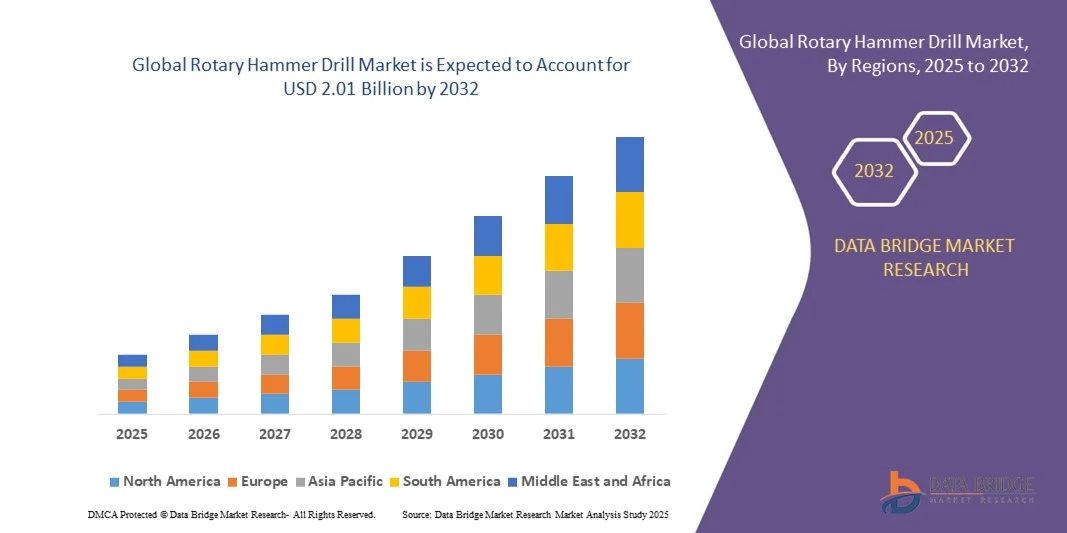
Stay informed with our latest keyword market research covering strategies, innovations, and forecasts. Download full report: https://www.databridgemarketresearch.com/reports/global-rotary-hammer-drill-market
Rotary Hammer Drill Market Segmentation and Market Companies
Segments
- By Application:
The global rotary hammer drill market can be segmented based on application into residential, commercial, and industrial sectors. The residential sector is expected to witness significant growth due to increasing home improvement and DIY activities. The commercial sector is also anticipated to grow as construction projects continue to rise worldwide. The industrial sector, including manufacturing and infrastructure development, will also contribute to the market growth.
- By Product Type:
In terms of product type, the market can be segmented into corded and cordless rotary hammer drills. Cordless rotary hammer drills are gaining popularity due to their convenience and portability. The corded segment, however, still holds a significant market share owing to its consistent power supply and reliable performance.
- By Sales Channel:
The sales channel segment includes offline and online channels. Offline channels, such as retail stores and specialty shops, are crucial for reaching customers who prefer in-person interactions. Online channels, on the other hand, are experiencing rapid growth with the increasing trend of e-commerce and digital platforms.
Market Players
- Bosch Power Tools:
Bosch is a prominent player in the global rotary hammer drill market, known for its innovation and quality products. The company offers a wide range of rotary hammer drills suitable for various applications, catering to both professionals and DIY enthusiasts.
- Makita Corporation:
Makita is another key player in the market, recognized for its durable and high-performance rotary hammer drills. The company focuses on technological advancements and customer satisfaction, positioning itself as a leading choice in the industry.
- Hilti Corporation:
Hilti is a renowned name in the construction tools sector, offering robust rotary hammer drills for industrial and commercial applications. The company's focus on precision engineering and user-friendly designs sets it apart in the market.
- DEWALT (Stanley Black & Decker):
DEWALT, a subsidiary of Stanley Black & Decker, is a well-established brand in the power tools industry. The company's rotary hammer drills are known for their reliability and efficiency, catering to the diverse needs of construction professionals.
- Metabo Power Tools:
Metabo Power Tools is a trusted player in the rotary hammer drill market, delivering durable and high-performance tools for various applications. The company's commitment to quality and innovation has solidified its position in the competitive landscape.
The global rotary hammer drill market is dynamic and competitive, with key players focusing on product development, strategic partnerships, and market expansion to gain a competitive edge. (Source: Data Bridge Market Research )The global rotary hammer drill market is experiencing significant growth driven by various applications across residential, commercial, and industrial sectors. In the residential segment, the market is seeing a surge in demand due to the increasing trend of home improvements and DIY activities among homeowners. The commercial sector, characterized by ongoing construction projects globally, is a key driver for market expansion. The industrial segment, which includes manufacturing and infrastructure development, is also contributing to the market growth with the need for high-performance tools for heavy-duty tasks.
Product segmentation plays a crucial role in catering to the diverse needs of consumers in the rotary hammer drill market. The cordless segment is witnessing increasing popularity owing to the convenience and portability it offers to users, especially in scenarios where mobility is essential. On the other hand, the corded segment still commands a significant market share due to the consistent power supply and reliable performance it provides, making it a preferred choice for certain applications that require continuous usage without the need for recharging.
Sales channels also play a vital role in reaching and engaging with customers in the rotary hammer drill market. Offline channels, including retail stores and specialty shops, continue to be essential for customers who prefer in-person interactions, product demonstrations, and immediate assistance from sales staff. However, online channels are experiencing rapid growth, driven by the increasing trend of e-commerce and digital platforms. Online channels offer convenience, a wide range of product options, and the ability to compare prices and features easily, attracting a growing number of consumers towards online purchases.
Key market players such as Bosch Power Tools, Makita Corporation, Hilti Corporation, DEWALT (Stanley Black & Decker), and Metabo Power Tools are driving innovation and quality in the global rotary hammer drill market. These companies focus on product development, technological advancements, and customer satisfaction to maintain a competitive edge in the market. Strategic partnerships and market expansion strategies are also crucial for these players to enhance their presence in key regions and target new customer segments.
In conclusion, the global rotary hammer drill market is characterized by dynamic competition and continuous innovation. The market players mentioned above are leading the industry with their focus on quality, performance, and customer-centric approaches. As the market continues to evolve, companies need to adapt to changing consumer preferences, technological advancements, and market trends to stay competitive and meet the growing demand for high-quality rotary hammer drills across various sectors.The global rotary hammer drill market is a dynamic and competitive landscape driven by the increasing demand across residential, commercial, and industrial sectors. One of the primary growth drivers in the residential segment is the growing trend of DIY activities and home improvement projects, leading to a surge in demand for rotary hammer drills. In the commercial sector, ongoing construction projects worldwide are fueling market expansion, as these drills are essential tools for various construction applications. The industrial segment, encompassing manufacturing and infrastructure development, is also contributing significantly to the market growth by requiring high-performance tools for heavy-duty tasks, highlighting the versatility of rotary hammer drills across different industries.
Product segmentation is crucial in meeting the diverse needs of consumers within the rotary hammer drill market. Cordless rotary hammer drills are gaining popularity due to their convenience and portability, especially in scenarios where mobility is essential. On the other hand, corded rotary hammer drills still maintain a considerable market share due to their consistent power supply and reliable performance, making them preferable for applications that require continuous usage without the need for recharging.
Sales channels play a vital role in reaching customers and driving sales in the rotary hammer drill market. Offline channels such as retail stores and specialty shops remain crucial for customers seeking in-person interactions, product demonstrations, and immediate assistance. However, online channels are experiencing rapid growth with the rise of e-commerce and digital platforms, offering convenience, a wide range of product options, and easy price and feature comparisons, attracting a growing number of consumers to online purchases.
Key market players such as Bosch Power Tools, Makita Corporation, Hilti Corporation, DEWALT (Stanley Black & Decker), and Metabo Power Tools are at the forefront of driving innovation, quality, and customer satisfaction in the global rotary hammer drill market. These companies are dedicated to product development, technological advancements, and strategic partnerships to maintain a competitive edge and expand their market presence. The industry's focus on quality, performance, and customer-centric approaches underscores the competitive nature of the market and the importance of continuous innovation to meet evolving consumer preferences and market trends. Moving forward, companies in the rotary hammer drill market need to stay agile, adapt to changing dynamics, and leverage technological advancements to capture new opportunities and sustain growth in this highly competitive landscape.
Frequently Asked Questions About This Report
What are the signs of a Market Rebound for Rotary Hammer Drill Market?
What are the key players in the Rotary Hammer Drill Market for manufacturing?
How are smart Rotary Hammer Drill Market solutions gaining traction?
How do high initial costs act as a restraint for the Rotary Hammer Drill Market?
How is the Cold Chain (if applicable) impacting Rotary Hammer Drill Market quality?
What is the competitive intensity of the Rotary Hammer Drill Market (Porter’s Five Forces)?
How is Market Saturation affecting the Rotary Hammer Drill Market industry in North America?
What is the competitive intensity of the Rotary Hammer Drill Market (Porter’s Five Forces)?
What are the technical limitations hindering Rotary Hammer Drill Market expansion?
How is the Rotary Hammer Drill Market evolving in the Entertainment industry?
What are the latest breakthroughs in Rotary Hammer Drill Market R&D?
How are customized/personalized Rotary Hammer Drill Market offerings performing?
What are the logistics challenges in the Rotary Hammer Drill Market across different regions?
Browse More Reports:
Global Consumer Electronics Packaging Market
Global Corporate Web Security Market
Global Counter-IED Market
Global Cranial Implants Treatment Market
Global Crimean-Congo Haemorrhagic Fever Market
Global Critical Infrastructure Protection Market
Global Cylinder Deactivation System Market
Global Dental Wax Market
Global Detox Drinks Market
Global Diagnostic Tape Market
Global Diamond Coatings Market
Global Digital Badges Market
Global Digital Inspection Market
Global DNA Profiling Kits Market
Global Docking Station Market
Contact Us:
Data Bridge Market Research
US: +1 614 591 3140
UK: +44 845 154 9652
APAC : +653 1251 980
Email:- corporatesales@databridgemarketresearch.com"
The USA is a key player in the Pine-Derived Chemicals Market. Its large forests and strong paper industry supply raw material. Adhesive, coating, and ink makers use the output every day. Local firms keep working on new, cleaner grades.
What Is Driving the Market?
Bio-based chemistry is the first driver. Industries are moving toward sustainability and away from conventional oil-based inputs. Pine-based chemicals are gaining momentum in automotive, textile, and packaging uses. Buyers want greener materials without a drop-in performance.
Adhesives, sealants, and coatings are the second driver. Rosin and its derivatives are widely used in these products. A growing construction sector adds demand. So, does the call for eco-friendly adhesives in packaging, automotive, and building materials.
Get exclusive insights into the Pine-Derived Chemicals Market – https://www.theinsightpartners.com/sample/TIPRE00010691
Cosmetics is the third driver. Terpenes and pine oil have natural fragrance, antibacterial, and anti-inflammatory traits. As shoppers favor natural and organic ingredients, pine-derived chemicals are a popular pick in skin care, hair care, and beauty products.
Supply is a factor to watch. Output depends on pine tapping and on the by-products of pulp making, so volumes can follow forestry and paper trends.
Which Segment Leads?
By type, the report covers tall oil fatty acid, tall oil rosin, gum turpentine, gum rosin, sterols, pitch, and other pine-derived chemicals. Tall oil fatty acid is the type with the largest market share, according to the report. Rosin products also play a central role across adhesives and coatings.
By application, the market spans paints and coatings, adhesives and sealants, surfactants, printing inks, and others. By source, it covers living trees, dead pine stumps and logs, and by-products of sulfate pulping, known as the kraft process. By process, the report looks at kraft and tapping. This wide spread shows how flexible pine chemistry is.
Which Region Leads?
Asia Pacific is expected to record the highest growth rate among all regions during the forecast period. The report covers China, India, and Japan within the region.
The United States is a key market. Support comes from the rise of bio-based chemicals, strong demand in adhesives, sealants, and coatings, and a growing taste for natural cosmetic ingredients.
The report also covers Europe, South and Central America, and the Middle East and Africa. Europe adds steady demand through Germany, France, the UK, and Italy. Brazil and Argentina give South and Central America room to grow.
Which Companies Are Prominent?
The report profiles these market leaders:
- Arakawa Chemical Industries, Ltd.
- Arizona Chemical Company, LLC
- DRT (Dérivés Résiniques ET Terpéniques)
- Eastman Chemical Company
- Foreverest Resources Ltd.
- Georgia-Pacific Chemicals LLC.
- Harima Chemicals Group Inc.
- Ingevity Corporation
- Mentha and Allied Products Pvt. Ltd.
- Renessenz LLC.
The field mixes global chemical groups with focused resin and terpene specialists. Firms compete on product range, quality, and access to raw material. Many are working to turn pine resin and by-products into higher-value chemicals. Companies that offer products for several industries can spread their risk.
What Is Changing in 2026?
Technology is widening the field. Better methods to convert pine resin and by-products into valuable chemicals can improve the economics.
Clean energy is a growing area. Pine-derived chemicals are being used in biofuels and biomass-based energy. As the world focuses on cutting carbon, demand for bio-based feedstocks like these may climb.
Sustainable packaging is the third shift. Rosin-based resins are being studied for biodegradable packaging and coatings. This points to new openings in a market that wants natural, lower-impact solutions.
What Are the Investment Opportunities?
Bioplastics and sustainable packaging offer a big opening. Rosin derivatives help make biodegradable polymers, which matches the shift toward greener packaging and consumer goods.
Food and beverages is another promising field. Pine-derived natural antioxidants and flavoring agents can serve food preservation and flavor needs, as consumers lean toward natural and organic products.
Paints and coatings round out the list. Rosin esters and turpentine are used in sustainable products, and demand should rise as the industry seeks bio-based options. Firms that invest in cleaner processes are well placed for the next phase of growth.
Frequently Asked Questions
- Which type segment accounted for the highest share of the market?
A. The tall oil fatty acid segment accounted for the largest market share. - Which region is expected to record the highest growth?
A. Asia Pacific is expected to record the highest growth rate from 2026 to 2034. - What is driving the pine-derived chemicals market?
A. Growing demand for bio-based products is a key driver. - What is the expected CAGR of the market?
A. The market is estimated to witness a CAGR of 3.94% from 2026 to 2034.
Related Reading / Reports
Explore additional research from The Insight Partners covering related bio-based and specialty chemical markets:
- Oleochemicals Market — covers chemicals made from natural oils and fats.
- Polyoxyethylene Hydrogenated Castor Oil Market — looks at plant-based surfactants and emulsifiers.
- Paper Dry Strength Agent Market — tracks additives used in paper and pulp making.
About US:
The Insight Partners is among the leading market research and consulting firms in the world. We take pride in delivering exclusive reports along with sophisticated strategic and tactical insights into the industry. Reports are generated through a combination of primary and secondary research, solely aimed at giving our clientele a knowledge-based insight into the market and domain. This is done to assist clients in making wiser business decisions. A holistic perspective in every study undertaken form an integral part of our research methodology and makes the report unique and reliable.
Contact US
For any queries, please reach out to us:
Phone: +1-646-491-9876
E-mail: sales@theinsightpartners.com
Also Available in : Korean | German | Japanese | French | Chinese | Italian | Spanish